

ISSN 0439-755X
CN 11-1911/B
CN 11-1911/B
Acta Psychologica Sinica ›› 2025, Vol. 57 ›› Issue (12): 2220-2241.doi: 10.3724/SP.J.1041.2025.2220
• Reports of Empirical Studies • Previous Articles Next Articles
HU Xiaoyong( ), ZHAO Yue, JI Yuexin1, MA Jiaxin3
Received:2024-07-10
Published:2025-12-25
Online:2025-09-28
Contact:
HU Xiaoyong
E-mail:huxiaoyong@whu.edu.cn
Supported by:HU Xiaoyong, ZHAO Yue, JI Yuexin, MA Jiaxin. (2025). Awe’s Influence on Prosociality: Psychological Mechanisms Across High- and Low-SES Individuals. Acta Psychologica Sinica, 57(12), 2220-2241.
| Variables | 1 | 2 | 3 | 4 |
|---|---|---|---|---|
| 1. Trait Awe | 1 | |||
| 2. Small Self | 0.15** | 1 | ||
| 3. Authentic Self | 0.39*** | ?0.01 | 1 | |
| 4. Prosocial Tendencies | 0.41*** | 0.18*** | 0.28*** | 1 |
| M | 5.04 | 4.12 | 6.98 | 3.70 |
| SD | 1.00 | 1.52 | 1.45 | 0.59 |
Table 1 Descriptive Statistics and Correlations Among Main Variables (N = 414)
| Variables | 1 | 2 | 3 | 4 |
|---|---|---|---|---|
| 1. Trait Awe | 1 | |||
| 2. Small Self | 0.15** | 1 | ||
| 3. Authentic Self | 0.39*** | ?0.01 | 1 | |
| 4. Prosocial Tendencies | 0.41*** | 0.18*** | 0.28*** | 1 |
| M | 5.04 | 4.12 | 6.98 | 3.70 |
| SD | 1.00 | 1.52 | 1.45 | 0.59 |
| Model Path | Coeff | SE | 95% CI | Effect | |
|---|---|---|---|---|---|
| Lower | Upper | ||||
| Direct Effect: AWE→PT | 0.22 | 0.03 | 0.155 | 0.283 | 81.48% |
| Indirect Effect 1: AWE→SS→PT | 0.01 | 0.01 | 0.003 | 0.028 | 3.70% |
| Indirect Effect 2: AWE→AS→PT | 0.04 | 0.01 | 0.012 | 0.067 | 14.81% |
| Total Indirect Effect | 0.05 | 0.02 | 0.021 | 0.085 | 18.52% |
| Total Effect | 0.27 | 0.03 | 0.212 | 0.330 | 100.00% |
Table 2 Mediation Analysis of the Effects of Trait Awe on Prosocial Tendencies (N = 414)
| Model Path | Coeff | SE | 95% CI | Effect | |
|---|---|---|---|---|---|
| Lower | Upper | ||||
| Direct Effect: AWE→PT | 0.22 | 0.03 | 0.155 | 0.283 | 81.48% |
| Indirect Effect 1: AWE→SS→PT | 0.01 | 0.01 | 0.003 | 0.028 | 3.70% |
| Indirect Effect 2: AWE→AS→PT | 0.04 | 0.01 | 0.012 | 0.067 | 14.81% |
| Total Indirect Effect | 0.05 | 0.02 | 0.021 | 0.085 | 18.52% |
| Total Effect | 0.27 | 0.03 | 0.212 | 0.330 | 100.00% |
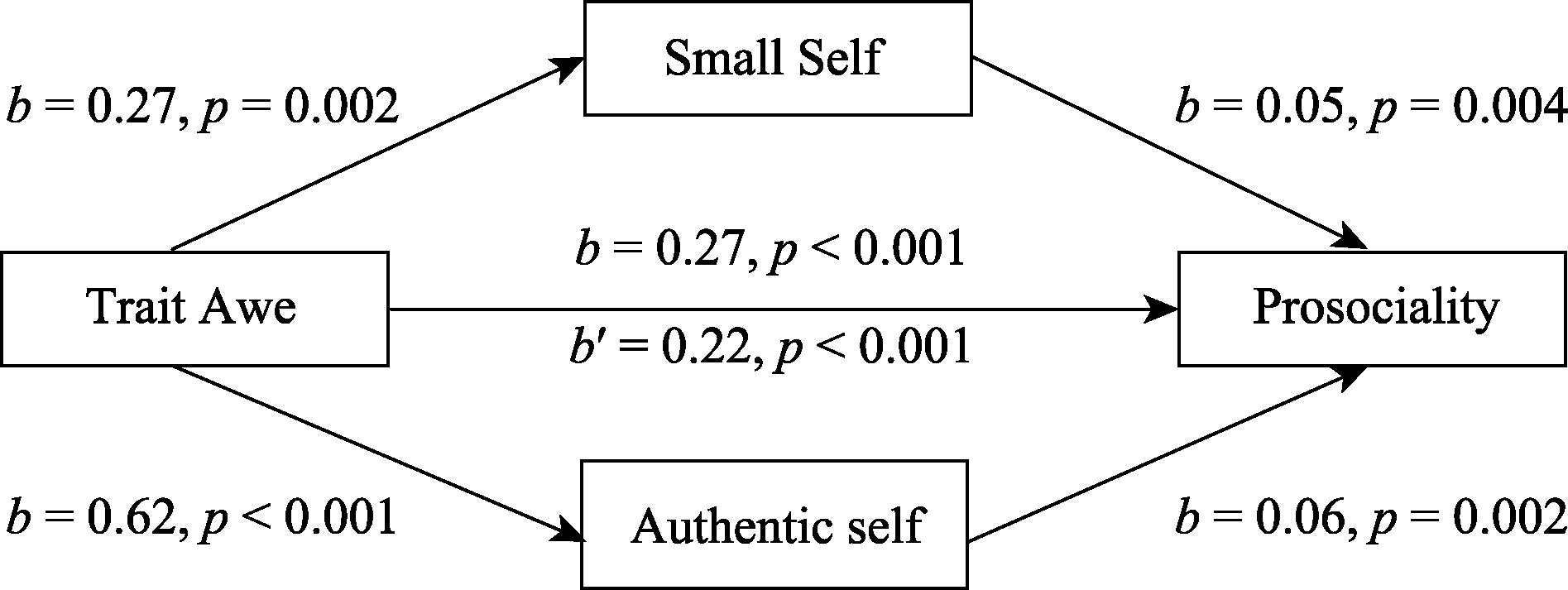
Figure 1. Trait Awe Predicts Prosociality through the Parallel Mediation of the Small self and the Authentic Self.
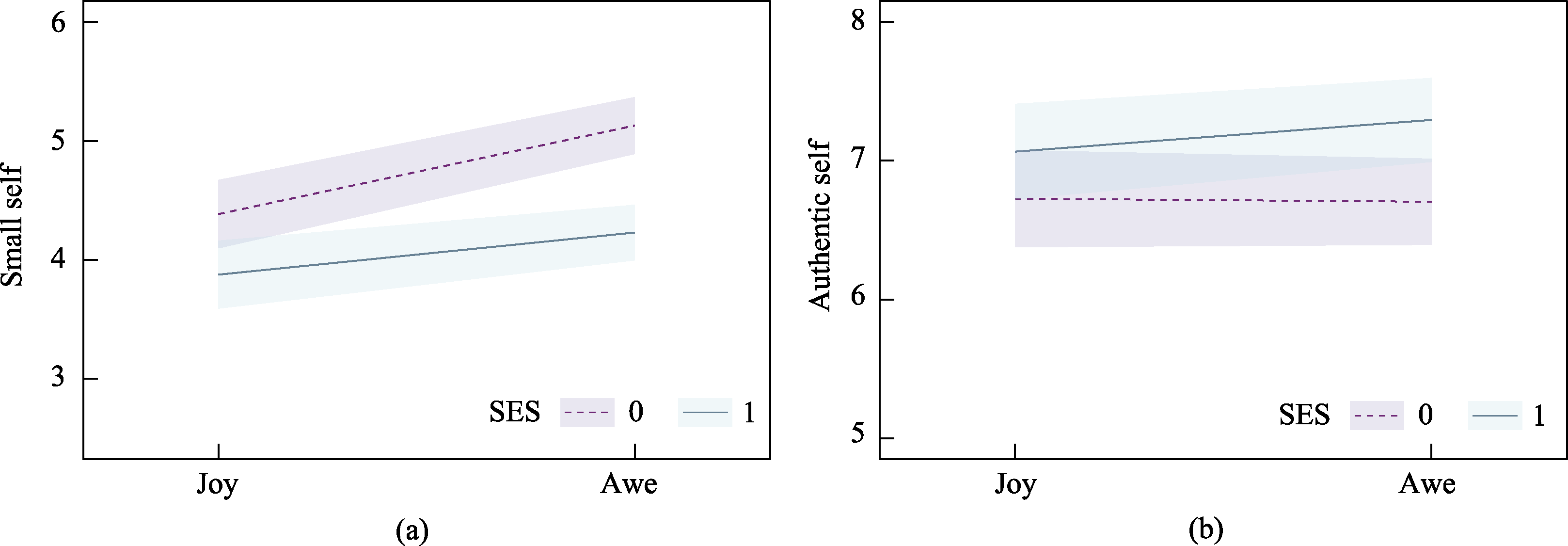
Figure 2. Interaction Effect of Socioeconomic Status and Emotions on the Small Self and Authentic Self Note: SES stands for socioeconomic status, 0 represents low socioeconomic status, and 1 represents high socioeconomic status.
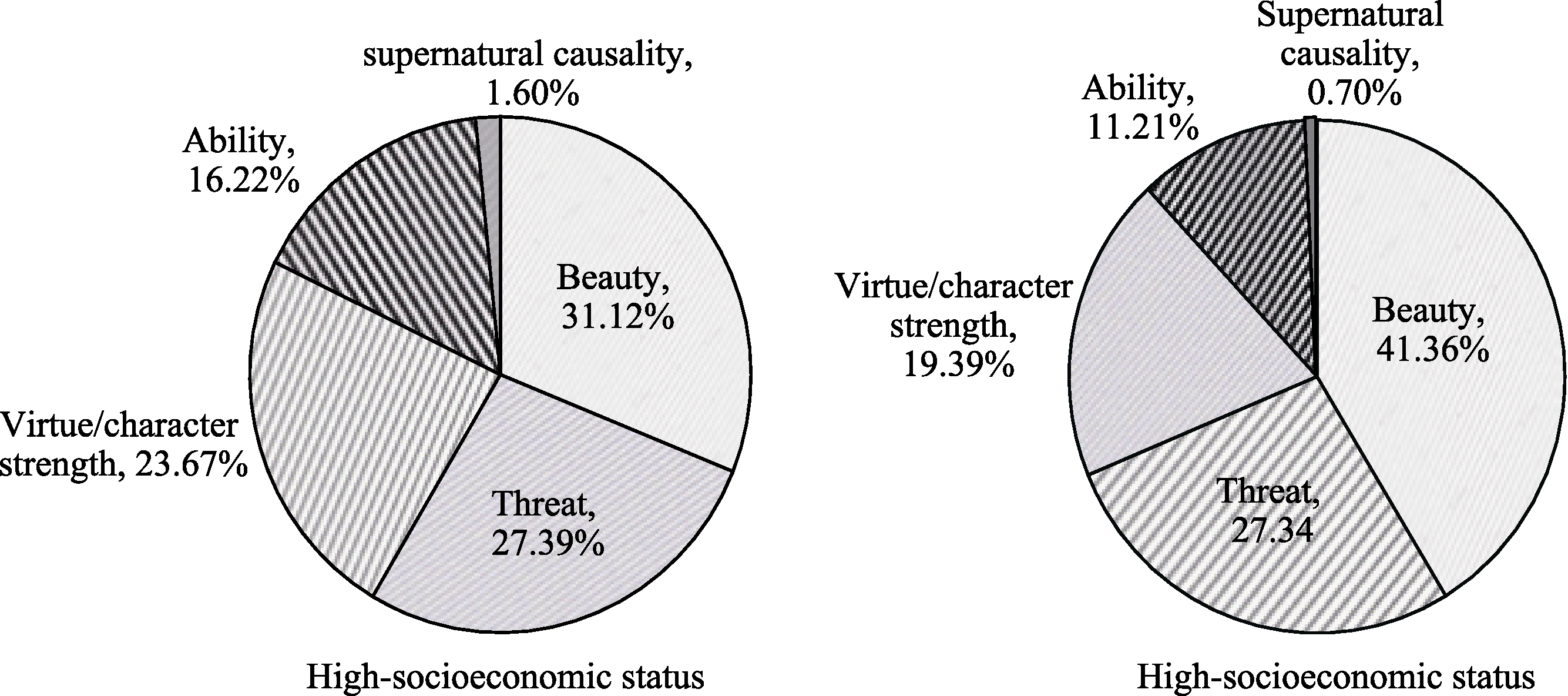
Figure 3. Perceived Differences in Awe Themes Between High and Low Socioeconomic Status Individuals.
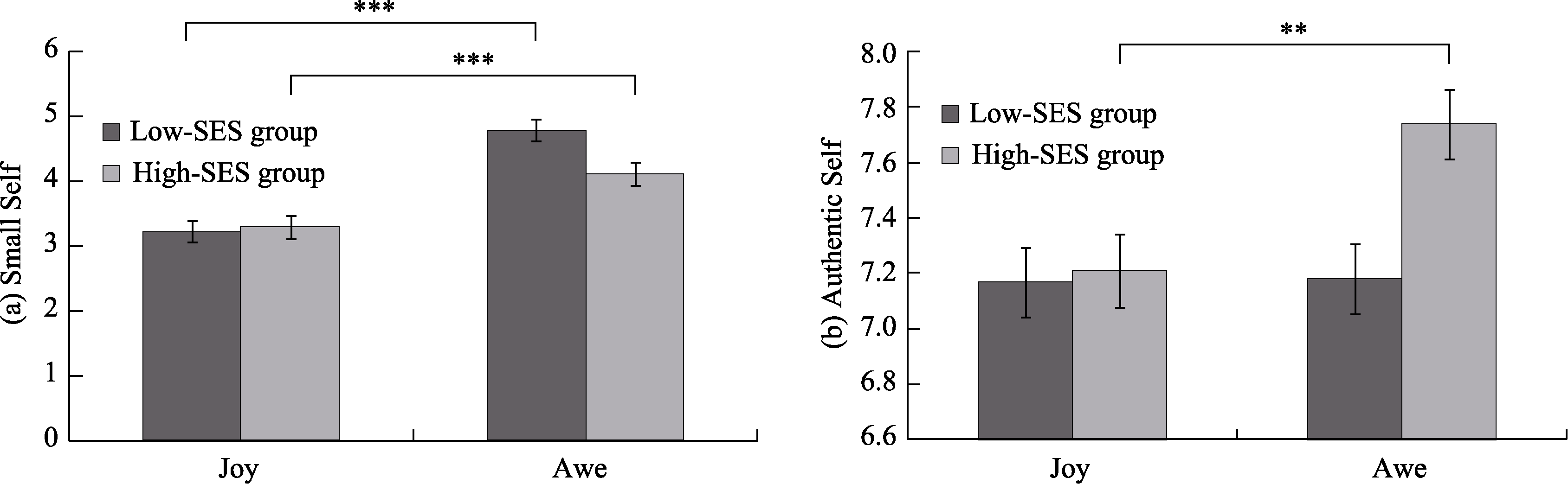
Figure 4. The Moderating Effect of Socioeconomic Status on the Effects of the Small Self and the Authentic Self on Awe.
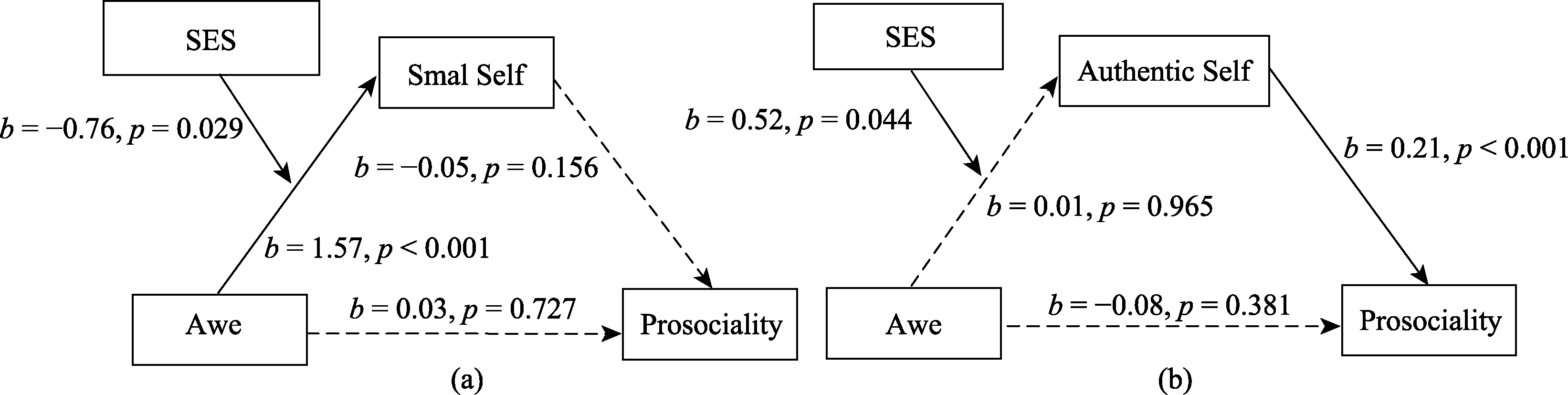
Figure 5. Moderated Mediation Model.
| Predictor Variable | Outcome Variable | |||||||
|---|---|---|---|---|---|---|---|---|
| Small Self (M1) | Prosociality (Y) | |||||||
| Coeff | SE | t | p | Coeff | SE | t | p | |
| Awe (X) | 1.57 | 0.24 | 6.58 | 0.000*** | 0.03 | 0.09 | 0.35 | 0.727 |
| Socioeconomic Status (W) | 0.08 | 0.25 | 0.34 | 0.735 | ||||
| X×W | ?0.76 | 0.35 | ?2.20 | 0.029* | ||||
| Small Self (M1) | ?0.05 | 0.03 | ?1.42 | 0.156 | ||||
| R2 = 0.23, F (3, 192) = 18.79, p < 0.001*** | R2 = 0.01, F (2, 193) = 1.06, p = 0.348 | |||||||
| Authentic self (M2) | Prosociality (Y) | |||||||
| Awe (X) | 0.01 | 0.18 | 0.04 | 0.965 | ?0.08 | 0.08 | ?1.00 | 0.318 |
| Socioeconomic Status (W) | 0.04 | 0.18 | 0.20 | 0.842 | ||||
| X×W | 0.52 | 0.26 | 2.03 | 0.044* | ||||
| Authentic self (M2) | 0.21 | 0.04 | 4.67 | 0.000*** | ||||
| R2 = 0.07, F (3, 192) = 4.73, p = 0.003** | R2 = 0.10, F (2, 193) = 10.98, p < 0.001*** | |||||||
Table 3 Moderated Mediation Model Analysis Results
| Predictor Variable | Outcome Variable | |||||||
|---|---|---|---|---|---|---|---|---|
| Small Self (M1) | Prosociality (Y) | |||||||
| Coeff | SE | t | p | Coeff | SE | t | p | |
| Awe (X) | 1.57 | 0.24 | 6.58 | 0.000*** | 0.03 | 0.09 | 0.35 | 0.727 |
| Socioeconomic Status (W) | 0.08 | 0.25 | 0.34 | 0.735 | ||||
| X×W | ?0.76 | 0.35 | ?2.20 | 0.029* | ||||
| Small Self (M1) | ?0.05 | 0.03 | ?1.42 | 0.156 | ||||
| R2 = 0.23, F (3, 192) = 18.79, p < 0.001*** | R2 = 0.01, F (2, 193) = 1.06, p = 0.348 | |||||||
| Authentic self (M2) | Prosociality (Y) | |||||||
| Awe (X) | 0.01 | 0.18 | 0.04 | 0.965 | ?0.08 | 0.08 | ?1.00 | 0.318 |
| Socioeconomic Status (W) | 0.04 | 0.18 | 0.20 | 0.842 | ||||
| X×W | 0.52 | 0.26 | 2.03 | 0.044* | ||||
| Authentic self (M2) | 0.21 | 0.04 | 4.67 | 0.000*** | ||||
| R2 = 0.07, F (3, 192) = 4.73, p = 0.003** | R2 = 0.10, F (2, 193) = 10.98, p < 0.001*** | |||||||
| Emotional Experience | Emotional Condition | F | ηp2 | ||
|---|---|---|---|---|---|
| Aesthetic Awe | Ability-Based Awe | Joy | |||
| Awe | 5.78c | 5.71c | 2.76a, b | 118.01*** | 0.56 |
| Joy | 1.24c | 1.16c | 4.85a, b | 331.87*** | 0.78 |
| Aesthetic Enjoyment | 5.90b, c | 2.97a, c | 3.62a, b | 84.86*** | 0.48 |
| Admiration | 3.58b | 5.79a, c | 2.83b | 46.48*** | 0.34 |
Table 4 Emotional Experiences Under Different Emotion Manipulation Conditions
| Emotional Experience | Emotional Condition | F | ηp2 | ||
|---|---|---|---|---|---|
| Aesthetic Awe | Ability-Based Awe | Joy | |||
| Awe | 5.78c | 5.71c | 2.76a, b | 118.01*** | 0.56 |
| Joy | 1.24c | 1.16c | 4.85a, b | 331.87*** | 0.78 |
| Aesthetic Enjoyment | 5.90b, c | 2.97a, c | 3.62a, b | 84.86*** | 0.48 |
| Admiration | 3.58b | 5.79a, c | 2.83b | 46.48*** | 0.34 |
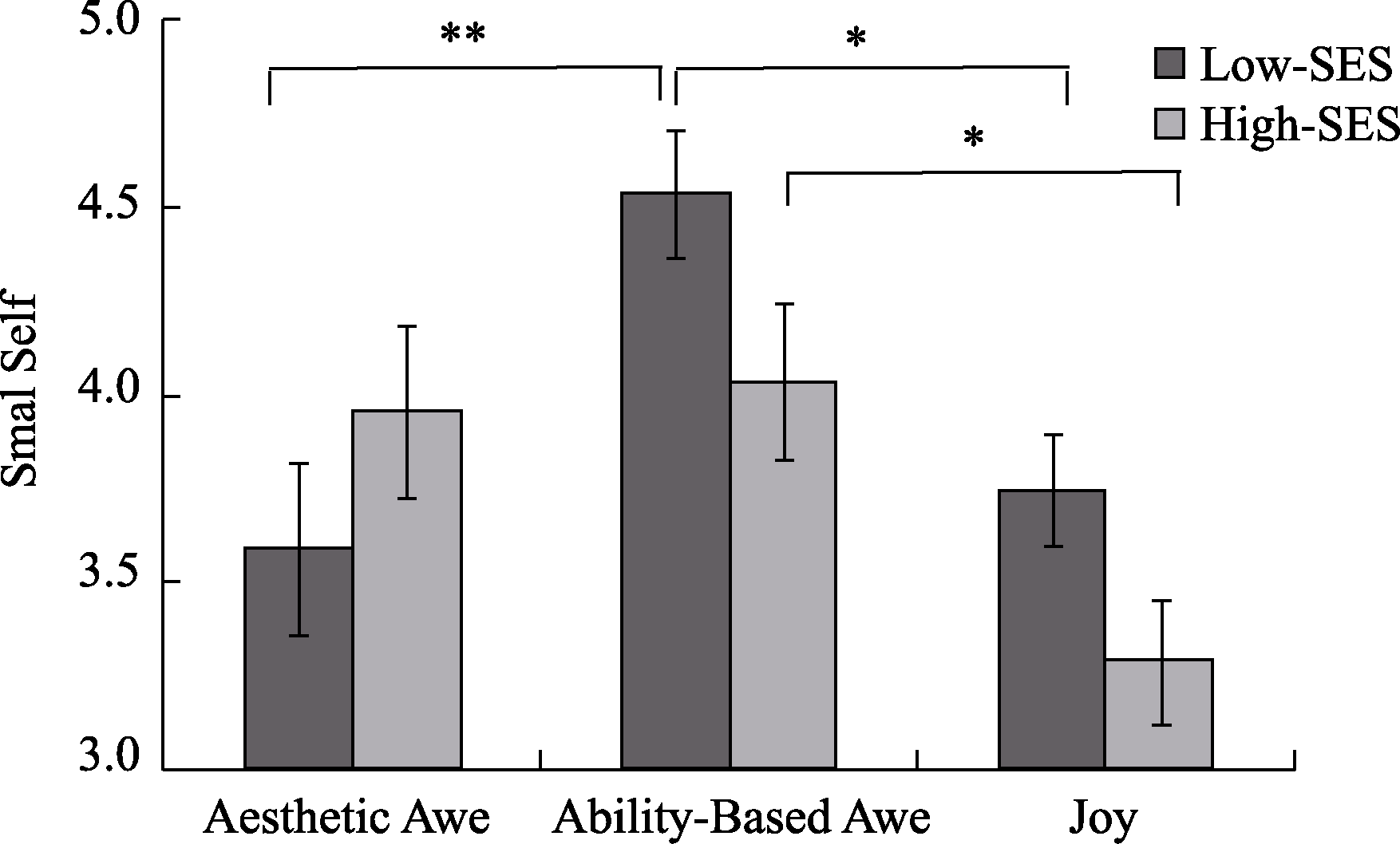
Figure 6. Interaction Effect between Socioeconomic Status and Types of Awe on Small Self.
| Predictor | Outcome Variable | |||||||
|---|---|---|---|---|---|---|---|---|
| Small Self (M) | Prosociality (Y) | |||||||
| Coeff | SE | t | p | Coeff | SE | t | p | |
| D1 | ?0.16 | 0.28 | ?0.57 | 0.570 | 0.21 | 0.18 | 1.18 | 0.237 |
| D2 | 0.78 | 0.25 | 3.17 | 0.002** | 0.25 | 0.18 | 1.35 | 0.179 |
| Socioeconomic Status (W) | ?0.47 | 0.25 | ?1.85 | 0.065 | ||||
| D1×W | 0.83 | 0.40 | 2.08 | 0.037* | ||||
| D2×W | ?0.03 | 0.37 | ?0.09 | 0.929 | ||||
| Small Self (M) | ?0.03 | 0.07 | ?0.46 | 0.645 | ||||
Table 5 Results of Moderated Mediation Model Analysis
| Predictor | Outcome Variable | |||||||
|---|---|---|---|---|---|---|---|---|
| Small Self (M) | Prosociality (Y) | |||||||
| Coeff | SE | t | p | Coeff | SE | t | p | |
| D1 | ?0.16 | 0.28 | ?0.57 | 0.570 | 0.21 | 0.18 | 1.18 | 0.237 |
| D2 | 0.78 | 0.25 | 3.17 | 0.002** | 0.25 | 0.18 | 1.35 | 0.179 |
| Socioeconomic Status (W) | ?0.47 | 0.25 | ?1.85 | 0.065 | ||||
| D1×W | 0.83 | 0.40 | 2.08 | 0.037* | ||||
| D2×W | ?0.03 | 0.37 | ?0.09 | 0.929 | ||||
| Small Self (M) | ?0.03 | 0.07 | ?0.46 | 0.645 | ||||
| Emotional Experience | Emotional Condition | F | ηp2 | ||
|---|---|---|---|---|---|
| Aesthetic Awe | Ability Awe | Joy | |||
| Awe | 5.65c | 5.35c | 2.61a, b | 91.21*** | 0.51 |
| Joy | 4.88b, c | 3.82a, c | 5.45a, b | 20.49*** | 0.19 |
| Aesthetic Enjoyment | 5.98b, c | 3.94a | 4.33a | 30.74*** | 0.26 |
| Admiration | 3.65b | 5.82a, c | 3.49b | 34.50*** | 0.28 |
Table 6 Emotional Experiences under Different Emotion Manipulation Conditions
| Emotional Experience | Emotional Condition | F | ηp2 | ||
|---|---|---|---|---|---|
| Aesthetic Awe | Ability Awe | Joy | |||
| Awe | 5.65c | 5.35c | 2.61a, b | 91.21*** | 0.51 |
| Joy | 4.88b, c | 3.82a, c | 5.45a, b | 20.49*** | 0.19 |
| Aesthetic Enjoyment | 5.98b, c | 3.94a | 4.33a | 30.74*** | 0.26 |
| Admiration | 3.65b | 5.82a, c | 3.49b | 34.50*** | 0.28 |
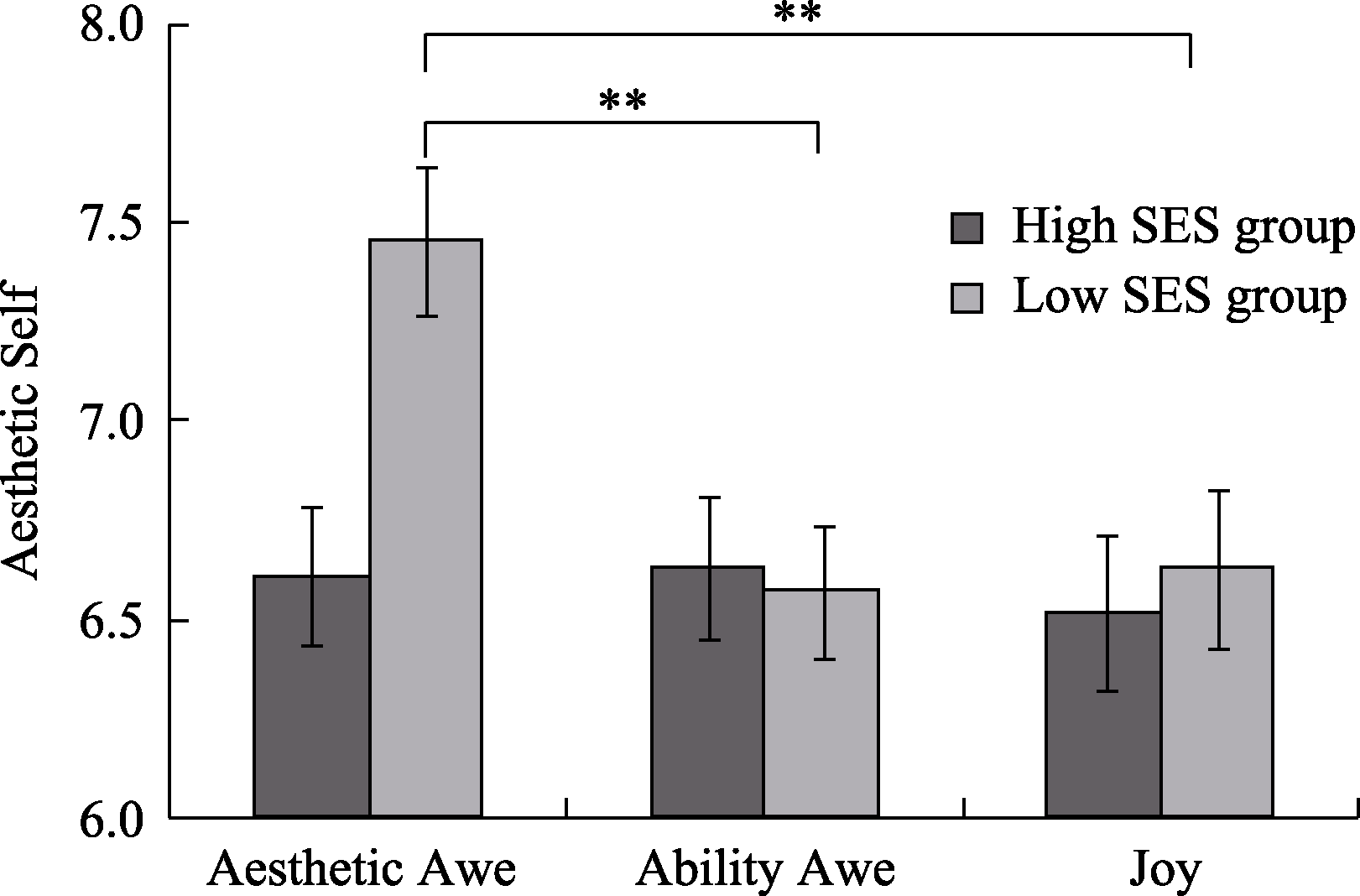
Figure 7. Interaction of Socioeconomic Status and Types of Awe on Authentic Self. Note: **p < 0.01.
| Predictor Variable | Outcome Variable | |||||||
|---|---|---|---|---|---|---|---|---|
| Authentic Self (M) | Prosociality (Y) | |||||||
| Coeff | SE | t | p | Coeff | SE | t | p | |
| D1 | 0.08 | 0.24 | 0.35 | 0.729 | ?0.09 | 0.19 | ?0.50 | 0.615 |
| D2 | 0.11 | 0.28 | 0.39 | 0.699 | ?0.22 | 0.17 | ?1.30 | 0.194 |
| Socioeconomic Status (W) | 0.11 | 0.29 | 0.38 | 0.703 | ||||
| D1×W | 0.75 | 0.36 | 2.09 | 0.037* | ||||
| D2×W | ?0.18 | 0.40 | ?0.44 | 0.660 | ||||
| Authentic Self (M) | 0.19 | 0.07 | 2.64 | 0.008** | ||||
Table 7 Results of Moderated Mediation Model Analysis
| Predictor Variable | Outcome Variable | |||||||
|---|---|---|---|---|---|---|---|---|
| Authentic Self (M) | Prosociality (Y) | |||||||
| Coeff | SE | t | p | Coeff | SE | t | p | |
| D1 | 0.08 | 0.24 | 0.35 | 0.729 | ?0.09 | 0.19 | ?0.50 | 0.615 |
| D2 | 0.11 | 0.28 | 0.39 | 0.699 | ?0.22 | 0.17 | ?1.30 | 0.194 |
| Socioeconomic Status (W) | 0.11 | 0.29 | 0.38 | 0.703 | ||||
| D1×W | 0.75 | 0.36 | 2.09 | 0.037* | ||||
| D2×W | ?0.18 | 0.40 | ?0.44 | 0.660 | ||||
| Authentic Self (M) | 0.19 | 0.07 | 2.64 | 0.008** | ||||
| [1] |
Adler N. E., Epel E. S., Castellazzo G., & Ickovics J. R. (2000). Relationship of subjective and objective social status with psychological and physiological functioning: Preliminary data in healthy white women. Health Psychology, 19(6), 586-592. https://doi.org/10.1037//0278-6133.19.6.586
doi: 10.1037//0278-6133.19.6.586 URL pmid: 11129362 |
| [2] | Bai J., Yang S., Xu B., & Guo Y. (2021). How can successful people share their goodness with the world: The psychological mechanism underlying the upper social classes’ redistributive preferences and the role of humility. Acta Psychologica Sinica, 53(10), 1161-1172. https://doi.org/10.3724/SP.J.1041.2021.01161 |
| [3] |
Bai Y., Maruskin L. A., Chen S., Gordon A. M., Stellar J. E., McNeil G. D.,... Keltner D. (2017). Awe, the diminished self, and collective engagement: Universals and cultural variations in the small self. Journal of Personality and Social Psychology, 113(2), 185-209. https://doi.org/10.1037/pspa0000087
doi: 10.1037/pspa0000087 URL pmid: 28481617 |
| [4] |
Bai Y., Ocampo J., Jin G., Chen S., Benet-Martinez V., Monroy M.,... Keltner D. (2021). Awe, daily stress, and elevated life satisfaction. Journal of Personality and Social Psychology, 120(4), 837-860. https://doi.org/10.1037/pspa0000267
doi: 10.1037/pspa0000267 URL pmid: 33764120 |
| [5] | Carlo G., & Randall B. A. (2002). The development of a measure of prosocial behaviors for late adolescents. Journal of Youth and Adolescence, 31(1), 31-44. https://doi.org/10.1023/A:1014033032440 |
| [6] |
Cheng L., & Wang X. (2023). Shining our humanity: The benefits of awe on self-humanity. Emotion, 24(3), 589-601. https://doi.org/10.1037/emo0001293
doi: 10.1037/emo0001293 URL pmid: 37676162 |
| [7] | Chirico, A., & Yaden D. B. (2018). Awe:A self-transcendent and sometimes transformative emotion. In H. C. Lench (Ed.), The function of emotions (pp. 221-233). Springer International Publishing. https://doi.org/10.1007/978-3-319-77619-4_11 |
| [8] | Cui X. (2023). The effect of social class on prosocial behavior: The role of social responsibility and awe [Unpublished master’s thesis]. Jinan University, Guangzhou. |
| [9] | Curran P. G. (2016). Methods for the detection of carelessly invalid responses in survey data. Journal of Experimental Social Psychology, 66, 4-19. |
| [10] |
Danvers A. F., & Shiota M. N. (2017). Going off script: Effects of awe on memory for script-typical and -irrelevant narrative detail. Emotion, 17(6), 938-952. https://doi.org/10.1037/emo0000277
doi: 10.1037/emo0000277 URL pmid: 28230393 |
| [11] |
Detert J. R., Treviño L. K., & Sweitzer V. L. (2008). Moral disengagement in ethical decision making: A study of antecedents and outcomes. Journal of Applied Psychology, 93(2), 374-391. http://dx. doi.org/10.1037/0021-9010.93.2.374
pmid: 18361639 |
| [12] | Diehl M., Owen S., & Youngblade L. (2004). Agency and communion attributes in adults' spontaneous self-representations. International Journal of Behavioral Development, 28(1), 1-15. https://doi.org/10.1080/01650250344000226 |
| [13] |
Emmons R. A., & McCullough M. E. (2003). Counting blessings versus burdens: An experimental investigation of gratitude and subjective well-being in daily life. Journal of Personality and Social Psychology, 84(2), 377-389. doi:10.1037/0022-3514.84.2.377.
pmid: 12585811 |
| [14] | Fang J., Wen Z., & He Z. (2023). Moderated mediation analyses of a frequently-used types of categorical variable. Chinese Journal of Applied Psychology, 29(4), 291-299. |
| [15] |
Faul F., Erdfelder E., Lang A. G., & Buchner A. (2007). G*Power 3: A flexible statistical power analysis program for the social, behavioral, and biomedical sciences. Behavior Research Methods, 39(2), 175-191. https://doi.org/10.3758/bf03193146
doi: 10.3758/bf03193146 URL pmid: 17695343 |
| [16] |
Frimer J., Walker L., Dunlop W., Lee B., & Riches A. (2011). The integration of agency and communion in moral personality: Evidence of enlightened self-interest. Journal of Personality and Social Psychology, 101(1), 149-163. https://doi.org/10.1037/a0023780
doi: 10.1037/a0023780 URL pmid: 21574724 |
| [17] | Fu Y. N., Feng R. D., Liu Q., He Y. M., Turel O., Zhang S. Y., & He Q. H. (2022). Awe and prosocial behavior: The mediating role of presence of meaning in life and the moderating role of perceived social support. International Journal of Environmental Research and Public Health, 19(11), Article 6466. https://doi.org/10.3390/ijerph19116466 |
| [18] |
Galinsky A. D., Magee J. C., Gruenfeld D. H, Whitson J. A., & Liljenquist K. A. (2008). Power reduces the press of the situation: Implications for creativity, conformity, and dissonance. Journal of Personality and Social Psychology, 95(6), 1450-1466. https://doi.org/10.1037/a0012633
doi: 10.1037/a0012633 URL pmid: 19025295 |
| [19] |
Gan M., Heller D., & Chen S. (2018). The power in being yourself: Feeling authentic enhances the sense of power. Personality and Social Psychology Bulletin, 44(10), 1460-1472. https://doi.org/10.1177/014616721877100
doi: 10.1177/0146167218771000 URL pmid: 29739292 |
| [20] |
Gordon A. M., Stellar J. E., Anderson C. L., McNeil G. D., Loew D., & Keltner D. (2017). The dark side of the sublime: Distinguishing a threat-based variant of awe. Journal of Personality and Social Psychology, 113(2), 310-328. https://doi.org/10.1037/pspp0000120
doi: 10.1037/pspp0000120 URL pmid: 27929301 |
| [21] |
Guan F., Chen J., Chen O., Liu L., & Zha Y. (2019). Awe and prosocial tendency. Current Psychology, 38(4), 1033-1041. https://doi.org/10.1007/s12144-019-00244-7
doi: 10.1007/s12144-019-00244-7 URL |
| [22] | Hayes A. F. (2018). Introduction to mediation, moderation, and conditional process analysis: A regression-based approach (2nd ed.). New York: Guilford Press. |
| [23] | Huang L., Yang T., & Ji Z. (2003). Applicability of the positive and negative affect scale in Chinese. Chinese Mental Health Journal, 17(1), 54-56. |
| [24] | Ihm, E. D., Paloutzian R. F., van Elk M., & Schooler J. W. (2019). Awe as a meaning-making emotion:On the evolution of awe and the origin of religions. In J. R. Feierman & L. Oviedo (Eds.), The evolution of religion, religiosity and theology (pp. 138-153). Routledge. |
| [25] | Jiang T., Hicks J., Yuan W., Yin Y., Needy L., & Vess M. (2024). The unique nature and psychosocial implications of awe. Nature Reviews Psychology, 3, 475-488. https://doi.org/10.1038/s44159-024-00322-z |
| [26] | Jiang T., & Sedikides C. (2022). Awe motivates authentic-self pursuit via self-transcendence: Implications for prosociality. Journal of Personality and Social Psychology, 123(3), 576-596. https://doi.org/10.1037/pspi0000381 |
| [27] | Jiao L. M., & Luo L. (2022). Dispositional awe positively predicts prosocial tendencies: The multiple mediation effects of connectedness and empathy. International Journal of Environmental Research and Public Health, 19(24), Article 16605. https://doi.org/10.3390/ijerph192416605 |
| [28] | Joye Y., & Bolderdijk J. (2015). An exploratory study into the effects of extraordinary nature on emotions, mood, and prosociality. Frontiers in Psychology, 5, Article 1577. https://doi.org/10.3389/fpsyg.2014.01577 |
| [29] | Keltner D., & Haidt J. (2003). Approaching awe, a moral, spiritual, and aesthetic emotion. Cognition and Emotion, 17(2), 297-314. https://doi.org/10.1080/02699930302297 |
| [30] |
Keltner D., & Piff P. (2020). Self-transcendent awe as a moral grounding of wisdom. Psychological Inquiry, 31(2), 160-163. https://doi.org/10.1080/1047840X.2020.1750927
doi: 10.1080/1047840X.2020.1750927 URL |
| [31] | Konečni V. J. (2005). The aesthetic trinity: Awe, being moved, thrills. Bulletin of Psychology and the Arts, 5(2), 27-44. https://doi.org/10.1037/e674862010-005 |
| [32] | Kou Y., Hong H., Tan C., & Li L. (2007). Revisioning prosocial tendencies measure for adolescent. Psychological Development and Education, 23(1), 112-117. |
| [33] |
Kraus M. W., Côté S., & Keltner D. (2010). Social class, contextualism, and empathic accuracy. Psychological Science, 21(11), 1716-1723. https://doi.org/10.1177/0956797610387613
doi: 10.1177/0956797610387613 URL pmid: 20974714 |
| [34] |
Kraus M. W., Piff P. K., & Keltner D. (2009). Social class, sense of control, and social explanation. Journal of Personality and Social Psychology, 97(6), 992-1004. https://doi.org/10.1037/a0016357
doi: 10.1037/a0016357 URL pmid: 19968415 |
| [35] | Kraus M. W., Piff P. K., & Keltner D. (2011). Social class as culture: The convergence of resources and rank in the social realm. Current Directions in Psychological Science, 20(4), 246-250. https://doi.org/10.1177/0963721411414654 |
| [36] |
Kraus M. W., Piff P. K., Mendoza-Denton R., Rheinschmidt M. L., & Keltner D. (2012). Social class, solipsism, and contextualism: How the rich are different from the poor. Psychological Review, 119(3), 546-572. https://doi.org/10.1037/a0028756
doi: 10.1037/a0028756 URL pmid: 22775498 |
| [37] | Kuznetsova A., Brockhoff P. B., & Christensen R. H. B. (2017). Imer test package: Tests in linear mixed effects models. Journal of Statistical Software, 82(13), 1-26. https://doi.org/10.18637/jss.v082.i13 |
| [38] | Lenton A. P., Bruder M., Slabu L., & Sedikides C. (2013). How does “being real” feel? The experience of state authenticity. Journal of Personality, 81(3), 276-289. https://doi.org/10.1111/j.1467-6494.2012.00805.x |
| [39] | Lin R., Chen Y., Shen Y., Xiong X., Lin N., & Lian R. (2021). Dispositional awe and online altruism: Testing a moderated mediating model. Frontiers in Psychology, 12, Article 688591. https://doi.org/10.3389/fpsyg.2021.688591 |
| [40] | Lin R., Hong Y., Xiao H., & Lian R. (2020). Dispositional awe and prosocial tendency: The mediating roles of self-transcendent meaning in life and spiritual self-transcendence. Social Behavior and Personality, 48(12),1-10. https://doi.org/10.2224/sbp.9665 |
| [41] | Luo L., Zou R., Yang D., & Yuan J. (2022). Awe experience triggered by fighting against COVID-19 promotes prosociality through increased feeling of connectedness and empathy. The Journal of Positive Psychology, 18(6), 866-882. https://doi.org/10.1080/17439760.2022.2131607 |
| [42] | Mansfield E. D., & McAdams D. P. (1996). Generativity and themes of agency and communion in adult autobiography. Personality and Social Psychology Bulletin, 22(7), 721-731. https://doi.org/10.1177/0146167296227006 |
| [43] | Maslow A. H. (1962). Toward a psychology of being. Princeton: Van Nostrand. |
| [44] | McDougall W. (1910). Instinct and intelligence. British Journal of Psychology, 3(3), 250-266. https://doi.org/10.1111/j.2044-8295.1910.tb00204.x |
| [45] |
Meng L., & Wang X. (2022). Awe in the workplace promotes prosocial behavior. PsyCh Journal, 12(1), 44-53. https://doi.org/10.1002/pchj.593
doi: 10.1002/pchj.593 URL pmid: 36058883 |
| [46] |
Mesquita B., Boiger M., & De Leersnyder J. (2016). The cultural construction of emotions. Current Opinion in Psychology, 8, 31-36. http://dx.doi.org/10.1016/j.copsyc.2015.09.015
doi: S2352-250X(15)00241-9 URL pmid: 29506799 |
| [47] | Nelson-Coffey S. K., Ruberton P. M., Chancellor J., Cornick J. E., Blascovich J., & Lyubomirsky S. (2019). The proximal experience of awe. PloS One, 14(5), Article e0216780. https://doi.org/10.1371/journal.pone.0216780 |
| [48] |
Norenzayan A., & Heine S. J. (2005). Psychological universals: What are they and how can we know? Psychological Bulletin, 131(5), 763-784. http://dx.doi.org/10.1037/0033-2909.131.5.763
URL pmid: 16187859 |
| [49] |
Oveis C., Horberg E. J., & Keltner D. (2010). Compassion, pride, and social intuitions of self-other similarity. Journal of Personality and Social Psychology, 98(4), 618-630. https://doi.org/10.1037/a0017628
doi: 10.1037/a0017628 URL pmid: 20307133 |
| [50] |
Perlin J. D., & Li L. (2020). Why does awe have prosocial effects? New perspectives on awe and the small self. Perspectives on Psychological Science, 15(2), 291-308. https://doi.org/10.1177/1745691619886006
doi: 10.1177/1745691619886006 URL pmid: 31930954 |
| [51] |
Piff P. K. (2014). Wealth and the inflated self: Class, entitlement, and narcissism. Personality and Social Psychology Bulletin, 40(1), 34-43. http://dx.d0i.0rg/l0.1177/0146167213501699
doi: 10.1177/0146167213501699 URL pmid: 23963971 |
| [52] |
Piff P. K., Dietze P., Feinberg M., Stancato D. M., & Keltner D. (2015). Awe, the small self, and prosocial behavior. Journal of Personality and Social Psychology, 108(6), 883-899. https://doi.org/10.1037/pspi0000018
doi: 10.1037/pspi0000018 URL pmid: 25984788 |
| [53] |
Piff P. K., Kraus M. W., Côté S., Cheng B. H., & Keltner D. (2010). Having less, giving more: The influence of social class on prosocial behavior. Journal of Personality and Social Psychology, 99(5), 771-784. http://dx.doi.org/10.1037/a0020092
doi: 10.1037/a0020092 URL pmid: 20649364 |
| [54] | Piff P. K., Martinez A. G., & Keltner D. (2012). Me against we: In-group transgression, collective shame, and in-group-directed hostility. Cognition and Emotion, 26(4), 634-649. http://dx.doi.org/10.1080/02699931.2011.595394 |
| [55] | Prade C., & Saroglou V. (2016). Awe’s effects on generosity and helping. The Journal of Positive Psychology, 11(5), 522-530. https://doi.org/10.1080/17439760.2015.1127992 |
| [56] | Qian Z. C. (2018). A study on the relationship between awe and moral judgment of college students [Unpublished master’s thesis]. Nanjing Normal University. |
| [57] | Rudd M., Vohs K. D., & Aaker J. (2012). Awe expands people’s perception of time, alters decision making, and enhances well-being. Psychological Science, 23(10), 1130-1136. https://doi.org/10.1177/0956797612438731 |
| [58] |
Schmader T., & Sedikides C. (2018). State authenticity as fit to environment: The implications of social identity for fit, authenticity, and self-segregation. Personality and Social Psychology Review, 22(3), 228-259. https://doi.org/10.1177/1088868317734080
doi: 10.1177/1088868317734080 URL pmid: 28975851 |
| [59] | Schoemann A. M., Boulton A. J., & Short S. D. (2017). Determining power and sample size for simple and complex mediation models. Social Psychological and Personality Science, 8(4), 379-386. https://doi.org/10.1177/1948550617715068 |
| [60] |
Sedikides C., Lenton A. P., Slabu L., & Thomaes S. (2019). Sketching the contours of state authenticity. Review of General Psychology, 23(1), 73-88. https://doi.org/10.1037/gpr0000156
doi: 10.1037/gpr0000156 URL |
| [61] | Septianto F., Nasution R. A., Arnita D., & Seo Y. (2022). The role of threat-based awe and construal level in charitable advertising. European Journal of Marketing, 56(5), 1532-1555. https://doi.org/10.1108/EJM-06-2021-0403 |
| [62] | Shiota M. N., Keltner D., & John O. P. (2006). Positive emotion dispositions differentially associated with Big Five personality and attachment style. The Journal of Positive Psychology, 1(2), 61-71. https://doi.org/10.1080/17439760500510833 |
| [63] | Shiota M. N., Keltner D., & Mossman A. (2007). The nature of awe: Elicitors, appraisals, and effects on self-concept. Cognition and Emotion, 21(5), 944-963. https://doi.org/10.1080/02699930600923668 |
| [64] | So J., Achar C., Han D., Agrawal N., Duhachek A., & Maheswaran D. (2015). The psychology of appraisal: Specific emotions and decision-making. Journal of Consumer Psychology, 25(3), 359-371. https://doi.org/10.1016/j.jcps.2015.04.003 |
| [65] | Stell A. J. (2018). Awe as a self-transcending emotion [Unpublished doctoral dissertation]. University of Sussex. https://hdl.handle.net/10779/uos.23456144.v1 |
| [66] | Stellar J. E. (2021). Awe helps us remember why it is important to forget the self. Annals of the New York Academy of Sciences, 1501(1), 81-84. https://doi.org/10.1111/nyas.14577 |
| [67] | Stellar J. E., Gordon A. M., Piff P. K., Cordaro D., Anderson C. L., Bai Y.,... Keltner D. (2017). Self-transcendent emotions and their social functions: Compassion, gratitude, and awe bind us to others through prosociality. Emotion Review, 9(3), 200-207. https://doi.org/10.1177/1754073916684557 |
| [68] |
Stephens N. M., Markus H. R., & Townsend S. M. (2007). Choice as an act of meaning: The case of social class. Journal of Personality and Social Psychology, 93(5), 814-830.
pmid: 17983302 |
| [69] | Sturm V. E., Datta S., Roy A. R. K., Sible I. J., Kosik E. L., Veziris C. R.,... Keltner D. (2022). Big smile, small self: Awe walks promote prosocial positive emotions in older adults. Emotion, 22(5), 1044-1058. https://doi.org/10.1037/emo0000876 |
| [70] | Tracy, J. L., Weidman A. C., Cheng J. T., & Martens J. P. (2014). Pride:The fundamental emotion of success, power, and status. In M. M. Tugade, M. N. Shiot, & L. D. Kirby (Eds.), Handbook of positive emotions (pp. 294-310). The Guilford Press. |
| [71] | Tyson C., Hornsey M. J., & Barlow F. K. (2022). What does it mean to feel small? Three dimensions of the small self. Self and Identity, 21(4), 387-405. https://doi.org/10.1080/15298868.2021.1921018 |
| [72] | van Cappellen P., & Saroglou V. (2012). Awe activates religious and spiritual feelings and behavioral intentions. Psychology of Religion and Spirituality, 4(3), 223-236. |
| [73] | Waller M., Mistry D., Jetly R., & Frewen P. (2021). Meditating in virtual reality 3: 360° video of perceptual presence of instructor. Mindfulness, 12(6), 1424-1437. https://doi.org/10.1007/s12671-021-01612-w |
| [74] |
Watson D., Clark L. A., & Tellegen A. (1988). Development and validation of brief measures of positive and negative affect: The PANAS scales. Journal of Personality and Social Psychology, 54(6), 1063-1070. https://doi.org/10.1037/0022-3514.54.6.1063
doi: 10.1037//0022-3514.54.6.1063 URL pmid: 3397865 |
| [75] |
Yang S., Rao T., Yu F., & Guo Y. (2022). Subjective class research in psychology of social class: Its contributions and deficiencies. Advances in Psychological Science, 30(8), 1883-1893. https://doi.org/10.3724/SP.J.1042.2022.01883
doi: 10.3724/SP.J.1042.2022.01883 URL |
| [76] | Yang Y., Yang Z., Bao T., Liu Y., & Passmore H. A. (2016). Elicited awe decreases aggression. Journal of Pacific Rim Psychology, 10, Article e11. https://doi.org/10.1017/prp.2016.8 |
| [77] | Yuan W., Du Y., & Jiang T. (2024). How and when awe improves meaning in life: The role of authentic-self pursuit and trait authenticity. Emotion, 24(2), 412-430. https://doi.org/10.1037/emo0001278 |
| [78] | Zhou H., & Long L. (2004). Statistical remedies for common method biases. Advances in Psychological Science, 12(6), 942-950. |
| [79] | Zhou L., Li S., Peng K., Wang Y., & Guan F. (2022). Revision the Chinese version of the awe experience scale. Chinese Journal of Clinical Psychology, 30(5), 1138-1142. |
| Viewed | ||||||
|
Full text |
|
|||||
|
Abstract |
|
|||||
