

ISSN 0439-755X
CN 11-1911/B
CN 11-1911/B
Acta Psychologica Sinica ›› 2025, Vol. 57 ›› Issue (10): 1689-1700.doi: 10.3724/SP.J.1041.2025.1689
• Reports of Empirical Studies • Next Articles
FENG Junye, WANG Zhe, SUN Yu-Hao P( )
)
Published:2025-10-25
Online:2025-08-15
Contact:
SUN Yu-Hao P
E-mail:sunyuhao@zstu.edu.cn
FENG Junye, WANG Zhe, SUN Yu-Hao P. (2025). The Multiple Image Advantage in Face Identity Recognition Relies on the Formation of Facial Representation. Acta Psychologica Sinica, 57(10), 1689-1700.
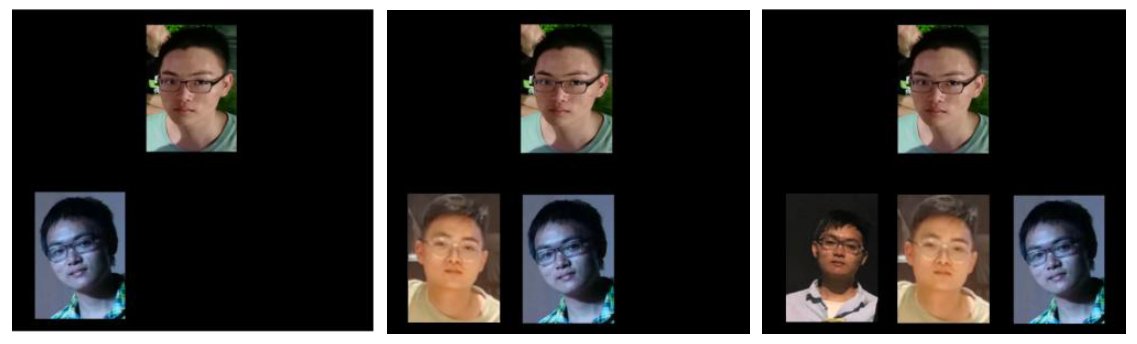
Figure 1. Example of face material layout (from left to right: Block1 to Block3).
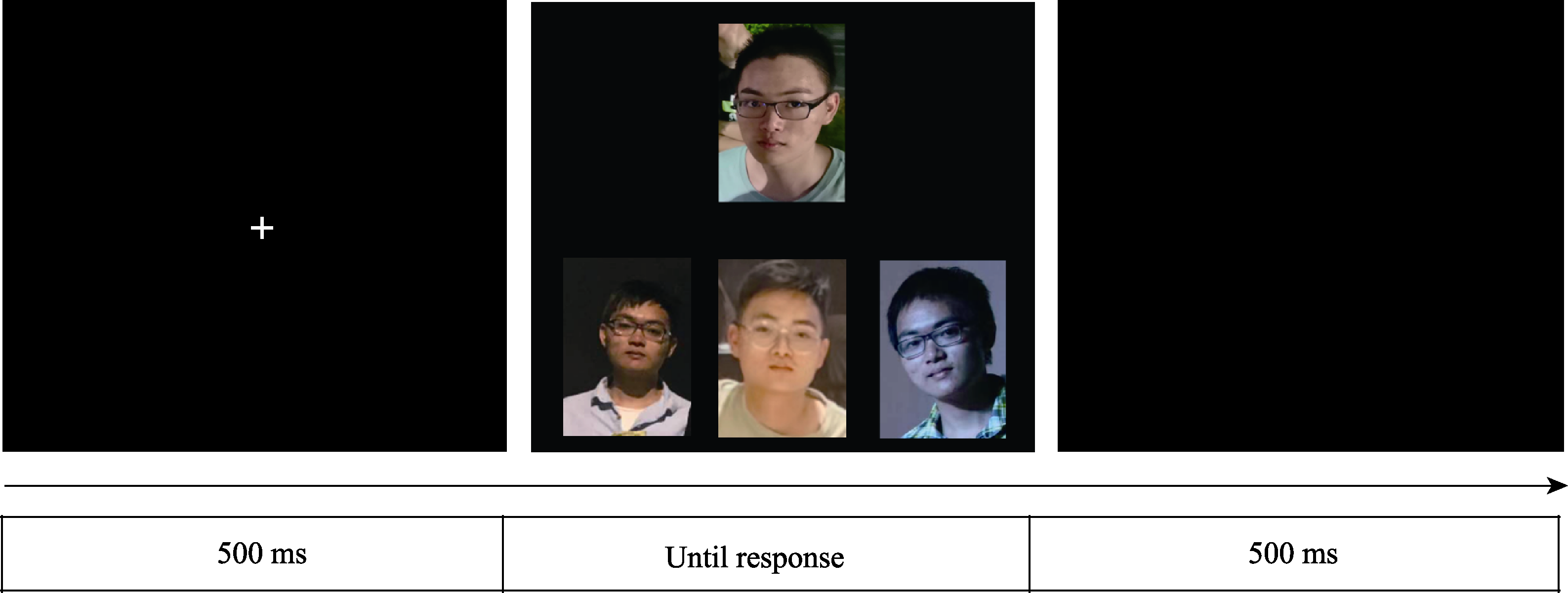
Figure 2. Flowchart of a single trial in the simultaneous matching task (using 1-to-3 matching as an example).
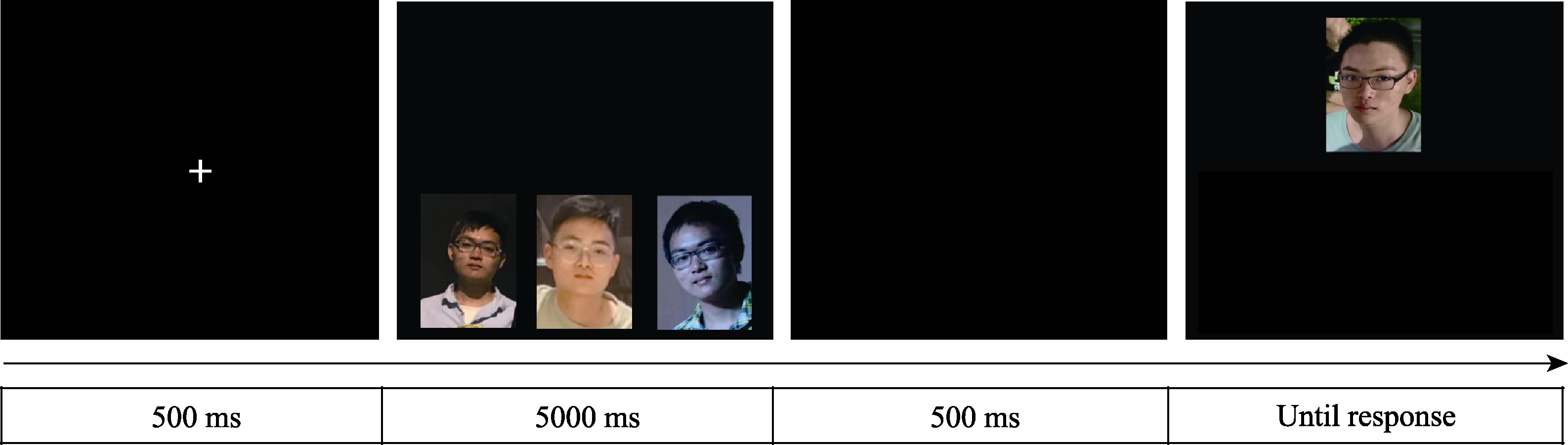
Figure 3. Flowchart of a single trial in the sequential matching task (using 3-to-1 matching as an example).
| Discriminability (d') | Criterion (c) | Reaction Time (ms*) | ||||
|---|---|---|---|---|---|---|
| Simultaneous | Sequential | Simultaneous | Sequential | Simultaneous | Sequential | |
| 1 Image | 1.26 (0.08) | 1.23 (0.08) | ?0.13 (0.06) | ?0.30 (0.06) | 2751 (187) | 6558 (183) |
| 2 Images | 1.45 (0.09) | 1.53 (0.09) | ?0.38 (0.06) | ?0.57 (0.06) | 2904 (167) | 6473 (162) |
| 3 Images | 1.43 (0.10) | 1.74 (0.10) | ?0.62 (0.07) | ?0.65 (0.07) | 2579 (127) | 6257 (124) |
Table 1 Descriptive Statistics for Experiment 1A (M ± SE)
| Discriminability (d') | Criterion (c) | Reaction Time (ms*) | ||||
|---|---|---|---|---|---|---|
| Simultaneous | Sequential | Simultaneous | Sequential | Simultaneous | Sequential | |
| 1 Image | 1.26 (0.08) | 1.23 (0.08) | ?0.13 (0.06) | ?0.30 (0.06) | 2751 (187) | 6558 (183) |
| 2 Images | 1.45 (0.09) | 1.53 (0.09) | ?0.38 (0.06) | ?0.57 (0.06) | 2904 (167) | 6473 (162) |
| 3 Images | 1.43 (0.10) | 1.74 (0.10) | ?0.62 (0.07) | ?0.65 (0.07) | 2579 (127) | 6257 (124) |
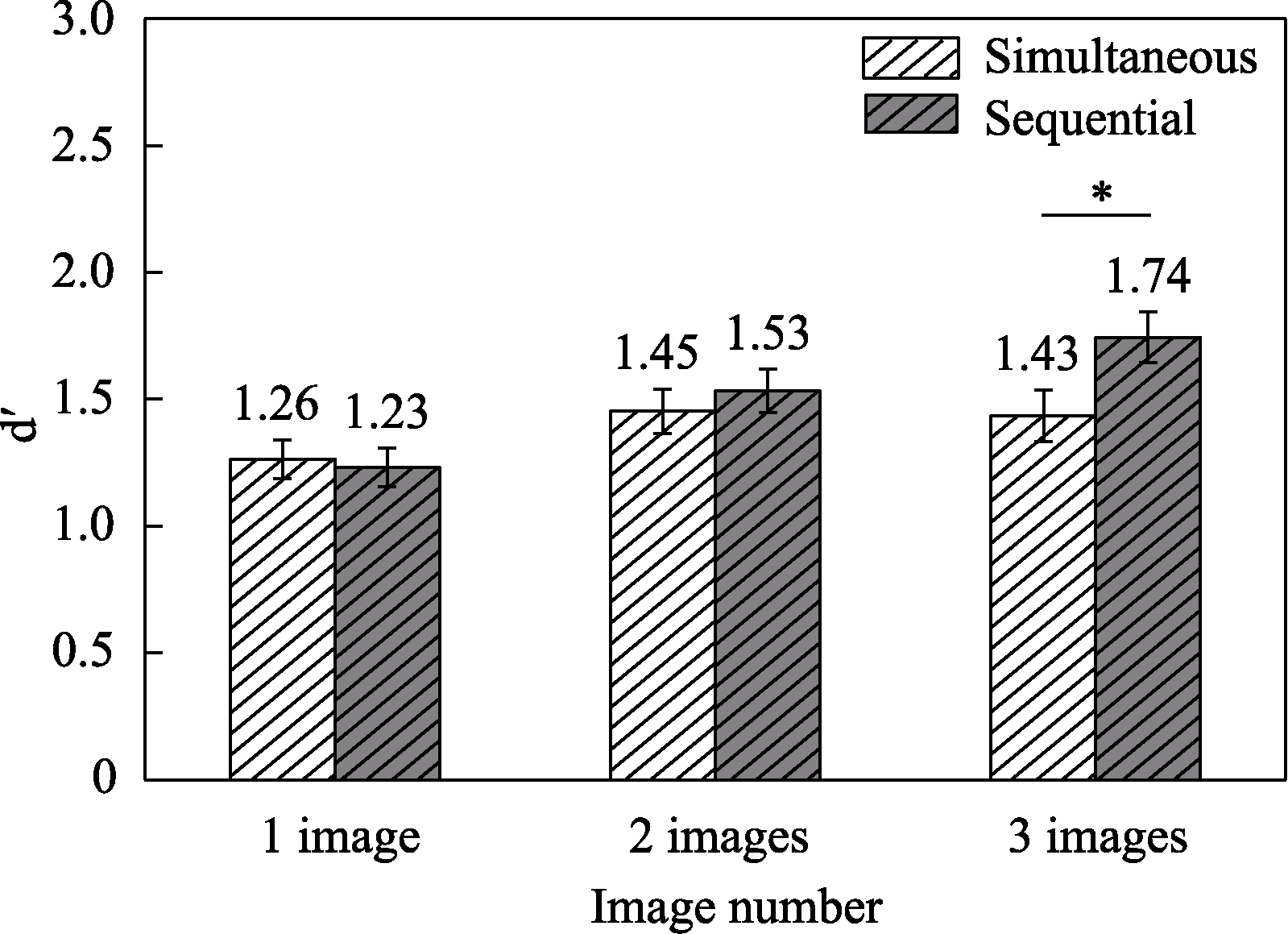
Figure 4. Discriminability under different presentation modes across image quantity conditions. Note: * p < 0.05
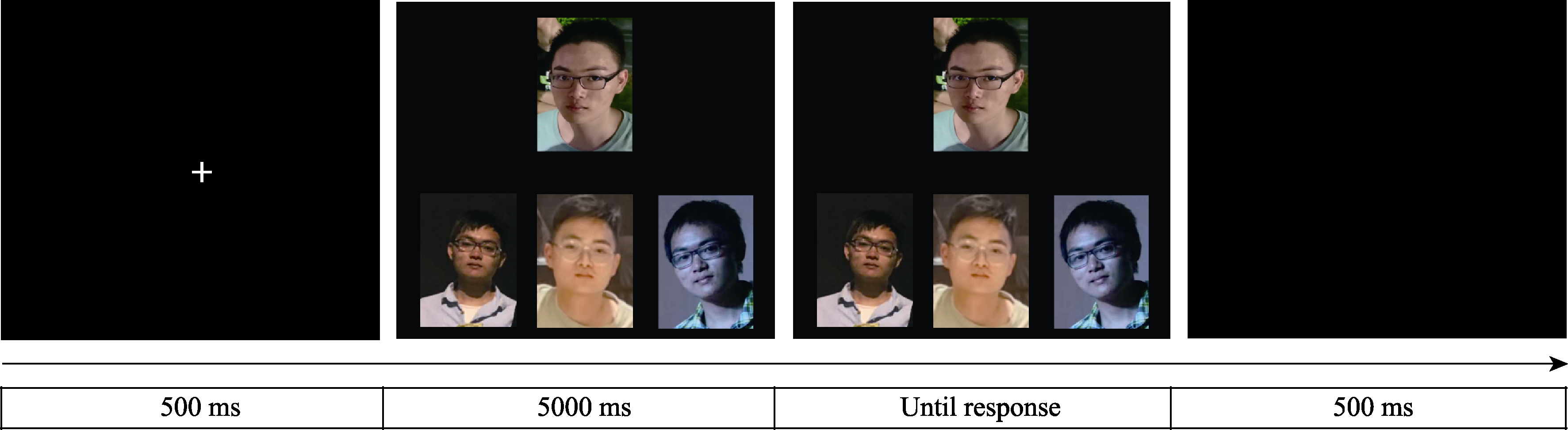
Figure 5. Flowchart of a single trial in the simultaneous matching task (Experiment 1B).
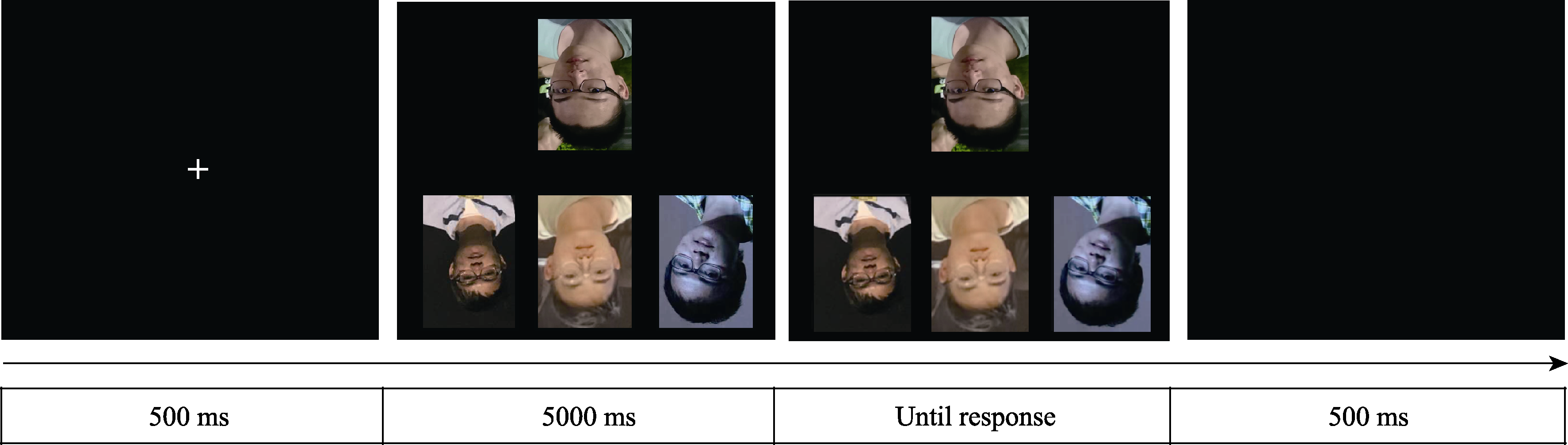
Figure 6. Flowchart of a single trial in the simultaneous matching task (Inverted).

Figure 7. Flowchart of a single trial in the sequential matching task (Inverted)
| Discriminability (d′) | Criterion (c) | |||
|---|---|---|---|---|
| Simultaneous | Sequential | Simultaneous | Sequential | |
| 1 Image | 0.92(0.08) | 0.66(0.08) | ?0.50(0.06) | ?0.30(0.06) |
| 3 Images | 1.07(0.09) | 0.83(0.09) | ?0.83(0.09) | ?0.57(0.09) |
Table 2 Descriptive Statistics for Experiment 2 (M ± SE)
| Discriminability (d′) | Criterion (c) | |||
|---|---|---|---|---|
| Simultaneous | Sequential | Simultaneous | Sequential | |
| 1 Image | 0.92(0.08) | 0.66(0.08) | ?0.50(0.06) | ?0.30(0.06) |
| 3 Images | 1.07(0.09) | 0.83(0.09) | ?0.83(0.09) | ?0.57(0.09) |
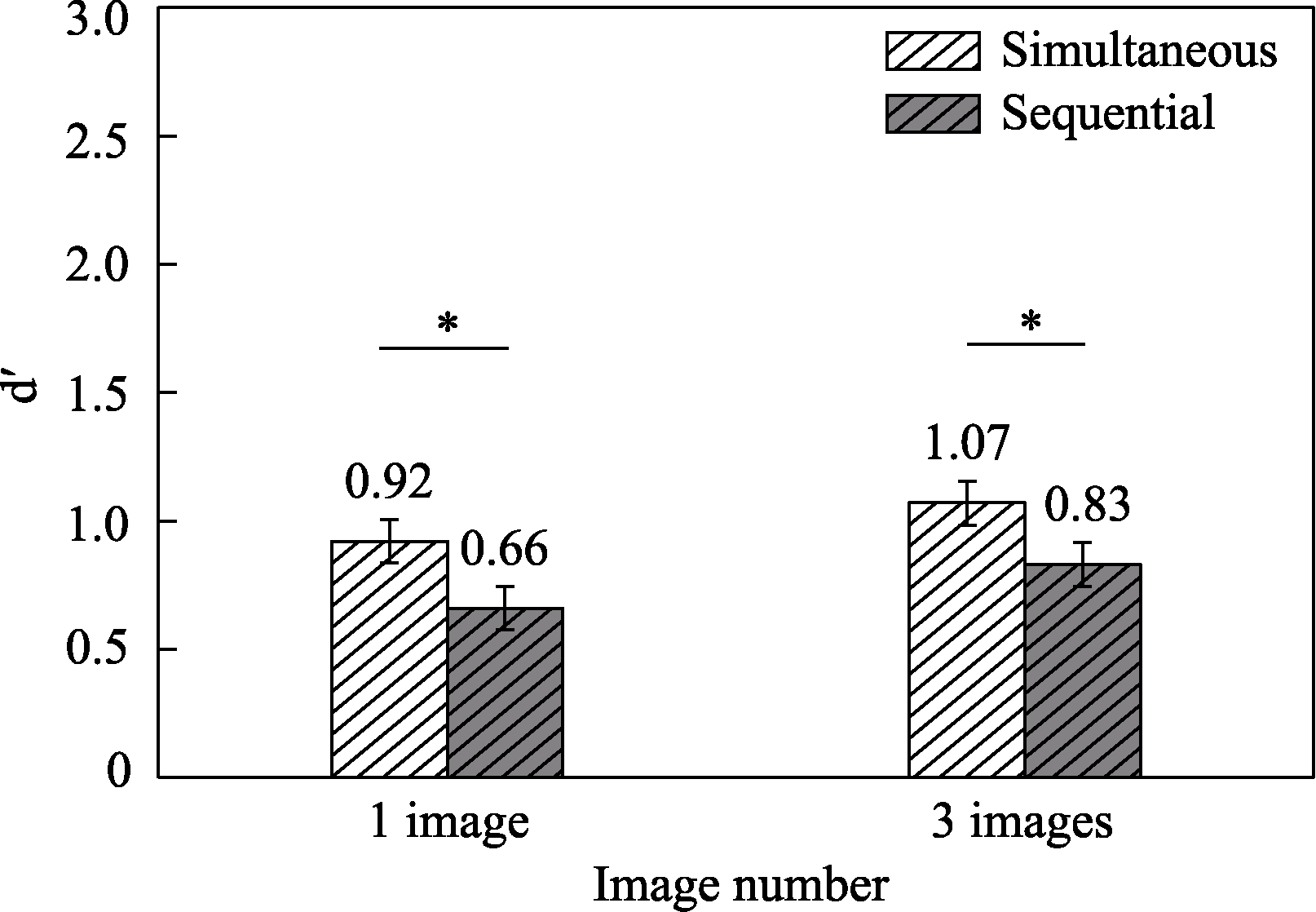
Figure 8. Discriminability index under different presentation modes across image quantity conditions (Inverted Faces). Note: * p < 0.05 (Main effect of Image Number)
| [1] | Andrews, S., Jenkins, R., Cursiter, H., & Burton, A. M. (2015). Telling faces together: Learning new faces through exposure to multiple instances. Quarterly Journal of Experimental Psychology, 68(10), 2041-2050. |
| [2] |
Baker, K. A., & Mondloch, C. J. (2019). Two sides of face learning: Improving between-identity discrimination while tolerating more within-person variability in appearance. Perception, 48(11), 1124-1145.
doi: 10.1177/0301006619867862 pmid: 31483735 |
| [3] | Baker, K. A., & Mondloch, C. J. (2023). Unfamiliar face matching ability predicts the slope of face learning. Scientific Reports, 13(1), 5248. |
| [4] | Baker, K. A., Laurence, S., & Mondloch, C. J. (2017). How does a newly encountered face become familiar? The effect of within- person variability on adults’ and children’s perception of identity. Cognition, 161, 19-30. |
| [5] | Baker, K. A., Stabile, V. J., & Mondloch, C. J. (2023). Stable individual differences in unfamiliar face identification: Evidence from simultaneous and sequential matching tasks. Cognition, 232, 105333. |
| [6] |
Bindemann, M., & Sandford, A. (2011). Me, myself, and I: Different recognition rates for three photo-IDs of the same person. Perception, 40(5), 625-627.
pmid: 21882725 |
| [7] | Bruce, V., Henderson, Z., Greenwood, K., Hancock, P. J., Burton, A. M., & Miller, P. (1999). Verification of face identities from images captured on video. Journal of Experimental Psychology: Applied, 5(4), 339-360. |
| [8] |
Burton, A. M., Jenkins, R., Hancock, P. J., & White, D. (2005). Robust representations for face recognition: The power of averages. Cognitive Psychology, 51(3), 256-284.
pmid: 16198327 |
| [9] | Davis, E. E., Matthews, C. M., & Mondloch, C. J. (2021). Ensemble coding of facial identity is not refined by experience: Evidence from other‐race and inverted faces. British Journal of Psychology, 112(1), 265-281. |
| [10] | Devue, C., & de Sena, S. (2023). The impact of stability in appearance on the development of facial representations. Cognition, 239, 105569. |
| [11] | Dowsett, A. J., Sandford, A., & Burton, A. M. (2016). Face learning with multiple images leads to fast acquisition of familiarity for specific individuals. Quarterly Journal of Experimental Psychology, 69(1), 1-10. |
| [12] | Dunn, J. D., Kemp, R. I., & White, D. (2018). Search templates that incorporate within-face variation improve visual search for faces. Cognitive Research: Principles and Implications, 3(1), 37. |
| [13] |
Freire, A., Lee, K., & Symons, L. A. (2000). The face-inversion effect as a deficit in the encoding of configural information: Direct evidence. Perception, 29(2), 159-170.
pmid: 10820599 |
| [14] | Honig, T., Shoham, A., & Yovel, G. (2022). Perceptual similarity modulates effects of learning from variability on face recognition. Vision Research, 201, 108128. |
| [15] |
Itier, R. J., Alain, C., Sedore, K., & McIntosh, A. R. (2007). Early face processing specificity: It's in the eyes! Journal of Cognitive Neuroscience, 19(11), 1815-1826.
pmid: 17958484 |
| [16] | Jones, S. P., Dwyer, D. M., & Lewis, M. B. (2017). The utility of multiple synthesized views in the recognition of unfamiliar faces. Quarterly Journal of Experimental Psychology, 70(5), 906-918. |
| [17] |
Kramer, R. S., Hardy, S. C., & Ritchie, K. L. (2020). Searching for faces in crowd chokepoint videos. Applied Cognitive Psychology, 34(2), 343-356.
doi: 10.1002/acp.3620 |
| [18] |
Kramer, R. S., & Reynolds, M. G. (2018). Unfamiliar face matching with frontal and profile views. Perception, 47(4), 414-431.
doi: 10.1177/0301006618756809 pmid: 29402154 |
| [19] | Kramer, R. S., & Ritchie, K. L. (2016). Disguising superman: How glasses affect unfamiliar face matching. Applied Cognitive Psychology, 30(6), 841-845. |
| [20] | Leder, H., & Bruce, V. (2000). When inverted faces are recognized: The role of configural information in face recognition. The Quarterly Journal of Experimental Psychology: Section A, 53(2), 513-536. |
| [21] | Li, X. M., & Li, H. F. (2018). The relationships between mental imagery, perception and memory from the perspectives of representation and cognitive process. Journal of Psychological Science, 41(3), 520-525. |
| [22] | Longmore, C. A., Santos, I. M., Silva, C. F., Hall, A., Faloyin, D., & Little, E. (2017). Image dependency in the recognition of newly learnt faces. Quarterly Journal of Experimental Psychology, 70(5), 863-873. |
| [23] |
Matthews, C. M., & Mondloch, C. J. (2018). Finding an unfamiliar face in a line‐up: Viewing multiple images of the target is beneficial on target‐present trials but costly on target‐absent trials. British Journal of Psychology, 109(4), 758-776.
doi: 10.1111/bjop.12301 pmid: 29658990 |
| [24] | Matthews, C. M., & Mondloch, C. J. (2022). Learning faces from variability: Four-and five-year-olds differ from older children and adults. Journal of Experimental Child Psychology, 213, 105259. |
| [25] | Matthews, C. M., Ritchie, K. L., Laurence, S., & Mondloch, C. J. (2024). Multiple images captured from a single encounter do not promote face learning. Perception, 53(5-6), 299-316. |
| [26] | Megreya, A. M., & Burton, A. M. (2006). Unfamiliar faces are not faces: Evidence from a matching task. Memory & Cognition, 34, 865-876. |
| [27] | Megreya, A. M., & Burton, A. M. (2008). Matching faces to photographs: Poor performance in eyewitness memory (without the memory). Journal of Experimental Psychology: Applied, 14(4), 364-372. |
| [28] | Megreya, A. M., White, D., & Burton, A. M. (2011). The other-race effect does not rely on memory: Evidence from a matching task. Quarterly Journal of Experimental Psychology, 64(8), 1473-1483. |
| [29] | Menon, N., Kemp, R. I., & White, D. (2018). More than a sum of parts: Robust face recognition by integrating variation. Royal Society Open Science, 5(5), 172381. |
| [30] | Menon, N., White, D., & Kemp, R. I. (2015a). Variation in photos of the same face drives improvements in identity verification. Perception, 44(11), 1332-1341. |
| [31] | Menon, N., White, D., & Kemp, R. I. (2015b). Identity-level representations affect unfamiliar face matching performance in sequential but not simultaneous tasks. Quarterly Journal of Experimental Psychology, 68(9), 1777-1793. |
| [32] | Mileva, M., & Burton, A. M. (2019). Face search in CCTV surveillance. Cognitive Research: Principles and Implications, 4, 37. |
| [33] | Mileva, V. R., Hancock, P. J. B., & Langton, S. R. H. (2021). Visual search performance in ‘CCTV’ and mobile phone-like video footage. Cognitive Research: Principles and Implications, 6, 63. |
| [34] |
Murphy, J., Ipser, A., Gaigg, S. B., & Cook, R. (2015). Exemplar variance supports robust learning of facial identity. Journal of Experimental Psychology: Human Perception and Performance, 41(3), 577-581.
doi: 10.1037/xhp0000049 pmid: 25867504 |
| [35] |
Peng, S., Kuang, B., & Hu, P. (2019). Memory of ensemble representation was independent of attention. Frontiers in Psychology, 10, 228.
doi: 10.3389/fpsyg.2019.00228 pmid: 30800092 |
| [36] | Pitcher, D., Caulfield, R., & Burton, A. M. (2023). Provoked overt recognition in acquired prosopagnosia using multiple different images of famous faces. Cognitive Neuropsychology, 40(3-4), 158-166. |
| [37] | Ritchie, K. L., & Burton, A. M. (2017). Learning faces from variability. Quarterly Journal of Experimental Psychology, 70(5), 897-905. |
| [38] | Ritchie, K. L., Kramer, R. S., Mileva, M., Sandford, A., & Burton, A. M. (2021). Multiple-image arrays in face matching tasks with and without memory. Cognition, 211, 104632. |
| [39] | Ritchie, K. L., Mireku, M. O., & Kramer, R. S. (2020). Face averages and multiple images in a live matching task. British Journal of Psychology, 111(1), 92-102. |
| [40] | Sandford, A., & Ritchie, K. L. (2021). Unfamiliar face matching, within-person variability, and multiple-image arrays. Visual Cognition, 29(3), 143-157. |
| [41] |
Tanaka, J., Giles, M., Kremen, S., & Simon, V. (1998). Mapping attractor fields in face space: The atypicality bias in face recognition. Cognition, 68(3), 199-220.
pmid: 9852665 |
| [42] | Tanaka, J. W., Kaiser, M. D., Hagen, S., & Pierce, L. J. (2014). Losing face: Impaired discrimination of featural and configural information in the mouth region of an inverted face. Attention, Perception, & Psychophysics, 76(4), 1000-1014. |
| [43] |
Wang, Z., Ni, H., Feng, D., Yan, L., & Sun, Y.-H. (2023). Regional asynchrony and eye region-specificity in part-based processing and holistic processing during face familiarization. Acta Psychologica Sinica, 55(6), 861-876.
doi: 10.3724/SP.J.1041.2023.00861 |
| [44] | White, D., Burton, A. M., Jenkins, R., & Kemp, R. I. (2014). Redesigning photo-ID to improve unfamiliar face matching performance. Journal of Experimental Psychology: Applied, 20(2), 166-173. |
| [45] | Xu, B., & Tanaka, J. W. (2013). Does face inversion qualitatively change face processing: An eye movement study using a face change detection task. Journal of Vision, 13(2), 22-22. |
| [46] | Yin, R. K. (1969). Looking at upside-down faces. Journal of Experimental Psychology, 81(1), 141-145. |
| [47] | Young, A. W., & Burton, A. M. (2018). Are we face experts. Trends in Cognitive Sciences, 22(2), 100-110. |
| [1] | ZHOU Aibao, XIE Pei, PAN Chaochao, TIAN Zhe, XIE Junwei, LIU Jiong. Looking for the lost self: Self-face recognition in schizophrenics [J]. Acta Psychologica Sinica, 2020, 52(2): 184-196. |
| [2] | MENG Yingfang. Neural Correlates at Encoding of Covert Face Recognition [J]. Acta Psychologica Sinica, 2013, 45(9): 935-943. |
| [3] | SUN Tianyi;XU yuanli;GUO Chunyan. The Brain Potential Features of Human Face Recognition during Working Memory [J]. Acta Psychologica Sinica, 2013, 45(10): 1072-1084. |
| [4] | HAN Lei,MA Juan,JIAO Ting,GAO Feng-Qiang,GUO Yong-Yu,WANG Peng. Differences in Early Face Processing between Shy and Nonshy Undergraduates: Electrophysiological Evidence from an ERP Study [J]. , 2010, 42(02): 271-278. |
| [5] | Zhang Weiwei Chen Yucui Shen Zheng (Laboratory on Cognitive Neuroscience of Psychology Department and National laboratory on Machine Perception, Peking University, Beijing, 100871). SPECIAL NEURAL SUBSTRATE OF FACE PROCESSING [J]. , 2001, 33(02): 182-188. |
| Viewed | ||||||
|
Full text |
|
|||||
|
Abstract |
|
|||||
