
ISSN 0439-755X
CN 11-1911/B
CN 11-1911/B
Acta Psychologica Sinica ›› 2021, Vol. 53 ›› Issue (11): 1260-1270.doi: 10.3724/SP.J.1041.2021.01260
• Reports of Empirical Studies • Previous Articles Next Articles
LI Qiaoling, ZHAO Junzhe, QIAO Shiqi, GUO Tengfei, WANG Minghui( ), ZHAO Guoxiang()
Received:2020-06-11
Published:2021-11-25
Online:2021-09-23
Contact:
WANG Minghui,ZHAO Guoxiang
E-mail:wmhwang@163.com;zhaogx@henu.edu.cn
Supported by:LI Qiaoling, ZHAO Junzhe, QIAO Shiqi, GUO Tengfei, WANG Minghui, ZHAO Guoxiang. (2021). Mechanisms of different purposes of social media usage on employees’ job performance. Acta Psychologica Sinica, 53(11), 1260-1270.
| Model | χ2 | df | χ2/df | CFI | TLI | RMSEA | SRMR |
|---|---|---|---|---|---|---|---|
| Single factor model:I1+I2+I3+I4+I5+I6+D7 | 2211.44 | 252 | 8.78 | 0.50 | 0.45 | 0.15 | 0.11 |
| Two factor model: I1; I2+I3+I4+I5+I6+D7 | 1827.93 | 251 | 7.28 | 0.60 | 0.56 | 0.13 | 0.11 |
| Three-factor model: I1; I2; I3+I4+I5+I6+D7 | 1581.28 | 249 | 6.35 | 0.66 | 0.62 | 0.12 | 0.10 |
| Four factor model: I1; I2; I3; I4+I5+I6+D7 | 1246.25 | 246 | 5.07 | 0.75 | 0.72 | 0.11 | 0.09 |
| Five factor model: I1; I2; I3; I4; I5+I6+D7 | 1039.67 | 242 | 4.30 | 0.80 | 0.77 | 0.10 | 0.08 |
| Six factor model: I1; I2; I3; I4; I5; I6+D7 | 736.88 | 237 | 3.11 | 0.87 | 0.85 | 0.08 | 0.07 |
| Seven factor model: I1; I2; I3; I4; I5; I6; D7 | 402.73 | 231 | 1.74 | 0.96 | 0.95 | 0.05 | 0.05 |
| Eight factor model: I1; I2; I3; I4; I5; I6; D7; CMV | 312.82 | 207 | 1.51 | 0.97 | 0.96 | 0.04 | 0.04 |
Table 1 Distinguish between validity tests and common method bias analysis results
| Model | χ2 | df | χ2/df | CFI | TLI | RMSEA | SRMR |
|---|---|---|---|---|---|---|---|
| Single factor model:I1+I2+I3+I4+I5+I6+D7 | 2211.44 | 252 | 8.78 | 0.50 | 0.45 | 0.15 | 0.11 |
| Two factor model: I1; I2+I3+I4+I5+I6+D7 | 1827.93 | 251 | 7.28 | 0.60 | 0.56 | 0.13 | 0.11 |
| Three-factor model: I1; I2; I3+I4+I5+I6+D7 | 1581.28 | 249 | 6.35 | 0.66 | 0.62 | 0.12 | 0.10 |
| Four factor model: I1; I2; I3; I4+I5+I6+D7 | 1246.25 | 246 | 5.07 | 0.75 | 0.72 | 0.11 | 0.09 |
| Five factor model: I1; I2; I3; I4; I5+I6+D7 | 1039.67 | 242 | 4.30 | 0.80 | 0.77 | 0.10 | 0.08 |
| Six factor model: I1; I2; I3; I4; I5; I6+D7 | 736.88 | 237 | 3.11 | 0.87 | 0.85 | 0.08 | 0.07 |
| Seven factor model: I1; I2; I3; I4; I5; I6; D7 | 402.73 | 231 | 1.74 | 0.96 | 0.95 | 0.05 | 0.05 |
| Eight factor model: I1; I2; I3; I4; I5; I6; D7; CMV | 312.82 | 207 | 1.51 | 0.97 | 0.96 | 0.04 | 0.04 |
| Variable name | M | SD | 1 | 2 | 3 | 4 | 5 | 6 | 7 |
|---|---|---|---|---|---|---|---|---|---|
| 1. Work based social media usage | 5.60 | 0.99 | (0.80) | ||||||
| 2. Social based social media usage | 5.55 | 0.92 | 0.32** | (0.75) | |||||
| 3. Job engagement | 5.63 | 0.84 | 0.33** | 0.31** | (0.93) | ||||
| 4. Job interruptions | 3.46 | 1.23 | -0.26** | -0.20** | -0.18** | (0.69) | |||
| 5. Interpersonal trust | 5.49 | 0.65 | 0.44** | 0.41** | 0.59** | -0.12* | (0.84) | ||
| 6. Relationship conflict | 2.55 | 1.06 | -0.20** | -0.25** | -0.37** | 0.32** | -0.37** | (0.79) | |
| 7. Job performance | 5.86 | 0.63 | 0.18** | 0.27** | 0.36** | -0.14** | 0.34** | -0.33** | (0.910) |
Table 2 The mean, standard deviation, reliability and correlation of the variables
| Variable name | M | SD | 1 | 2 | 3 | 4 | 5 | 6 | 7 |
|---|---|---|---|---|---|---|---|---|---|
| 1. Work based social media usage | 5.60 | 0.99 | (0.80) | ||||||
| 2. Social based social media usage | 5.55 | 0.92 | 0.32** | (0.75) | |||||
| 3. Job engagement | 5.63 | 0.84 | 0.33** | 0.31** | (0.93) | ||||
| 4. Job interruptions | 3.46 | 1.23 | -0.26** | -0.20** | -0.18** | (0.69) | |||
| 5. Interpersonal trust | 5.49 | 0.65 | 0.44** | 0.41** | 0.59** | -0.12* | (0.84) | ||
| 6. Relationship conflict | 2.55 | 1.06 | -0.20** | -0.25** | -0.37** | 0.32** | -0.37** | (0.79) | |
| 7. Job performance | 5.86 | 0.63 | 0.18** | 0.27** | 0.36** | -0.14** | 0.34** | -0.33** | (0.910) |
| Variable | Model 1 | Model 2 | Model 3 | |||
|---|---|---|---|---|---|---|
| Job performance | Job engagement | Job interruptions | Interpersonal trust | Relationship conflict | Job performance | |
| Direct effect | ||||||
| Work-based social media usage | 0.17** | 0.30** | -0.27** | 0.41** | -0.18** | -0.03 |
| Social-based social media usage | 0.14* | 0.34** | -0.23** | 0.43** | -0.36** | 0.14 |
| Job engagement | 0.21* | |||||
| Job interruptions | 0.02 | |||||
| Interpersonal trust | 0.09 | |||||
| Relationship conflict | -0.24* | |||||
| Indirect effect | 95% confidence intervals for indirect effects | |||||
| Work based social media usage → engagement → performance | 0.063 [0.003, 0.146] | |||||
| Work based social media usage → interruptions → performance | -0.004 [-0.051, 0.036] | |||||
| Work based social media usage → interpersonal trust → job performance | 0.037 [-0.047, 0.148] | |||||
| Work-based social media usage → relationship conflict → job performance | 0.044 [-0.003, 0.093] | |||||
| Social-based social media usage → engagement → performance | 0.088 [0.027, 0.159] | |||||
| Social-based social media usage →interruptions → performance | -0.004 [-0.042, 0.034] | |||||
| Social-based social media usage → interpersonal trust → job performance | 0.038 [-0.064, 0.138] | |||||
| Social-based social media usage → relationship conflict → job performance | 0.088 [0.027, 0.182] | |||||
Table 3 An analysis of the main and mediating effects of social media usage based on work and social interaction
| Variable | Model 1 | Model 2 | Model 3 | |||
|---|---|---|---|---|---|---|
| Job performance | Job engagement | Job interruptions | Interpersonal trust | Relationship conflict | Job performance | |
| Direct effect | ||||||
| Work-based social media usage | 0.17** | 0.30** | -0.27** | 0.41** | -0.18** | -0.03 |
| Social-based social media usage | 0.14* | 0.34** | -0.23** | 0.43** | -0.36** | 0.14 |
| Job engagement | 0.21* | |||||
| Job interruptions | 0.02 | |||||
| Interpersonal trust | 0.09 | |||||
| Relationship conflict | -0.24* | |||||
| Indirect effect | 95% confidence intervals for indirect effects | |||||
| Work based social media usage → engagement → performance | 0.063 [0.003, 0.146] | |||||
| Work based social media usage → interruptions → performance | -0.004 [-0.051, 0.036] | |||||
| Work based social media usage → interpersonal trust → job performance | 0.037 [-0.047, 0.148] | |||||
| Work-based social media usage → relationship conflict → job performance | 0.044 [-0.003, 0.093] | |||||
| Social-based social media usage → engagement → performance | 0.088 [0.027, 0.159] | |||||
| Social-based social media usage →interruptions → performance | -0.004 [-0.042, 0.034] | |||||
| Social-based social media usage → interpersonal trust → job performance | 0.038 [-0.064, 0.138] | |||||
| Social-based social media usage → relationship conflict → job performance | 0.088 [0.027, 0.182] | |||||
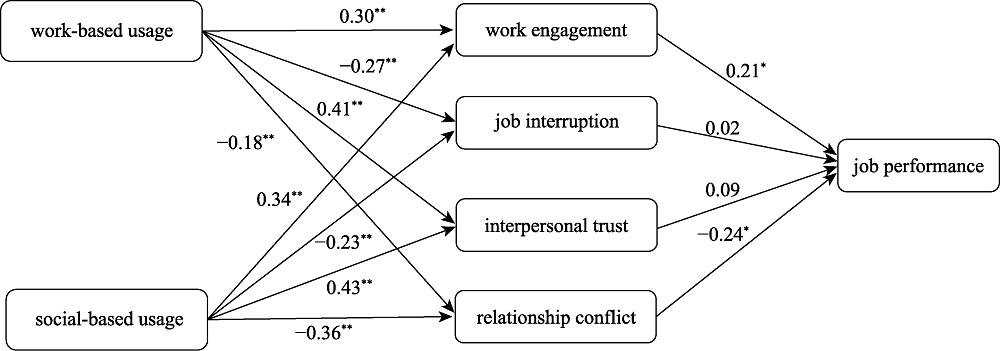
Figure 1. The impact of work-and social-media usage on job performance.
| Variable | Model 1 | Model 2 | |||
|---|---|---|---|---|---|
| Work Engagement | Job Interruption | Interpersonal Trust | Relationship Conflict | Job Performance | |
| Independent variable | |||||
| Work-based social media usage | 0.21** | -0.31** | 0.21** | -0.13* | -0.01 |
| Social-based social media usage | 0.19** | -0.16* | 0.18** | -0.23** | -0.01 |
| Work-based social media usage × social-based socail media usage | -0.11* | -0.10 | -0.03 | 0.06 | 0.05 |
| Intermediate variable | |||||
| Work Engagement | 0.15** | ||||
| Job interruption | -0.01 | ||||
| Interpersonal trust | 0.12 | ||||
| Relationship conflict | -0.11** | ||||
Table 4 Interactive effects analysis
| Variable | Model 1 | Model 2 | |||
|---|---|---|---|---|---|
| Work Engagement | Job Interruption | Interpersonal Trust | Relationship Conflict | Job Performance | |
| Independent variable | |||||
| Work-based social media usage | 0.21** | -0.31** | 0.21** | -0.13* | -0.01 |
| Social-based social media usage | 0.19** | -0.16* | 0.18** | -0.23** | -0.01 |
| Work-based social media usage × social-based socail media usage | -0.11* | -0.10 | -0.03 | 0.06 | 0.05 |
| Intermediate variable | |||||
| Work Engagement | 0.15** | ||||
| Job interruption | -0.01 | ||||
| Interpersonal trust | 0.12 | ||||
| Relationship conflict | -0.11** | ||||
| Mediating model | Mediating effect (95% CI) |
|---|---|
| Work-based social media usage × social-based social media usage → work engagement → job performance | -0.016 [-0.045, -0.001] |
| Work-based social media usage × social-based social media usage → job interruption → job performance | 0.001 [-0.004, 0.010] |
| Work-based social media usage × social-based social media usage → interpersonal trust → job performance | -0.003 [-0.020, 0.003] |
| Work-based social media usage × social-based social media usage → relationship conflict → job performance | -0.007 [-0.023, 0.003] |
Table 5 Intermediate effect value
| Mediating model | Mediating effect (95% CI) |
|---|---|
| Work-based social media usage × social-based social media usage → work engagement → job performance | -0.016 [-0.045, -0.001] |
| Work-based social media usage × social-based social media usage → job interruption → job performance | 0.001 [-0.004, 0.010] |
| Work-based social media usage × social-based social media usage → interpersonal trust → job performance | -0.003 [-0.020, 0.003] |
| Work-based social media usage × social-based social media usage → relationship conflict → job performance | -0.007 [-0.023, 0.003] |
| [1] |
Bakker, A. B., & Demerouti, E. (2017). Job demands resources theory: Taking stock and looking forward. Journal of Occupational Health Psychology, 22(3), 273-285.
doi: 10.1037/ocp0000056 URL |
| [2] |
Bakker, A. B., Hakanen, J. J., Demerouti, E., & Xanthopoulou, D. (2007). Job resources boost work engagement, particularly when job demands are high. Journal of Educational Psychology, 99(2), 274-284.
doi: 10.1037/0022-0663.99.2.274 URL |
| [3] |
Benitez, J., Castillo, A., Llorens, J., & Braojos, J. (2018). IT-enabled knowledge ambidexterity and innovation performance in small U.S. firms: The moderator role of social media capability. Information & Management, 55(1), 131-143.
doi: 10.1016/j.im.2017.09.004 URL |
| [4] |
Bizzi, L. (2017). Should HR managers allow employees to use social media at work? Behavioral and motivational outcomes of employee blogging. International Journal of Human Resource Management, 31(10), 1-28.
doi: 10.1080/09585192.2020.1691353 URL |
| [5] |
Brooks, S. (2015). Does personal social media usage affect efficiency and well-being? Computers in Human Behavior, 46, 26-37.
doi: 10.1016/j.chb.2014.12.053 URL |
| [6] |
Bruk-Lee, V., & Spector, P. E. (2006). The social stressors-counter productive work behaviors link: Are conflicts with supervisors and coworkers the same? Journal of Occupational Health Psychology, 11(2), 145-156.
doi: 10.1037/1076-8998.11.2.145 URL |
| [7] |
Bucher, E., Fieseler, C., & Suphan, A. (2013). The stress potential of social media in the workplace. Information Communication and Society, 16(10), 1639-1667.
doi: 10.1080/1369118X.2012.710245 URL |
| [8] |
Cao, X. F., & Ali, A. (2018). Enhancing team creative performance through social media and transactive memory system. International Journal of Information Management, 39, 69-79.
doi: 10.1016/j.ijinfomgt.2017.11.009 URL |
| [9] |
Chen, X., & Wei, S. (2020). The impact of social media use for communication and social exchange relationship on employee performance. Journal of Knowledge Management, 24(6), 1289-1314.
doi: 10.1108/JKM-04-2019-0167 URL |
| [10] | Cheng, Y.-S., & Cho, S. (2021). Are social media bad for your employees? Effects of at work break activit |
