

ISSN 0439-755X
CN 11-1911/B
CN 11-1911/B
Acta Psychologica Sinica ›› 2025, Vol. 57 ›› Issue (12): 2131-2148.doi: 10.3724/SP.J.1041.2025.2131
• Reports of Empirical Studies • Previous Articles Next Articles
FAN Yunge, MA Zijuan, LIN Weishi, ZHANG Rui, WANG Dongfang( ), FAN Fang()
Published:2025-12-25
Online:2025-09-28
Contact:
WANG Dongfang,FAN Fang
E-mail:wangdf@m.scnu.edu.cn;fangfan@scnu.edu.cn
FAN Yunge, MA Zijuan, LIN Weishi, ZHANG Rui, WANG Dongfang, FAN Fang. (2025). The concept and dimensional characteristics of spiritual support for older adults in contemporary China. Acta Psychologica Sinica, 57(12), 2131-2148.
| Groups | Home-based care setting | Institutional care setting | ||
|---|---|---|---|---|
| n | % | n | % | |
| Sex | ||||
| Male | 16 | 50.0% | 3 | 15.0% |
| Female | 16 | 50.0% | 17 | 85.0% |
| Age (years) | ||||
| 60~69 | 24 | 75.0% | 1 | 5.0% |
| 70~79 | 5 | 15.6% | 4 | 20.0% |
| ≥ 80 | 3 | 9.4% | 15 | 75.0% |
Table 1 Demographic Characteristics of Older Adults
| Groups | Home-based care setting | Institutional care setting | ||
|---|---|---|---|---|
| n | % | n | % | |
| Sex | ||||
| Male | 16 | 50.0% | 3 | 15.0% |
| Female | 16 | 50.0% | 17 | 85.0% |
| Age (years) | ||||
| 60~69 | 24 | 75.0% | 1 | 5.0% |
| 70~79 | 5 | 15.6% | 4 | 20.0% |
| ≥ 80 | 3 | 9.4% | 15 | 75.0% |
| Interviewees | Interview questions |
|---|---|
| Older adults | What are your main spiritual needs? |
| In your opinion, what aspects should contemporary spiritual support for older adults include? | |
| Considering your current situation, in which aspects would you like to receive more spiritual comfort? | |
| Children of older adults | In your opinion, what aspects should contemporary spiritual support for older adults include? |
| As children, in what ways do you think caring for and attending to your parents can provide them with greater psychological comfort? | |
| What other sources do you consider important for your parents to receive spiritual support? | |
| Caregivers | In your opinion, what aspects should contemporary spiritual support for older adults include? |
| From which aspects should elderly care institutions provide attention and support to ensure older adults receive greater psychological comfort? | |
| What other sources do you consider important for older adults to receive spiritual support? |
Table 2 Interview Outline on the Connotation and Dimensional Characteristics of Spiritual Support
| Interviewees | Interview questions |
|---|---|
| Older adults | What are your main spiritual needs? |
| In your opinion, what aspects should contemporary spiritual support for older adults include? | |
| Considering your current situation, in which aspects would you like to receive more spiritual comfort? | |
| Children of older adults | In your opinion, what aspects should contemporary spiritual support for older adults include? |
| As children, in what ways do you think caring for and attending to your parents can provide them with greater psychological comfort? | |
| What other sources do you consider important for your parents to receive spiritual support? | |
| Caregivers | In your opinion, what aspects should contemporary spiritual support for older adults include? |
| From which aspects should elderly care institutions provide attention and support to ensure older adults receive greater psychological comfort? | |
| What other sources do you consider important for older adults to receive spiritual support? |
| No. | Open Coding | Reference Points (No.) | Main Coding (Category) | Selective Coding (Third-Level Coding) |
|---|---|---|---|---|
| 1 | Daily Health Care | 15 | Medical Care | Health Security (Sense of Security) |
| 2 | Daily Physical Condition | 5 | ||
| 3 | Nearby Medical Services | 4 | ||
| 4 | Convenient Medication | 3 | ||
| 5 | Volunteer Services at Medical Facilities | 1 | ||
| 6 | Medical Quality | 1 | ||
| 7 | Medical Security | 8 | Policy Welfare | |
| 8 | Living Security | 3 | ||
| 9 | Long-term Care Insurance | 3 | ||
| 10 | Community Care | 1 | ||
| 11 | Medical Measures | 1 | ||
| 12 | Integration of Medical and Elderly Care | 7 | Integration of Medical and Elderly Care | |
| 13 | Autonomy of Living Space | 12 | Spatial Freedom | Independence and Freedom (Sense of Autonomy) |
| 14 | Free Travel | 8 | Freedom to Travel | |
| 15 | Leave for Travel | 1 | ||
| 16 | Autonomous Living | 12 | Freedom of Choice | |
| 17 | Dietary Freedom | 9 | ||
| 18 | Freedom of Life Choices | 4 | ||
| 19 | Freedom of Time | 1 | ||
| 20 | Freedom of Speech | 1 | ||
| 21 | Diverse Activities | 21 | Surrounding Activities | Educational Activities (Sense of Competence) |
| 22 | Group Activities | 9 | ||
| 23 | Free or Low-cost Activities | 5 | ||
| 24 | Professional Teaching | 3 | ||
| 25 | Care Activities | 2 | ||
| 26 | Course Opening | 2 | ||
| 27 | Street Activities | 1 | ||
| 28 | Personal Activities | 1 | ||
| 29 | Activity Funding Support | 1 | ||
| 30 | Travel Outdoors | 12 | Outdoor Activities | |
| 31 | Need for Activity Venues | 17 | Activity Venues | |
| 32 | Senior Activity Centers | 4 | ||
| 33 | Senior Universities | 1 | ||
| 34 | Prayer Halls | 1 | ||
| 35 | Respect | 26 | Existential Value | Meaning of Life (Sense of Value) |
| 36 | Meaning of Life | 8 | ||
| 37 | Role as a Parent | 7 | ||
| 38 | Importance Given | 4 | ||
| 39 | Feeling Needed | 1 | ||
| 40 | Life Attachment | 1 | ||
| 41 | Value of Labor | 7 | Self-worth | |
| 42 | Value of Volunteering | 6 | ||
| 43 | Value of Appearance | 3 | ||
| 44 | Value of Performance | 2 | ||
| 45 | Value of Contribution | 1 | ||
| 46 | Value of Learning | 1 | ||
| 47 | Value of Teaching | 1 | ||
| 48 | Children's Accompaniment | 19 | Intimate Relationships | Social Interaction (Sense of Belonging) |
| 49 | Daily Visits from Children | 13 | ||
| 50 | Family Accompaniment | 6 | ||
| 51 | Contact with Children | 6 | Intimate Relationships | Social Interaction (Sense of Belonging) |
| 52 | Visits from Children When Sick | 4 | ||
| 53 | Visits from Children on Special Holidays | 2 | ||
| 54 | Care from Children | 1 | ||
| 55 | Encouragement from Children | 1 | ||
| 56 | Spouse Accompaniment | 1 | ||
| 57 | Neighbor Interaction | 11 | Friendship | |
| 58 | Staff Interaction | 7 | ||
| 59 | Interaction with Familiar Friends | 5 | ||
| 60 | Interaction with Peers | 2 | ||
| 61 | Lively Group | 3 | Group Interaction | |
| 62 | Community Care | 1 | ||
| 63 | Interaction with Strangers | 16 | Casual Acquaintances | |
| 64 | Making New Friends | 7 | ||
| 65 | Language Needs | 1 | ||
| 66 | Inner Confession | 5 | Inner Confession | |
| 67 | Professional Confession | 3 | ||
| Total | 362 | |||
Table 3 Distribution of Coding Nodes for the Spiritual Support of Older Adults
| No. | Open Coding | Reference Points (No.) | Main Coding (Category) | Selective Coding (Third-Level Coding) |
|---|---|---|---|---|
| 1 | Daily Health Care | 15 | Medical Care | Health Security (Sense of Security) |
| 2 | Daily Physical Condition | 5 | ||
| 3 | Nearby Medical Services | 4 | ||
| 4 | Convenient Medication | 3 | ||
| 5 | Volunteer Services at Medical Facilities | 1 | ||
| 6 | Medical Quality | 1 | ||
| 7 | Medical Security | 8 | Policy Welfare | |
| 8 | Living Security | 3 | ||
| 9 | Long-term Care Insurance | 3 | ||
| 10 | Community Care | 1 | ||
| 11 | Medical Measures | 1 | ||
| 12 | Integration of Medical and Elderly Care | 7 | Integration of Medical and Elderly Care | |
| 13 | Autonomy of Living Space | 12 | Spatial Freedom | Independence and Freedom (Sense of Autonomy) |
| 14 | Free Travel | 8 | Freedom to Travel | |
| 15 | Leave for Travel | 1 | ||
| 16 | Autonomous Living | 12 | Freedom of Choice | |
| 17 | Dietary Freedom | 9 | ||
| 18 | Freedom of Life Choices | 4 | ||
| 19 | Freedom of Time | 1 | ||
| 20 | Freedom of Speech | 1 | ||
| 21 | Diverse Activities | 21 | Surrounding Activities | Educational Activities (Sense of Competence) |
| 22 | Group Activities | 9 | ||
| 23 | Free or Low-cost Activities | 5 | ||
| 24 | Professional Teaching | 3 | ||
| 25 | Care Activities | 2 | ||
| 26 | Course Opening | 2 | ||
| 27 | Street Activities | 1 | ||
| 28 | Personal Activities | 1 | ||
| 29 | Activity Funding Support | 1 | ||
| 30 | Travel Outdoors | 12 | Outdoor Activities | |
| 31 | Need for Activity Venues | 17 | Activity Venues | |
| 32 | Senior Activity Centers | 4 | ||
| 33 | Senior Universities | 1 | ||
| 34 | Prayer Halls | 1 | ||
| 35 | Respect | 26 | Existential Value | Meaning of Life (Sense of Value) |
| 36 | Meaning of Life | 8 | ||
| 37 | Role as a Parent | 7 | ||
| 38 | Importance Given | 4 | ||
| 39 | Feeling Needed | 1 | ||
| 40 | Life Attachment | 1 | ||
| 41 | Value of Labor | 7 | Self-worth | |
| 42 | Value of Volunteering | 6 | ||
| 43 | Value of Appearance | 3 | ||
| 44 | Value of Performance | 2 | ||
| 45 | Value of Contribution | 1 | ||
| 46 | Value of Learning | 1 | ||
| 47 | Value of Teaching | 1 | ||
| 48 | Children's Accompaniment | 19 | Intimate Relationships | Social Interaction (Sense of Belonging) |
| 49 | Daily Visits from Children | 13 | ||
| 50 | Family Accompaniment | 6 | ||
| 51 | Contact with Children | 6 | Intimate Relationships | Social Interaction (Sense of Belonging) |
| 52 | Visits from Children When Sick | 4 | ||
| 53 | Visits from Children on Special Holidays | 2 | ||
| 54 | Care from Children | 1 | ||
| 55 | Encouragement from Children | 1 | ||
| 56 | Spouse Accompaniment | 1 | ||
| 57 | Neighbor Interaction | 11 | Friendship | |
| 58 | Staff Interaction | 7 | ||
| 59 | Interaction with Familiar Friends | 5 | ||
| 60 | Interaction with Peers | 2 | ||
| 61 | Lively Group | 3 | Group Interaction | |
| 62 | Community Care | 1 | ||
| 63 | Interaction with Strangers | 16 | Casual Acquaintances | |
| 64 | Making New Friends | 7 | ||
| 65 | Language Needs | 1 | ||
| 66 | Inner Confession | 5 | Inner Confession | |
| 67 | Professional Confession | 3 | ||
| Total | 362 | |||
| Core category | Example from home-based care setting | Example from institutional care setting |
|---|---|---|
| Health security (Sense of safety) | “Right now, what farmers care about most is their health. Farmers simply cannot afford to get sick. Improving social security benefits is crucial. The current social security payments of a few hundred yuan are not enough for the elderly to live on.” | “I feel that community hospitals are becoming fewer and fewer, when in fact there should be more… Especially here, there are still many nursing homes; in our area, there are at least four. Apart from private hospitals, the nearest regular hospitals are quite far away.” |
| Social interaction (Sense of belonging) | “Especially for those of us who come from other provinces, with language barriers, unfamiliar food, and a different climate, without relatives, classmates, or colleagues. Over time, we just want to meet people in the community and spend time with them.” | “When I saw the hand dance, I was interested; it was great, and I brought my friend along… People aren’t young forever. As we age, we need more friends, and someday we will need help from others.” |
| Educational activities (Sense of competence) | “The elderly’s spiritual and cultural life has become richer. Conflicts between mothers-in-law and daughters-in-law at home can be reduced. Taking care of children requires some leisure activities, which can reduce family friction. I think this is positive energy in contemporary life.” | “One advantage of our nursing home is that many older adults take classes. But now, because fewer seniors are living here, the courses have decreased. Before, we had calligraphy classes, paper-cutting classes, piano classes, computer classes—so many. Every day was busy.” |
| Independence and freedom (Sense of autonomy) | “Children and the elderly do need some personal space because everyone’s eating habits and daily routines are different.” | “Older adults also need their own space and don’t want to trouble their children. If we are still able to move around independently, we all hope to have our own space. Here in the nursing home, we have private kitchens, private bathrooms, and private rooms.” |
| Meaning of life (Sense of value) | “In old age, one needs to feel needed. They may not particularly enjoy taking care of children, but if they help their children with childcare, the children will surely show appreciation, which brings emotional and psychological satisfaction to older adults.” | “We need outsiders to talk with us and visit us… because it makes us feel that we exist. Elderly people also have their own needs. Even though they are old, they want to learn more, and gaining more knowledge gives them a sense of self-worth.” |
Table 4 Examples of Interview Data on the Connotation of Spiritual Support
| Core category | Example from home-based care setting | Example from institutional care setting |
|---|---|---|
| Health security (Sense of safety) | “Right now, what farmers care about most is their health. Farmers simply cannot afford to get sick. Improving social security benefits is crucial. The current social security payments of a few hundred yuan are not enough for the elderly to live on.” | “I feel that community hospitals are becoming fewer and fewer, when in fact there should be more… Especially here, there are still many nursing homes; in our area, there are at least four. Apart from private hospitals, the nearest regular hospitals are quite far away.” |
| Social interaction (Sense of belonging) | “Especially for those of us who come from other provinces, with language barriers, unfamiliar food, and a different climate, without relatives, classmates, or colleagues. Over time, we just want to meet people in the community and spend time with them.” | “When I saw the hand dance, I was interested; it was great, and I brought my friend along… People aren’t young forever. As we age, we need more friends, and someday we will need help from others.” |
| Educational activities (Sense of competence) | “The elderly’s spiritual and cultural life has become richer. Conflicts between mothers-in-law and daughters-in-law at home can be reduced. Taking care of children requires some leisure activities, which can reduce family friction. I think this is positive energy in contemporary life.” | “One advantage of our nursing home is that many older adults take classes. But now, because fewer seniors are living here, the courses have decreased. Before, we had calligraphy classes, paper-cutting classes, piano classes, computer classes—so many. Every day was busy.” |
| Independence and freedom (Sense of autonomy) | “Children and the elderly do need some personal space because everyone’s eating habits and daily routines are different.” | “Older adults also need their own space and don’t want to trouble their children. If we are still able to move around independently, we all hope to have our own space. Here in the nursing home, we have private kitchens, private bathrooms, and private rooms.” |
| Meaning of life (Sense of value) | “In old age, one needs to feel needed. They may not particularly enjoy taking care of children, but if they help their children with childcare, the children will surely show appreciation, which brings emotional and psychological satisfaction to older adults.” | “We need outsiders to talk with us and visit us… because it makes us feel that we exist. Elderly people also have their own needs. Even though they are old, they want to learn more, and gaining more knowledge gives them a sense of self-worth.” |
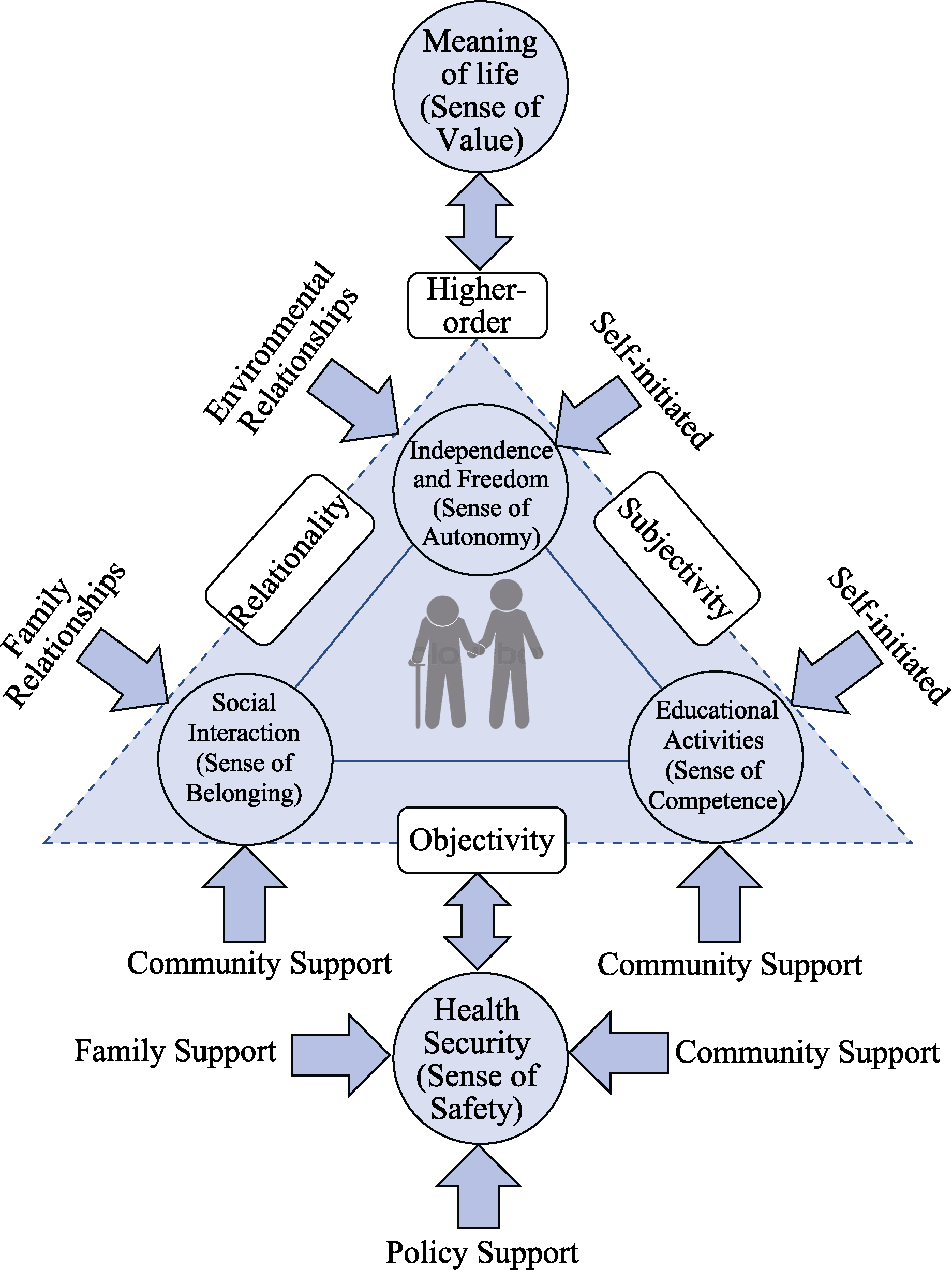
Figure 1. Theoretical Model of Spiritual Support for Older Adults.
| Assessment items | Health security | Social interaction | Educational activities | Independence and freedom | Meaning of life | Commonality |
|---|---|---|---|---|---|---|
| JS1. I feel powerless to cope with or handle sudden health problems. | 0.66 | 0.47 | ||||
| JS8. I worry about my current or future health conditions. | 0.77 | 0.64 | ||||
| JS16. I am worried about my future retirement security. | 0.70 | 0.58 | ||||
| JS24. I often worry that no one will be able to take care of me if I encounter health problems. | 0.73 | 0.59 | ||||
| JS12. When I encounter problems, I can get satisfactory help from my children. | 0.80 | 0.75 | ||||
| JS13. I can always receive help, support, and encouragement when needed. | 0.75 | 0.73 | ||||
| JS20. I often worry that my children do not truly care about me. | 0.59 | 0.53 | ||||
| JS27. I often feel lonely. | 0.60 | 0.48 | ||||
| JS30. I am satisfied with the overall current life situation of my children. | 0.72 | 0.63 | ||||
| JS31. There are people who regularly show concern, visit, or care for me. | 0.60 | 0.55 | ||||
| JS32. I often feel angry or disappointed with my children. | 0.70 | 0.57 | ||||
| JS3. I am satisfied with the cultural and recreational activities I currently participate in. | 0.79 | 0.72 | ||||
| JS10. I am satisfied with the cultural and recreational facilities and venues around me. | 0.77 | 0.71 | ||||
| JS18. I feel that I grow and change positively through participation in cultural and recreational activities. | 0.76 | 0.72 | ||||
| JS26. Participating in cultural and recreational activities makes my daily life feel fulfilling and enjoyable. | 0.80 | 0.72 | ||||
| JS2. I can freely choose my lifestyle. | 0.77 | 0.70 | ||||
| JS9. Most of what I can or cannot do is determined by myself. | 0.75 | 0.65 | ||||
| JS17. I can arrange my life independently without being influenced by others. | 0.76 | 0.72 | ||||
| JS21. I get along well with people around me. | 0.55 | 0.59 | ||||
| JS15. I can find suitable opportunities to realize my value. | 0.85 | 0.73 | ||||
| JS29. I am able to resolve conflicts quickly. | 0.62 | 0.56 | ||||
| JS33. I feel that I am a valuable person. | 0.77 | 0.69 | ||||
| Rotated eigenvalues | 1.41 | 7.61 | 2.32 | 1.54 | 1.15 | |
| Variance explained (%) | 10.84 | 17.65 | 14.35 | 11.63 | 9.34 | 63.82 |
Table 5 Factor Loadings of the Perceived Spiritual Support Questionnaire for Older Adults
| Assessment items | Health security | Social interaction | Educational activities | Independence and freedom | Meaning of life | Commonality |
|---|---|---|---|---|---|---|
| JS1. I feel powerless to cope with or handle sudden health problems. | 0.66 | 0.47 | ||||
| JS8. I worry about my current or future health conditions. | 0.77 | 0.64 | ||||
| JS16. I am worried about my future retirement security. | 0.70 | 0.58 | ||||
| JS24. I often worry that no one will be able to take care of me if I encounter health problems. | 0.73 | 0.59 | ||||
| JS12. When I encounter problems, I can get satisfactory help from my children. | 0.80 | 0.75 | ||||
| JS13. I can always receive help, support, and encouragement when needed. | 0.75 | 0.73 | ||||
| JS20. I often worry that my children do not truly care about me. | 0.59 | 0.53 | ||||
| JS27. I often feel lonely. | 0.60 | 0.48 | ||||
| JS30. I am satisfied with the overall current life situation of my children. | 0.72 | 0.63 | ||||
| JS31. There are people who regularly show concern, visit, or care for me. | 0.60 | 0.55 | ||||
| JS32. I often feel angry or disappointed with my children. | 0.70 | 0.57 | ||||
| JS3. I am satisfied with the cultural and recreational activities I currently participate in. | 0.79 | 0.72 | ||||
| JS10. I am satisfied with the cultural and recreational facilities and venues around me. | 0.77 | 0.71 | ||||
| JS18. I feel that I grow and change positively through participation in cultural and recreational activities. | 0.76 | 0.72 | ||||
| JS26. Participating in cultural and recreational activities makes my daily life feel fulfilling and enjoyable. | 0.80 | 0.72 | ||||
| JS2. I can freely choose my lifestyle. | 0.77 | 0.70 | ||||
| JS9. Most of what I can or cannot do is determined by myself. | 0.75 | 0.65 | ||||
| JS17. I can arrange my life independently without being influenced by others. | 0.76 | 0.72 | ||||
| JS21. I get along well with people around me. | 0.55 | 0.59 | ||||
| JS15. I can find suitable opportunities to realize my value. | 0.85 | 0.73 | ||||
| JS29. I am able to resolve conflicts quickly. | 0.62 | 0.56 | ||||
| JS33. I feel that I am a valuable person. | 0.77 | 0.69 | ||||
| Rotated eigenvalues | 1.41 | 7.61 | 2.32 | 1.54 | 1.15 | |
| Variance explained (%) | 10.84 | 17.65 | 14.35 | 11.63 | 9.34 | 63.82 |
| Models | χ2 | df | χ2/df | CFI | TLI | SRMR | RMSEA |
|---|---|---|---|---|---|---|---|
| 5-factor | 259.198 | 131 | 1.98 | 0.95 | 0.91 | 0.03 | 0.04 |
| 4-factor | 329.270 | 149 | 2.21 | 0.93 | 0.89 | 0.03 | 0.05 |
| 3-factor | 390.542 | 168 | 2.31 | 0.91 | 0.87 | 0.04 | 0.05 |
| 2-factor | 496.808 | 188 | 2.67 | 0.87 | 0.84 | 0.05 | 0.06 |
| 1-factor | 955.942 | 209 | 4.57 | 0.69 | 0.66 | 0.10 | 0.08 |
Table 6 Fit Indices for Competing Factor Models of the Perceived Spiritual Support Questionnaire
| Models | χ2 | df | χ2/df | CFI | TLI | SRMR | RMSEA |
|---|---|---|---|---|---|---|---|
| 5-factor | 259.198 | 131 | 1.98 | 0.95 | 0.91 | 0.03 | 0.04 |
| 4-factor | 329.270 | 149 | 2.21 | 0.93 | 0.89 | 0.03 | 0.05 |
| 3-factor | 390.542 | 168 | 2.31 | 0.91 | 0.87 | 0.04 | 0.05 |
| 2-factor | 496.808 | 188 | 2.67 | 0.87 | 0.84 | 0.05 | 0.06 |
| 1-factor | 955.942 | 209 | 4.57 | 0.69 | 0.66 | 0.10 | 0.08 |
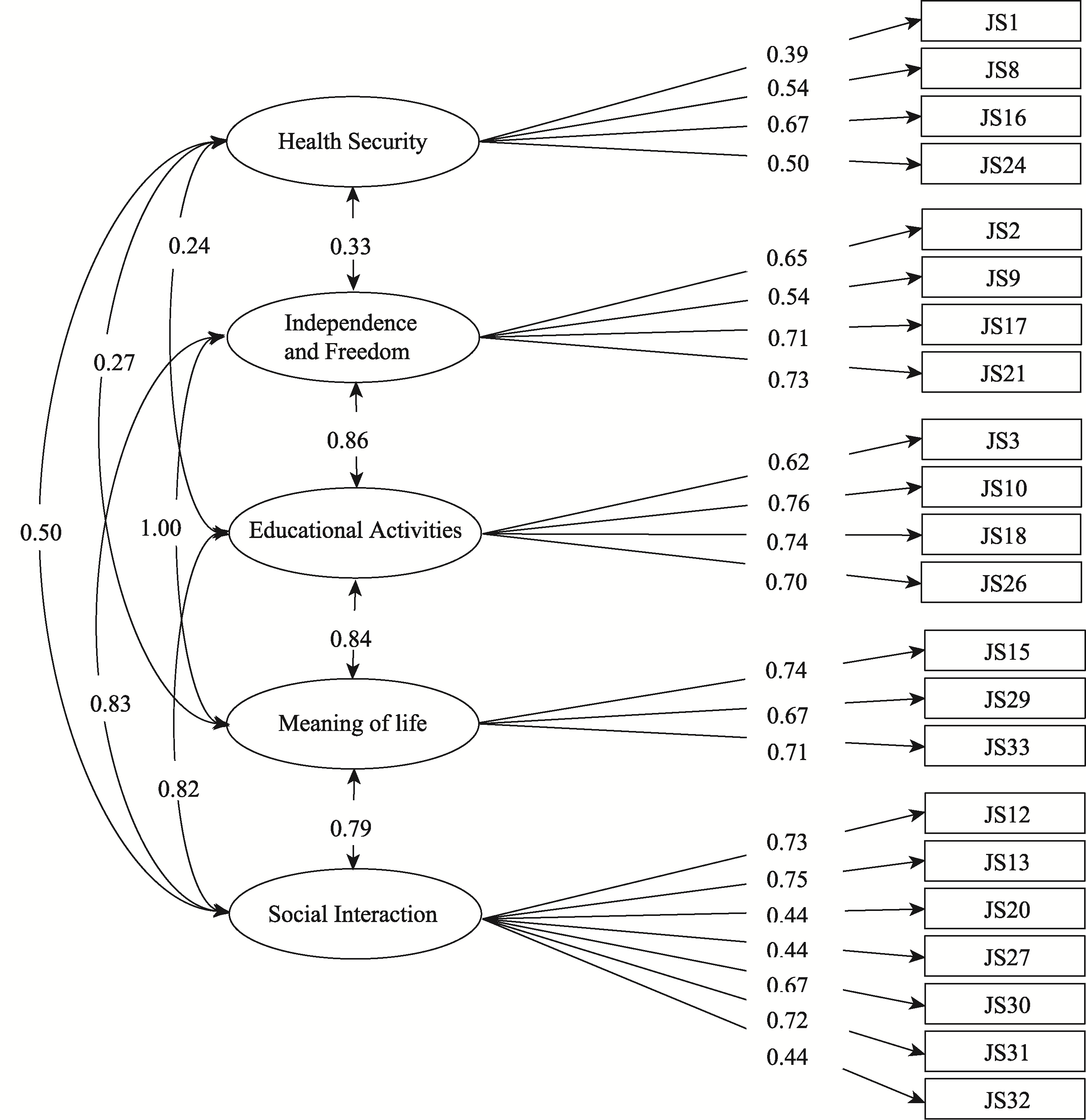
Figure 2. Standardized Path of the Five-Factor Model of the Perceived Spiritual Support Questionnaire for Older Adults Note: Correlations among items have been specified.
| Perceived Spiritual Support Questionnaire | Loneliness | Depression | Anxiety |
|---|---|---|---|
| Total score | ?0.54*** | ?0.33*** | ?0.35*** |
| Health security (Sense of safety) | ?0.43*** | ?0.30*** | ?0.31*** |
| Social interaction (Sense of belonging) | ?0.56*** | ?0.21** | ?0.35*** |
| Educational activities (Sense of competence) | ?0.27*** | ?0.15* | ?0.16* |
| Independence and freedom (Sense of autonomy) | ?0.36*** | ?0.19** | ?0.21** |
| Meaning of life (Sense of value) | ?0.30*** | ?0.21** | ?0.19** |
Table 7 Correlations between the Perceived Spiritual Support Questionnaire for Older Adults and Criterion Variables
| Perceived Spiritual Support Questionnaire | Loneliness | Depression | Anxiety |
|---|---|---|---|
| Total score | ?0.54*** | ?0.33*** | ?0.35*** |
| Health security (Sense of safety) | ?0.43*** | ?0.30*** | ?0.31*** |
| Social interaction (Sense of belonging) | ?0.56*** | ?0.21** | ?0.35*** |
| Educational activities (Sense of competence) | ?0.27*** | ?0.15* | ?0.16* |
| Independence and freedom (Sense of autonomy) | ?0.36*** | ?0.19** | ?0.21** |
| Meaning of life (Sense of value) | ?0.30*** | ?0.21** | ?0.19** |
| Variables | M | SD | 1 | 2 | 3 | 4 | 5 | 6 | 7 | 8 | 9 |
|---|---|---|---|---|---|---|---|---|---|---|---|
| 1 Perceived spiritual support | 3.33 | 0.45 | — | ||||||||
| 2 Health security | 3.15 | 0.75 | 0.63*** | — | |||||||
| 3 Social interaction | 3.51 | 0.55 | 0.85*** | 0.42*** | — | ||||||
| 4 Educational activities | 3.33 | 0.67 | 0.67*** | 0.20** | 0.46*** | — | |||||
| 5 Independence and freedom | 3.51 | 0.59 | 0.70*** | 0.27*** | 0.52*** | 0.45*** | — | ||||
| 6 Meaning of life | 2.92 | 0.82 | 0.55*** | 0.18** | 0.34*** | 0.23*** | 0.25*** | — | |||
| 7 Physical quality of life | 45.44 | 10.50 | 0.27*** | 0.29*** | 0.21** | 0.14* | 0.17* | 0.13 | — | ||
| 8 Mental quality of life | 57.73 | 10.01 | 0.22** | 0.15* | 0.21** | 0.12 | 0.16* | 0.10 | 0.05 | — | |
| 9 Frailty | 3.32 | 2.80 | ?0.30*** | ?0.30*** | ?0.23** | ?0.20** | ?0.17* | ?0.12 | ?0.63*** | ?0.45*** | — |
| 10 Decline in cognitive function | 2.30 | 1.85 | ?0.26*** | ?0.24*** | ?0.22** | ?0.13 | ?0.15* | ?0.13 | ?0.26*** | ?0.38*** | 0.43*** |
Table 8 Correlations between Perceived Spiritual Support, Quality of Life, Frailty, and Cognitive Function
| Variables | M | SD | 1 | 2 | 3 | 4 | 5 | 6 | 7 | 8 | 9 |
|---|---|---|---|---|---|---|---|---|---|---|---|
| 1 Perceived spiritual support | 3.33 | 0.45 | — | ||||||||
| 2 Health security | 3.15 | 0.75 | 0.63*** | — | |||||||
| 3 Social interaction | 3.51 | 0.55 | 0.85*** | 0.42*** | — | ||||||
| 4 Educational activities | 3.33 | 0.67 | 0.67*** | 0.20** | 0.46*** | — | |||||
| 5 Independence and freedom | 3.51 | 0.59 | 0.70*** | 0.27*** | 0.52*** | 0.45*** | — | ||||
| 6 Meaning of life | 2.92 | 0.82 | 0.55*** | 0.18** | 0.34*** | 0.23*** | 0.25*** | — | |||
| 7 Physical quality of life | 45.44 | 10.50 | 0.27*** | 0.29*** | 0.21** | 0.14* | 0.17* | 0.13 | — | ||
| 8 Mental quality of life | 57.73 | 10.01 | 0.22** | 0.15* | 0.21** | 0.12 | 0.16* | 0.10 | 0.05 | — | |
| 9 Frailty | 3.32 | 2.80 | ?0.30*** | ?0.30*** | ?0.23** | ?0.20** | ?0.17* | ?0.12 | ?0.63*** | ?0.45*** | — |
| 10 Decline in cognitive function | 2.30 | 1.85 | ?0.26*** | ?0.24*** | ?0.22** | ?0.13 | ?0.15* | ?0.13 | ?0.26*** | ?0.38*** | 0.43*** |
| Predictive variable | Physical quality of life (T2) | Mental quality of life (T2) | Frailty (T2) | Cognitive decline (T2) | ||||
|---|---|---|---|---|---|---|---|---|
| Model 1a β | Model 2b β | Model 1a β | Model 2b β | Model 1a β | Model 2b β | Model 1a β | Model 2b β | |
| Perceived spiritual support (T1) | 0.27*** | 0.21** | 0.22** | 0.24** | ?0.30*** | ?0.26*** | ?0.26*** | ?0.24*** |
| R2 | 0.08 | 0.18 | 0.05 | 0.10 | 0.09 | 0.13 | 0.07 | 0.13 |
Table 9 Predictive Effects of Perceived Spiritual Support on Physical and Mental quality of life, Frailty, and Cognitive Function
| Predictive variable | Physical quality of life (T2) | Mental quality of life (T2) | Frailty (T2) | Cognitive decline (T2) | ||||
|---|---|---|---|---|---|---|---|---|
| Model 1a β | Model 2b β | Model 1a β | Model 2b β | Model 1a β | Model 2b β | Model 1a β | Model 2b β | |
| Perceived spiritual support (T1) | 0.27*** | 0.21** | 0.22** | 0.24** | ?0.30*** | ?0.26*** | ?0.26*** | ?0.24*** |
| R2 | 0.08 | 0.18 | 0.05 | 0.10 | 0.09 | 0.13 | 0.07 | 0.13 |
| [1] | Antonucci T. C., Ajrouch K. J., & Birditt K. S. (2014). The convoy model: Explaining social relations from a multidisciplinary perspective. Gerontologist, 54(1), 82-92. |
| [2] | Berlin M., & Perone A. K. (2024). Interactions, relationships and belonging: Comparing social connectedness and perceived isolation among older women living alone in private homes and in assisted living. Ageing and Society, 44(6), 1329-1353. |
| [3] | Bollen K. A. (1989). Structural equations with latent variables. John Wiley & Sons. |
| [4] | Bronfenbrenner U. (1977). Toward an experimental ecology of human development. American Psychologist, 32(7), 513-531. |
| [5] | Carstensen L. L., Fung H. H., & Charles S. T. (2003). Socioemotional selectivity theory and the regulation of emotion in the second half of life. Motivation and Emotion, 27(2), 103-123. |
| [6] | Chen F. (2016). The social support network for spiritual support of elderly people in rural northern Jiangsu. Chinese Journal of Gerontology, 36(14), 3585-3587. |
| [7] | Chen X., Giles J., Yao Y., Yip W., Meng Q., Berkman L., … Zhao Y. (2022). The path to healthy ageing in China: A Peking University-Lancet commission. The Lancet, 400(10367), 1967-2006. |
| [8] | Chen X. M. (1999). Grounded theory: Its train of thought and methods. Educational Research and Experiment, (4), 58-63+73. |
| [9] | Chen X. M. (2000). Qualitative research method and social sciences research. Beijing: Education Science Press. |
| [10] | Corbin J., & Strauss A. (2008). Basics of qualitative research: Techniques and procedures for developing grounded theory (3rd ed.). SAGE Publications, Inc., |
| [11] | Cui L., Wang Y., Chen W., Wen W., & Han M. S. (2021). Predicting determinants of consumers' purchase motivation for electric vehicles: An application of Maslow's hierarchy of needs model. Energy Policy, 151, 112167. |
| [12] |
Dang M., Chen Y., Ji J. S., Zhang Y., Chen C., & Zhang Z. (2024). The association between household and family composition and mental health of the elderly: Mediating role of lifestyle. BMC Public Health, 24(1), 2055.
doi: 10.1186/s12889-024-19516-4 pmid: 39080574 |
| [13] | Deci E. L., & Ryan R. M. (2000). The "what" and "why" of goal pursuits: Human needs and the self-determination of behavior. Psychological Inquiry, 11(4), 227-268. |
| [14] |
Faul F., Erdfelder E., Buchner A., & Lang A.-G. (2009). Statistical power analyses using G*Power 3.1: Tests for correlation and regression analyses. Behavior Research Methods, 41, 1149-1160.
doi: 10.3758/BRM.41.4.1149 pmid: 19897823 |
| [15] | Gobbens R. J., Luijkx K. G., Wijnen-Sponselee M. T., & Schols J. M. (2010). Towards an integral conceptual model of frailty. The Journal of Nutrition, Health and Aging, 14(3), 175-181. |
| [16] | Hau K., Cheng Z. J., & Herbert W. M. (1999). Confirmatory factor analyses: Number of items in questionnaires and small sample application strategies. Acta Psychologica Sinica, 31(1), 76-83. |
| [17] |
Hays R. D., & DiMatteo M. R. (1987). A short-form measure of loneliness. Journal of Personality Assessment, 51(1), 69-81.
doi: 10.1207/s15327752jpa5101_6 pmid: 3572711 |
| [18] | Hicks, A. M., & Korbel C. (2013). Attachment theory. In M. D. Gellman, & J. R. Turner (Eds.), Encyclopedia of Behavioral Medicine (pp. 149-155). Springer New York. |
| [19] | Holt-Lunstad J. (2024). Social connection as a critical factor for mental and physical health: Evidence, trends, challenges, and future implications. World Psychiatry, 23(3), 312-332. |
| [20] | Hughes C. P., Berg L., Danziger W., Coben L. A., & Martin R. L. (1982). A new clinical scale for the staging of dementia. British Journal of Psychiatry, 140(6), 566-572. |
| [21] | Inoue Y., Wann D. L., Lock D., Sato M., Moore C., & Funk D. C. (2020). Enhancing older adults' sense of belonging and subjective well-being through sport game attendance, team identification, and emotional support. Journal of Aging and Health, 32(7-8), 530-542. |
| [22] |
Jadidi A., Khodaveisi M., Sadeghian E., & Fallahi-Khoshknab M. (2021). Exploring the process of spiritual health of the elderly living in nursing homes: A grounded theory study. Ethiopian Journal of Health Sciences, 31(3), 589-598.
doi: 10.4314/ejhs.v31i3.16 pmid: 34483616 |
| [23] | Jadidi A., Sadeghian E., Khodaveisi M., & Fallahi-Khoshknab M. (2022). Spiritual needs of the Muslim elderly living in nursing homes: A qualitative study. Journal of Religion and Health, 61(2), 1514-1528. |
| [24] |
Kroenke K., Spitzer R. L., & Williams J. B. (2001). The PHQ-9: Validity of a brief depression severity measure. Journal of General Internal Medicine, 16(9), 606-613.
doi: 10.1046/j.1525-1497.2001.016009606.x pmid: 11556941 |
| [25] | Lakey, B. (2014). Perceived social support and happiness:The role of personality and relational processes. In S. David, Boniwell, I., & Conley Ayers, A. (Eds.), Oxford handbook of happiness. Oxford University Press. |
| [26] | Li L. R., & Wang J. (2022). The issue of elderly spiritual support from the perspective of China's traditional filial piety culture. Chinese Journal of Gerontology, 42(5), 1262-1265. |
| [27] |
Litwin H., & Shiovitz-Ezra S. (2011). Social network type and subjective well-being in a national sample of older Americans. Gerontologist, 51(3), 379-388.
doi: 10.1093/geront/gnq094 pmid: 21097553 |
| [28] | Liu S. (2010). The old age support of rural elderly parents having complied with family planning. Population and Society, 26(4), 11-15. |
| [29] |
Lu J., Zhang C., Xue Y., Mao D., Zheng X., Wu S., & Wang X. (2019). Moderating effect of social support on depression and health promoting lifestyle for Chinese empty nesters: A cross-sectional study. Journal of Affective Disorders, 256, 495-508.
doi: S0165-0327(18)32778-2 pmid: 31271867 |
| [30] | McNamara T. K., & Gonzales E. (2011). Volunteer transitions among older adults: The role of human, social, and cultural capital in later life. The Journals of Gerontology. Series B, Psychological Sciences and Social Sciences, 66(4), 490-501. |
| [31] | Meng H., & Wang Y. J. (2022). Spiritual care:A study of the aged care in ethnic minority areas of China in the perspective of embodiment. Journal of Yunnan Nationalities University (Social Sciences Edition), 39(2), 76-84. |
| [32] | Ming Y. (2000). A “ripples” pattern of the mental demands of the elderly. South China Population, (2), 56-60+65. |
| [33] | Mu G. Z. (2004). An analysis of the mental support for the elderly. Journal of Renmin University of China, (4), 124-129. |
| [34] | Nagao-Sato S., Akamatsu R., Karasawa M., Tamaura Y., Fujiwara K., Nishimura K., & Sakai M. (2023). Associations between patterns of participation in community activities and social support, self-efficacy, self-rated health among community-dwelling older adults. Journal of Psychiatric Research, 157, 82-87. |
| [35] | Nakanishi M., Yamasaki S., Nakashima T., Miyamoto Y., Cooper C., Richards M., … Nishida A. (2024). Association between dementia, change in home-care use, and depressive symptoms during the covid-19 pandemic: A longitudinal study using data from three cohort studies. Journal of Alzheimer’s Disease, 99(1), 403-415. |
| [36] |
Nikitin J., Luchetti M., Alimanovic N., Rupprecht F. S., & Sutin A. R. (2024). Are social interactions perceived as more meaningful in older adulthood? Psychology and Aging, 39(6), 599-607.
doi: 10.1037/pag0000827 pmid: 38780545 |
| [37] | Nowell L. S., Norris J. M., White D. E., & Moules N. J. (2017). Thematic analysis: Striving to meet the trustworthiness criteria. International Journal of Qualitative Methods, 16(1), 16094069 17733847. |
| [38] | Paquet C., Whitehead J., Shah R., Adams A. M., Dooley D., Spreng R. N., … Dubé L. (2023). Social prescription interventions addressing social isolation and loneliness in older adults: Meta-review integrating on-the-ground resources. Journal of Medical Internet Research, 25, e40213. |
| [39] | Rowe J. W., & Kahn R. L. (1998). Successful aging. New York: Pantheon/Random House. |
| [40] | Shi J., Hua W., Tang D., Xu K., & Xu Q. (2021). A study on supply-demand satisfaction of community-based senior care combined with the psychological perception of the elderly. Healthcare, 9(6), 643. |
| [41] | Spitzer R. L., Kroenke K., Williams J. B., & Löwe B. (2006). A brief measure for assessing generalized anxiety disorder: The GAD-7. Archives of Internal Medicine, 166(10), 1092-1097. |
| [42] | Sun W. W., & Shi D. N. (2020). The effect mechanism of social support and mental health of rural elderly. Sociological Review of China, 8(4), 77-87. |
| [43] | Teixeira P. J., Carraça E. V., Markland D., Silva M. N., & Ryan R. M. (2012). Exercise, physical activity, and self-determination theory: A systematic review. The International Journal of Behavioral Nutrition and Physical Activity, 9, 78. |
| [44] | Tsujimoto M., Saito T., Matsuzaki Y., & Kawashima R. (2024). Role of positive and negative emotion regulation in well-being and health: The interplay between positive and negative emotion regulation abilities is linked to mental and physical health. Journal of Happiness Studies, 25, 25. |
| [45] |
Ware Jr J., Kosinski M., & Keller S. D. (1996). A 12-item short-form health survey: Construction of scales and preliminary tests of reliability and validity. Medical Care, 34(3), 220-233.
doi: 10.1097/00005650-199603000-00003 pmid: 8628042 |
| [46] | Wu M. L. (2010). Questionnaire statistical analysis practice—SPSS operation and application. Chongqing: Chongqing University Press. |
| [47] | Yang H., Shao J. J., Zhang Q. H., Jiang Y., Li J. M., & Bai X. J. (2019). Mediating role of security and perceived control on the relationship between fear of aging and older adults' vulnerability to fraud. Chinese Journal of Clinical Psychology, 27(5), 1036-1040. |
| [48] | Yang J. H. (2021). Social adaptation of elderly migrants from the perspective of spatial theory. Sociological Studies, 36(3), 180-203. |
| [49] | You W. B. (2015). The realistic dilemmas of spiritual support for the elderly in China and the construction of a support system. Chinese Journal of Gerontology, 35(12), 3479-3482. |
| [50] | Zhang T., Liu Y., Wang Y., Li C., Yang X., Tian L., … Li H. (2022). Quality indicators for the care of older adults with disabilities in long-term care facilities based on Maslow’s hierarchy of needs. International Journal of Nursing Sciences, 9(4), 453-459. |
| [51] | Zhao D. H., & Yang P. P. (2020). The protection dilemma and realization path of spiritual support right under the background of aging. Study and Practice, (11), 103-112. |
| [52] | Zhou S. B. (2005). Constructing concordant society and senile spiritual security. Northwest Population Journal, (6), 8-11 |
| [1] | MENG Haijiang, CHEN Lei, WANG Gang, ZHANG Jian. Differences in motor cortex synaptic plasticity associated with two forms of exercise in older adults: Evidence from TMS studies [J]. Acta Psychologica Sinica, 2023, 55(10): 1653-1661. |
| [2] | ZHANG Baoshan, JIN Dou, MA Mengjia, XU Ran. The effect of aging stereotypes on the quality of medical decision-making and the mediating role of attribution bias [J]. Acta Psychologica Sinica, 2022, 54(8): 951-963. |
| [3] | WANG Tangsheng, YANG Chunliang, ZHONG Nian. Forward testing effect on new learning in older adults [J]. Acta Psychologica Sinica, 2020, 52(11): 1266-1277. |
| [4] | WANG Dahua; YANG Xiaoyang; WANG Yan; Richard B. Miller. The Assessment of Marital Attachment and Its Relationship with General Attachment among Older Adults [J]. Acta Psychologica Sinica, 2015, 47(9): 1133-1142. |
| [5] | ZHOU AiBao;LIU PeiRu;ZHANG YanChi;YIN YuLong. Friend-reference Effect in Older Adults [J]. Acta Psychologica Sinica, 2015, 47(9): 1143-1151. |
| [6] | XIAO Hongrui;GONG Xianmin;WANG Dahua. Effect of Emotional Valence and Time Interval on the False Memory of Pictures among Older Adults [J]. Acta Psychologica Sinica, 2014, 46(7): 922-930. |
| [7] | LIU Yingjie;WEI Ping;DING Jinhong;GUO Chunyan. Age Differences in the Repetition Effect for Studied or New Objects [J]. Acta Psychologica Sinica, 2014, 46(3): 321-330. |
| Viewed | ||||||
|
Full text |
|
|||||
|
Abstract |
|
|||||
