

ISSN 0439-755X
CN 11-1911/B
CN 11-1911/B
Acta Psychologica Sinica ›› 2025, Vol. 57 ›› Issue (11): 2043-2059.doi: 10.3724/SP.J.1041.2025.2043
• Reports of Empirical Studies • Previous Articles Next Articles
WU Yueting1, WANG Bo2,3( ), BAO Han Wu Shuang4, LI Ruonan1, WU Yi1, WANG Jiaqi1(), CHENG Cheng3, YANG Li3,5()
Published:2025-11-25
Online:2025-09-25
Contact:
WANG Bo, E-mail: bo_wang@tju.edu.cn; YANG Li, E-mail: yangli@tju.edu.cn
WU Yueting, WANG Bo, BAO Han Wu Shuang, LI Ruonan, WU Yi, WANG Jiaqi, CHENG Cheng, YANG Li. (2025). Humans perceive warmth and competence in large language models. Acta Psychologica Sinica, 57(11), 2043-2059.
| Dimension | b | SE | z | p | 95% CI |
|---|---|---|---|---|---|
| competence | ?0.98 | 0.06 | ?15.11 | <0.001 | [?1.11, ?0.85] |
| warmth | ?2.04 | 0.09 | ?22.53 | <0.001 | [?2.22, ?1.86] |
| Ability | ?1.14 | 0.07 | ?16.87 | <0.001 | [?1.27, ?1.01] |
| Assertiveness | ?3.14 | 0.15 | ?21.69 | <0.001 | [?3.42, ?2.85] |
| Morality | ?2.22 | 0.1 | ?22.84 | <0.001 | [?2.41, ?2.03] |
| Sociability | ?3.63 | 0.18 | ?19.94 | <0.001 | [?3.99, ?3.27] |
| Status | ?2.83 | 0.13 | ?22.47 | <0.001 | [?3.07, ?2.58] |
| Appearance | ?3.60 | 0.18 | ?20.06 | <0.001 | [?3.95, ?3.25] |
| Health | ?3.66 | 0.19 | ?19.82 | <0.001 | [?4.02, ?3.30] |
| Occupation | ?3.50 | 0.17 | ?20.42 | <0.001 | [?3.84, ?3.17] |
| Beliefs | ?4.03 | 0.22 | ?18.29 | <0.001 | [?4.46, ?3.59] |
| Deviance | ?4.18 | 0.24 | ?17.61 | <0.001 | [?4.65, ?3.72] |
| Emotion | ?3.98 | 0.22 | ?18.48 | <0.001 | [?4.40, ?3.56] |
| Other | ?3.98 | 0.22 | ?18.49 | <0.001 | [?4.40, ?3.56] |
| Beauty | ?5.13 | 0.38 | ?13.57 | <0.001 | [?5.87, ?4.39] |
| Geography | ?6.39 | 0.71 | ?9.06 | <0.001 | [?7.77, ?5.01] |
| Social groups | ?6.40 | 0.71 | ?9.03 | <0.001 | [?7.78, ?5.01] |
Table 1 Summary of Fixed Effects for the Two-Dimensional Model and Sub-Dimensional Models
| Dimension | b | SE | z | p | 95% CI |
|---|---|---|---|---|---|
| competence | ?0.98 | 0.06 | ?15.11 | <0.001 | [?1.11, ?0.85] |
| warmth | ?2.04 | 0.09 | ?22.53 | <0.001 | [?2.22, ?1.86] |
| Ability | ?1.14 | 0.07 | ?16.87 | <0.001 | [?1.27, ?1.01] |
| Assertiveness | ?3.14 | 0.15 | ?21.69 | <0.001 | [?3.42, ?2.85] |
| Morality | ?2.22 | 0.1 | ?22.84 | <0.001 | [?2.41, ?2.03] |
| Sociability | ?3.63 | 0.18 | ?19.94 | <0.001 | [?3.99, ?3.27] |
| Status | ?2.83 | 0.13 | ?22.47 | <0.001 | [?3.07, ?2.58] |
| Appearance | ?3.60 | 0.18 | ?20.06 | <0.001 | [?3.95, ?3.25] |
| Health | ?3.66 | 0.19 | ?19.82 | <0.001 | [?4.02, ?3.30] |
| Occupation | ?3.50 | 0.17 | ?20.42 | <0.001 | [?3.84, ?3.17] |
| Beliefs | ?4.03 | 0.22 | ?18.29 | <0.001 | [?4.46, ?3.59] |
| Deviance | ?4.18 | 0.24 | ?17.61 | <0.001 | [?4.65, ?3.72] |
| Emotion | ?3.98 | 0.22 | ?18.48 | <0.001 | [?4.40, ?3.56] |
| Other | ?3.98 | 0.22 | ?18.49 | <0.001 | [?4.40, ?3.56] |
| Beauty | ?5.13 | 0.38 | ?13.57 | <0.001 | [?5.87, ?4.39] |
| Geography | ?6.39 | 0.71 | ?9.06 | <0.001 | [?7.77, ?5.01] |
| Social groups | ?6.40 | 0.71 | ?9.03 | <0.001 | [?7.78, ?5.01] |
| Dimension | Estimated Marginal Means | 95% CI Lower Bound | 95% CI Upper Bound | Dimension | Estimated Marginal Means | 95% CI Lower Bound | 95% CI Upper Bound |
|---|---|---|---|---|---|---|---|
| Competence | 0.38 | 0.33 | 0.43 | Health | 0.03 | 0.02 | 0.04 |
| Warmth | 0.13 | 0.11 | 0.16 | Other | 0.02 | 0.01 | 0.03 |
| Ability | 0.32 | 0.28 | 0.37 | Emotion | 0.02 | 0.01 | 0.03 |
| Assertiveness | 0.04 | 0.03 | 0.06 | Beliefs | 0.02 | 0.01 | 0.03 |
| Morality | 0.11 | 0.09 | 0.13 | Deviance | 0.02 | 0.01 | 0.02 |
| Sociability | 0.03 | 0.02 | 0.04 | Beauty | 0.01 | 0 | 0.01 |
| Status | 0.06 | 0.05 | 0.08 | Geography | 0 | 0 | 0.01 |
| Occupation | 0.03 | 0.02 | 0.04 | Social groups | 0 | 0 | 0.01 |
| Appearance | 0.03 | 0.02 | 0.04 |
Table 2 Coverage of Participants’ Descriptive Words for Each Impression Dimension in SADCAT
| Dimension | Estimated Marginal Means | 95% CI Lower Bound | 95% CI Upper Bound | Dimension | Estimated Marginal Means | 95% CI Lower Bound | 95% CI Upper Bound |
|---|---|---|---|---|---|---|---|
| Competence | 0.38 | 0.33 | 0.43 | Health | 0.03 | 0.02 | 0.04 |
| Warmth | 0.13 | 0.11 | 0.16 | Other | 0.02 | 0.01 | 0.03 |
| Ability | 0.32 | 0.28 | 0.37 | Emotion | 0.02 | 0.01 | 0.03 |
| Assertiveness | 0.04 | 0.03 | 0.06 | Beliefs | 0.02 | 0.01 | 0.03 |
| Morality | 0.11 | 0.09 | 0.13 | Deviance | 0.02 | 0.01 | 0.02 |
| Sociability | 0.03 | 0.02 | 0.04 | Beauty | 0.01 | 0 | 0.01 |
| Status | 0.06 | 0.05 | 0.08 | Geography | 0 | 0 | 0.01 |
| Occupation | 0.03 | 0.02 | 0.04 | Social groups | 0 | 0 | 0.01 |
| Appearance | 0.03 | 0.02 | 0.04 |
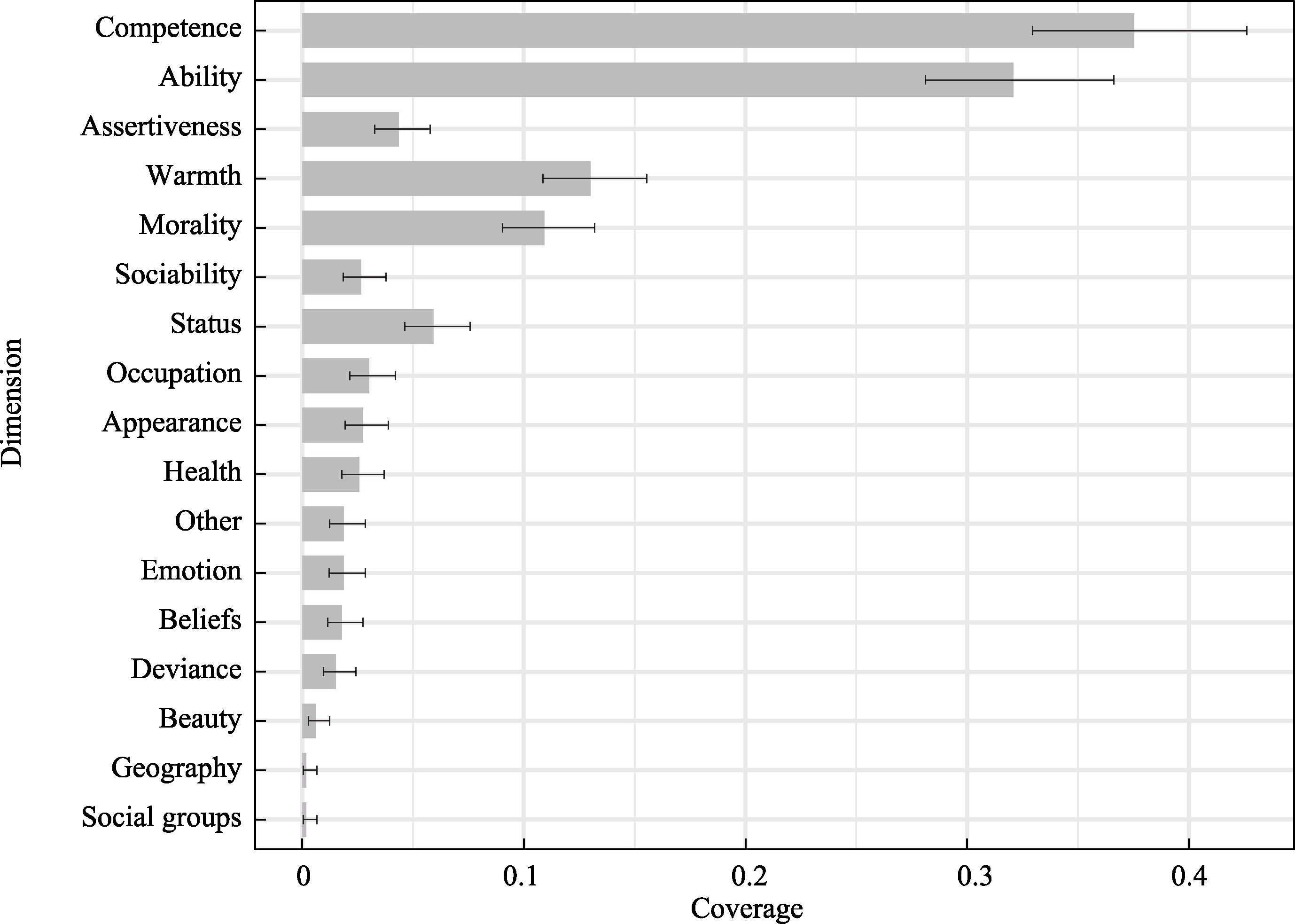
Figure 1. Coverage rates of participants’ descriptive words in each impression dimension of SADCAT.
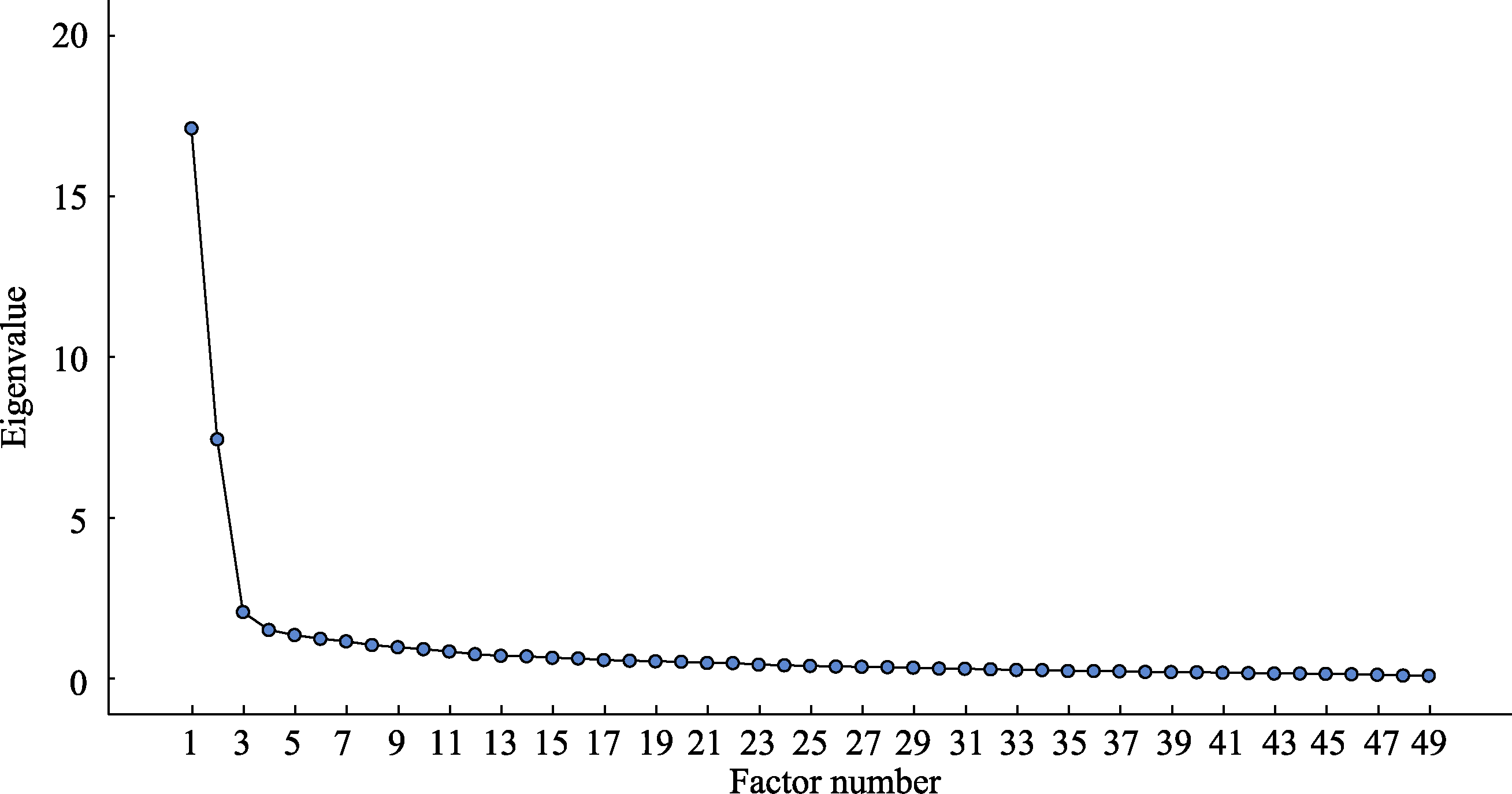
Figure 2. Scree Plot of Exploratory Factor Analysis.
| Words | All (N = 219) | Male (N = 134) | Female (N = 85) | ||||||
|---|---|---|---|---|---|---|---|---|---|
| Factor 1 | Factor 2 | Communality | Factor 1 | Factor 2 | Communality | Factor 1 | Factor 2 | Communality | |
| Intelligent | 0.83 | 0.70 | 0.80 | 0.65 | 0.87 | 0.82 | |||
| Practical | 0.81 | 0.70 | 0.80 | 0.75 | 0.71 | 0.66 | |||
| Patient | 0.78 | 0.70 | 0.72 | 0.76 | 0.71 | 0.56 | |||
| Advanced | 0.78 | 0.64 | 0.73 | 0.53 | 0.79 | 0.75 | |||
| Fast | 0.77 | 0.75 | 0.78 | 0.62 | |||||
| Rich | 0.77 | 0.70 | 0.69 | 0.49 | 0.80 | 0.71 | |||
| Informative | 0.76 | 0.60 | 0.69 | 0.52 | 0.78 | 0.84 | |||
| Easy to Use | ?0.76 | 0.66 | ?0.76 | 0.61 | |||||
| Efficient | 0.76 | 0.66 | 0.82 | 0.68 | |||||
| Comprehensive | 0.76 | 0.63 | 0.73 | 0.55 | 0.79 | 0.67 | |||
| Useful | 0.75 | 0.65 | 0.78 | 0.61 | 0.75 | 0.62 | |||
| Knowledgeable | 0.74 | 0.60 | 0.77 | 0.60 | 0.71 | 0.57 | |||
| Organized | 0.72 | 0.59 | 0.66 | 0.54 | 0.76 | 0.66 | |||
| Powerful | 0.71 | 0.57 | 0.78 | 0.61 | |||||
| Comprehending | 0.70 | 0.58 | 0.72 | 0.55 | 0.70 | 0.51 | |||
| Mature | 0.69 | 0.72 | 0.79 | 0.63 | |||||
| Responsive | 0.69 | 0.64 | 0.75 | 0.62 | 0.70 | 0.53 | |||
| Calm | 0.66 | 0.50 | 0.52 | 0.52 | 0.66 | 0.47 | |||
| Uncomplicated (R) | ?0.65 | 0.46 | ?0.67 | 0.45 | |||||
| Convenient | 0.65 | 0.49 | 0.78 | 0.64 | |||||
| Amazing | 0.65 | 0.43 | 0.63 | 0.47 | |||||
| Open | 0.64 | 0.59 | |||||||
| Accurate | 0.59 | 0.61 | 0.50 | ||||||
| Methodical (R) | ?0.56 | 0.47 | ?0.71 | 0.65 | |||||
| Ttustworthy | 0.54 | 0.58 | 0.62 | 0.48 | |||||
| Smart | 0.83 | 0.79 | |||||||
| Interesting | 0.68 | 0.53 | |||||||
| Tolerant | 0.88 | 0.79 | 0.90 | 0.82 | 0.91 | 0.88 | |||
| Depressive (R) | 0.82 | 0.70 | 0.86 | 0.74 | 0.75 | 0.62 | |||
| Unpersistent (R) | 0.81 | 0.67 | 0.86 | 0.74 | 0.74 | 0.57 | |||
| Isolated (R) | ?0.80 | 0.66 | ?0.83 | 0.70 | ?0.75 | 0.60 | |||
| Silent (R) | ?0.75 | 0.58 | ?0.76 | 0.58 | ?0.66 | 0.51 | |||
| Cunning (R) | 0.73 | 0.57 | 0.64 | 0.47 | |||||
| Unstable (R) | 0.70 | 0.53 | 0.74 | 0.57 | |||||
| Enthusiastic | 0.68 | 0.55 | 0.65 | 0.46 | 0.65 | 0.48 | |||
| Concealing (R) | 0.65 | 0.44 | 0.64 | 0.44 | |||||
| Odd (R) | 0.62 | 0.41 | 0.70 | 0.54 | |||||
| Cautious | ?0.56 | 0.44 | ?0.55 | 0.46 | |||||
| Eigenvalue (after rotation) | 12.83 | 6.27 | 10.13 | 5.12 | 11.21 | 4.82 | |||
| Variance Explained (after rotation) | 35.62 | 17.41 | 37.51 | 18.96 | 38.67 | 16.63 | |||
| Cumulative variance explained (after rotation) | 35.62 | 53.04 | 37.51 | 56.47 | 38.67 | 55.30 | |||
Table 3 Exploratory Factor Analysis Results
| Words | All (N = 219) | Male (N = 134) | Female (N = 85) | ||||||
|---|---|---|---|---|---|---|---|---|---|
| Factor 1 | Factor 2 | Communality | Factor 1 | Factor 2 | Communality | Factor 1 | Factor 2 | Communality | |
| Intelligent | 0.83 | 0.70 | 0.80 | 0.65 | 0.87 | 0.82 | |||
| Practical | 0.81 | 0.70 | 0.80 | 0.75 | 0.71 | 0.66 | |||
| Patient | 0.78 | 0.70 | 0.72 | 0.76 | 0.71 | 0.56 | |||
| Advanced | 0.78 | 0.64 | 0.73 | 0.53 | 0.79 | 0.75 | |||
| Fast | 0.77 | 0.75 | 0.78 | 0.62 | |||||
| Rich | 0.77 | 0.70 | 0.69 | 0.49 | 0.80 | 0.71 | |||
| Informative | 0.76 | 0.60 | 0.69 | 0.52 | 0.78 | 0.84 | |||
| Easy to Use | ?0.76 | 0.66 | ?0.76 | 0.61 | |||||
| Efficient | 0.76 | 0.66 | 0.82 | 0.68 | |||||
| Comprehensive | 0.76 | 0.63 | 0.73 | 0.55 | 0.79 | 0.67 | |||
| Useful | 0.75 | 0.65 | 0.78 | 0.61 | 0.75 | 0.62 | |||
| Knowledgeable | 0.74 | 0.60 | 0.77 | 0.60 | 0.71 | 0.57 | |||
| Organized | 0.72 | 0.59 | 0.66 | 0.54 | 0.76 | 0.66 | |||
| Powerful | 0.71 | 0.57 | 0.78 | 0.61 | |||||
| Comprehending | 0.70 | 0.58 | 0.72 | 0.55 | 0.70 | 0.51 | |||
| Mature | 0.69 | 0.72 | 0.79 | 0.63 | |||||
| Responsive | 0.69 | 0.64 | 0.75 | 0.62 | 0.70 | 0.53 | |||
| Calm | 0.66 | 0.50 | 0.52 | 0.52 | 0.66 | 0.47 | |||
| Uncomplicated (R) | ?0.65 | 0.46 | ?0.67 | 0.45 | |||||
| Convenient | 0.65 | 0.49 | 0.78 | 0.64 | |||||
| Amazing | 0.65 | 0.43 | 0.63 | 0.47 | |||||
| Open | 0.64 | 0.59 | |||||||
| Accurate | 0.59 | 0.61 | 0.50 | ||||||
| Methodical (R) | ?0.56 | 0.47 | ?0.71 | 0.65 | |||||
| Ttustworthy | 0.54 | 0.58 | 0.62 | 0.48 | |||||
| Smart | 0.83 | 0.79 | |||||||
| Interesting | 0.68 | 0.53 | |||||||
| Tolerant | 0.88 | 0.79 | 0.90 | 0.82 | 0.91 | 0.88 | |||
| Depressive (R) | 0.82 | 0.70 | 0.86 | 0.74 | 0.75 | 0.62 | |||
| Unpersistent (R) | 0.81 | 0.67 | 0.86 | 0.74 | 0.74 | 0.57 | |||
| Isolated (R) | ?0.80 | 0.66 | ?0.83 | 0.70 | ?0.75 | 0.60 | |||
| Silent (R) | ?0.75 | 0.58 | ?0.76 | 0.58 | ?0.66 | 0.51 | |||
| Cunning (R) | 0.73 | 0.57 | 0.64 | 0.47 | |||||
| Unstable (R) | 0.70 | 0.53 | 0.74 | 0.57 | |||||
| Enthusiastic | 0.68 | 0.55 | 0.65 | 0.46 | 0.65 | 0.48 | |||
| Concealing (R) | 0.65 | 0.44 | 0.64 | 0.44 | |||||
| Odd (R) | 0.62 | 0.41 | 0.70 | 0.54 | |||||
| Cautious | ?0.56 | 0.44 | ?0.55 | 0.46 | |||||
| Eigenvalue (after rotation) | 12.83 | 6.27 | 10.13 | 5.12 | 11.21 | 4.82 | |||
| Variance Explained (after rotation) | 35.62 | 17.41 | 37.51 | 18.96 | 38.67 | 16.63 | |||
| Cumulative variance explained (after rotation) | 35.62 | 53.04 | 37.51 | 56.47 | 38.67 | 55.30 | |||
| Variable | M | SD | Warmth | Competence | Willingness to continue | Liking |
|---|---|---|---|---|---|---|
| Warmth | 5.21 | 1.24 | 1 | |||
| Competence | 5.24 | 1.18 | 0.3*** | 1 | ||
| Willingness to continue | 5.96 | 1.17 | 0.33*** | 0.5*** | 1 | |
| Likability | 5.60 | 1.01 | 0.49 *** | 0.39*** | 0.66*** |
Table 4 Descriptive Statistics and Correlation Coefficient Matrix for Each Variable (N = 178)
| Variable | M | SD | Warmth | Competence | Willingness to continue | Liking |
|---|---|---|---|---|---|---|
| Warmth | 5.21 | 1.24 | 1 | |||
| Competence | 5.24 | 1.18 | 0.3*** | 1 | ||
| Willingness to continue | 5.96 | 1.17 | 0.33*** | 0.5*** | 1 | |
| Likability | 5.60 | 1.01 | 0.49 *** | 0.39*** | 0.66*** |
| Dependent variable | Independent variable | b | SE | β | t | p | 95% CI |
|---|---|---|---|---|---|---|---|
| Willingness to continue using | (Intercept) | 2.7 | 0.41 | - | 6.61 | <0.001 | [1.90, 3.51] |
| Warmth | 0.18 | 0.06 | 0.19 | 2.87 | 0.005 | [0.06, 0.31] | |
| Competence | 0.44 | 0.07 | 0.45 | 6.64 | <0.001 | [0.31, 0.57] | |
| Liking | (Intercept) | 2.65 | 0.35 | - | 7.62 | <0.001 | [1.96, 3.33] |
| Warmth | 0.34 | 0.05 | 0.41 | 6.23 | <0.001 | [0.23, 0.44] | |
| Competence | 0.23 | 0.06 | 0.27 | 4.05 | <0.001 | [0.12, 0.34] |
Table 5 Multiple Regression Analysis Results of Participants’ Warmth and Competence Ratings on Continuance Intention and Liking for LLMs
| Dependent variable | Independent variable | b | SE | β | t | p | 95% CI |
|---|---|---|---|---|---|---|---|
| Willingness to continue using | (Intercept) | 2.7 | 0.41 | - | 6.61 | <0.001 | [1.90, 3.51] |
| Warmth | 0.18 | 0.06 | 0.19 | 2.87 | 0.005 | [0.06, 0.31] | |
| Competence | 0.44 | 0.07 | 0.45 | 6.64 | <0.001 | [0.31, 0.57] | |
| Liking | (Intercept) | 2.65 | 0.35 | - | 7.62 | <0.001 | [1.96, 3.33] |
| Warmth | 0.34 | 0.05 | 0.41 | 6.23 | <0.001 | [0.23, 0.44] | |
| Competence | 0.23 | 0.06 | 0.27 | 4.05 | <0.001 | [0.12, 0.34] |
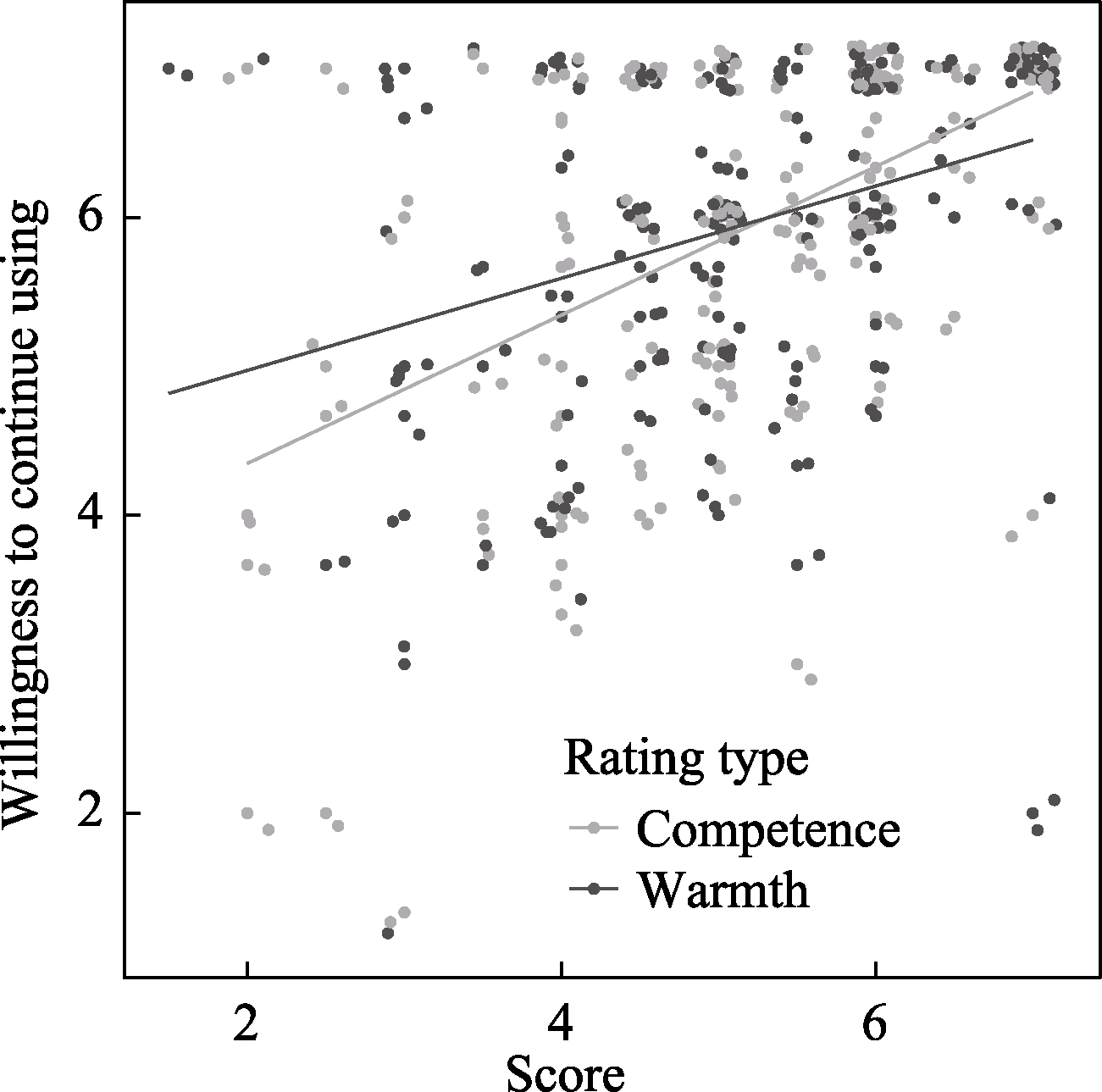
Figure 3. Scatter Plot of Participants’ Ratings of LLMs’ Competence and Warmth Versus Their Willingness to Continue Using LLMs.
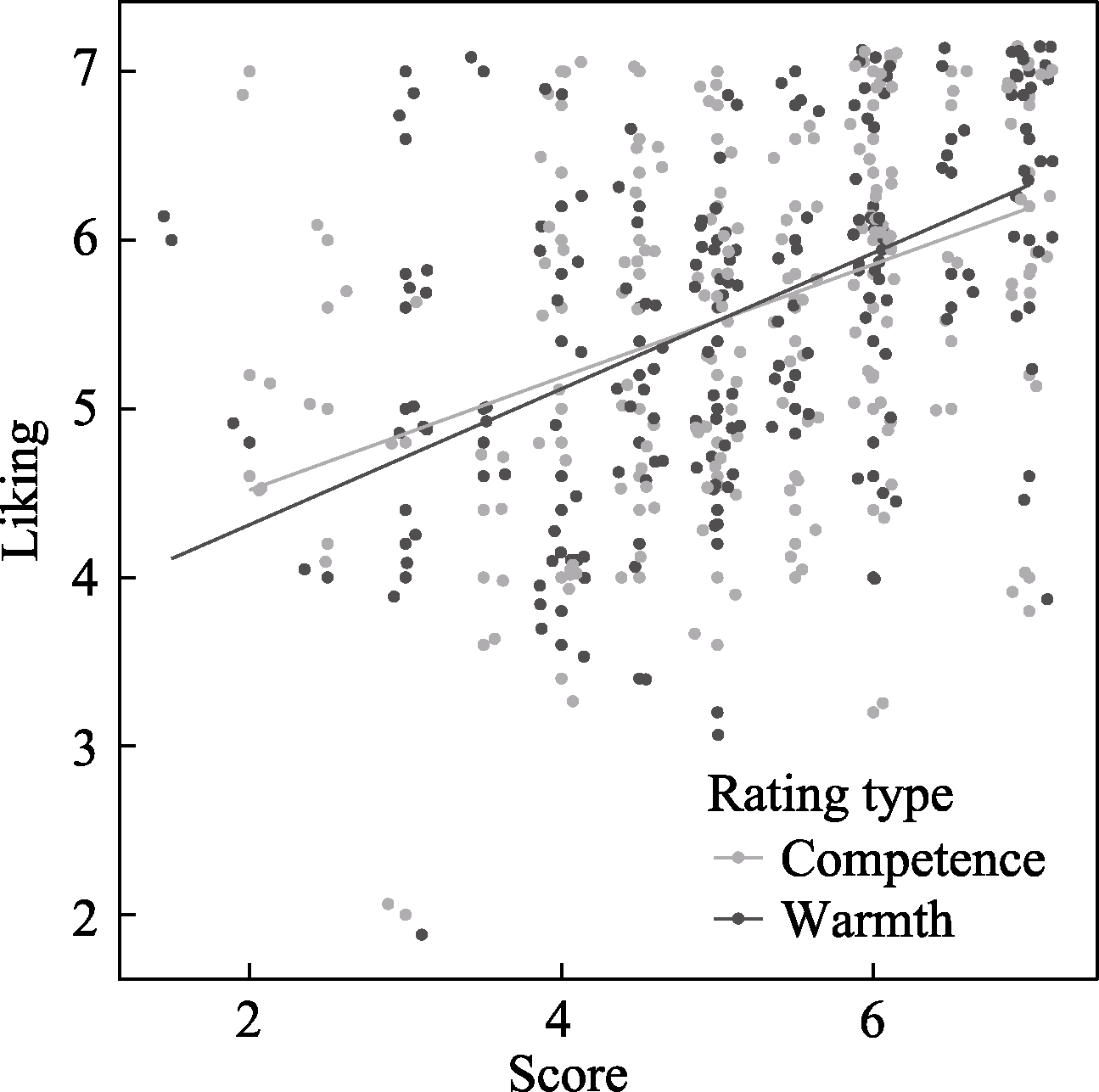
Figure 4. Scatterplot of Participants’ Ratings of LLMs’ Capabilities and Warmth Versus Their Preference for LLMs.
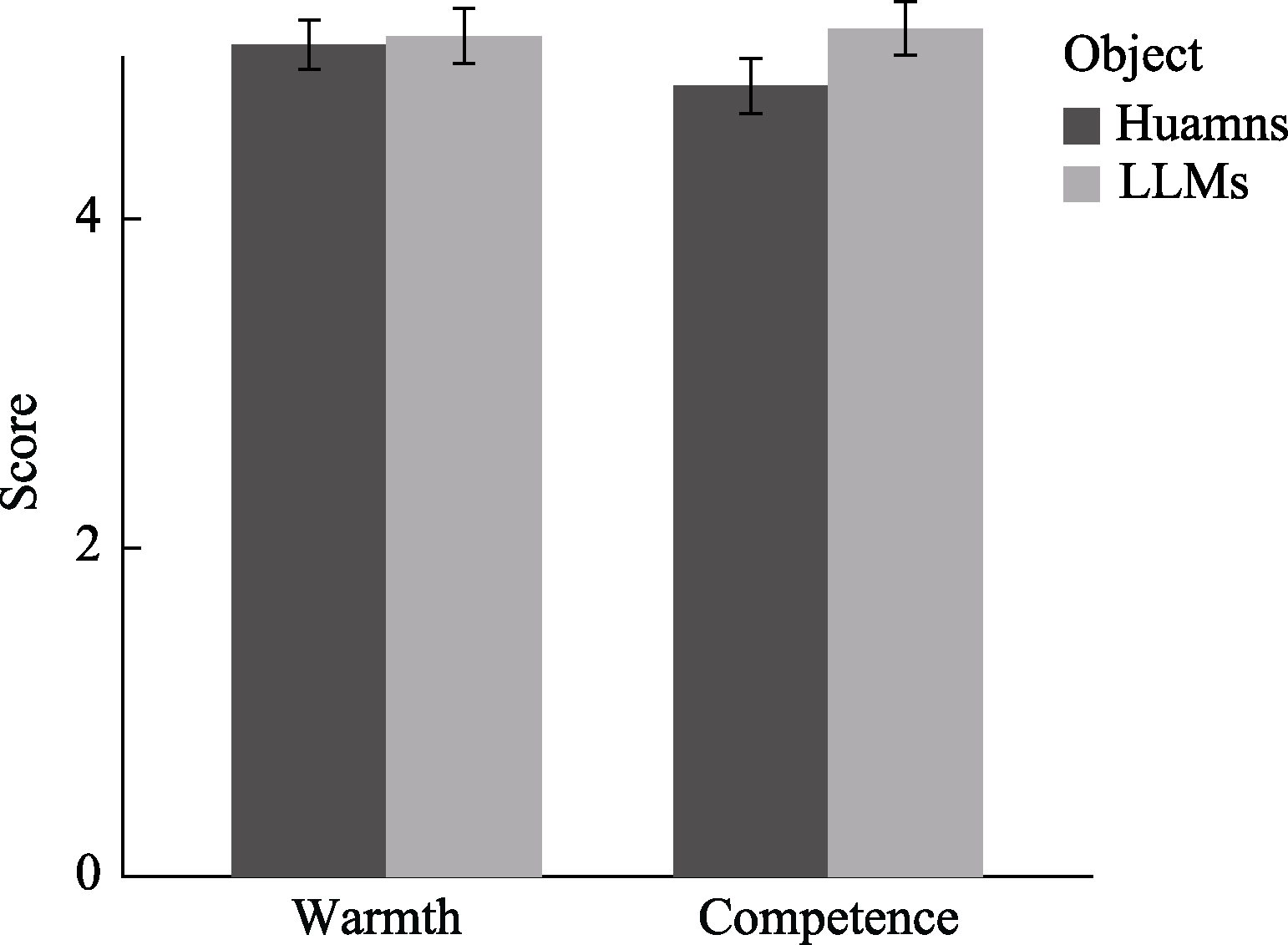
Figure 5. Participants’ Ratings of Warmth and Competence for Humans and LLMs.
| Group | Dimension | t | p | df | 95% CI | Cohen’s d |
|---|---|---|---|---|---|---|
| All (N = 207) | warmth | 0.60 | 0.551 | 206.00 | [?0.12, 0.23] | 0.05 |
| competence | 3.51 | <0.00 | 206.00 | [0.15, 0.54] | 0.29 | |
| Male (N = 124) | warmth | 2.30 | 0.023 | 123.00 | [0.03, 0.40] | 0.21 |
| competence | 2.28 | 0.024 | 123.00 | [0.04, 0.53] | 0.25 | |
| Female (N = 83) | warmth | ?1.15 | 0.255 | 82.00 | [?0.52, 0.14] | ?0.15 |
| competence | 2.71 | 0.008 | 82.00 | [0.12, 0.77] | 0.34 |
Table 6 Paired Sample t-test Results for Participants’ Ratings of Warmth and Competence: Humans vs. LLMs.
| Group | Dimension | t | p | df | 95% CI | Cohen’s d |
|---|---|---|---|---|---|---|
| All (N = 207) | warmth | 0.60 | 0.551 | 206.00 | [?0.12, 0.23] | 0.05 |
| competence | 3.51 | <0.00 | 206.00 | [0.15, 0.54] | 0.29 | |
| Male (N = 124) | warmth | 2.30 | 0.023 | 123.00 | [0.03, 0.40] | 0.21 |
| competence | 2.28 | 0.024 | 123.00 | [0.04, 0.53] | 0.25 | |
| Female (N = 83) | warmth | ?1.15 | 0.255 | 82.00 | [?0.52, 0.14] | ?0.15 |
| competence | 2.71 | 0.008 | 82.00 | [0.12, 0.77] | 0.34 |
| [1] | Abele, A. E., & Brack, S. (2013). Preference for other persons’ traits is dependent on the kind of social relationship. Social Psychology, 44(2), 84-94. |
| [2] | Abele, A. E., Bruckmüller, S., & Wojciszke, B. (2014). You are so kind - and I am kind and smart: Actor - observer differences in the interpretation of on-going behavior. Polish Psychological Bulletin, 128(4), 394-401. |
| [3] | Abele, A. E., Ellemers, N., Fiske, S. T., Koch, A., & Yzerbyt, V. (2021). Navigating the social world: Toward an integrated framework for evaluating self, individuals, and groups. Psychological Review, 128(2), 290-314. |
| [4] | Abele, A. E., Hauke, N., Peters, K., Louvet, E., Szymkow, A., & Duan, Y. (2016). Facets of the fundamental content dimensions: Agency with competence and assertiveness-communion with warmth and morality. Frontiers in Psychology, 7(1), Article 1810. |
| [5] |
Abele, A. E., & Wojciszke, B. (2007). Agency and communion from the perspective of self versus others. Journal of Personality and Social Psychology, 93(5), 751-763.
doi: 10.1037/0022-3514.93.5.751 pmid: 17983298 |
| [6] | Abele, A. E., & Wojciszke, B. (2014). Communal and agentic content in social cognition:A dual perspective model. In J. M. Olson & M. P. Zanna (Eds.), Advances in experimental social psychology (Vol 50, pp. 195-255). Elsevier Academic Press Inc. |
| [7] | Abele, A. E., & Wojciszke, B. (Eds). (2018). Agency and communion in social psychology. Routledge. |
| [8] | Bai, X., Ramos, M. R., & Fiske, S. T. (2020). As diversity increases, people paradoxically perceive social groups as more similar. Proceedings of the National Academy of Sciences, 117(23), 12741-12749. |
| [9] | Bartneck, C., Kulic, D., Croft, E., & Zoghbi, S. (2009). Measurement instruments for the anthropomorphism, animacy, likeability, perceived intelligence, and perceived safety of robots. International Journal of Social Robotics, 1(1), 71-81. |
| [10] | Bodroža, B., Dinić, B. M., & Bojić, L. (2024). Personality testing of large language models: Limited temporal stability, but highlighted prosociality. Royal Society Open Science, 11(10), 240180. |
| [11] | Brown, T. B., Mann, B., Ryder, N., Subbiah, M., Kaplan, J., Dhariwal, P.,... Amodei, D. (2020). Language models are few-shot learners. In Proceedings of the 34th International Conference on Neural Information Processing Systems (pp. 1877-1901). Curran Associates Inc. |
| [12] | Bubeck, S., Chandrasekaran, V., Eldan, R., Gehrke, J., Horvitz, E., Kamar, E.,... Zhang, Y.. (2023). Sparks of artificial general intelligence: Early experiments with GPT-4. arXiv. https://doi.org/10.48550/arXiv.2303.12712 |
| [13] | Carpinella, C. M., Wyman, A. B., Perez, M. A., & Stroessner, S. J. (2017, March). The Robotic Social Attributes Scale (RoSAS): Development and validation. In Proceedings of the 2017 ACM/IEEE International Conference on Human-Robot Interaction (pp. 254-262). ACM. |
| [14] |
Cattell, R. B. (1966). The scree test for the number of factors. Multivariate Behavioral Research, 1(2), 245-276.
doi: 10.1207/s15327906mbr0102_10 pmid: 26828106 |
| [15] | Chi, O. H., Jia, S., Li, Y., & Gursoy, D. (2021). Developing a formative scale to measure consumers’ trust toward interaction with artificially intelligent (AI) social robots in service delivery. Computers in Human Behavior, 118, 106700. |
| [16] | Comrey, A. L., & Lee, H. B. (1992). A first course in factor analysis (2nd ed. pp. xii, 430). Lawrence Erlbaum Associates, Inc. |
| [17] | Costello, A. B., & Osborne, J. (2005). Best practices in exploratory factor analysis: Four recommendations for getting the most from your analysis. Practical assessment, research, and evaluation, 10(1), Article 7. |
| [18] |
Cuddy, A. J. C., Fiske, S. T., & Glick, P. (2007). The BIAS map: Behaviors from intergroup affect and stereotypes. Journal of Personality and Social Psychology, 92(4), 631-648.
doi: 10.1037/0022-3514.92.4.631 pmid: 17469949 |
| [19] | Cuddy, A. J. C., Fiske, S. T., Kwan, V. S. Y., Glick, P., Demoulin, S., Leyens, J. P.,... Ziegler, R. (2009). Stereotype content model across cultures: Towards universal similarities and some differences. British Journal of Social Psychology, 48(1), 1-33. |
| [20] | Cuff, B. M. P., Brown, S. J., Taylor, L., & Howat, D. J. (2016). Empathy: A review of the concept. Emotion Review, 8(2), 144-153. |
| [21] | Davis, F. D. (1989). Perceived usefulness, perceived ease of use, and user acceptance of information technology. MIS Quarterly, 13(3), 319-340. |
| [22] | de Ruyter, B., Saini, P., Markopoulos, P., & van Breemen, A. (2005). Assessing the effects of building social intelligence in a robotic interface for the home. Interacting with Computers, 17(5), 522-541. |
| [23] | dos Santos, R. P. (2023). Enhancing physics learning with ChatGPT, Bing Chat, and Bard as agents-to-think-with: A comparative case study. arXiv. https://doi.org/10.48550/arXiv.2306.00724 |
| [24] | Durante, F., Fiske, S. T., Gelfand, M. J., Crippa, F., Suttora, C., Stillwell, A.,... Teymoori, A. (2017). Ambivalent stereotypes link to peace, conflict, and inequality across 38 nations. Proceedings of the National Academy of Sciences, 114(4), 669-674. |
| [25] |
Fiske, S. T. (1992). Thinking is for doing: Portraits of social cognition from daguerreotype to laserphoto. Journal of Personality and Social Psychology, 63(6), 877-889.
doi: 10.1037//0022-3514.63.6.877 pmid: 1460557 |
| [26] |
Fiske, S. T. (2018). Stereotype content: Warmth and competence endure. Current Directions in Psychological Science, 27(2), 67-73.
doi: 10.1177/0963721417738825 pmid: 29755213 |
| [27] |
Fiske, S. T., Cuddy, A. J. C., & Glick, P. (2007). Universal dimensions of social cognition: Warmth and competence. Trends in Cognitive Sciences, 11(2), 77-83.
doi: 10.1016/j.tics.2006.11.005 pmid: 17188552 |
| [28] |
Fiske, S. T., Cuddy, A. J. C., Glick, P., & Xu, J. (2002). A model of (often mixed) stereotype content: Competence and warmth respectively follow from perceived status and competition. Journal of Personality and Social Psychology, 82(6), 878-902.
pmid: 12051578 |
| [29] | Gray, H. M., Gray, K., & Wegner, D. M. (2007). Dimensions of mind perception. Science, 315(5812), 619. |
| [30] |
Gray, K., & Wegner, D. M. (2010). Blaming God for our pain: Human suffering and the divine mind. Personality and Social Psychology Review, 14(1), 7-16.
doi: 10.1177/1088868309350299 pmid: 19926831 |
| [31] | Green, P., & MacLeod, C. J. (2016). SIMR: An R package for power analysis of generalized linear mixed models by simulation. Methods in Ecology and Evolution, 7(4), 493-498. |
| [32] |
Heaven, P. C. L., Ciarrochi, J., Leeson, P., & Barkus, E. (2013). Agreeableness, conscientiousness, and psychoticism: Distinctive influences of three personality dimensions in adolescence. British Journal of Psychology, 104(4), 481-494.
doi: 10.1111/bjop.12002 pmid: 24094279 |
| [33] | Heflick, N. A., Goldenberg, J. L., Cooper, D. P., & Puvia, E. (2011). From women to objects: Appearance focus, target gender, and perceptions of warmth, morality and competence. Journal of Experimental Social Psychology, 47(3), 572-581. |
| [34] | Huang, J., Wang, W., Lam, M. H., Li, E. J., Jiao, W., & Lyu, M. R. (2023). Revisiting the reliability of psychological scales on large language models. arXiv.https://doi.org/10.48550/arXiv.2305.19926 |
| [35] | Jiang, G. Y., Xu, M. J., Zhu, S. C., Han, W. J., Zhang, C., & Zhu, Y. X. (2023, December). Evaluating and inducing personality in pre-trained language models. In Proceedings of the 37th International Conference on Neural Information Processing Systems. Neural Information Processing Systems (NIPS). |
| [36] | Kosinski, M. (2024). Evaluating large language models in theory of mind tasks. Proceedings of the National Academy of Sciences, 121(45), e2405460121. |
| [37] | Lee, Y. K., Suh, J., Zhan, H., Li, J. J., & Ong, D. C. (2024). Large language models produce responses perceived to be empathic. arXiv. https://doi.org/10.48550/arXiv.2403.18148 |
| [38] | Luo, J., & Dai, X. Y. (2018). Development of the Chinese Adjectives Scale of Big-Five Factor Personality Ⅳ: A Short Scale Version. Chinese Journal of Clinical Psychology, 26(4), 642-646. |
| [39] | MacCallum, R. C., Widaman, K. F., Zhang, S., & Hong, S. (1999). Sample size in factor analysis. Psychological Methods, 4(1), 84-99. |
| [40] | McKee, K. R., Bai, X. C. Z., & Fiske, S. T. (2023). Humans perceive warmth and competence in artificial intelligence. Iscience, 26(8), 107256. |
| [41] | Mirnig, N., Stollnberger, G., Miksch, M., Stadler, S., Giuliani, M., & Tscheligi, M. (2017). To err is robot: How humans assess and act toward an erroneous social robot. Frontiers in Robotics and AI, 4(1), Article 21. |
| [42] | Mohammad, Y., & Nishida, T. (2015). Why should we imitate robots? Effect of back imitation on judgment of imitative skill. International Journal of Social Robotics, 7(4), 497-512. |
| [43] | Mori, M. (1970). The uncanny valley. Energy, 7, 33-35. |
| [44] | Nicolas, G., Bai, X. C. Z., & Fiske, S. T. (2021). Comprehensive stereotype content dictionaries using a semi-automated method. European Journal of Social Psychology, 51(1), 178-196. |
| [45] | Nomura, T., Kanda, T., & Suzuki, T. (2006). Experimental investigation into influence of negative attitudes toward robots on human-robot interaction. Ai & Society, 20(2), 138-150. |
| [46] | Ouyang, L., Wu, J., Jiang, X., Almeida, D., Wainwright, C., Mishkin, P.,... Lowe, R. (2022). Training language models to follow instructions with human feedback. Advances in Neural Information Processing Systems, 35(27730-27744), Article 2011. |
| [47] | Scheunemann, M. M., Cuijpers, R. H., & Salge, C. (2020). Warmth and competence to predict human preference of robot behavior in physical human-robot interaction. In 2020 29th IEEE International Conference on Robot and Human Interactive Communication (RO-MAN) (pp. 1340-1347). 2020 29th IEEE International Conference on Robot and Human Interactive Communication (RO- MAN). |
| [48] | Sorin, V., Brin, D., Barash, Y., Konen, E., Charney, A., Nadkarni, G., & Klang, E. (2024). Large language models and empathy: Systematic review. Journal of Medical Internet Research, 26(10), Article e52597. |
| [49] |
Strachan, J. W. A., Albergo, D., Borghini, G., Pansardi, O., Scaliti, E., Gupta, S.,... Becchio, C. (2024). Testing theory of mind in large language models and humans. Nature Human Behaviour, 8(7), 1285-1295.
doi: 10.1038/s41562-024-01882-z pmid: 38769463 |
| [50] | Sundararajan, L., Wu, M. S., Ho, W.-T., Sun, J. C., Leung, C. P., & Rich, G. J. (2022). Expanding our kind: A pan-cultural study of the animistic principle of ontological parity. The Humanistic Psychologist, 50(3), 476-496. |
| [51] | Tae, M., & Lee, J. (2020). The effect of robot’s ice-breaking humor on likeability and future contact intentions. In Companion of the 2020 ACM/IEEE International Conference on Human-Robot Interaction (pp. 462-464). ACM. |
| [52] | Uchronski, M. (2008). Agency and communion in spontaneous self- descriptions: Occurrence and situational malleability. European Journal of Social Psychology, 38(7), 1093-1102. |
| [53] | Venkatesh, V., & Morris, M. (2000). Why don’t men ever stop to ask for directions? Gender, social influence, and their role in technology acceptance and usage behavior. MIS Quarterly, 24(1), 115-139. |
| [54] | Venkatesh, V., Morris, M. G., Davis, G. B., & Davis, F. D. (2003). User acceptance of information technology: Toward a unified view. MIS Quarterly, 27(3), 425-478. |
| [55] | Wang, J., Ma, W., Sun, P., Zhang, M., & Nie, J.-Y. (2024). Understanding user experience in large language model interactions. arXiv. https://doi.org/10.48550/arXiv.2401.08329 |
| [56] |
Waytz, A., Cacioppo, J., & Epley, N. (2010). Who sees human? The stability and importance of individual differences in anthropomorphism. Perspectives on Psychological Science, 5(3), 219-232.
doi: 10.1177/1745691610369336 pmid: 24839457 |
| [57] | Waytz, A., & Young, L. (2014). Two motivations for two dimensions of mind. Journal of Experimental Social Psychology, 55, 278-283. |
| [58] | Webb, T., Holyoak, K. J., & Lu, H. J. (2023). Emergent analogical reasoning in large language models. Nature Human Behaviour, 7(9), 1526-1541. |
| [59] | Wojciszke, B., & Abele, A. E. (2008). The primacy of communion over agency and its reversals in evaluations. European Journal of Social Psychology, 38(7), 1139-1147. |
| [60] | Wu, X. Y., & Zhang, D. W. (2023). The impact mechanism of mobile visual search continuous behavior intention from academic new media users: Empirical analysis of UTAUT2-ECT integration model. Journal of Intelligence, 42(8), 164-176. |
| [61] | Zhao, Y. K., Huang, Z., Seligman, M., & Peng, K. P. (2024). Risk and prosocialbehavioural cues elicit human-like response patterns from AI chatbots. Scientific Reports, 14(1), Article 7095. |
| [62] | Zuo, B., Dai, T. T., Wen, F. F., & Suo, Y. X. (2015). The big two model in social cognition. Journal of Psychological Science, 38(4), 1019-1023. |
| [63] | Zuo, B., Wen, F. F., Wu, Y., & Dai, T. T. (2018). Situational evolution of the relationship between warmth and competence in intergroup evaluation: Impact of evaluating intention and behavioral outcomes. ActaPsychologicaSinica, 50(10), 1180-1196. |
| [1] | LI Muyang, LEI Ting, XIE Xie, GUO Zeyu, LIU Kexin, CHEN Wenqing, SUN Qinyi, DONG Yuntao, ZANG Yinyin. Qualitative exploration of negative experiences in counseling clients [J]. Acta Psychologica Sinica, 2025, 57(7): 1216-1230. |
| [2] | JIAO Liying, LI Chang-Jin, CHEN Zhen, XU Hengbin, XU Yan. When AI “possesses” personality: Roles of good and evil personalities influence moral judgment in large language models [J]. Acta Psychologica Sinica, 2025, 57(6): 929-946. |
| [3] | GAO Chenghai, DANG Baobao, WANG Bingjie, WU Michael Shengtao. The linguistic strength and weakness of artificial intelligence: A comparison between Large Language Model (s) and real students in the Chinese context [J]. Acta Psychologica Sinica, 2025, 57(6): 947-966. |
| [4] | ZHANG Yanbo, HUANG Feng, MO Liuling, LIU Xiaoqian, ZHU Tingshao. Suicidal ideation data augmentation and recognition technology based on large language models [J]. Acta Psychologica Sinica, 2025, 57(6): 987-1000. |
| [5] | ZHOU Zisen, HUANG Qi, TAN Zehong, LIU Rui, CAO Ziheng, MU Fangman, FAN Yachun, QIN Shaozheng. Emotional capabilities evaluation of multimodal large language model in dynamic social interaction scenarios [J]. Acta Psychologica Sinica, 2025, 57(11): 1988-2000. |
| [6] | HUANG Feng, DING Huimin, LI Sijia, HAN Nuo, DI Yazheng, LIU Xiaoqian, ZHAO Nan, LI Linyan, ZHU Tingshao. Self-help AI psychological counseling system based on large language models and its effectiveness evaluation [J]. Acta Psychologica Sinica, 2025, 57(11): 2022-2042. |
| [7] | DONG Da, CHEN Wei. Persons are not things: Rejuvenating social cognition [J]. Acta Psychologica Sinica, 2025, 57(1): 173-189. |
| [8] | QIU Tian, JIANG Nan, LU Jingyi. Undervaluing the advantages of displaying skills in front of an expert [J]. Acta Psychologica Sinica, 2023, 55(5): 766-780. |
| [9] | JIANG Xuting, WU Xiaoyue, FAN Xueling, HE Wei. Effects of coworker anger expression on leader emergence: The mediating roles of perceived warmth and competence and the compensating effect of anger apology [J]. Acta Psychologica Sinica, 2023, 55(5): 812-830. |
| [10] | SUN Chu, GENG Haiyan. Dynamic information processing under self and another’s perspectives: A behavioral oscillation study [J]. Acta Psychologica Sinica, 2023, 55(2): 224-236. |
| [11] | SONG Qi, REN Qiqi, CHEN Yang, REN Yingwei. The double-edged sword effect of employee personal initiative behavior on coworker relationships: The moderating role of the employee warmth trait [J]. Acta Psychologica Sinica, 2023, 55(12): 2013-2034. |
| [12] | LIU Yiting, FAN Jieqiong, CHEN Bin-Bin. The effects of marital quality on coparenting: A cross-level mediation analysis based on the common fate model [J]. Acta Psychologica Sinica, 2022, 54(10): 1216-1233. |
| [13] | ZUO Bin, LIU Chen, WEN Fangfang, TAN Xiao, XIE Zhijie. The impact of gender orientation of names on individuals’ evaluation of impressions and interpersonal interaction [J]. Acta Psychologica Sinica, 2021, 53(4): 387-399. |
| [14] | ZUO Bin, DAI Yuee, WEN Fangfang, GAO Jia, XIE Zhijie, HE Saifei. “You were what you eat”: Food-gender stereotypes and their impact on evaluation of impression [J]. Acta Psychologica Sinica, 2021, 53(3): 259-272. |
| [15] | SHANG Xuesong, CHEN Zhuo, LU Jingyi. “Will I be judged harshly after trying to help but causing more troubles?” A misprediction about help recipients [J]. Acta Psychologica Sinica, 2021, 53(3): 291-305. |
| Viewed | ||||||
|
Full text |
|
|||||
|
Abstract |
|
|||||
