

ISSN 0439-755X
CN 11-1911/B
主办:中国心理学会
中国科学院心理研究所
出版:科学出版社
CN 11-1911/B
主办:中国心理学会
中国科学院心理研究所
出版:科学出版社
心理学报 ›› 2026, Vol. 58 ›› Issue (6): 1059-1076.doi: 10.3724/SP.J.1041.2026.1059 cstr: 32110.14.2026.1059
何婷婷1,#, 吴天朗2,#, 季琭妍2,†( ), 陈文锋3,†(), 高晓岚4
收稿日期:2024-11-14
发布日期:2026-04-28
出版日期:2026-06-25
通讯作者:
†季琭妍和陈文锋为共同通讯作者。作者简介:#何婷婷和吴天朗为共同第一作者。
基金资助:
HE Tingting1,#, WU Tianlang2,#, JI Luyan2,†(), CHEN Wenfeng3,†(), GAO Xiaolan4
Received:2024-11-14
Online:2026-04-28
Published:2026-06-25
摘要:
在人际互动中, 面孔特征和情境因素等非言语线索对人的知觉至关重要。但以往的面孔印象更新研究忽略了非言语线索, 且鲜少关注心理社会因素对面孔印象更新的影响。本研究使用经典的印象更新范式和想象范式, 结合眼动技术, 为非言语线索面孔印象更新的模式、以及评价者/目标−线索社会距离对其的调节作用及其认知机制, 提供了新的实证证据。结果显示: (1)基于非言语线索的面孔可信度印象更新呈同化对比动态变化模式。(2)评价者/目标−线索社会距离总体上均对面孔可信度印象产生跨维度同化效应。(3)评价者−线索社会距离和目标−线索社会距离均只能通过“目标−线索相对注意值”来间接影响面孔可信度印象更新, 且二者均主要影响可信度印象提升程度。
中图分类号:
何婷婷, 吴天朗, 季琭妍, 陈文锋, 高晓岚. (2026). 基于非言语线索的面孔可信度印象动态更新及社会距离的调节作用. 心理学报, 58(6), 1059-1076.
HE Tingting, WU Tianlang, JI Luyan, CHEN Wenfeng, GAO Xiaolan. (2026). Dynamic impression updating of face trustworthiness based on nonverbal cues and the moderating role of social distance. Acta Psychologica Sinica, 58(6), 1059-1076.
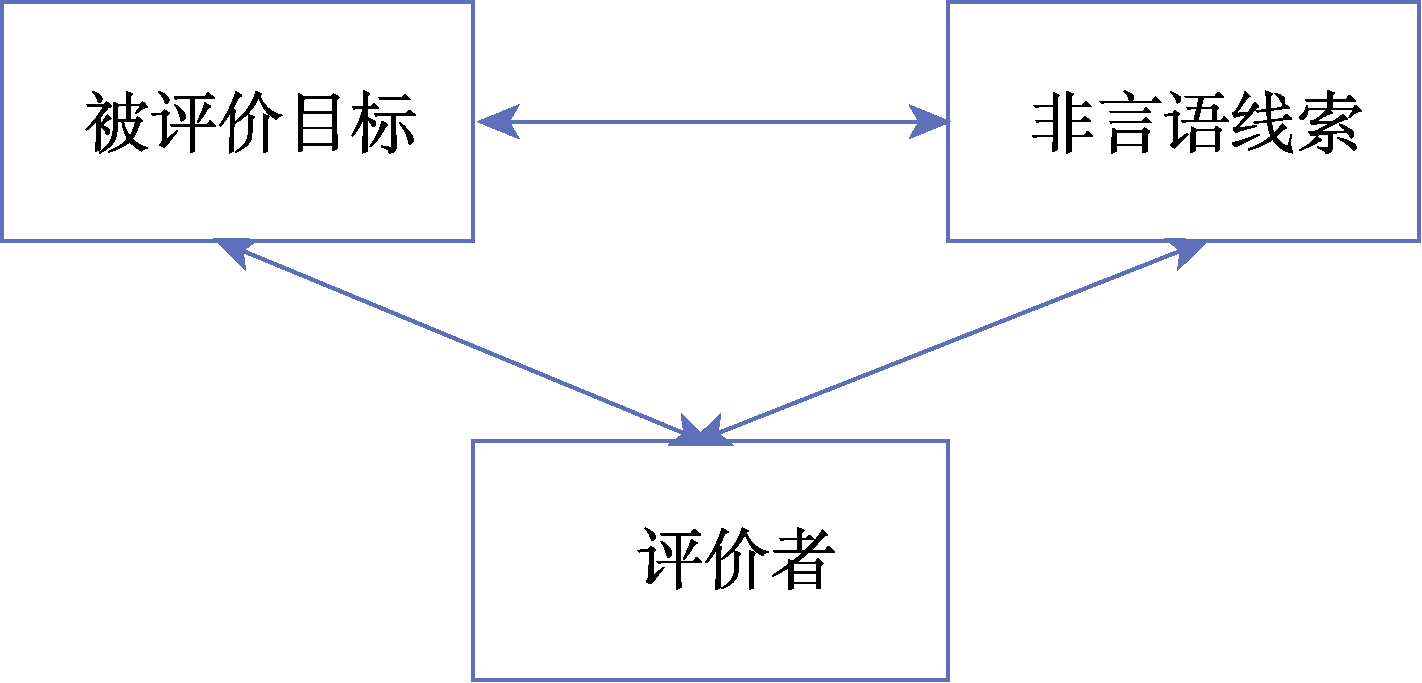
图1 基于非言语线索的“评价者−目标−线索”三元系统
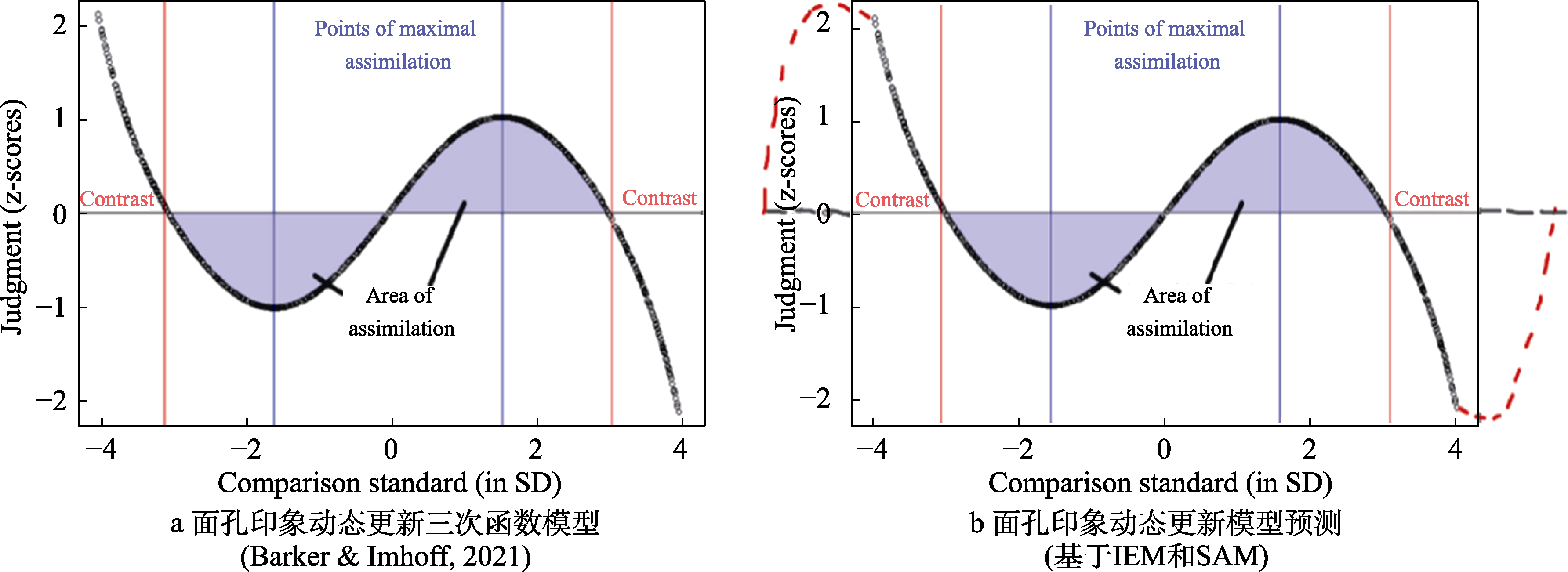
图2 面孔印象动态更新模式示例及模型预测 注: 图中横轴代表线索面孔与目标面孔的初始客观差值(标准差); 纵轴代表线索面孔出现后与出现前, 个体对目标面孔主观印象的差值(Z分数)。结合前述同化/对比效应定义, 线索面孔初始值高于/低于目标面孔, 且目标印象提升/降低, 则为同化效应(图中中间紫色区域); 线索面孔初始值高于/低于目标面孔, 且目标印象降低/提升, 则为对比效应(图中两侧区域)。
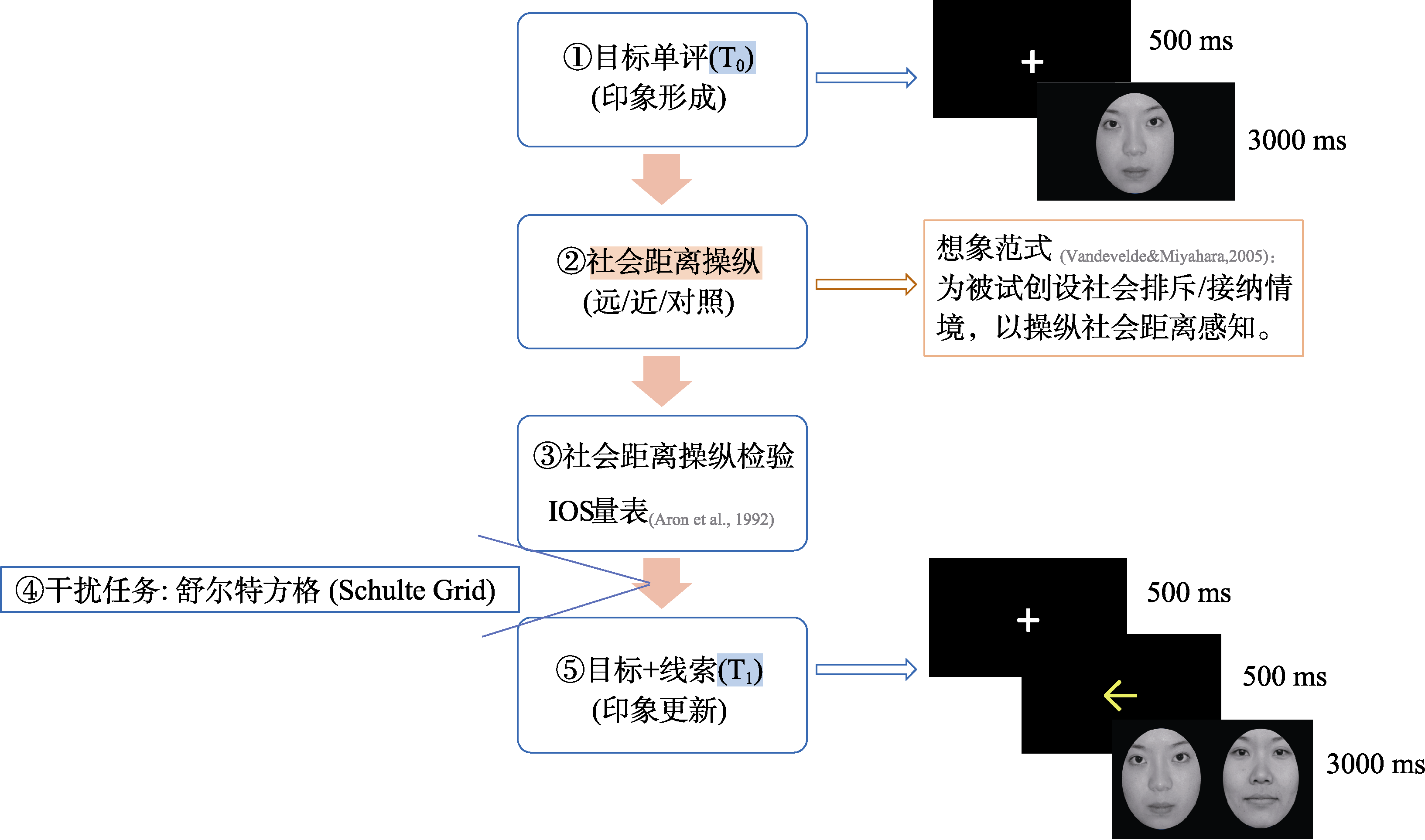
图3 实验流程图
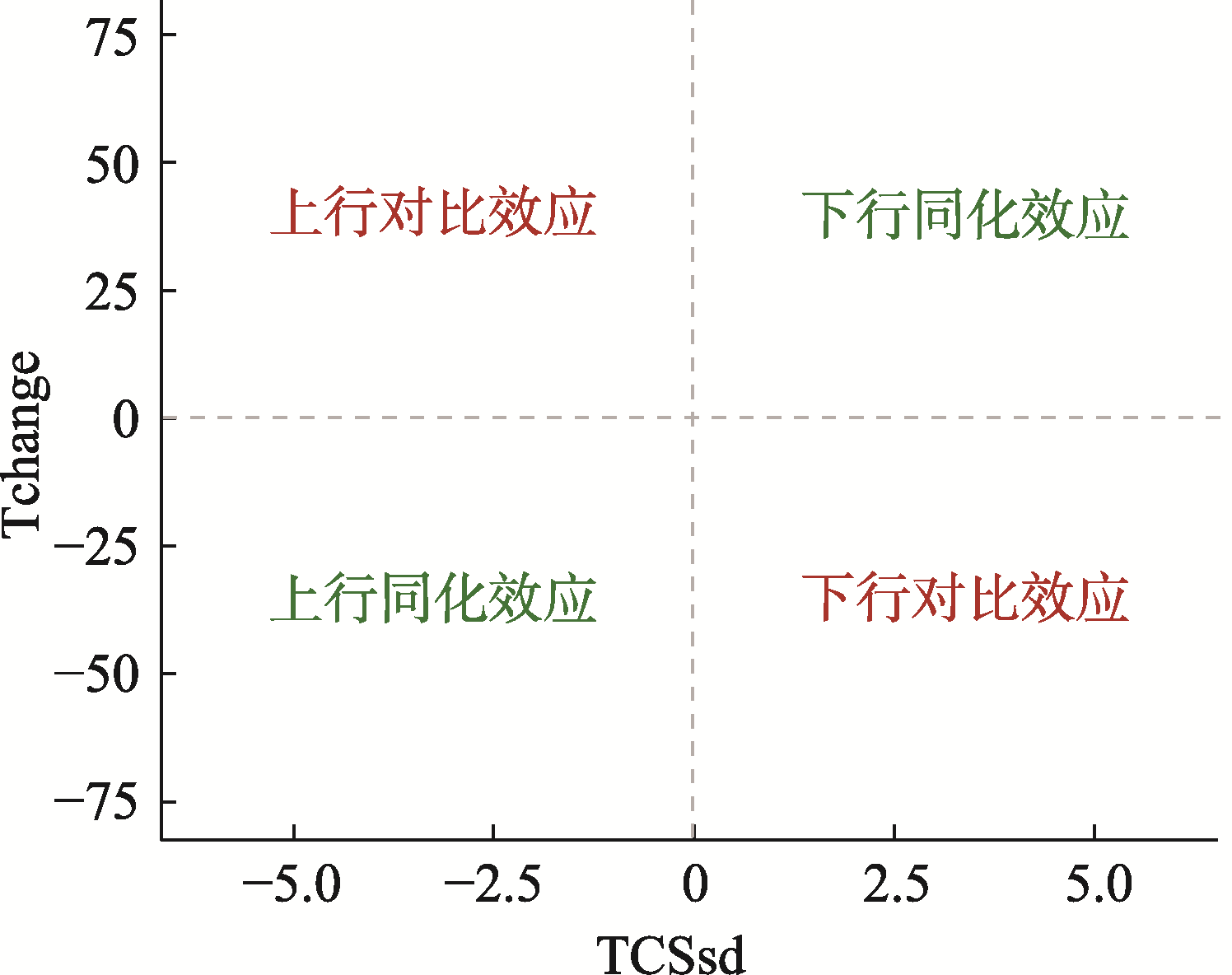
图4 同化/对比效应区分示意图
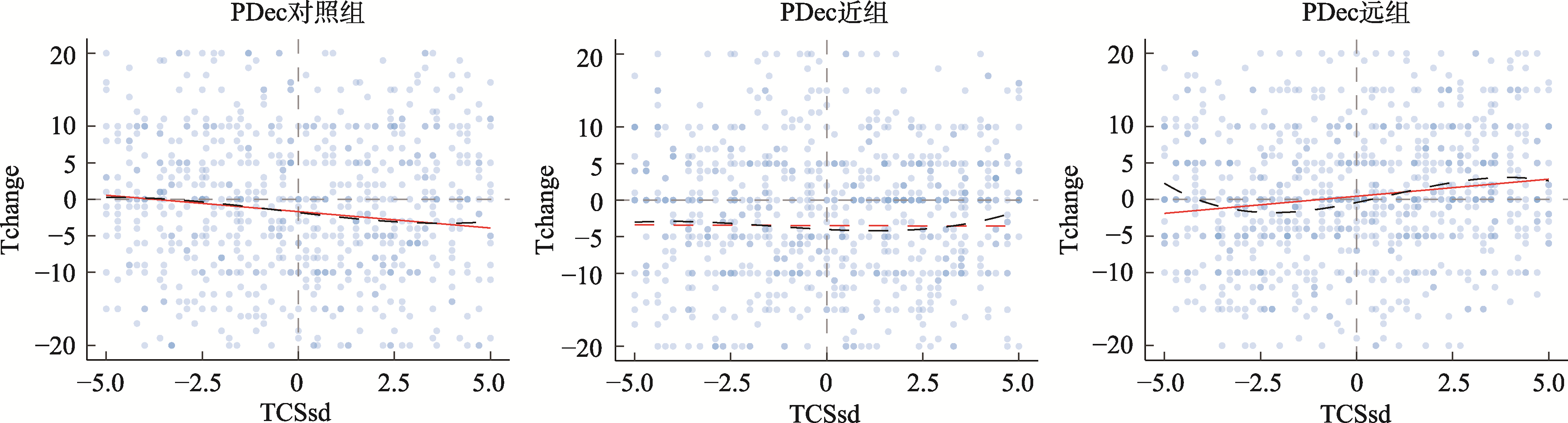
图5 实验1 Tchange与TCS拟合结果
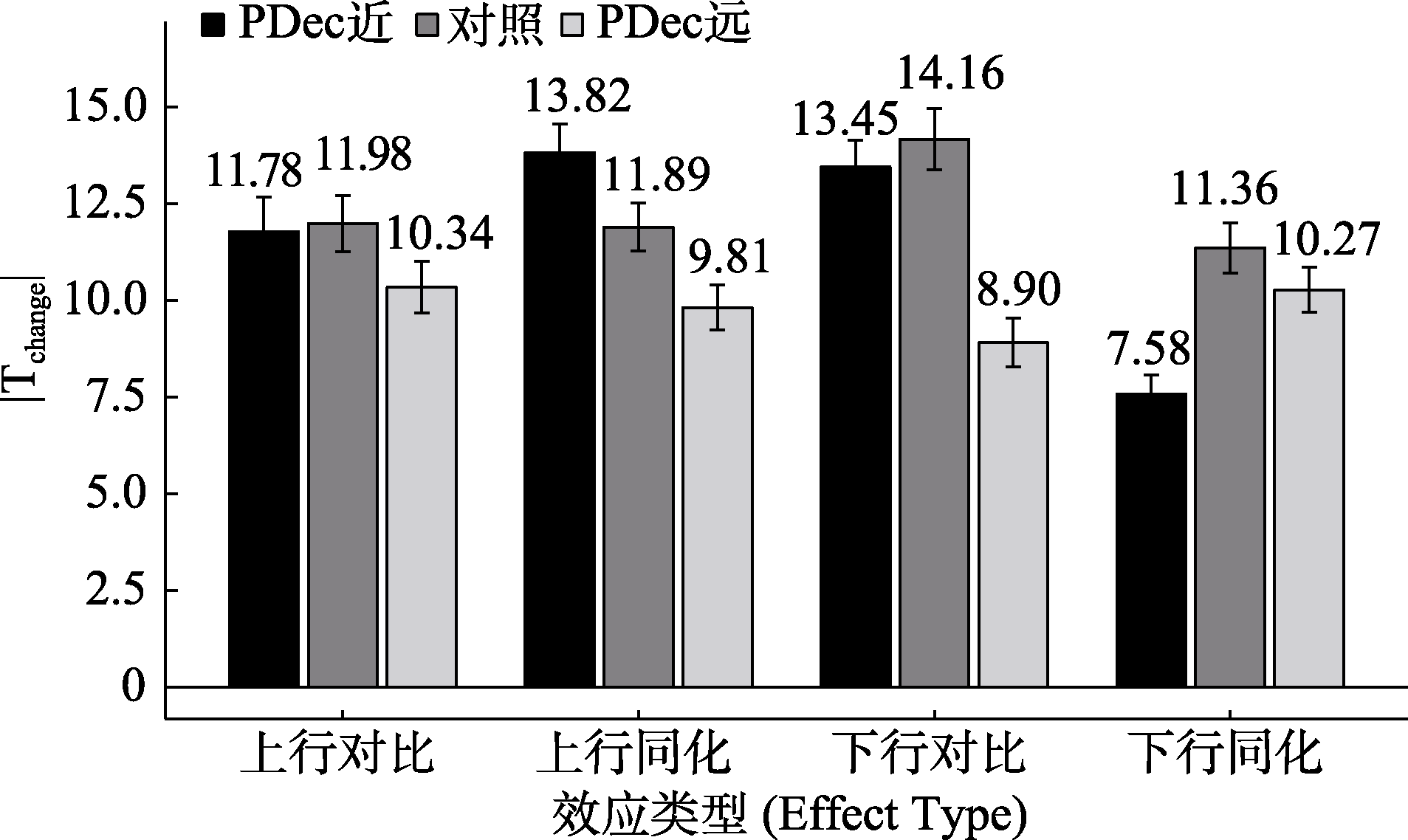
图6 实验1不同评价者−线索社会距离条件下的4类印象更新程度
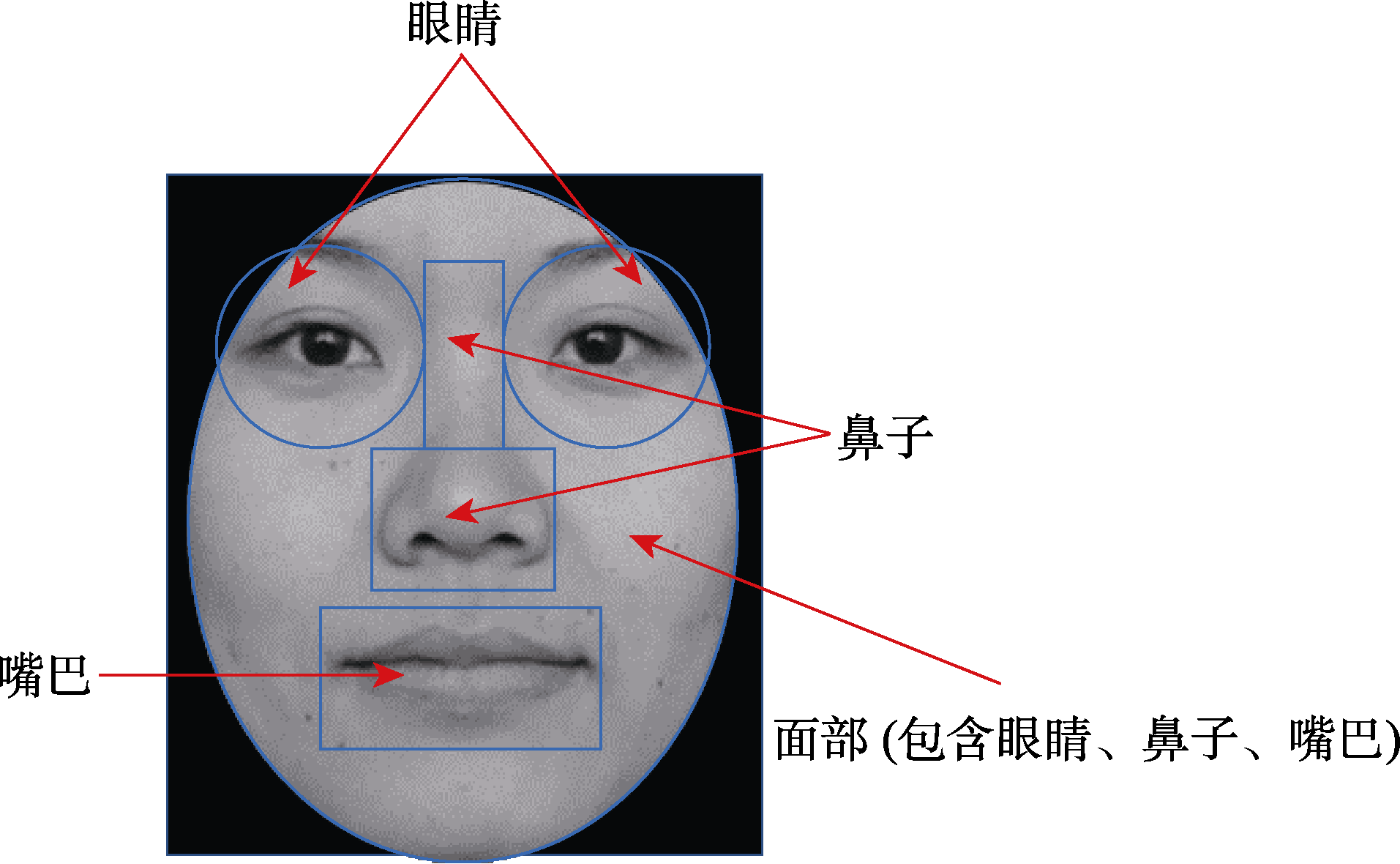
图7 兴趣区划分示意图
| 兴趣区 | 总注视时间(ms)[M ± SD] | 总注视次数(次)[M ± SD] |
|---|---|---|
| 鼻子 | 890.00 ± 656.00 | 3.33 ± 2.16 |
| 眼睛 | 726.00 ± 637.00 | 2.59 ± 2.31 |
| 嘴巴 | 472.00 ± 571.00 | 1.48 ± 1.66 |
表1 实验1-T0眼动数据描述性统计表
| 兴趣区 | 总注视时间(ms)[M ± SD] | 总注视次数(次)[M ± SD] |
|---|---|---|
| 鼻子 | 890.00 ± 656.00 | 3.33 ± 2.16 |
| 眼睛 | 726.00 ± 637.00 | 2.59 ± 2.31 |
| 嘴巴 | 472.00 ± 571.00 | 1.48 ± 1.66 |
| PDe-c组别 | 兴趣区 | 总注视时间(ms) [M ± SD] | 总注视次数(次) [M ± SD] |
|---|---|---|---|
| 近 | 目标面孔 | 1884 ± 633 | 7.50 ± 2.74 |
| 线索面孔 | 383 ± 422 | 1.73 ± 1.85 | |
| 远 | 目标面孔 | 1911 ± 628 | 6.64 ± 2.51 |
| 线索面孔 | 399 ± 427 | 1.69 ± 1.83 | |
| 对照 | 目标面孔 | 1904 ± 632 | 6.60 ± 2.66 |
| 线索面孔 | 432 ± 480 | 1.61 ± 1.76 |
表2 实验1-T1眼动数据描述性统计表
| PDe-c组别 | 兴趣区 | 总注视时间(ms) [M ± SD] | 总注视次数(次) [M ± SD] |
|---|---|---|---|
| 近 | 目标面孔 | 1884 ± 633 | 7.50 ± 2.74 |
| 线索面孔 | 383 ± 422 | 1.73 ± 1.85 | |
| 远 | 目标面孔 | 1911 ± 628 | 6.64 ± 2.51 |
| 线索面孔 | 399 ± 427 | 1.69 ± 1.83 | |
| 对照 | 目标面孔 | 1904 ± 632 | 6.60 ± 2.66 |
| 线索面孔 | 432 ± 480 | 1.61 ± 1.76 |
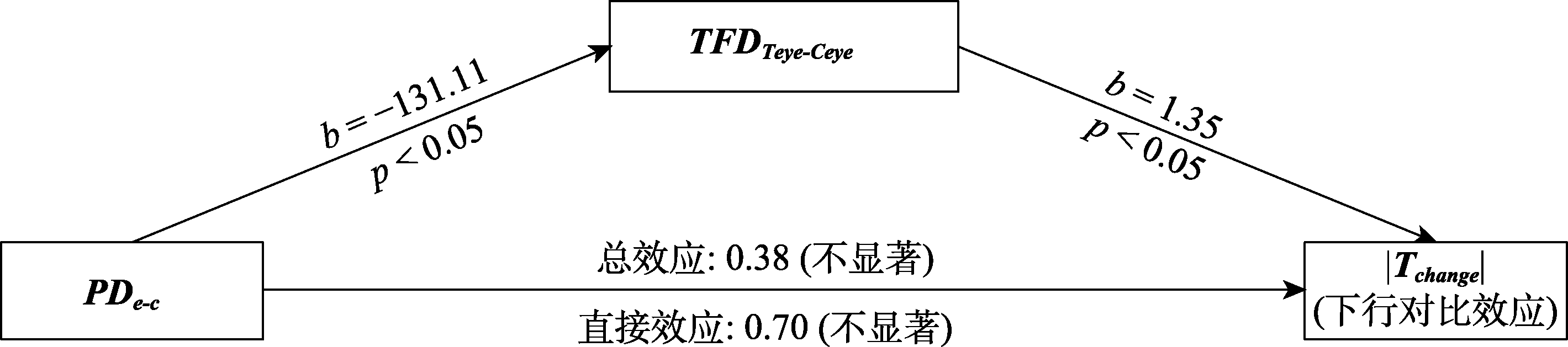
图8 实验1 行为−眼动联合分析结果
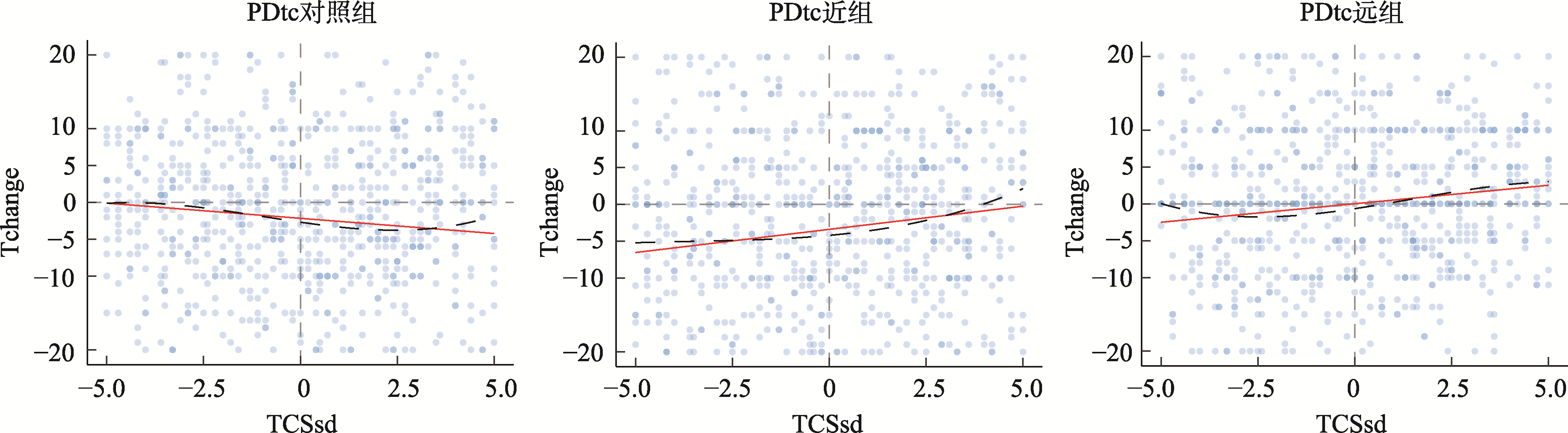
图9 实验2 Tchange与TCS拟合结果
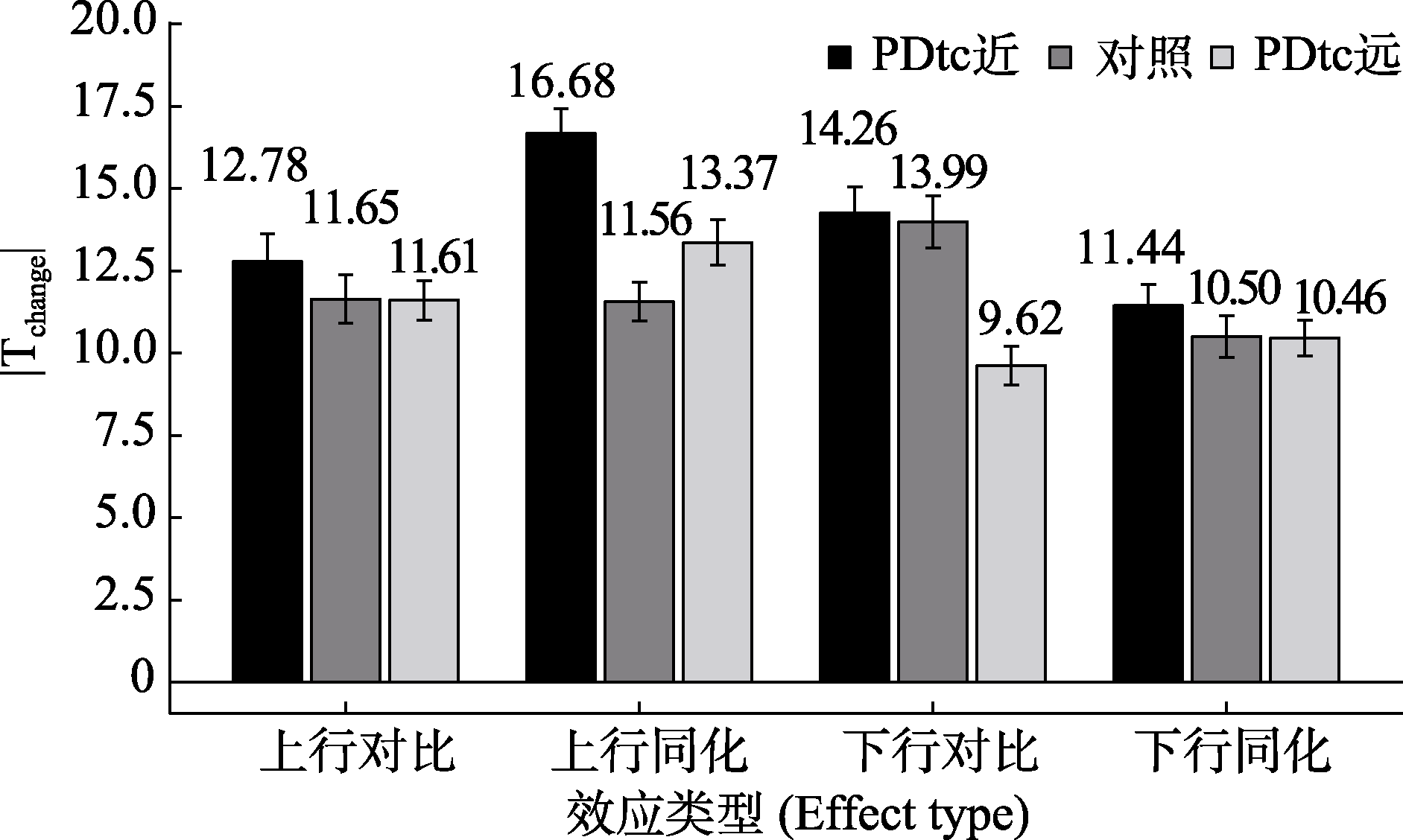
图10 实验2不同目标−线索社会距离条件下的四类印象更新程度
| 兴趣区(IA) | 总注视时间(ms) [M ± SD] | 总注视次数(次) [M ± SD] |
|---|---|---|
| 鼻子 | 961.00 ± 673.00 | 3.52 ± 2.12 |
| 眼睛 | 598.00 ± 568.00 | 2.16 ± 2.03 |
| 嘴巴 | 443.00 ± 536.00 | 1.46 ± 1.58 |
表3 实验2-T0眼动数据描述性统计表
| 兴趣区(IA) | 总注视时间(ms) [M ± SD] | 总注视次数(次) [M ± SD] |
|---|---|---|
| 鼻子 | 961.00 ± 673.00 | 3.52 ± 2.12 |
| 眼睛 | 598.00 ± 568.00 | 2.16 ± 2.03 |
| 嘴巴 | 443.00 ± 536.00 | 1.46 ± 1.58 |
| PDt-c组别 | 兴趣区 | 总注视时间(ms) [M ± SD] | 总注视次数(次) [M ± SD] |
|---|---|---|---|
| 近 | 目标面孔 | 1693 ± 637 | 6.55 ± 2.53 |
| 线索面孔 | 524 ± 486 | 2.13 ± 1.96 | |
| 远 | 目标面孔 | 1737 ± 546 | 6.77 ± 2.69 |
| 线索面孔 | 535 ± 497 | 2.21 ± 2.03 | |
| 对照 | 目标面孔 | 1904 ± 632 | 6.60 ± 2.66 |
| 线索面孔 | 432 ± 480 | 1.61 ± 1.76 |
表4 实验2-T1眼动数据描述性统计表
| PDt-c组别 | 兴趣区 | 总注视时间(ms) [M ± SD] | 总注视次数(次) [M ± SD] |
|---|---|---|---|
| 近 | 目标面孔 | 1693 ± 637 | 6.55 ± 2.53 |
| 线索面孔 | 524 ± 486 | 2.13 ± 1.96 | |
| 远 | 目标面孔 | 1737 ± 546 | 6.77 ± 2.69 |
| 线索面孔 | 535 ± 497 | 2.21 ± 2.03 | |
| 对照 | 目标面孔 | 1904 ± 632 | 6.60 ± 2.66 |
| 线索面孔 | 432 ± 480 | 1.61 ± 1.76 |
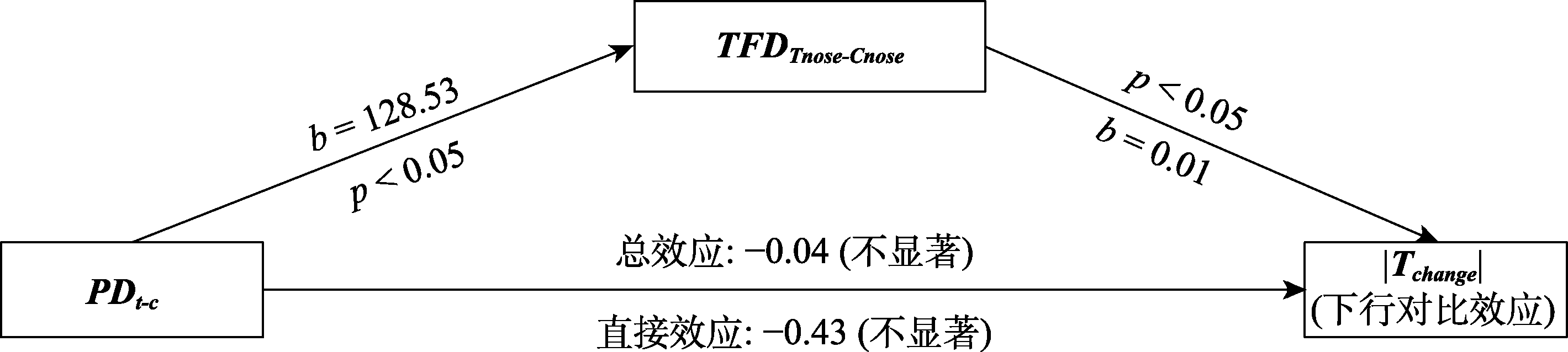
图11 实验2行为−眼动联合分析结果
| [1] |
Aron, A., Aron, E. N., & Smollan, D. (1992). Inclusion of other in the self scale and the structure of interpersonal closeness. Journal of Personality and Social Psychology, 63(4), 596-612.
doi: 10.1037/0022-3514.63.4.596 URL |
| [2] |
Barker, P., Dotsch, R., & Imhoff, R. (2020). Assimilation and contrast in spontaneous comparisons: Heterogeneous effects of standard extremity in facial evaluations. International Review of Social Psychology, 33(1), 1-17.
doi: 10.5334/irsp.291 URL |
| [3] | Barker, P., & Imhoff, R. (2021). The dynamic interactive pattern of assimilation and contrast: Accounting for standard extremity in comparative evaluations. Journal of Experimental Social Psychology, 97, Article 104190. |
| [4] | Baum, J., & Rahman, R. A. (2021). Negative news dominates fast and slow brain responses and social judgments even after source credibility evaluation. NeuroImage, 244(6), Article 118572. |
| [5] | Blanton, H. (2001). Evaluating the self in the context of another:The three-selves model of social comparison assimilation and contrast. In G. B. Moskowitz (Ed.), Cognitive social psychology: The Princeton Symposium and the legacy and future of social cognition (pp. 75-88). Mahwah, New Jersey: Erlbaum. |
| [6] | Bless, H., & Schwarz, N. (2010). Chapter 6-Mental construal and the emergence of assimilation and contrast effects: The inclusion/exclusion model. Advances in Experimental Social Psychology, 42, 319-373. |
| [7] |
Brambilla, M., Biella, M., & Freeman, J. B. (2021). The neural dynamics of face ensemble and trustworthiness processing. NeuroImage, 237, 118167.
doi: 10.1016/j.neuroimage.2021.118167 URL |
| [8] | Burgoon, J. K., Guerrero, L. K., & Floyd, K. (2010). Nonverbal communication (2nd ed.). Pearson Education. |
| [9] | Calvo, M. G., Gutiérrez-García, A., & Beltrán, D. (2018). Neural time course and brain sources of facial attractiveness vs. trustworthiness judgment. Cognitive, Affective, & Behavioral Neuroscience, 18(6), 1233-1347. |
| [10] |
Cogan, E., Parker, S., & Zellner, D. A. (2013). Beauty beyond compare: Effects of context extremity and categorization on hedonic contrast. Journal of Experimental Psychology: Human Perception and Performance, 39(1), 16-22.
doi: 10.1037/a0031020 pmid: 23244047 |
| [11] | Cohen, J. (1988). Statistical power analysis for the behavioral sciences (2nd ed.). Lawrence Erlbaum Associates. |
| [12] | Cuadrado, E., Tabernero, C., Hidalgo-Muñoz, A. R., Luque, B., & Castillo-Mayén, R. (2021). The arousal effect of exclusionary and inclusionary situations on social affiliation motivation and its subsequent influence on prosocial behavior. Frontiers in psychology, 12, Article 594440. |
| [13] | Du, X. (2023). An eye movement study on the influence of self-disgust on individual self-face fixation (Abstract). See Chinese Psychological Society (eds.), Summary Collection of the 25th National Conference on Psychology ——Forum for Doctoral/Postgraduate Students (pp.16). Chengdu, China. |
| [杜小普. (2023). 自我厌恶对个体自我面孔注视影响的眼动研究 (摘要). 见中国心理学会 (编), 第二十五届全国心理学学术会议摘要集——博/硕研究生论坛(pp.16). 成都.] | |
| [14] |
Engell, A. D., Haxby, J. V., & Todorov, A. (2007). Implicit trustworthiness decisions: Automatic coding of face properties in the human amygdala. Journal of Cognitive Neuroscience, 19(9), 1508-1519.
doi: 10.1162/jocn.2007.19.9.1508 pmid: 17714012 |
| [15] |
Ferguson, M. J., & Bargh, J. A. (2004). How social perception can automatically influence behavior. Trends in Cognitive Sciences, 8(1), 33-39.
pmid: 14697401 |
| [16] |
Ferguson, M. J., Mann, T. C., Cone, J., & Shen, X. (2019). When and how implicit first impressions can be updated. Current Directions in Psychological Science, 28(4), 331-336.
doi: 10.1177/0963721419835206 |
| [17] |
Faul, F., Erdfelder, E., Lang, A. G., & Buchner, A. (2007). G*Power 3: A flexible statistical power analysis program for the social, behavioral, and biomedical sciences. Behavior Research Methods, 39, 175-191.
doi: 10.3758/bf03193146 pmid: 17695343 |
| [18] |
Giesen, A., & Echterhoff, G. (2018). Do I really feel your pain? Comparing the effects of observed and personal ostracism. Personality and Social Psychology Bulletin, 44(4), 550-561.
doi: 10.1177/0146167217744524 pmid: 29231078 |
| [19] |
Hall, J. A., Andrzejewski, S. A., & Yopchick, J. E. (2009). Psychosocial correlates of interpersonal sensitivity: A meta-analysis. Journal of Nonverbal Behavior, 33(3), 149-180.
doi: 10.1007/s10919-009-0070-5 URL |
| [20] | Hayes, A. F. (2018). Introduction to mediation, moderation, and conditional process analysis: A regression-based approach. Guilford Publications. |
| [21] |
He, T., Wang, Y., & Chen, W. (2023). Contextual effect of social comparison and social evaluation: Insights from the perspective of joint evaluation. Advances in Psychological Science, 31(6), 1055-1067.
doi: 10.3724/SP.J.1042.2023.01055 |
|
[何婷婷, 王一漫, 陈文锋. (2023). 社会比较和社会评价的背景效应——来自联合评估视角的启示. 心理科学进展, 31(6), 1055-1067.]
doi: 10.3724/SP.J.1042.2023.01055 |
|
| [22] |
Henderson, J. M., Williams, C. C., & Falk, R. J. (2005). Eye movements are functional during face learning. Memory & Cognition, 33(1), 98-106.
doi: 10.3758/BF03195300 URL |
| [23] |
Hou, W., Tian, X., Liu, L., Yi, B., Ou, Y., Chen, W., & Shang, J. (2021). Continuum effect in assimilation process of facial attractiveness. Advances in Psychological Science, 29(7), 1210-1215.
doi: 10.3724/SP.J.1042.2021.01210 |
|
[侯文霞, 田欣然, 刘立志, 易冰, 欧玉晓, 陈文锋, 尚俊辰. (2021). 面孔吸引力同化的连续性效应. 心理科学进展, 29(7), 1210-1215.]
doi: 10.3724/SP.J.1042.2021.01210 |
|
| [24] | Huang, H. (2016). A study on the influence of others’ self- presentation on initial interpersonal trust in online social networking [Unpublished master’s thesis]. Guangzhou University, China. |
| [黄华炎. (2016). 线上网络社交初期他人自我呈现对人际初始信任的影响研究 (硕士学位论文). 广州大学.] | |
| [25] | Jones, E. E., & Davis, K. E. (1965). From acts to dispositions:The attribution process in person perception. In L. Berkowitz (Ed.), Advances in Experimental Social Psychology (Vol. 2, pp. 219-266). Academic Press. |
| [26] | Kahneman, D. (1973). Attention and effort. Englewood Cliffs, NJ: Prentice-Hall. |
| [27] |
Kahneman, D., & Tversky, A. (1979). Prospect theory: An analysis of decision under risk. Econometrica, 47(2), 263-292.
doi: 10.2307/1914185 URL |
| [28] |
Levin, D. T. (2000). Race as a visual feature: Using visual search and perceptual discrimination tasks to understand face categories and the cross-race recognition deficit. Journal of Experimental Psychology: General, 129(4), 559-574.
doi: 10.1037/0096-3445.129.4.559 URL |
| [29] | Li, Z., Wang, L., & Li, M. (2018). The impact of contextual information on the trustworthiness of faces: An event- related potential study. NeuroReport, 29(18), 1553-1558. |
| [30] | Liberman, N., Trope, Y., & Stephan, E. (2007). Psychological distance. In A. W. Kruglanski, & E. T. Higgins (Eds.), Social psychology: Handbook of basic principles (Vol. 2, pp. 353-383). New York, NY: Guilford Press. |
| [31] |
Lieberman, M. D., Eisenberger, N. I., Crockett, M. J., Tom, S. M., Pfeifer, J. H., & Way, B. M. (2007). Putting feelings into words: Affect labeling disrupts amygdala activity in response to affective stimuli. Psychological Science, 18(5), 421-428.
pmid: 17576282 |
| [32] | Lin, P. (2023). Influence and mechanisms of social exclusion on prosocial behavior [Unpublished master’s thesis]. Guangxi Normal University, Guilin, China. |
| [林培钿. (2023). 社会排斥对亲社会行为的影响及其作用机制 (硕士学位论文). 广西师范大学, 桂林.] | |
| [33] | Lu, H., Liu, Q., & Zhu, X. (2021). Enhancing effect of repetitive transcranial direct current stimulation and Schulte grid training on attention of healthy undergraduates. Academic Journal of Second Military Medical University, 42(2), 197-202. |
| [卢宏亮, 刘权辉, 朱霞. (2021). 重复经颅直流电刺激与舒尔特方格训练对健康大学生注意力的提升效果. 第二军医大学学报, 42(2), 197-202.] | |
| [34] | Luo, Y., Zhou, S., Lv, T., Lu, B., Zhou, H., Liu, L., & An, H. (2006). The influence of facial information on N170 in face cognition. Journal of Southern Medical University, 26(6), 794-795. |
| [罗一峰, 周曙, 吕田明, 陆兵勋, 周宏珍, 刘玲, 安红伟. (2006). 面孔认知中容颜信息对N170的影响. 南方医科大学学报, 26(6), 794-795.] | |
| [35] |
Mussweiler, T. (2003). Comparison processes in social judgment: mechanisms and consequences. Psychological review, 110(3), 472-489.
doi: 10.1037/0033-295x.110.3.472 pmid: 12885111 |
| [36] |
Oosterhof, N. N., & Todorov, A. (2008). The functional basis of face evaluation. Proceedings of the National Academy of Sciences of the United States of America, 105(32), 11087-11092.
doi: 10.1073/pnas.0805664105 pmid: 18685089 |
| [37] |
Park, B., & Rothbart, M. (1982). Perception of out-group homogeneity and levels of social categorization: Memory for the subordinate attributes of in-group and out-group members. Journal of Personality and Social Psychology, 42(6), 1051-1068.
doi: 10.1037/0022-3514.42.6.1051 URL |
| [38] | Shen, L. (2017). Reliable of oriental face: A study on eye movement in cross-cultural [Unpublished master’s thesis]. Jiangxi Normal University, Nanchang, China. |
| [沈璐. (2017). 靠谱的东方脸: 一个跨文化的眼动研究 (硕士学位论文). 江西师范大学, 南昌.] | |
| [39] | Shen, X., & Ferguson, M. J. (2021). How resistant are implicit impressions of facial trustworthiness? When new evidence leads to durable updating. Journal of Experimental Social Psychology, 97, Article 104219. |
| [40] | Shen, X., Mann, T. C., & Ferguson, M. J. (2020). Beware a dishonest face?: Updating face-based implicit impressions using diagnostic behavioral information. Journal of Experimental Social Psychology, 86, Article 103888. |
| [41] | Shi, X. (2019). The influence of personality traits of perceivers and perceivers on the accuracy of personality perception from face [Unpublished master’s thesis]. Liaoning Normal University, Dalian, China. |
| [史晓露. (2019). 知觉者、被知觉者的人格特质对面孔人格知觉准确性的影响 (硕士学位论文). 辽宁师范大学, 大连.] | |
| [42] |
Tajfel, H., Billing, M. G., Bundy, R. P., & Flament, C. (1971). Social Categorization and Intergroup Behaviour. European Journal of Social Psychology, 1(2), 149-178.
doi: 10.1002/ejsp.v1:2 URL |
| [43] | Tajfel, H., & Turner, J. C. (1979). An integrative theory of intergroup conflict. In W. G. Austin & S. Worchel (Eds.), The social psychology of intergroup relations (pp. 33-47). Monterey, CA: Brooks/Cole. |
| [44] |
Tian, X., Hou, W., Ou, Y., Yi, B., Chen, W., & Shang, J. (2021). Average percept in ensemble perception is based on morphed average object: Evidence from average facial attractiveness. Acta Psychologica Sinica, 53(7), 714-728.
doi: 10.3724/SP.J.1041.2021.00714 |
|
[田欣然, 侯文霞, 欧玉晓, 易冰, 陈文锋, 尚俊辰. (2021). 基于合成平均刺激的平均表征机制——来自平均面孔吸引力的证据. 心理学报, 53(7), 714-728.]
doi: 10.3724/SP.J.1041.2021.00714 |
|
| [45] |
Tong, Y., Bai, Y., & Feng, T. (2024). The cognitive mechanism of reducing procrastination by emotion regulation: The mediation role of task aversiveness. Acta Psychologica Sinica, 56(4), 458-468.
doi: 10.3724/SP.J.1041.2024.00458 |
|
[童廷婷, 白幼玲, 冯廷勇. (2024). 情绪调节改善拖延行为的认知机制: 任务厌恶中介作用. 心理学报, 56(4), 458-468.]
doi: 10.3724/SP.J.1041.2024.00458 |
|
| [46] |
Trope, Y., & Liberman, N. (2010). Construal-level theory of psychological distance. Psychological Review, 117(2), 440-463.
doi: 10.1037/a0018963 pmid: 20438233 |
| [47] | Turner, J. C., Hogg, M. A., Oakes, P. J., Reicher, S. D., & Wetherell, M. S. (1987). Rediscovering the social group: A self-categorization theory. Oxford, UK: Basil Blackwell. |
| [48] |
Vandevelde, L., & Miyahara, M. (2005). Impact of group rejections from a physical activity on physical self-esteem among university students. Social Psychology of Education, 8(1), 65-81.
doi: 10.1007/s11218-004-3951-9 URL |
| [49] | Wang, Y., He, T., & Chen, W. (2023). Cross-dimensional assimilation effect in facial trustworthiness evaluation: The asymmetry of in-group favoritism under the moderation of socioeconomic status (in Chinese). Chinese Science Bulletin, 68(2-3), 229-237. |
| [王一漫, 何婷婷, 陈文锋. (2023). 面孔可信度评价的跨维度同化效应: 社会经济地位调节下的内群体偏好不对称性. 科学通报, 68(2-3), 229-237.] | |
| [50] | Wang, Y., & Luo, Y. (2005). Standardization and assessment of college students’ facial expression of emotion. Chinese Journal of Clinical Psychology, 13(4), 396-398. |
| [王妍, 罗跃嘉. (2005). 大学生面孔表情材料的标准化及其评定. 中国临床心理学杂志, 13(4), 396-398.] | |
| [51] |
Williams, K. D., & Jarvis, B. J. (2006). Cyberball: A program for use in research on interpersonal ostracism and acceptance. Behavior Research Methods, 38(1), 174-180.
doi: 10.3758/bf03192765 pmid: 16817529 |
| [52] | Xing, S., & Yu, G. (2005). A review on research of social comparison. Advances in Psychological Science, 13(1), 78-84. |
| [邢淑芬, 俞国良. (2005). 社会比较研究的现状与发展趋势. 心理科学进展, 13(1), 78-84.] | |
| [53] |
Yang, X., & Zou, Y. (2020). Can we really empathize? The influence of vicarious ostracism on individuals and its theoretical explanation. Advances in Psychological Science, 28(9), 1575-1585.
doi: 10.3724/SP.J.1042.2020.01575 |
|
[杨晓莉, 邹妍. (2020). 我们真的能感同身受吗?——替代性排斥对个体的影响及理论解释. 心理科学进展, 28(9), 1575-1585.]
doi: 10.3724/SP.J.1042.2020.01575 |
|
| [54] | Yudkin, D. A., Van Bavel, J. J., & Rhodes, M. (2020). Young children are more likely to spontaneously attribute mental states to members of their own group. Psychological Science, 31(11), 1359-1371. |
| [1] | 周蕾, 李立统, 梁竹苑, 李纾, 惠青山, 张磊. 风险决策和跨期决策的过程比较: 基于概率和时间的等量转换范式[J]. 心理学报, 2026, 58(6): 1213-1236. |
| [2] | 吴莹莹, 张雅婷, 武星妍, 王振兴, 陈兰清, 谢涵颖. 不同人际交往能力青少年的情绪注意偏向[J]. 心理学报, 2026, 58(5): 866-886. |
| [3] | 李雨桐, 李璇, 岳泽明, 李亚红, 隋雪. 抑郁倾向个体对言语情绪信息的加工偏向[J]. 心理学报, 2025, 57(6): 1041-1055. |
| [4] | 张琪, 王紫乐, 吴美君. 知觉学习中非显著性刺激视觉加工的学习机制[J]. 心理学报, 2024, 56(6): 689-700. |
| [5] | 梁菲菲, 刘瑛, 贺斐, 冯琳琳, 王峥, 白学军. 中文阅读伴随词汇学习中的视觉复杂性效应:基于笔画数和词长的证据[J]. 心理学报, 2024, 56(12): 1734-1750. |
| [6] | 杨周, 朱嘉雯, 苏琳, 熊明洁. 对疼痛线索的晚期注视偏向预测慢性疼痛的维持:来自眼动的证据[J]. 心理学报, 2024, 56(1): 44-60. |
| [7] | 张萱, 刘萍萍. 熟悉度促进人们与垃圾分类中的志愿者合作及其作用机制[J]. 心理学报, 2023, 55(8): 1358-1371. |
| [8] | 龙翼婷, 姜英杰, 崔璨, 岳阳. 奖赏预测误差对项目和联结记忆影响的分离:元记忆的作用[J]. 心理学报, 2023, 55(6): 877-891. |
| [9] | 黄元娜, 江程铭, 刘洪志, 李纾. 风险、跨期和空间决策的决策策略共享:眼动和主观判断的证据[J]. 心理学报, 2023, 55(6): 994-1015. |
| [10] | 刘洪志, 杨钘兰, 李秋月, 魏子晗. 跨期决策中的维度差异偏好:眼动证据[J]. 心理学报, 2023, 55(4): 612-625. |
| [11] | 曹海波, 兰泽波, 高峰, 于海涛, 李鹏, 王敬欣. 词素位置概率在中文阅读中的作用:词汇判断和眼动研究[J]. 心理学报, 2023, 55(2): 159-176. |
| [12] | 钟毅平, 牛娜娜, 范伟, 任梦梦, 李梅. 动作自主性与社会距离对主动控制感的影响:来自行为与ERPs的证据[J]. 心理学报, 2023, 55(12): 1932-1948. |
| [13] | 李梅, 李琎, 张冠斐, 钟毅平, 李红. 承诺水平与社会距离对信任投资的影响:来自行为与ERPs的证据[J]. 心理学报, 2023, 55(11): 1859-1871. |
| [14] | 卢张龙, 刘梦娜, 刘玉洁, 马盼盼, 张瑞平. 内隐序列学习表征机制探究:眼动证据[J]. 心理学报, 2022, 54(7): 779-788. |
| [15] | 占友龙, 肖啸, 谭千保, 李琎, 钟毅平. 声誉关注与社会距离对伤害困境中道德决策的影响:来自行为与ERPs的证据[J]. 心理学报, 2022, 54(6): 613-627. |
| 阅读次数 | ||||||
|
全文 |
|
|||||
|
摘要 |
|
|||||
