

ISSN 0439-755X
CN 11-1911/B
主办:中国心理学会
中国科学院心理研究所
出版:科学出版社
CN 11-1911/B
主办:中国心理学会
中国科学院心理研究所
出版:科学出版社
心理学报 ›› 2026, Vol. 58 ›› Issue (7): 1444-1458.doi: 10.3724/SP.J.1041.2026.1444 cstr: 32110.14.2026.1444
• 研究报告 • 上一篇
黎耀奇1,2, 陈政任1, 江秋敏1, 林美珍3( )
)
收稿日期:2025-07-24
发布日期:2026-05-15
出版日期:2026-07-25
通讯作者:
林美珍, E-mail: linmeizhen603@163.com基金资助:
LI Yaoqi1,2, CHEN Zhengren1, JIANG Qiumin1, LIN Meizhen3()
Received:2025-07-24
Online:2026-05-15
Published:2026-07-25
摘要:
提振消费、扩大内需已被列为我国经济工作首要任务, 如何通过有效的助推方式提振国民消费成为学界和政界共同关注的焦点。然而, 以物质激励为主的传统行为干预策略在长期影响方面存在局限, 如何利用有效的助推策略实现长期的提振消费效果是当下的研究缺口。本研究从时间心理学的研究视角出发, 综合运用二手数据分析、实验室实验、大规模问卷调查、现场实验等混合方法, 系统揭示时间观如何通过刺激个体体验消费需求进而助推消费倾向的影响机制。研究发现:(1)相对于循环时间观, 线性时间观能更有效地促进个体消费倾向, 而体验消费需求在二者间起中介作用; (2)时间范围对上述影响存在调节效应, 有限时间范围会增强时间观对消费倾向的影响, 而开放时间范围则削弱上述影响。本文将时间观助推纳入扩大内需研究情境, 拓展了框架效应研究边界, 研究结论为我国提振消费策略提供了实证支持和实践指导, 对制定长期提振消费政策有重要的借鉴意义。
中图分类号:
黎耀奇, 陈政任, 江秋敏, 林美珍. (2026). 人生得意须尽欢:时间观对个体消费倾向的影响. 心理学报, 58(7), 1444-1458.
LI Yaoqi, CHEN Zhengren, JIANG Qiumin, LIN Meizhen. (2026). You only live once: The influence of temporal perspective on individual consumption tendency. Acta Psychologica Sinica, 58(7), 1444-1458.
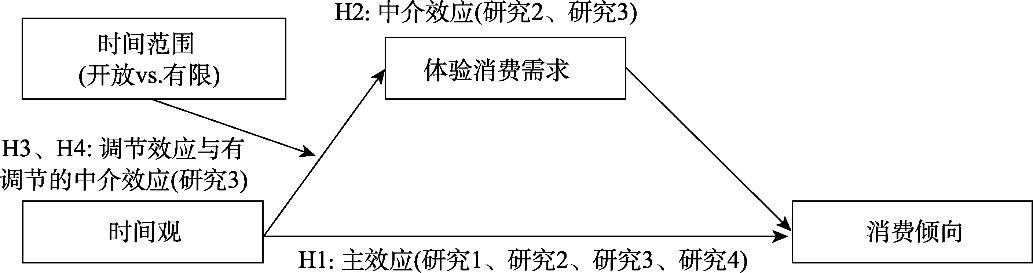
图1 研究模型
| 研究 | 验证假设 | 研究目的 | 数据来源 |
|---|---|---|---|
| 研究1 | H1 | 二手数据:确认主效应的存在 | 基于多数据库的37个国家配对数据 |
| 研究2 | H1、H2 | 实验室实验:检验主效应和中介效应, 建立因果关系, 排除可能存在的替代性中介解释 | 包括129个有效被试的实验室实验 |
| 研究3 | H1、H2、H3、H4 | 问卷调查:检验主效应、中介效应、调节效应与有调节的中介效应, 提升外部效度 | 来自31个省级行政区包括2970名受访者参与的问卷调查 |
| 研究4 | H1 | 现场实验:再次检验主效应, 确保生态效度 | 持续一个月的现场实验, 175张餐桌共603名顾客参与到实验 |
表1 研究概览
| 研究 | 验证假设 | 研究目的 | 数据来源 |
|---|---|---|---|
| 研究1 | H1 | 二手数据:确认主效应的存在 | 基于多数据库的37个国家配对数据 |
| 研究2 | H1、H2 | 实验室实验:检验主效应和中介效应, 建立因果关系, 排除可能存在的替代性中介解释 | 包括129个有效被试的实验室实验 |
| 研究3 | H1、H2、H3、H4 | 问卷调查:检验主效应、中介效应、调节效应与有调节的中介效应, 提升外部效度 | 来自31个省级行政区包括2970名受访者参与的问卷调查 |
| 研究4 | H1 | 现场实验:再次检验主效应, 确保生态效度 | 持续一个月的现场实验, 175张餐桌共603名顾客参与到实验 |
| 变量 | 各个国家每人每天的平均肉类消耗量 | |
|---|---|---|
| 模型1 | 模型2 | |
| 常量 | 115.32(17.34)*** | 155.71(25.55)*** |
| 人均GDP | 0.00004(0.0004) | 0.00008(0.0004) |
| 国家层次的长期导向 | −0.79(0.38)* | |
| R2 | 0.0004 | 0.11 |
表2 国家层次时间观对消费者每人每天的平均肉类消耗量的影响的层次回归模型
| 变量 | 各个国家每人每天的平均肉类消耗量 | |
|---|---|---|
| 模型1 | 模型2 | |
| 常量 | 115.32(17.34)*** | 155.71(25.55)*** |
| 人均GDP | 0.00004(0.0004) | 0.00008(0.0004) |
| 国家层次的长期导向 | −0.79(0.38)* | |
| R2 | 0.0004 | 0.11 |
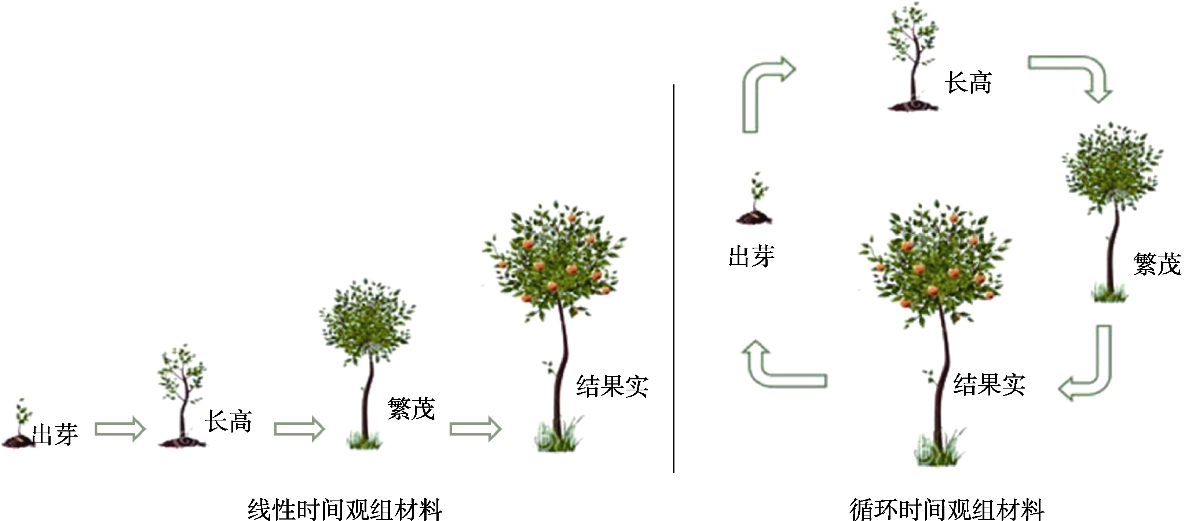
图2 研究1的时间观刺激材料
| Model | Factor | χ2 | df | χ2/df | △χ2(△df) | CFI | TLI | RMSEA | SRMR |
|---|---|---|---|---|---|---|---|---|---|
| M0 | 假设模型 | 622.11 | 48 | 12.96 | 0.95 | 0.92 | 0.06 | 0.05 | |
| M1 | 三因子模型 | 798.17 | 51 | 15.65 | 176.06(3) | 0.93 | 0.91 | 0.07 | 0.05 |
| M2 | 二因子模型 | 4168.53 | 53 | 78.65 | 3370.36(2) | 0.60 | 0.51 | 0.16 | 0.15 |
| M3 | 一因子模型 | 4075.24 | 54 | 75.47 | −93.29(1) | 0.61 | 0.53 | 0.16 | 0.11 |
表3 验证性因子分析
| Model | Factor | χ2 | df | χ2/df | △χ2(△df) | CFI | TLI | RMSEA | SRMR |
|---|---|---|---|---|---|---|---|---|---|
| M0 | 假设模型 | 622.11 | 48 | 12.96 | 0.95 | 0.92 | 0.06 | 0.05 | |
| M1 | 三因子模型 | 798.17 | 51 | 15.65 | 176.06(3) | 0.93 | 0.91 | 0.07 | 0.05 |
| M2 | 二因子模型 | 4168.53 | 53 | 78.65 | 3370.36(2) | 0.60 | 0.51 | 0.16 | 0.15 |
| M3 | 一因子模型 | 4075.24 | 54 | 75.47 | −93.29(1) | 0.61 | 0.53 | 0.16 | 0.11 |
| 变量 | M | SD | 1 | 2 | 3 | 4 | 5 | 6 | 7 | 8 | 9 | 10 |
|---|---|---|---|---|---|---|---|---|---|---|---|---|
| 1性别 | − | − | ||||||||||
| 2年龄 | 30.49 | 8.81 | −0.02 | |||||||||
| 3 教育水平 | 4.02 | 0.65 | 0.06*** | −0.08*** | ||||||||
| 4工作类型 | 3.14 | 1.73 | −0.06*** | 0.34*** | −0.15*** | |||||||
| 5每月收入 | 3.82 | 2.19 | 0.003 | 0.50*** | 0.22*** | 0.28*** | ||||||
| 6每月支出 | 2.38 | 1.42 | 0.05** | 0.40*** | 0.16*** | 0.18*** | 0.77*** | |||||
| 7 每年旅游次数 | 3.12 | 2.15 | 0.04* | 0.04* | 0.13*** | 0.003 | 0.28*** | 0.26*** | ||||
| 8时间观 | 5.60 | 0.97 | −0.09*** | 0.02 | 0.04* | −0.02 | 0.01 | 0.02 | 0.01 | |||
| 9 体验消费需求 | 5.30 | 0.84 | 0.03 | 0.06** | 0.02 | 0.04 | 0.14*** | 0.17*** | 0.16*** | 0.06*** | ||
| 10消费倾向 | 5.42 | 0.83 | −0.02 | 0.001 | 0.05** | 0.01 | 0.10*** | 0.13*** | 0.16*** | 0.08*** | 0.55*** | |
| 11 时间范围 | 4.72 | 0.82 | −0.001 | −0.13*** | 0.13*** | −0.03 | 0.11*** | 0.10*** | 0.15*** | −0.05** | 0.27*** | 0.27*** |
表4 各变量均值、标准差和相关系数
| 变量 | M | SD | 1 | 2 | 3 | 4 | 5 | 6 | 7 | 8 | 9 | 10 |
|---|---|---|---|---|---|---|---|---|---|---|---|---|
| 1性别 | − | − | ||||||||||
| 2年龄 | 30.49 | 8.81 | −0.02 | |||||||||
| 3 教育水平 | 4.02 | 0.65 | 0.06*** | −0.08*** | ||||||||
| 4工作类型 | 3.14 | 1.73 | −0.06*** | 0.34*** | −0.15*** | |||||||
| 5每月收入 | 3.82 | 2.19 | 0.003 | 0.50*** | 0.22*** | 0.28*** | ||||||
| 6每月支出 | 2.38 | 1.42 | 0.05** | 0.40*** | 0.16*** | 0.18*** | 0.77*** | |||||
| 7 每年旅游次数 | 3.12 | 2.15 | 0.04* | 0.04* | 0.13*** | 0.003 | 0.28*** | 0.26*** | ||||
| 8时间观 | 5.60 | 0.97 | −0.09*** | 0.02 | 0.04* | −0.02 | 0.01 | 0.02 | 0.01 | |||
| 9 体验消费需求 | 5.30 | 0.84 | 0.03 | 0.06** | 0.02 | 0.04 | 0.14*** | 0.17*** | 0.16*** | 0.06*** | ||
| 10消费倾向 | 5.42 | 0.83 | −0.02 | 0.001 | 0.05** | 0.01 | 0.10*** | 0.13*** | 0.16*** | 0.08*** | 0.55*** | |
| 11 时间范围 | 4.72 | 0.82 | −0.001 | −0.13*** | 0.13*** | −0.03 | 0.11*** | 0.10*** | 0.15*** | −0.05** | 0.27*** | 0.27*** |
| 变量/模型 | 体验消费需求 | 消费倾向 | ||||||
|---|---|---|---|---|---|---|---|---|
| M1 | M2 | M3 | M4 | M5 | M6 | M7 | ||
| 性别 | 0.043 | 0.05 | 0.06* | 0.07* | −0.06 | −0.05 | −0.08** | |
| (0.03) | (0.03) | (0.03) | (0.03) | (0.03) | (0.03) | (0.03) | ||
| 年龄 | −0.002 | −0.002 | 0.004 | 0.004 | −0.01* | −0.01** | −0.01** | |
| (0.002) | (0.002) | (0.002) | (0.002) | (0.002) | (0.002) | (0.002) | ||
| 教育水平 | −0.03 | −0.03 | −0.05* | −0.06* | 0.03 | 0.02 | 0.04 | |
| (0.03) | (0.03) | (0.02) | (0.02) | (0.03) | (0.03) | (0.02) | ||
| 工作类型 | 0.01 | 0.01 | 0.01 | 0.01 | 0.01 | 0.01 | 0.003 | |
| (0.01) | (0.01) | (0.01) | (0.01) | (0.01) | (0.01) | (0.01) | ||
| 每月收入 | 0.01 | 0.01 | −0.01 | −0.01 | 0.0004 | 0.002 | −0.002 | |
| (0.01) | (0.01) | (0.01) | (0.01) | (0.01) | (0.01) | (0.01) | ||
| 每月支出 | 0.08*** | 0.08*** | 0.07*** | 0.08*** | 0.07*** | 0.07*** | 0.02 | |
| (0.02) | (0.02) | (0.02) | (0.02) | (0.02) | (0.02) | (0.01) | ||
| 每年旅游次数 | 0.05*** | 0.05*** | 0.04*** | 0.04*** | 0.05*** | 0.05*** | 0.02*** | |
| (0.01) | (0.01) | (0.01) | (0.01) | (0.01) | (0.01) | (0.01) | ||
| 时间观 | 0.05** | 0.07*** | 0.09*** | 0.06*** | 0.03* | |||
| (0.02) | (0.02) | (0.02) | (0.02) | (0.01) | ||||
| 时间范围 | 0.26*** | 0.27*** | ||||||
| (0.02) | (0.02) | |||||||
| 时间观×时间范围 | −0.07*** | |||||||
| (0.02) | ||||||||
| 体验消费需求 | 0.54*** | |||||||
| (0.02) | ||||||||
| 截距 | 5.01*** | 4.7*** | 3.42*** | 3.30*** | 5.25*** | 4.90*** | 2.37*** | |
| (0.13) | (0.16) | (0.18) | (0.18) | (0.13) | (0.16) | (0.15) | ||
| R-squared | 0.05 | 0.05 | 0.11 | 0.12 | 0.04 | 0.04 | 0.32 | |
| ∆ R-squared | 0.004 | 0.06 | 0.01 | 0.01 | 0.28 | |||
| 调整R-squared | 0.04 | 0.05 | 0.11 | 0.12 | 0.03 | 0.04 | 0.32 | |
| F | 20.23*** | 19.28*** | 40.70*** | 38.77*** | 15.97*** | 16.00*** | 153.78*** | |
表5 层次回归模型
| 变量/模型 | 体验消费需求 | 消费倾向 | ||||||
|---|---|---|---|---|---|---|---|---|
| M1 | M2 | M3 | M4 | M5 | M6 | M7 | ||
| 性别 | 0.043 | 0.05 | 0.06* | 0.07* | −0.06 | −0.05 | −0.08** | |
| (0.03) | (0.03) | (0.03) | (0.03) | (0.03) | (0.03) | (0.03) | ||
| 年龄 | −0.002 | −0.002 | 0.004 | 0.004 | −0.01* | −0.01** | −0.01** | |
| (0.002) | (0.002) | (0.002) | (0.002) | (0.002) | (0.002) | (0.002) | ||
| 教育水平 | −0.03 | −0.03 | −0.05* | −0.06* | 0.03 | 0.02 | 0.04 | |
| (0.03) | (0.03) | (0.02) | (0.02) | (0.03) | (0.03) | (0.02) | ||
| 工作类型 | 0.01 | 0.01 | 0.01 | 0.01 | 0.01 | 0.01 | 0.003 | |
| (0.01) | (0.01) | (0.01) | (0.01) | (0.01) | (0.01) | (0.01) | ||
| 每月收入 | 0.01 | 0.01 | −0.01 | −0.01 | 0.0004 | 0.002 | −0.002 | |
| (0.01) | (0.01) | (0.01) | (0.01) | (0.01) | (0.01) | (0.01) | ||
| 每月支出 | 0.08*** | 0.08*** | 0.07*** | 0.08*** | 0.07*** | 0.07*** | 0.02 | |
| (0.02) | (0.02) | (0.02) | (0.02) | (0.02) | (0.02) | (0.01) | ||
| 每年旅游次数 | 0.05*** | 0.05*** | 0.04*** | 0.04*** | 0.05*** | 0.05*** | 0.02*** | |
| (0.01) | (0.01) | (0.01) | (0.01) | (0.01) | (0.01) | (0.01) | ||
| 时间观 | 0.05** | 0.07*** | 0.09*** | 0.06*** | 0.03* | |||
| (0.02) | (0.02) | (0.02) | (0.02) | (0.01) | ||||
| 时间范围 | 0.26*** | 0.27*** | ||||||
| (0.02) | (0.02) | |||||||
| 时间观×时间范围 | −0.07*** | |||||||
| (0.02) | ||||||||
| 体验消费需求 | 0.54*** | |||||||
| (0.02) | ||||||||
| 截距 | 5.01*** | 4.7*** | 3.42*** | 3.30*** | 5.25*** | 4.90*** | 2.37*** | |
| (0.13) | (0.16) | (0.18) | (0.18) | (0.13) | (0.16) | (0.15) | ||
| R-squared | 0.05 | 0.05 | 0.11 | 0.12 | 0.04 | 0.04 | 0.32 | |
| ∆ R-squared | 0.004 | 0.06 | 0.01 | 0.01 | 0.28 | |||
| 调整R-squared | 0.04 | 0.05 | 0.11 | 0.12 | 0.03 | 0.04 | 0.32 | |
| F | 20.23*** | 19.28*** | 40.70*** | 38.77*** | 15.97*** | 16.00*** | 153.78*** | |
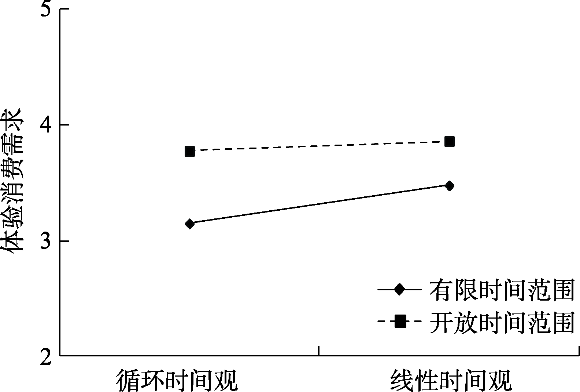
图3 时间观与时间范围对体验消费需求的交互作用
| 时间范围取值 | 间接效应 | BootSE | BootLLCI | BootULCI |
|---|---|---|---|---|
| 1.时间范围取均值 − SD (有限时间范围) | 0.07 | 0.01 | 0.04 | 0.10 |
| 2.时间范围取均值 | 0.04 | 0.01 | 0.03 | 0.06 |
| 3.时间范围取均值 + SD (开放时间范围) | 0.02 | 0.01 | 0.0006 | 0.03 |
| 差异(3-1) | −0.05 | 0.01 | −0.08 | −0.03 |
表6 有调节的中介效应分析
| 时间范围取值 | 间接效应 | BootSE | BootLLCI | BootULCI |
|---|---|---|---|---|
| 1.时间范围取均值 − SD (有限时间范围) | 0.07 | 0.01 | 0.04 | 0.10 |
| 2.时间范围取均值 | 0.04 | 0.01 | 0.03 | 0.06 |
| 3.时间范围取均值 + SD (开放时间范围) | 0.02 | 0.01 | 0.0006 | 0.03 |
| 差异(3-1) | −0.05 | 0.01 | −0.08 | −0.03 |
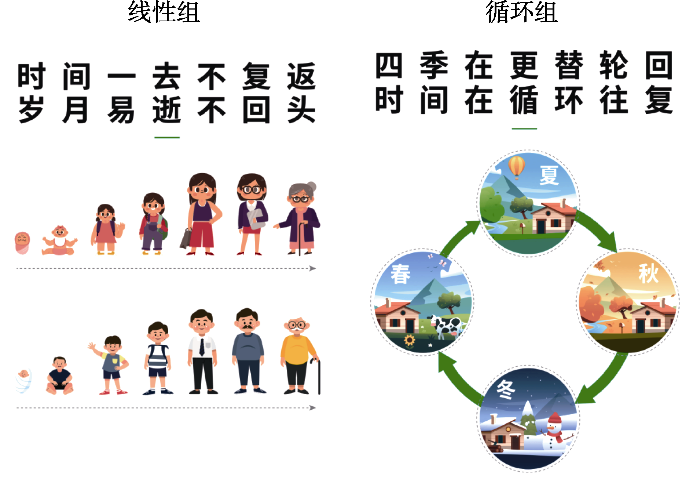
图4 研究4的时间观刺激材料
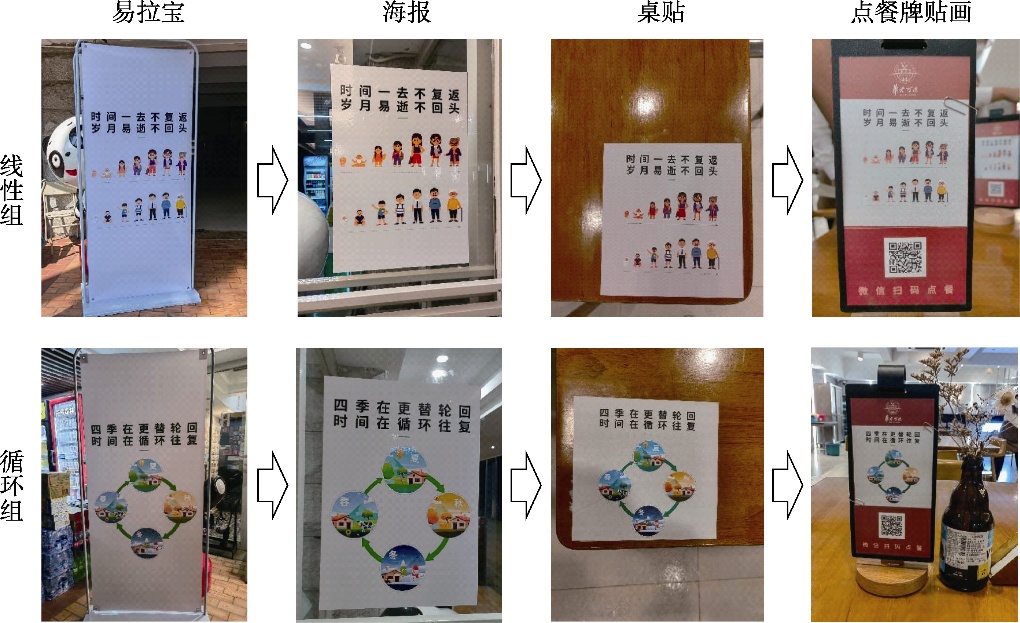
图5 餐厅各区域时间观刺激材料
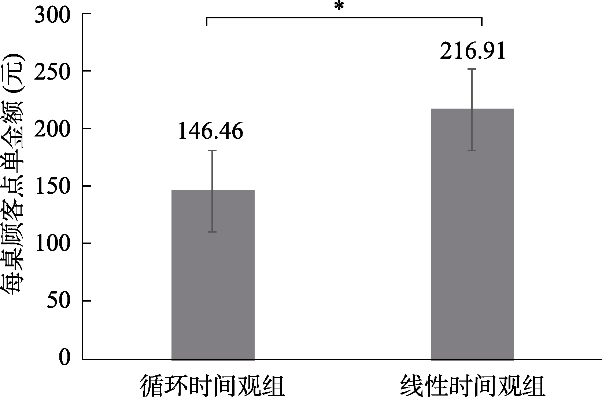
图6 时间观对消费金额的影响效应 注:* p < 0.05; 误差线为标准误(SE)
| [1] | Ancona, D. G., Okhuysen, G. A., & Perlow, L. A. (2001). Taking time to integrate temporal research. Academy of Management Review, 26(4), 512-529. |
| [2] | Arnould, E. J., & Price, L. L. (1993). River magic: Extraordinary experience and the extended service encounter. Journal of Consumer Research, 20(1), 24-45. |
| [3] | Babin, B. J., & Attaway, J. S. (2000). Atmospheric affect as a tool for creating value and gaining share of customer. Journal of Business Research, 49(2), 91-99. |
| [4] | Banerjee, S., Galizzi, M. M., John, P., & Mourato, S. (2023). Sustainable dietary choices improved by reflection before a nudge in an online experiment. Nature Sustainability, 6(12), 1632-1642. |
| [5] | Barkley, R. A., Edwards, G., Laneri, M., Fletcher, K., & Metevia, L. (2001). Executive functioning, temporal discounting, and sense of time in adolescents with attention deficit hyperactivity disorder (ADHD) and oppositional defiant disorder (ODD). Journal of Abnormal Child Psychology, 29(6), 541-556. |
| [6] | Bergadaa, M. M. (1990). The role of time in the action of the consumer. Journal of Consumer Research, 17(3), 289-302. |
| [7] | Briley, D. A. (2013). Looking forward, looking back: Cultural differences and similarities in time orientation. In Wyer, R. S., Chiu, C. Y., & Hong, Y. Y. (Eds.), Understanding culture: Theory, research, and application (pp. 311–325). Psychology Press. |
| [8] | Carstensen, L. L. (2006). The influence of a sense of time on human development. Science, 312(5782), 1913-1915. |
| [9] | Carstensen, L. L., Chu, L., Matteson, T. J., & Growney, C. M. (2024). What's time got to do with it? Appreciation of time influences social goals and emotional well-being. Psychology and Aging, 39(8), 833-853. |
| [10] | Carstensen, L. L., Fung, H. H., & Charles, S. T. (2003). Socioemotional selectivity theory and the regulation of emotion in the second half of life. Motivation and Emotion, 27(2), 103-123. |
| [11] | Carstensen, L. L., Isaacowitz, D. M., & Charles, S. T. (1999). Taking time seriously: A theory of socioemotional selectivity. American Psychologist, 54(3), 165-181. |
| [12] | Chen, C. S., Xu, W., Lan, Z. M., & Li, C. J. (2021). The propensity to consume in China: Characteristics, trend and promotion strategy. Management World, 37(8), 46-58. |
| [陈昌盛, 许伟, 兰宗敏, 李承健. (2021). 我国消费倾向的基本特征、发展态势与提升策略. 管理世界, 37(8), 46-58.] | |
| [13] | Cheng, X. S., Du, S. K., & Cheng, Y. (2023). Research on long-term incentive decision and leap of innovation performance under the nudge effect of peer information. Management World, 39(8), 172-202. |
| [程新生, 杜舒康, 程昱. (2023). 行业信息助推下的长效激励决策与创新绩效跃升研究. 管理世界, 39(8), 172-202.] | |
| [14] | Costa Pacheco, D., de Damião de Serpa Arruda Moniz, A. I., da Dias Lopes da Silva, O., Nunes Caldeira, S., & Bigné, E. (2025). Impulsivity in live shopping: How envy, happiness, and hedonic consumption influence Gen Z purchases. International Journal of Consumer Studies, 49(5), e70113. |
| [15] | Cotte, J., & Ratneshwar, S. (2001). Timestyle and leisure decisions. Journal of Leisure Research, 33(4), 396-409. |
| [16] | Cotte, J., Ratneshwar, S., & Mick, D. G. (2004). The times of their lives: Phenomenological and metaphorical characteristics of consumer timestyles. Journal of Consumer Research, 31(2), 333-345. |
| [17] | Ding, J., Jiang, L., Msall, L., & Notowidigdo, M. J. (2025). Consumer-financed fiscal stimulus: Evidence from digital coupons in China. American Economic Review: Insights, 7(3), 411-427. |
| [18] | Drolet, A., Williams, P., & Lau-Gesk, L. (2007). Age-related differences in responses to affective vs. rational ads for hedonic vs. utilitarian products. Marketing Letters, 18(4), 211-221. |
| [19] | Evans, J. S. B. (2008). Dual-processing accounts of reasoning, judgment, and social cognition. Annual Review of Psychology, 59(1), 255-278. |
| [20] | Gilovich, T., Kumar, A., & Jampol, L. (2015). A wonderful life: Experiential consumption and the pursuit of happiness. Journal of Consumer Psychology, 25(1), 152-165. |
| [21] | Gong, X. S., Xu, L., Li, Z. L., Lu, J. F., Jiang, L., & Zhang, Y. D. (2017). Research on the relationship between different types of reference group influence and residents' consumption intentions. Chinese Journal of Management, 14(12), 1829-1839. |
| [宫秀双, 徐磊, 李志兰, 卢健飞, 江林, 张雅丹. (2017). 参照群体影响类型与居民消费意愿的关系研究. 管理学报, 14(12), 1829-1839.] | |
| [22] | Graham, R. J. (1981). The role of perception of time in consumer research. Journal of Consumer Research, 7(4), 335-342. |
| [23] | He, G., Pan, Y., Park, A., Sawada, Y., & Tan, E. S. (2023). Reducing single-use cutlery with green nudges: Evidence from China's food-delivery industry. Science, 381(6662), eadd9884. |
| [24] | He, G. B., Li, S., & Liang, Z. Y. (2018). Behavioral decision-making is nudging China toward the overall revitalization. Acta Psychologica Sinica, 50(8), 803-813. |
| [何贵兵, 李纾, 梁竹苑. (2018). 以小拨大: 行为决策助推社会发展. 心理学报, 50(8), 803-813.] | |
| [25] | Holbrook, M. B., & Hirschman, E. C. (1982). The experiential aspects of consumption: Consumer fantasies, feelings, and fun. Journal of Consumer Research, 9(2), 132-140. |
| [26] | Huang, X. T. (2004). On time perspective. Journal of Psychological Science, 27(1), 5-7. |
| [黄希庭. (2004). 论时间洞察力. 心理科学, 27(1), 5-7.] | |
| [27] | Huang, Y. N., Song, X. Y., Shao, Y., Li, S., & Liang, Z. Y. (2018). Nudging: Default option effect and response mode promote organ donor registry participation in China. Acta Psychologica Sinica, 50(8), 868-879. |
| [黄元娜, 宋星云, 邵洋, 李纾, 梁竹苑. (2018). 以小拨大: 默认选项和反应模式效应助推中国器官捐献登记. 心理学报, 50(8), 868-879.] | |
| [28] | Jones, M. V., & Coviello, N. E. (2005). Internationalisation: Conceptualising an entrepreneurial process of behaviour in time. Journal of International Business Studies, 36(3), 284-303. |
| [29] | Keynes, J. M. (1936). The general theory of employment, interest and money. Palgrave Macmillan. |
| [30] | Kim, A., Bansal, P., & Haugh, H. (2019). No time like the present: How a present time perspective can foster sustainable development. Academy of Management Journal, 62(2), 607-634. |
| [31] | Kivetz, R., & Simonson, I. (2002). Self-control for the righteous: Toward a theory of precommitment to indulgence. Journal of Consumer Research, 29(2), 199-217. |
| [32] | Kumar, A., Killingsworth, M. A., & Gilovich, T. (2020). Spending on doing promotes more moment-to-moment happiness than spending on having. Journal of Experimental Social Psychology, 88, 103971. |
| [33] | Kurtz, J. L. (2008). Looking to the future to appreciate the present: The benefits of perceived temporal scarcity. Psychological Science, 19(12), 1238-1241. |
| [34] | Kyu Kim, B., Zauberman, G., & Bettman, J. R. (2012). Space, time, and intertemporal preferences. Journal of Consumer Research, 39(4), 867-880. |
| [35] | Levine, R., V. (2015). Keeping time. In M. Stolarski, N. Fieulaine, & W. van Beek (Eds.), Time perspective theory: Review, research and application (pp. 189-196). Springer. |
| [36] | Li, A. M., Wang, H. X., Sun, H. L., Xiong, G. X., & Yang, S. L. (2018). The nudge effect of "foresight for the future of our children": Pregnancy and environmental intertemporal choice. Acta Psychologica Sinica, 50(8), 858-867. |
| [李爱梅, 王海侠, 孙海龙, 熊冠星, 杨韶丽. (2018). “长计远虑”的助推效应: 怀孕与环境跨期决策. 心理学报, 50(8), 858-867.] | |
| [37] | Li, C., Wang, Y., Lv, X., & Li, H. (2021). To buy or not to buy? The effect of time scarcity and travel experience on tourists' impulse buying. Annals of Tourism Research, 86, 103083. |
| [38] | Li, X. L., Yu, H. Y., Fan, T. T., & Yang, J. (2024). How do government and market facilitate cross-platform mobility? Platform market decision analysis for SMEs. Management World, 40(6), 132-150. |
| [李小玲, 余红玉, 凡婷婷, 杨俊. (2024). 政府和市场如何助推跨平台流动?——基于中小商家的平台市场决策分析. 管理世界, 40(6), 132-150.] | |
| [39] | Li, Y., Chen, Z., & Zhang, C. (2023). Is the salesperson persuasive enough? The role of the tourists' perceived time adequacy and processing fluency. Tourism Management Perspectives, 48, 101168. |
| [40] | Li, Y., Song, Y., & Fang, S. (2023). Time perception and tourist behavioral decision when travelling. Current Issues in Tourism, 26(4), 533-539. |
| [41] | Li, Y., Wu, S., Yuan, Y., & Hu, Z. (2024). How temporal perspective affects the effectiveness of upcycled vs. recycled product advertisements. Journal of Retailing and Consumer Services, 78, 103714. |
| [42] | Li, Y. Q., & Jiang, Q. M. (2023). Tourism research under the psychological time framework: Current status and prospect. Tourism Tribune, 38(6), 53-62. |
| [黎耀奇, 江秋敏. (2023). 心理时间框架下的旅游研究: 现状与展望. 旅游学刊, 38(6), 53-62.] | |
| [43] | Little, T. D., Rhemtulla, M., Gibson, K., & Schoemann, A. M. (2013). Why the items versus parcels controversy needn't be one. Psychological Methods, 18(3), 285-300. |
| [44] | Liu, J., Zhang, Z., Sun, Y., Han, B. X., Lu, Q., & Liu, P. P. (2019). Accept or reject? The nudge effect of response options on making a balanced choice between enhancement and enrichment classes. Acta Psychologica Sinica, 51(4), 437-449. |
| [刘隽, 张震, 孙彦, 韩布新, 陆勤, 刘萍萍. (2019). 接受还是拒绝? 反应模式助推基础课与拓展课均衡选择. 心理学报, 51(4), 437-449.] | |
| [45] | McCabe, S., Li, C., & Chen, Z. (2016). Time for a radical reappraisal of tourist decision making? Toward a new conceptual model. Journal of Travel Research, 55(1), 3-15. |
| [46] | Moser, C., Stauffacher, M., Krütli, P., & Scholz, R. W. (2012). The influence of linear and cyclical temporal representations on risk perception of nuclear waste: An experimental study. Journal of Risk Research, 15(5), 459-476. |
| [47] | Müller, U., & Giesbrecht, G. F. (2006). Psychological models of time: Arrows, cycles and spirals. Culture & Psychology, 12(2), 221-229. |
| [48] | Nesselroade, J. R. (2001). Intraindividual variability in development within and between individuals. European Psychologist, 6(3), 187-193. |
| [49] | Park, H., Kwon, J., & Bagchi, R. (2024). Is "4 for 16" better than "4 for 15.30"? The price divisibility effect in multipack purchases. Journal of Consumer Research, 51(3), 455-473. |
| [50] | Park, J., Kim, D., & Hyun, H. (2021). Understanding self-service technology adoption by "older" consumers. Journal of Services Marketing, 35(1), 78-97. |
| [51] | Picot-Coupey, K., Krey, N., Huré, E., & Ackermann, C.-L. (2021). Still work and/or fun? Corroboration of the hedonic and utilitarian shopping value scale. Journal of Business Research, 126(4), 578-590. |
| [52] | Pine, B. J., & Gilmore, J. H. (2011). The experience economy. Harvard Business Press. |
| [53] | Robinson, T. D., Veresiu, E., & Babić Rosario, A. (2022). Consumer timework. Journal of Consumer Research, 49(1), 96-111. |
| [54] | Sathyanarayana, S., & Mohanasundaram, T. (2024). Fit indices in structural equation modeling and confirmatory factor analysis: Reporting guidelines. Asian Journal of Economics, Business and Accounting, 24(7), 561-577. |
| [55] | Saunders, C., Van Slyke, C., & Vogel, D. R. (2004). My time or yours? Managing time visions in global virtual teams. Academy of Management Perspectives, 18(1), 19-37. |
| [56] | Stolarski, M., Fieulaine, N., & Van Beek, W. (Eds.). (2015). Time perspective theory: Review, research and application. Springer International. |
| [57] | Spielberger, C. D., Gonzalez-Reigosa, F., Martinez-Urrutia, A., Natalicio, L., & Natalicio, D. S. (1971). Development of the Spanish edition of the state-trait anxiety inventory. Interamerican Journal of Psychology, 5(3-4), 145-158. |
| [58] | Sullivan-Singh, S. J., Stanton, A. L., & Low, C. A. (2015). Living with limited time: Socioemotional selectivity theory in the context of health adversity. Journal of Personality and Social Psychology, 108(6), 900-916. |
| [59] | Tam, L., & Dholakia, U. (2014). Saving in cycles: How to get people to save more money. Psychological Science, 25(2), 531-537. |
| [60] | Thaler, R. H., & Sunstein, C. R. (2009). Nudge: Improving decisions about health, wealth, and happiness. Penguin. |
| [61] | Tiefenbeck, V., Wörner, A., Schöb, S., Fleisch, E., & Staake, T. (2019). Real-time feedback promotes energy conservation in the absence of volunteer selection bias and monetary incentives. Nature Energy, 4(1), 35-41. |
| [62] | Toncelli, A. (2025). On-the-shelf fruit ripeness monitoring using sub-terahertz plasmonic stickers. Nature Food, 6(1), 13-14. |
| [63] | Tonietto, G. N., & Barasch, A. (2021). Generating content increases enjoyment by immersing consumers and accelerating perceived time. Journal of Marketing, 85(6), 83-100. |
| [64] | Van Boven, L., & Gilovich, T. (2003). To do or to have? That is the question. Journal of Personality and Social Psychology, 85(6), 1193-1202. |
| [65] | Wang, H. Z., Hu, G. M., & Ouyang, J. Y. (2017). Time orientation: Concept interpretation, literature review and prospects in marketing research. Foreign Economics & Management, 39(5), 3-18. |
| [王海忠, 胡桂梅, 欧阳建颖. (2017). 时间导向的概念内涵及营销学术研究评析与前瞻. 外国经济与管理, 39(5), 3-18.] | |
| [66] | Wang, X. T. (2019). Using behavioral economics to cope with uncertainty: Expand the scope of effective nudging. Acta Psychologica Sinica, 51(4), 407-414. |
| [王晓田. (2019). 如何用行为经济学应对不确定性: 拓展有效助推的范围. 心理学报, 51(4), 407-414.] | |
| [67] | Wang, X. Z., An, X. J., Luo, H. S., Xu, S., Yu, X., Hu, S. Y., & Wang, Y. H. (2018). Anchoring effect as a nudge on improving public health: Two field experiments. Acta Psychologica Sinica, 50(8), 848-857. |
| [王晓庄, 安晓镜, 骆皓爽, 徐晟, 于馨, 胡施雅, 王玉涵. (2018). 锚定效应助推国民身心健康: 两个现场实验. 心理学报, 50(8), 848-857.] | |
| [68] | Watson, D., Clark, L. A., & Tellegen, A. (1988). Development and validation of brief measures of positive and negative affect: The PANAS scales. Journal of Personality and Social Psychology, 54(6), 1063-1070. |
| [69] | Williams, P., & Drolet, A. (2005). Age-related differences in responses to emotional advertisements. Journal of Consumer Research, 32(3), 343-354. |
| [70] | Wolske, K. S., Todd-Blick, A., & Tome, E. (2023). Increasing the reach of low-income energy programmes through behaviourally informed peer referral. Nature Energy, 8(8), 850-858. |
| [71] | Wu, Y., & Wen, Z. L. (2011). Item parceling strategies in structural equation modeling. Advances in Psychological Science, 19(12), 1859-1867. |
| [吴艳, 温忠麟. (2011). 结构方程建模中的题目打包策略. 心理科学进展, 19(12), 1859-1867.] | |
| [72] | Xu, L., Chen, Q., Cui, N., & Lu, K. L. (2019). Enjoy the present or wait for the future? Effects of individuals' view of time on intertemporal choice. Acta Psychologica Sinica, 51(1), 96-105. |
| [徐岚, 陈全, 崔楠, 陆凯丽. (2019). 享受当下, 还是留待未来?——时间观对跨期决策的影响. 心理学报, 51(1), 96-105.] | |
| [73] | Xu, L., Zhao, S., Cotte, J., & Cui, N. (2023). Cyclical time is greener: The impact of temporal perspective on pro- environmental behavior. Journal of Consumer Research, 50(4), 722-741. |
| [1] | 钟杰, 倪丹, 郑晓明, 马超. 上下级关系与职业主动行为之间的倒U型关系——基于跨边界视角[J]. 心理学报, 2026, 58(1): 130-150. |
| [2] | 冯文婷, 薛舒允, 汪涛. 拟人的品牌更环保?拟人化沟通对促进绿色消费倾向的影响[J]. 心理学报, 2025, 57(4): 720-738. |
| [3] | 王红丽, 陈政任, 李振, 刘智强, 梁翠琪, 赵彬洁. 何以跳脱时间困境:算法控制对零工工作者影响效应的主观时间边界[J]. 心理学报, 2025, 57(2): 275-297. |
| [4] | 徐岚, 陈全, 崔楠, 陆凯丽. 享受当下, 还是留待未来?——时间观对跨期决策的影响[J]. 心理学报, 2019, 51(1): 96-105. |
| 阅读次数 | ||||||
|
全文 |
|
|||||
|
摘要 |
|
|||||
