

ISSN 0439-755X
CN 11-1911/B
CN 11-1911/B
Acta Psychologica Sinica ›› 2026, Vol. 58 ›› Issue (6): 1015-1027.doi: 10.3724/SP.J.1041.2026.1015
• Reports of Empirical Studies • Next Articles
LU Xiaoman, DU Yike, YE Wenlong, WANG Haifei, MENG Lu, ZHOU Liang( )
)
Received:2025-03-15
Published:2026-06-25
Online:2026-04-28
Contact:
ZHOU Liang
E-mail:Zhouliang_group@163.com
Supported by:LU Xiaoman, DU Yike, YE Wenlong, WANG Haifei, MENG Lu, ZHOU Liang. (2026). Roles of Global Configuration and Local Motion in Beat Synchronization with Biological Motion. Acta Psychologica Sinica, 58(6), 1015-1027.
Add to citation manager EndNote|Ris|BibTeX
URL: https://journal.psych.ac.cn/acps/EN/10.3724/SP.J.1041.2026.1015
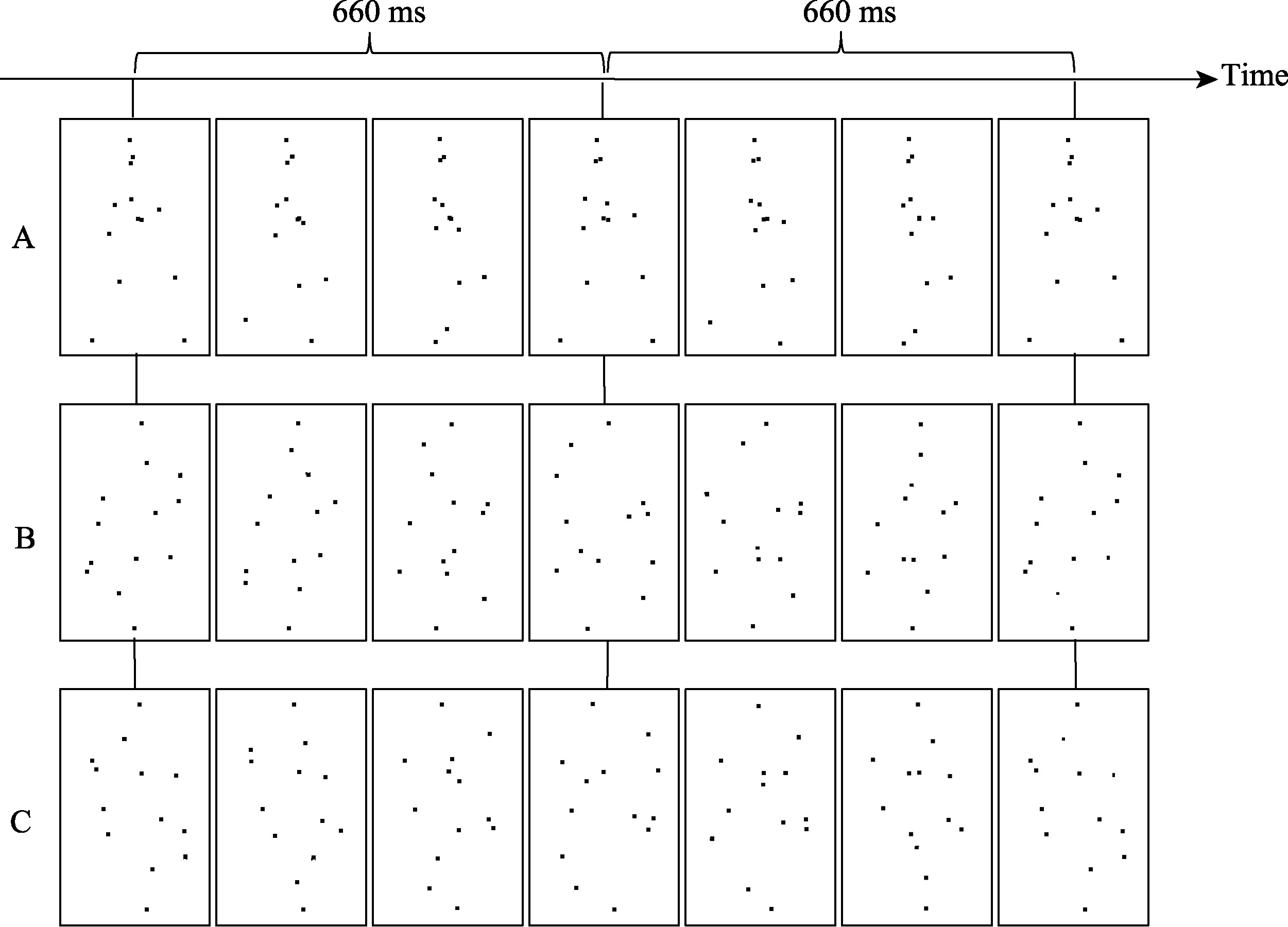
Figure 1. Stimuli of the three conditions: standard BM, scrambled BM, and inverted-scrambled BM.
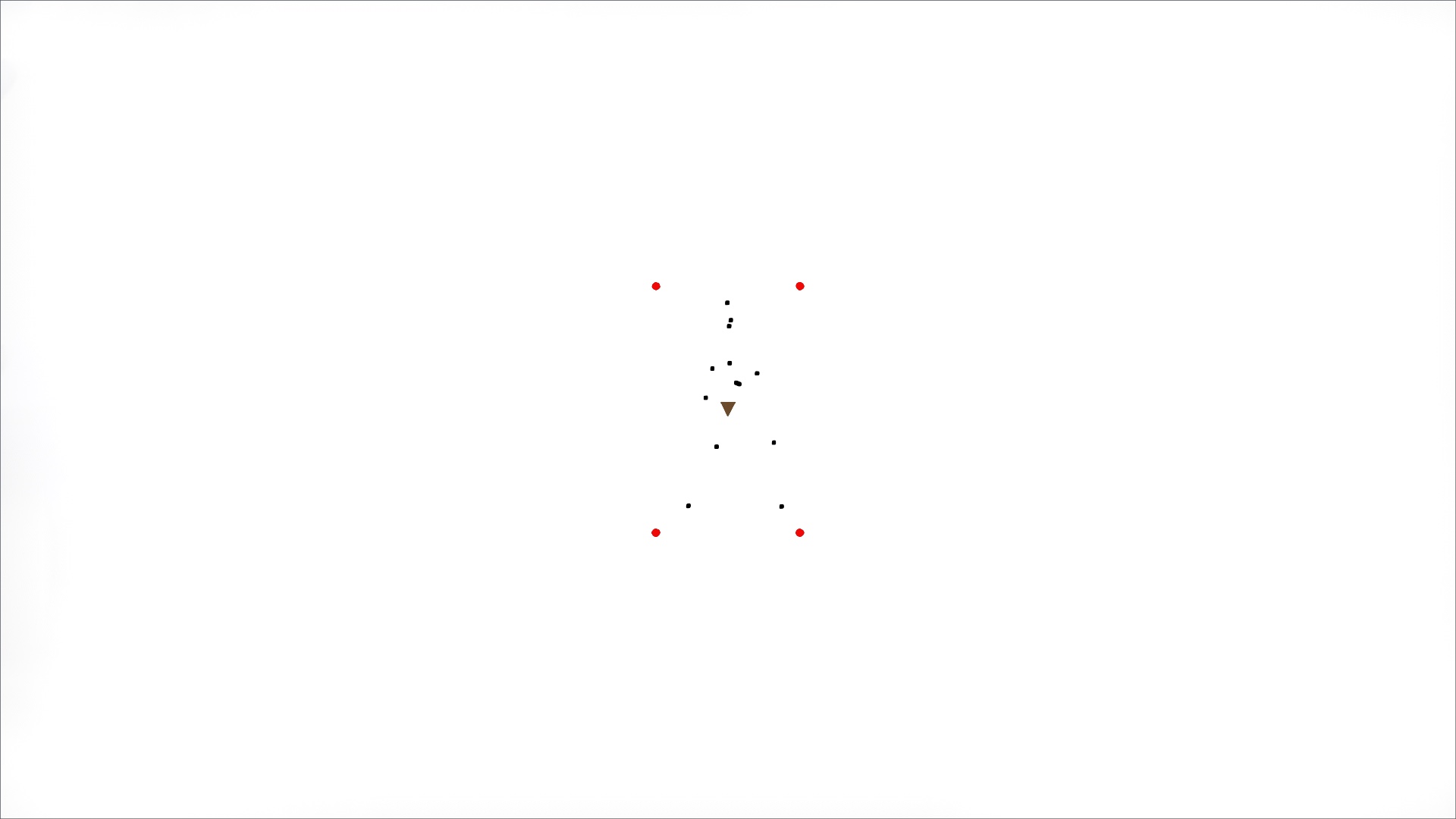
Figure 2. Schematic diagram of the experimental stimulus layout.
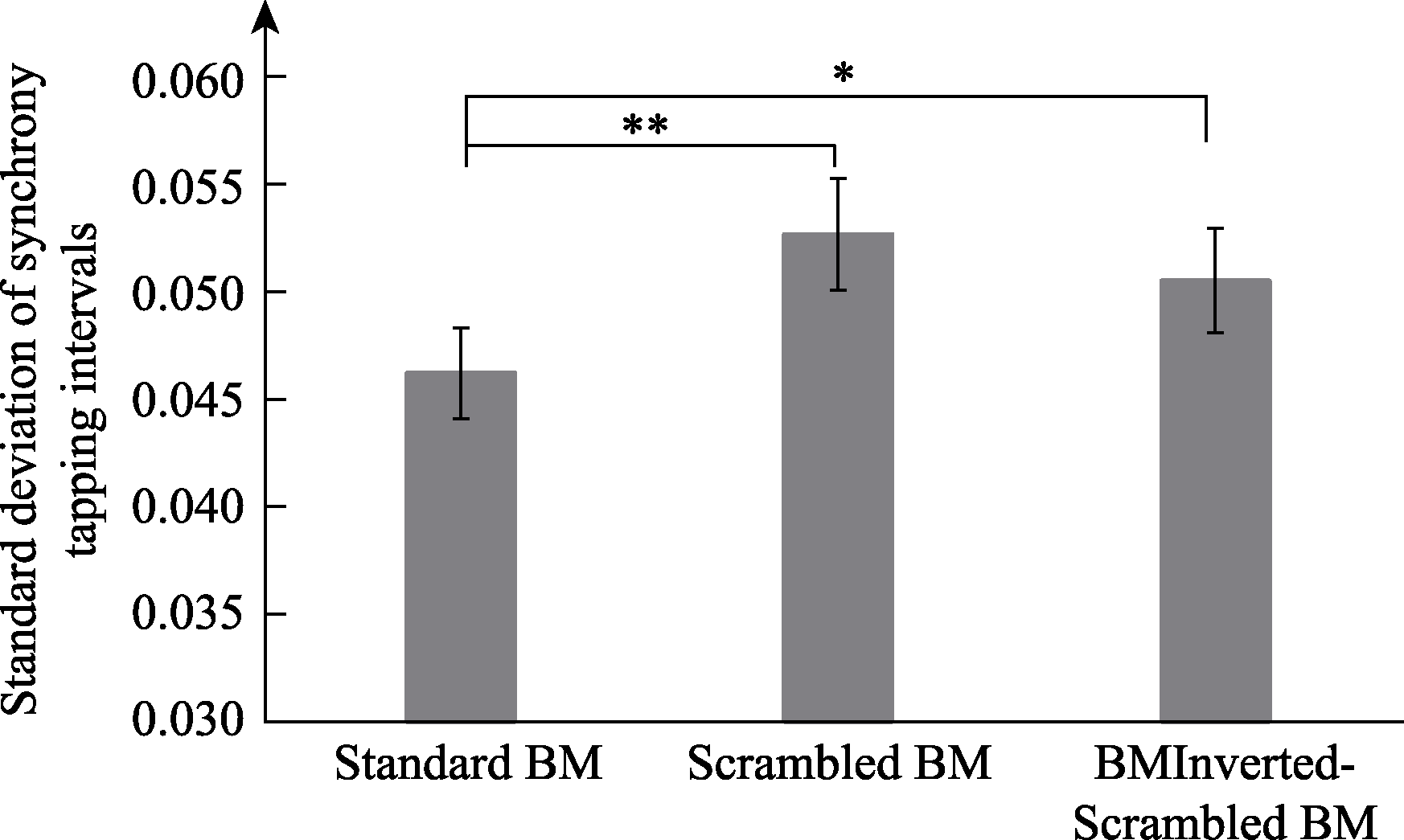
Figure 3. Beat synchronization stability indices for standard BM, scrambled BM, and inverted-scrambled BM stimuli. Note. The vertical axis represents the standard deviation of inter-tap intervals (ITI); smaller values indicate higher synchronization stability. Error bars represent standard errors, *p < 0.05, **p < 0.01.
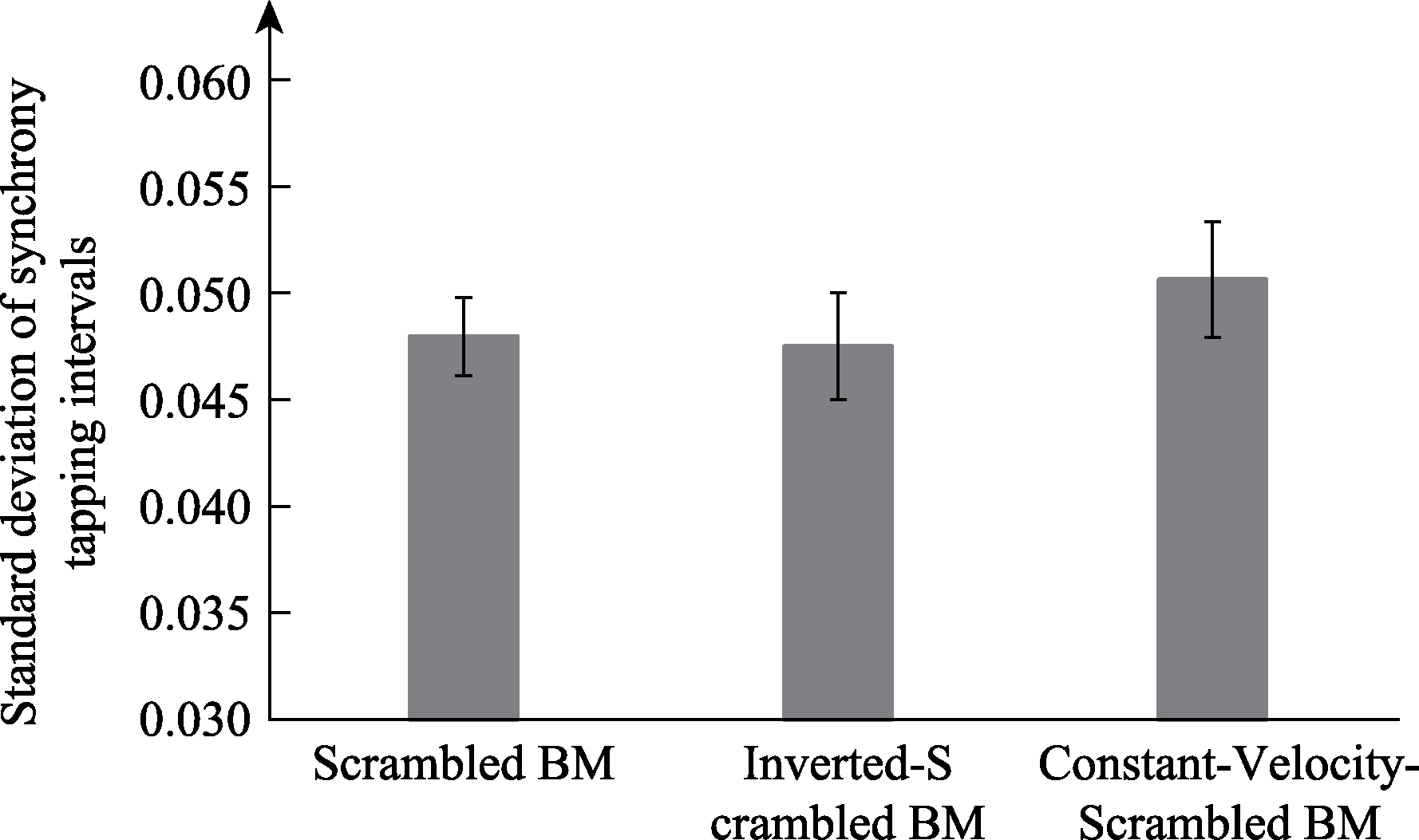
Figure 4. Beat synchronization stability indices for scrambled BM, inverted-scrambled BM, and constant-velocity-scrambled- BM stimuli. Note: The vertical axis represents the standard deviation of inter-tap intervals (ITI); smaller values indicate higher synchronization stability. Error bars represent standard errors.
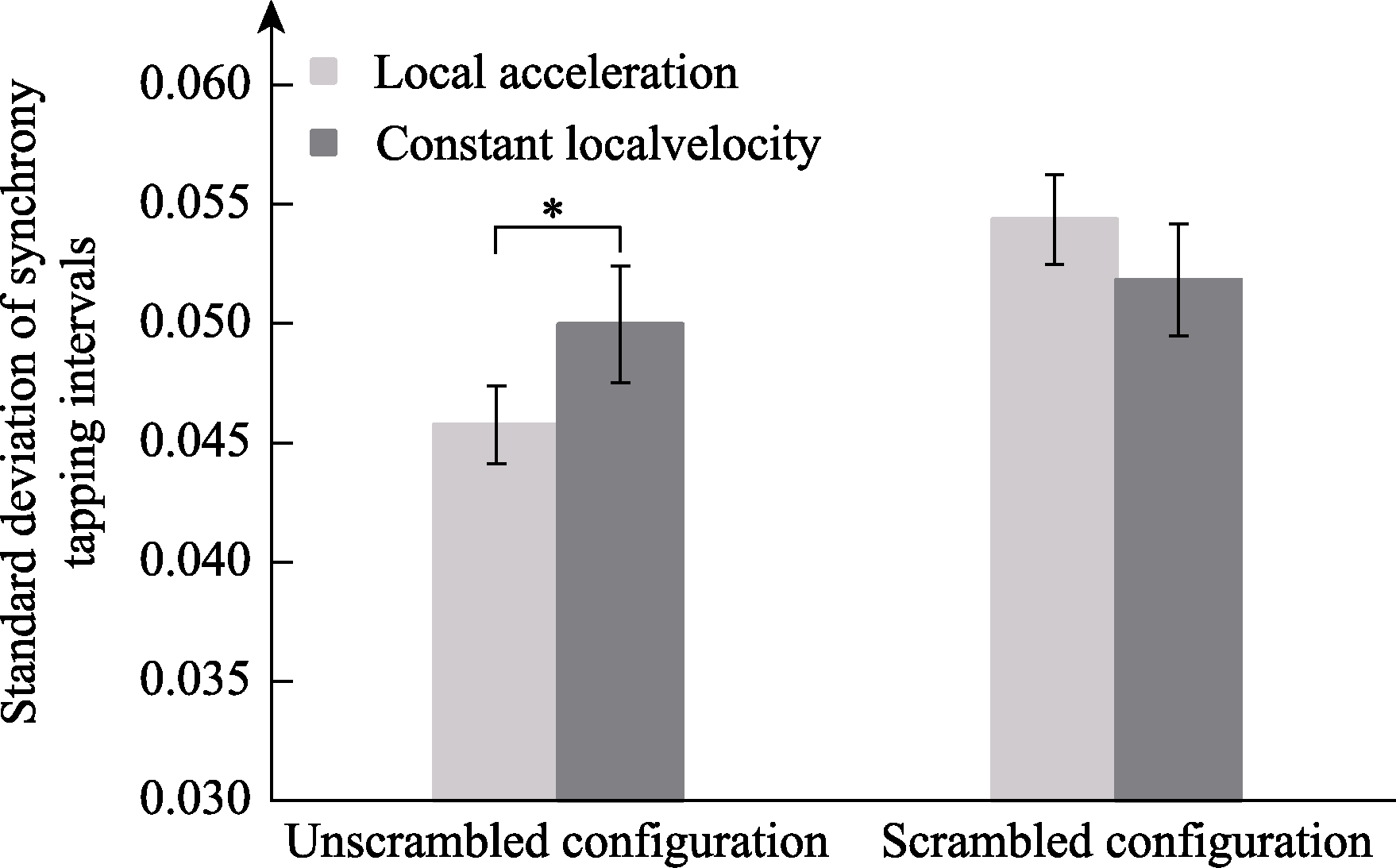
Figure 5. The beat synchronization stability index for the standard BM (intact global configuration with local acceleration), constant-velocity-standard BM (intact global configuration with constant local velocity), scrambled BM (disrupted global configuration with local acceleration), and constant-velocity-scrambled BM (disrupted global configuration with constant local velocity) conditions. Note: The vertical axis represents the standard deviation of inter-tap intervals (ITI); smaller values indicate higher synchronization stability. Error bars represent standard errors, *p < 0.05
| [1] |
Adams, R. A., Shipp, S., & Friston, K. J. (2013). Predictions not commands: Active inference in the motor system. Brain Structure and Function, 218(3), 611-643.
doi: 10.1007/s00429-012-0475-5 URL |
| [2] |
Beintema, J. A., & Lappe, M. (2002). Perception of biological motion without local image motion. Proceedings of the National Academy of Sciences, 99(8), 5661-5663.
doi: 10.1073/pnas.082483699 URL |
| [3] |
Beintema, J. A., Georg, K., & Lappe, M. (2006). Perception of biological motion from limited-lifetime stimuli. Perception & Psychophysics, 68(4), 613-624.
doi: 10.3758/BF03208763 URL |
| [4] | Bertenthal, B. I. (1993). Infants’ perception of biomechanical motions: Intrinsic image and knowledge-based constraints. In C. Granrud (Ed.), Visual Perception and Cognition in Infancy (pp. 175-214). Lawrence Erlbaum Associates, Inc. |
| [5] |
Bertenthal, B. I., & Pinto, J. (1994). Global processing of biological motions. Psychological Science, 5(4), 221-225.
doi: 10.1111/j.1467-9280.1994.tb00504.x URL |
| [6] |
Blake, R., & Shiffrar, M. (2007). Perception of human motion. Annual Review of Psychology, 58(1), 47-73.
doi: 10.1146/psych.2007.58.issue-1 URL |
| [7] | Cavagna, G. A., Heglund, N. C., & Taylor, C. R. (1977). Mechanical work in terrestrial locomotion: Two basic mechanisms for minimizing energy expenditure. American Journal of Physiology-Regulatory, Integrative and Comparative Physiology, 233(5), R243-R261. |
| [8] | Chang, D. H., & Troje, N. F. (2008). Perception of animacy and direction from local biological motion signals. Journal of Vision, 8(5), 3, 1-10. |
| [9] |
Dittrich, W. H. (1993). Action categories and the perception of biological motion. Perception, 22(1), 15-22.
pmid: 8474831 |
| [10] | Gan, L., Huang, Y., Zhou, L., Qian, C., & Wu, X. (2015). Synchronization to a bouncing ball with a realistic motion trajectory. Scientific Reports, 5(1), 11974. |
| [11] | Gilaie-Dotan, S., Saygin, A. P., Lorenzi, L. J., Rees, G., & Behrmann, M. (2015). Ventral aspect of the visual form pathway is not critical for the perception of biological motion. Proceedings of the National Academy of Sciences, 112(4), E361-E370. |
| [12] |
Hirai, M., Fukushima, H., & Hiraki, K. (2003). An event-related potentials study of biological motion perception in humans. Neuroscience Letters, 344(1), 41-44.
pmid: 12781917 |
| [13] | Jiang, Y., & Wang, L. (2011). Biological motion perception: The roles of global configuration and local motion. Advances in Psychological Science, 19(3), 301-311. |
| [14] |
Johansson, G. (1973). Visual perception of biological motion and a model for its analysis. Perception & Psychophysics, 14(2), 201-211.
doi: 10.3758/BF03212378 URL |
| [15] | Jordania, J. (2011). Sexual selection or natural selection? New look on the evolution of human morphology, behavior and art. Kadmos, 3, 400-416. |
| [16] |
Kaiser, M. D., Hudac, C. M., Shultz, S., Lee, S. M., Cheung, C., Berken, A. M.,... Pelphrey, K. A. (2010). Neural signatures of autism. Proceedings of the National Academy of Sciences, 107(49), 21223-21228.
doi: 10.1073/pnas.1010412107 URL |
| [17] |
Keller, G. B., & Mrsic-Flogel, T. D. (2018). Predictive processing: A canonical cortical computation. Neuron, 100(2), 424-435.
doi: S0896-6273(18)30857-2 pmid: 30359606 |
| [18] |
Kimchi, R. (1994). The role of wholistic/configural properties versus global properties in visual form perception. Perception, 23(5), 489-504.
pmid: 7800465 |
| [19] |
Klin, A., & Jones, W. (2008). Altered face scanning and impaired recognition of biological motion in a 15-month-old infant with autism. Developmental Science, 11(1), 40-46.
doi: 10.1111/j.1467-7687.2007.00608.x pmid: 18171365 |
| [20] |
Lange, J., & Lappe, M. (2006). A model of biological motion perception from configural form cues. Journal of Neuroscience, 26(11), 2894-2906.
doi: 10.1523/JNEUROSCI.4915-05.2006 pmid: 16540566 |
| [21] |
Lange, J., Georg, K., & Lappe, M. (2006). Visual perception of biological motion by form: A template-matching analysis. Journal of Vision, 6(8), 836-849.
pmid: 16895462 |
| [22] | Mather, G., Radford, K., & West, S. (1992). Low-level visual processing of biological motion. Proceedings of the Royal Society of London. Series B: Biological Sciences, 249(1325), 149-155. |
| [23] |
Navon, D. (1977). Forest before trees: The precedence of global features in visual perception. Cognitive Psychology, 9(3), 353-383.
doi: 10.1016/0010-0285(77)90012-3 URL |
| [24] |
Navon, D. (2003). What does a compound letter tell the psychologist’s mind? Acta Psychologica, 114(3), 273-309.
doi: 10.1016/j.actpsy.2003.06.002 URL |
| [25] |
Norman, J. F., Payton, S. M., Long, J. R., & Hawkes, L. M. (2004). Aging and the perception of biological motion. Psychology and Aging, 19(1), 219-225
pmid: 15065947 |
| [26] |
Patel, A. D., Iversen, J. R., Chen, Y., & Repp, B. H. (2005). The influence of metricality and modality on synchronization with a beat. Experimental Brain Research, 163(2), 226-238.
doi: 10.1007/s00221-004-2159-8 pmid: 15654589 |
| [27] |
Pavlova, M., Krägeloh-Mann, I., Sokolov, A., & Birbaumer, N. (2001). Recognition of point-light biological motion displays by young children. Perception, 30(8), 925-933.
pmid: 11578078 |
| [28] |
Pitcher, D., & Ungerleider, L. G. (2021). Evidence for a third visual pathway specialized for social perception. Trends in Cognitive Sciences, 25(2), 100-110.
doi: 10.1016/j.tics.2020.11.006 pmid: 33334693 |
| [29] |
Repp, B. H. (2005). Sensorimotor synchronization: A review of the tapping literature. Psychonomic Bulletin & Review, 12(6), 969-992.
doi: 10.3758/BF03206433 URL |
| [30] |
Repp, B. H., & Su, Y. H. (2013). Sensorimotor synchronization: A review of recent research (2006-2012). Psychonomic Bulletin & Review, 20(3), 403-452.
doi: 10.3758/s13423-012-0371-2 URL |
| [31] |
Shen, L., Lu, X., Yuan, X., Hu, R., Wang, Y., & Jiang, Y. (2023). Cortical encoding of rhythmic kinematic structures in biological motion. NeuroImage, 268, 119893.
doi: 10.1016/j.neuroimage.2023.119893 URL |
| [32] |
Shiffrar, M., Lichtey, L., & Chatterjee, S. H. (1997). The perception of biological motion across apertures. Perception & Psychophysics, 59(1), 51-59.
doi: 10.3758/BF03206847 URL |
| [33] |
Slotboom, J., Hoppenbrouwers, S. S., Bouman, Y. H. A., In 't Hout, W., Sergiou, C., van der Stigchel, S., & Theeuwes, J. (2017). Visual attention in violent offenders: Susceptibility to distraction. Psychiatry Research, 251, 281-286.
doi: S0165-1781(16)30112-3 pmid: 28222312 |
| [34] |
Su, Y. H. (2016a). Visual tuning and metrical perception of realistic point-light dance movements. Scientific Reports, 6, 22774.
doi: 10.1038/srep22774 |
| [35] | Su, Y. H. (2016b). Sensorimotor synchronization with different metrical levels of point-light dance movements. Frontiers in Human Neuroscience, 10, 186. |
| [36] |
Sun, Y., Stein, T., Liu, W., Ding, X., & Nie, Q. Y. (2017). Biphasic attentional orienting triggered by invisible social signals. Cognition, 168, 129-139.
doi: S0010-0277(17)30182-8 pmid: 28672158 |
| [37] |
Sun, Y., Wang, X., Huang, Y., Ji, H., & Ding, X. (2022). Biological motion gains preferential access to awareness during continuous flash suppression: Local biological motion matters. Journal of Experimental Psychology: General, 151(2), 309-320.
doi: 10.1037/xge0001078 URL |
| [38] |
Thompson, J. C., Clarke, M., Stewart, T., & Puce, A. (2005). Configural processing of biological motion in human superior temporal sulcus. Journal of Neuroscience, 25(39), 9059-9066.
doi: 10.1523/JNEUROSCI.2129-05.2005 pmid: 16192397 |
| [39] |
Troje, N. F., & Westhoff, C. (2006). The inversion effect in biological motion perception: Evidence for a “life detector”? Current Biology, 16(8), 821-824.
doi: 10.1016/j.cub.2006.03.022 URL |
| [40] | Ungerleider, L., G., & Mishkin, M. (1982). Two cortical visual systems. In D. J. Ingle, M. A. Goodale, & R. J. W. Mansfield (Eds.), Analysis of visual behavior (pp. 549-586). MIT Press. |
| [41] | Van Boxtel, J. J., & Lu, H. (2013). A biological motion toolbox for reading, displaying, and manipulating motion capture data in research settings. Journal of Vision, 13(12), 7, 1-16. |
| [42] |
Wang, L., Zhang, K., He, S., & Jiang, Y. (2010). Searching for life motion signals: Visual search asymmetry in local but not global biological-motion processing. Psychological Science, 21(8), 1083-1089.
doi: 10.1177/0956797610376072 pmid: 20581341 |
| [43] |
Yin, R. K. (1969). Looking at upside-down faces. Journal of Experimental Psychology, 81(1), 141-145.
doi: 10.1037/h0027474 URL |
| [44] |
Zhou, L., Shangguan, M., Xing, L., Yu, H., Wang, H., Hove, M. J., & Li, S. (2020). Separating the effects of stimulus-gravity compatibility and stimulus-response compatibility on visuomotor synchronization. Journal of Experimental Psychology: Human Perception and Performance, 46(4), 405-415.
doi: 10.1037/h0060282 URL |
| [1] | WANG Da, YANG Zhihao, MEI Gaoxing. Serial dependence for same-category and cross-category stimuli in social attention [J]. Acta Psychologica Sinica, 2026, 58(7): 1312-1324. |
| Viewed | ||||||
|
Full text |
|
|||||
|
Abstract |
|
|||||
