

ISSN 0439-755X
CN 11-1911/B
CN 11-1911/B
Acta Psychologica Sinica ›› 2025, Vol. 57 ›› Issue (6): 1056-1069.doi: 10.3724/SP.J.1041.2025.1056
• Reports of Empirical Studies • Previous Articles Next Articles
LI Xi1, ZHANG Chang1, YU Ruize1, YIN Yijia1, ZHOU Tong1, LIU Wei1,2( ), CHEN Ning1,2()
Published:2025-06-25
Online:2025-04-15
Contact:
Wei Liu, E-mail: LI Xi, ZHANG Chang, YU Ruize, YIN Yijia, ZHOU Tong, LIU Wei, CHEN Ning. (2025). The joint role of childhood emotional abuse and bullying victimization in the development of adolescent depressive symptoms: Sequential mediation or enhanced moderation?. Acta Psychologica Sinica, 57(6), 1056-1069.
Add to citation manager EndNote|Ris|BibTeX
URL: https://journal.psych.ac.cn/acps/EN/10.3724/SP.J.1041.2025.1056
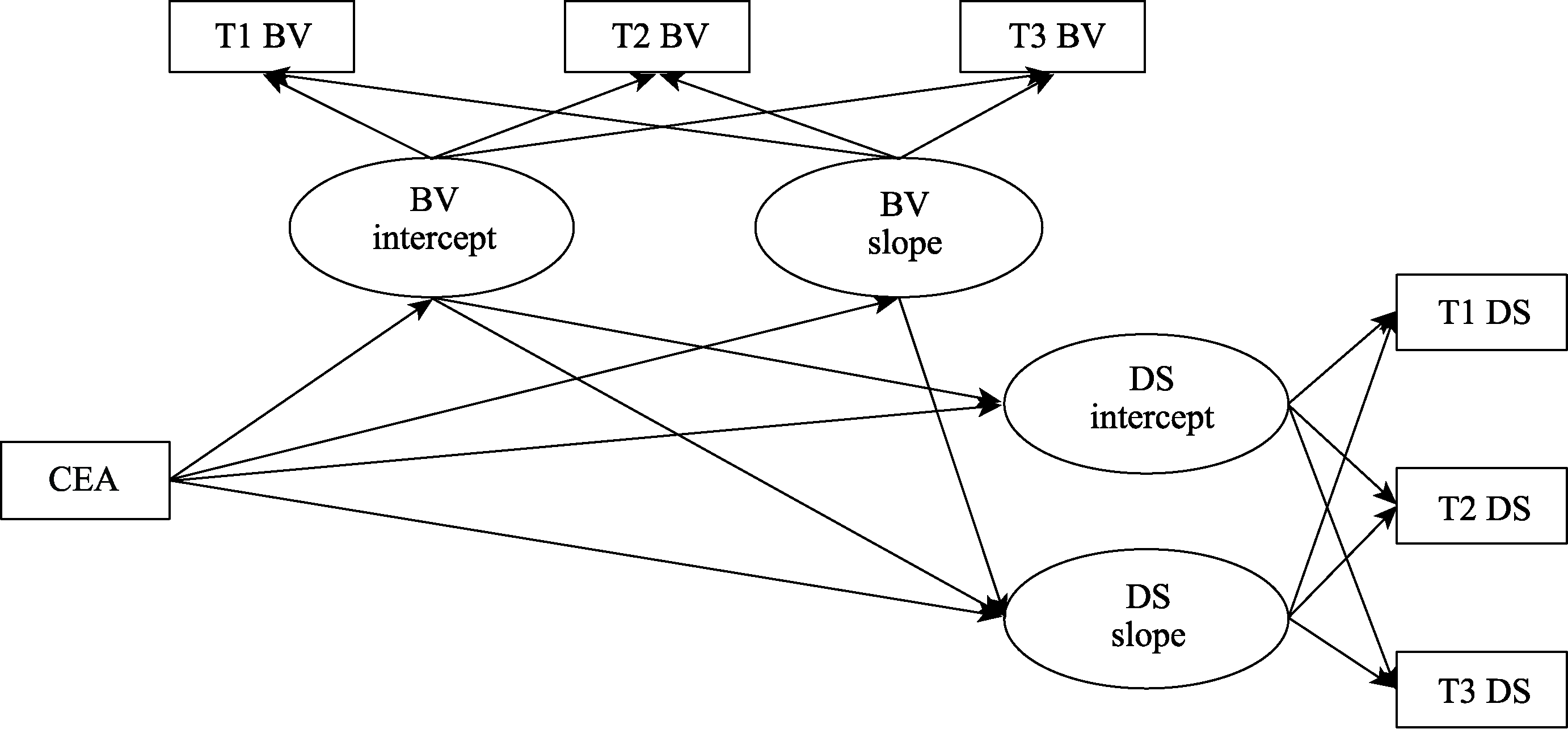
Figure 1. Hypothesized sequential mediation model. Note: CEA = childhood emotional abuse, BV= bullying victimization, DS = depressive symptoms. “T1 BV” represents bullying victimization measured at point in time 1, same below.
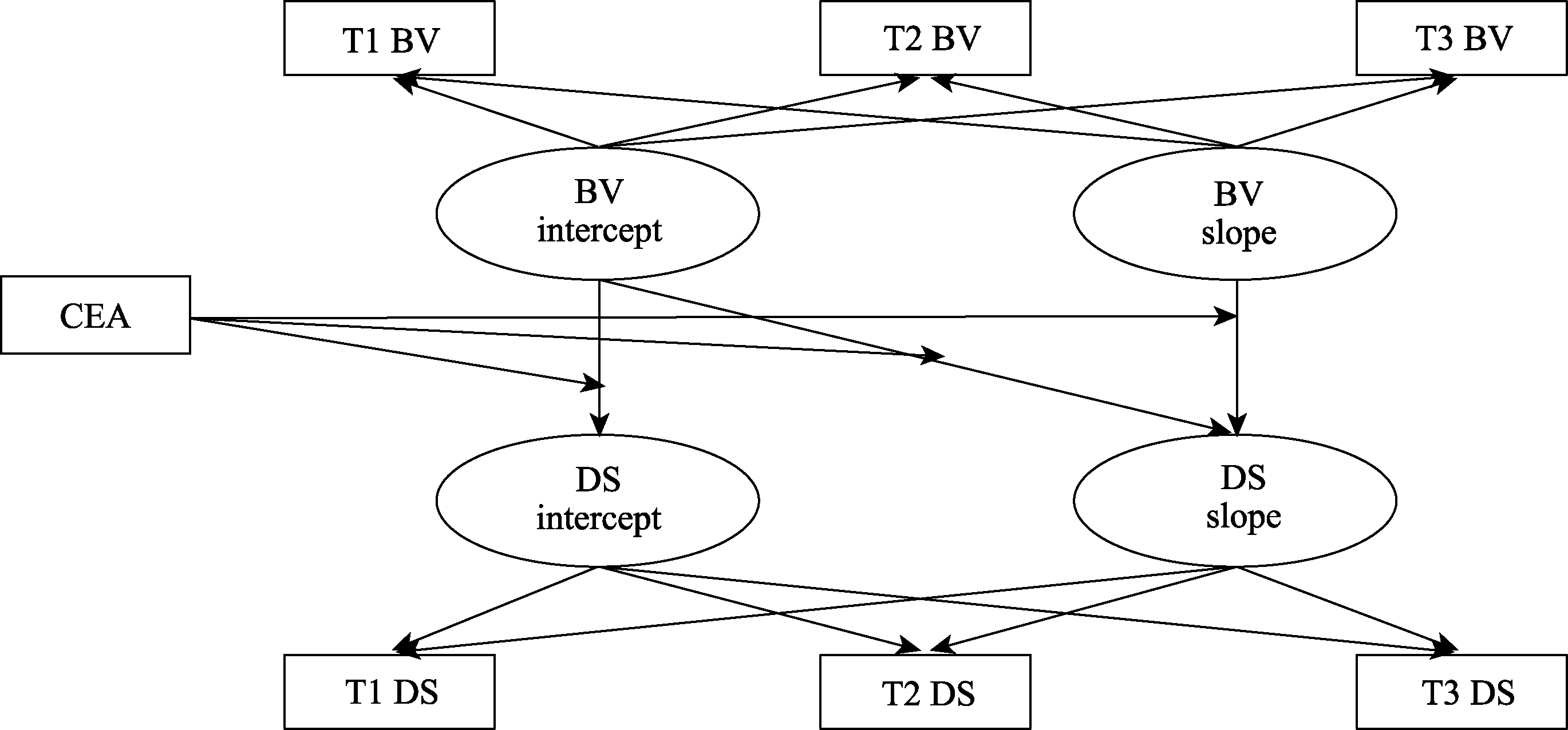
Figure 2. Hypothetical enhanced moderation model.
| variants | M | SD | 1 | 2 | 3 | 4 | 5 | 6 | 7 | 8 | 9 |
|---|---|---|---|---|---|---|---|---|---|---|---|
| 1. Gender | - | - | 1 | ||||||||
| 2. School years | 1.35 | 0.49 | -0.02 | 1 | |||||||
| 3. CEA | 1.30 | 0.51 | 0.05 | 0.15 | 1 | ||||||
| T1 BV | 1.20 | 0.50 | -0.10* | -0.10* | 0.16* | 1 | |||||
| 5. T2 BV | 1.24 | 0.50 | -0.06 | 0.02 | 0.21* | 0.32* | 1 | ||||
| 6. T3 BV | 1.23 | 0.42 | -0.13 | 0.10* | 0.34* | 0.22* | 0.50* | 1 | |||
| 7. T1 DS | 0.73 | 0.51 | 0.15* | 0.23 * | 0.30* | 0.31* | 0.23* | 0.22* | 1 | ||
| 8. T2 DS | 0.79 | 0.51 | 0.20* | 0.19 * | 0.33* | 0.09 | 0.32* | 0.24* | 0.44* | 1 | |
| 9. T3 DS | 0.90 | 0.52 | 0.19* | 0.20 * | 0.45* | 0.08 | 0.27* | 0.39* | 0.51* | 0.59* | 1 |
Table 1 Means, standard deviations and correlation coefficients of the variables used in the hypothetical models
| variants | M | SD | 1 | 2 | 3 | 4 | 5 | 6 | 7 | 8 | 9 |
|---|---|---|---|---|---|---|---|---|---|---|---|
| 1. Gender | - | - | 1 | ||||||||
| 2. School years | 1.35 | 0.49 | -0.02 | 1 | |||||||
| 3. CEA | 1.30 | 0.51 | 0.05 | 0.15 | 1 | ||||||
| T1 BV | 1.20 | 0.50 | -0.10* | -0.10* | 0.16* | 1 | |||||
| 5. T2 BV | 1.24 | 0.50 | -0.06 | 0.02 | 0.21* | 0.32* | 1 | ||||
| 6. T3 BV | 1.23 | 0.42 | -0.13 | 0.10* | 0.34* | 0.22* | 0.50* | 1 | |||
| 7. T1 DS | 0.73 | 0.51 | 0.15* | 0.23 * | 0.30* | 0.31* | 0.23* | 0.22* | 1 | ||
| 8. T2 DS | 0.79 | 0.51 | 0.20* | 0.19 * | 0.33* | 0.09 | 0.32* | 0.24* | 0.44* | 1 | |
| 9. T3 DS | 0.90 | 0.52 | 0.19* | 0.20 * | 0.45* | 0.08 | 0.27* | 0.39* | 0.51* | 0.59* | 1 |
| variants | models | CFI | RMSEA | ΔCFI | ΔRMSEA |
|---|---|---|---|---|---|
| Bullying victimization | |||||
| configural equivalence | 0.903 | 0.089 | |||
| weak equivalence | 0.891 | 0.090 | -0.012 | 0.001 | |
| strong equivalence | 0.890 | 0.087 | -0.001 | -0.003 | |
| strictly equivalent | 0.863 | 0.093 | -0.027 | 0.006 | |
| depressive symptoms | |||||
| configural equivalence | 0.918 | 0.057 | |||
| weak equivalence | 0.912 | 0.058 | -0.006 | 0.001 | |
| strong equivalence | 0.906 | 0.058 | -0.006 | 0.000 | |
| strictly equivalent | 0.878 | 0.066 | -0.028 | 0.008 |
Table 2 Longitudinal measurement invariance test
| variants | models | CFI | RMSEA | ΔCFI | ΔRMSEA |
|---|---|---|---|---|---|
| Bullying victimization | |||||
| configural equivalence | 0.903 | 0.089 | |||
| weak equivalence | 0.891 | 0.090 | -0.012 | 0.001 | |
| strong equivalence | 0.890 | 0.087 | -0.001 | -0.003 | |
| strictly equivalent | 0.863 | 0.093 | -0.027 | 0.006 | |
| depressive symptoms | |||||
| configural equivalence | 0.918 | 0.057 | |||
| weak equivalence | 0.912 | 0.058 | -0.006 | 0.001 | |
| strong equivalence | 0.906 | 0.058 | -0.006 | 0.000 | |
| strictly equivalent | 0.878 | 0.066 | -0.028 | 0.008 |
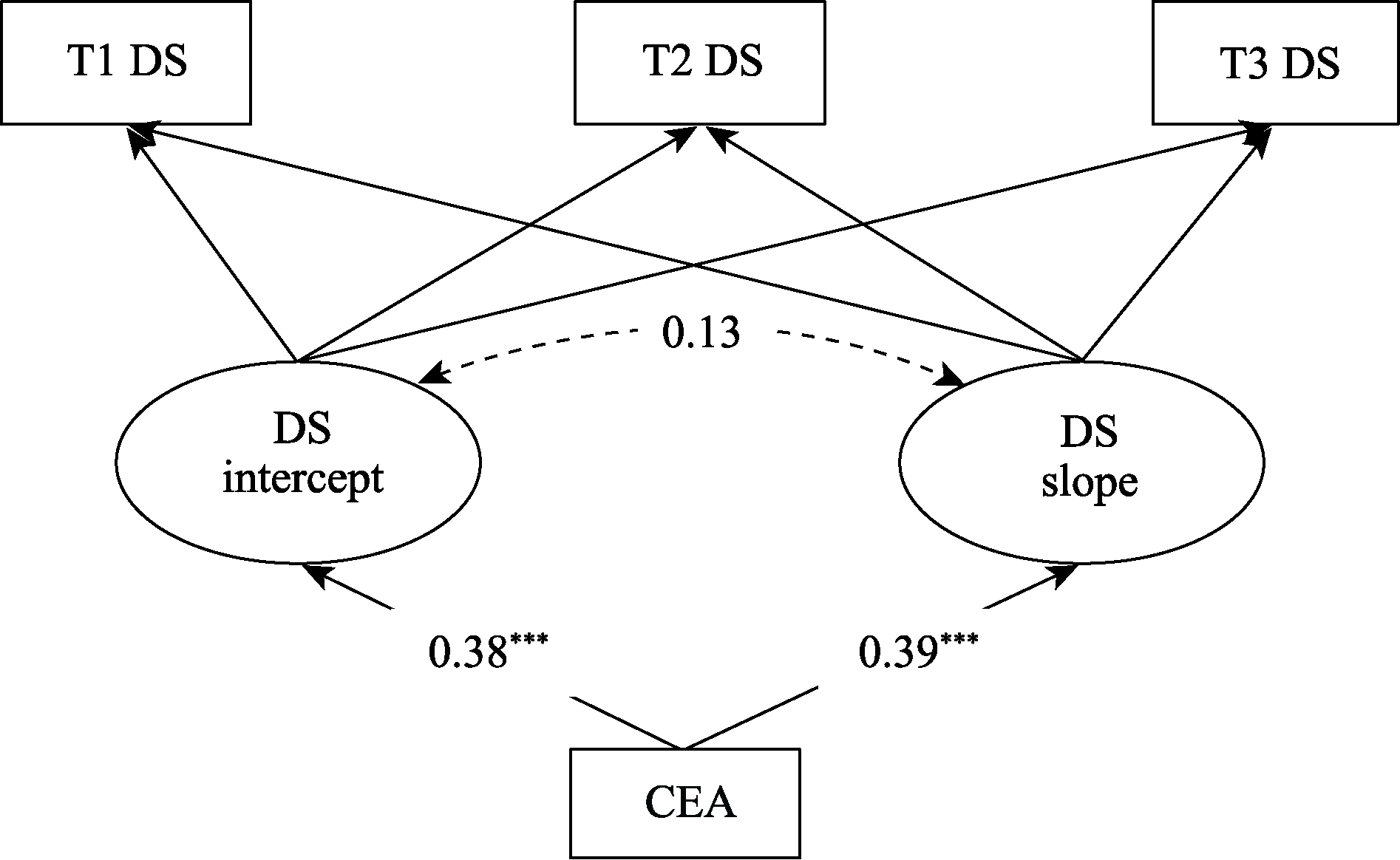
Figure 3. Predictive effect of childhood emotional abuse on depressive symptoms in adolescence. Note: All β-values are standardized path coefficients; dashed lines indicate path coefficients that are not significant; for graphical simplicity, only key effect values are reported in the figure, below.
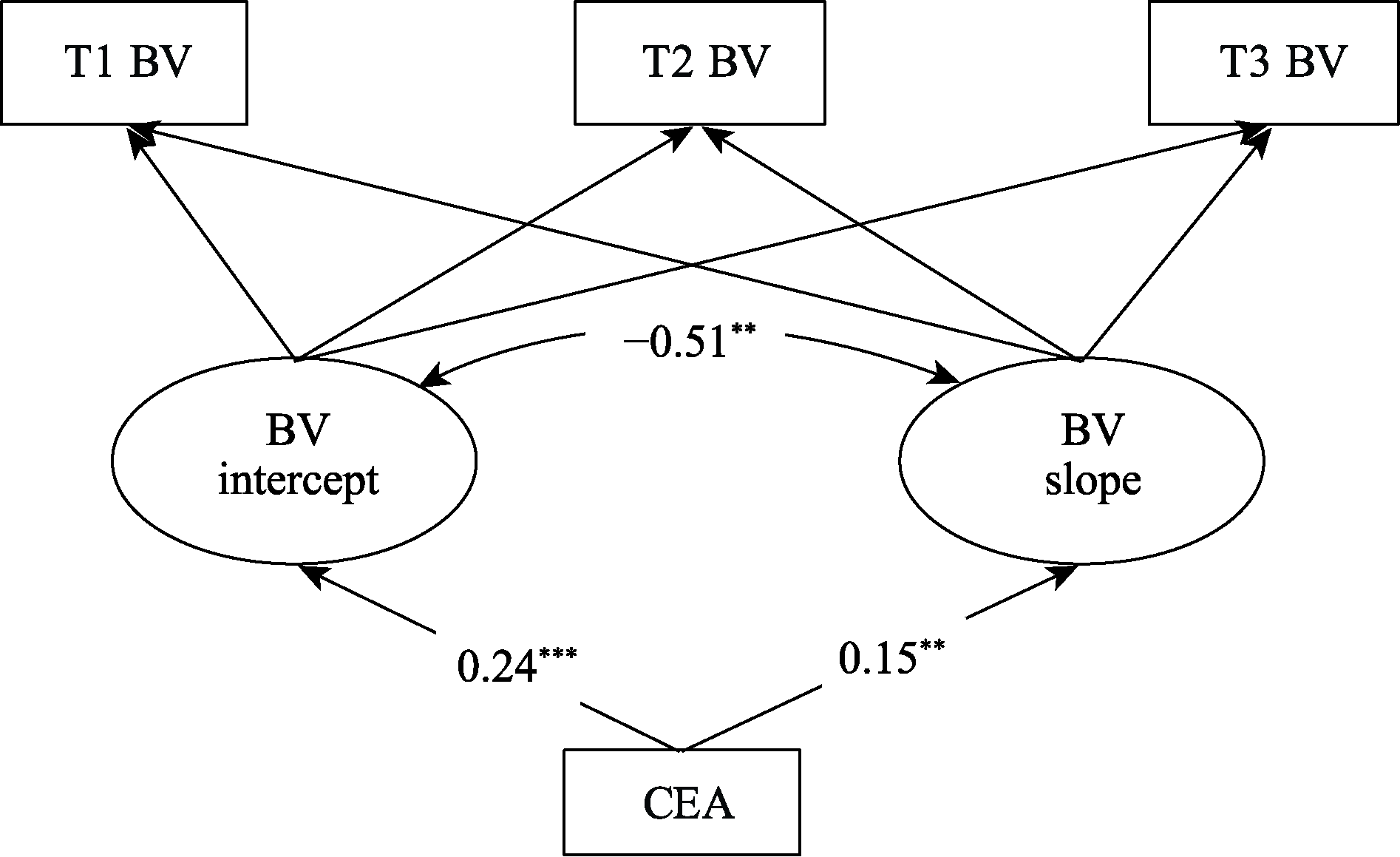
Figure 4. Predictive role of childhood emotional abuse on bullying victimization in adolescence.
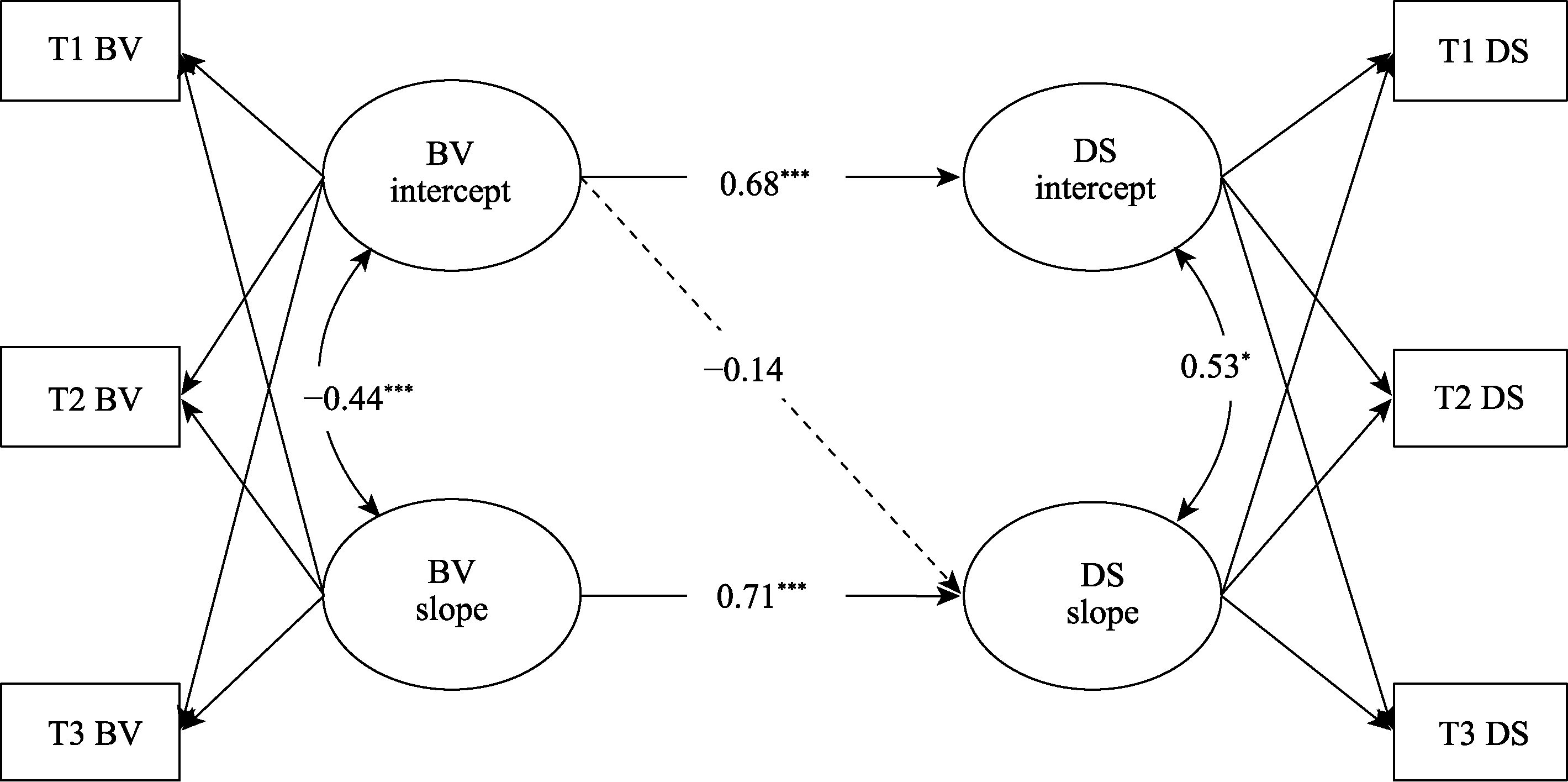
Figure 5. Longitudinal correlation between bullying victimization and depressive symptoms.
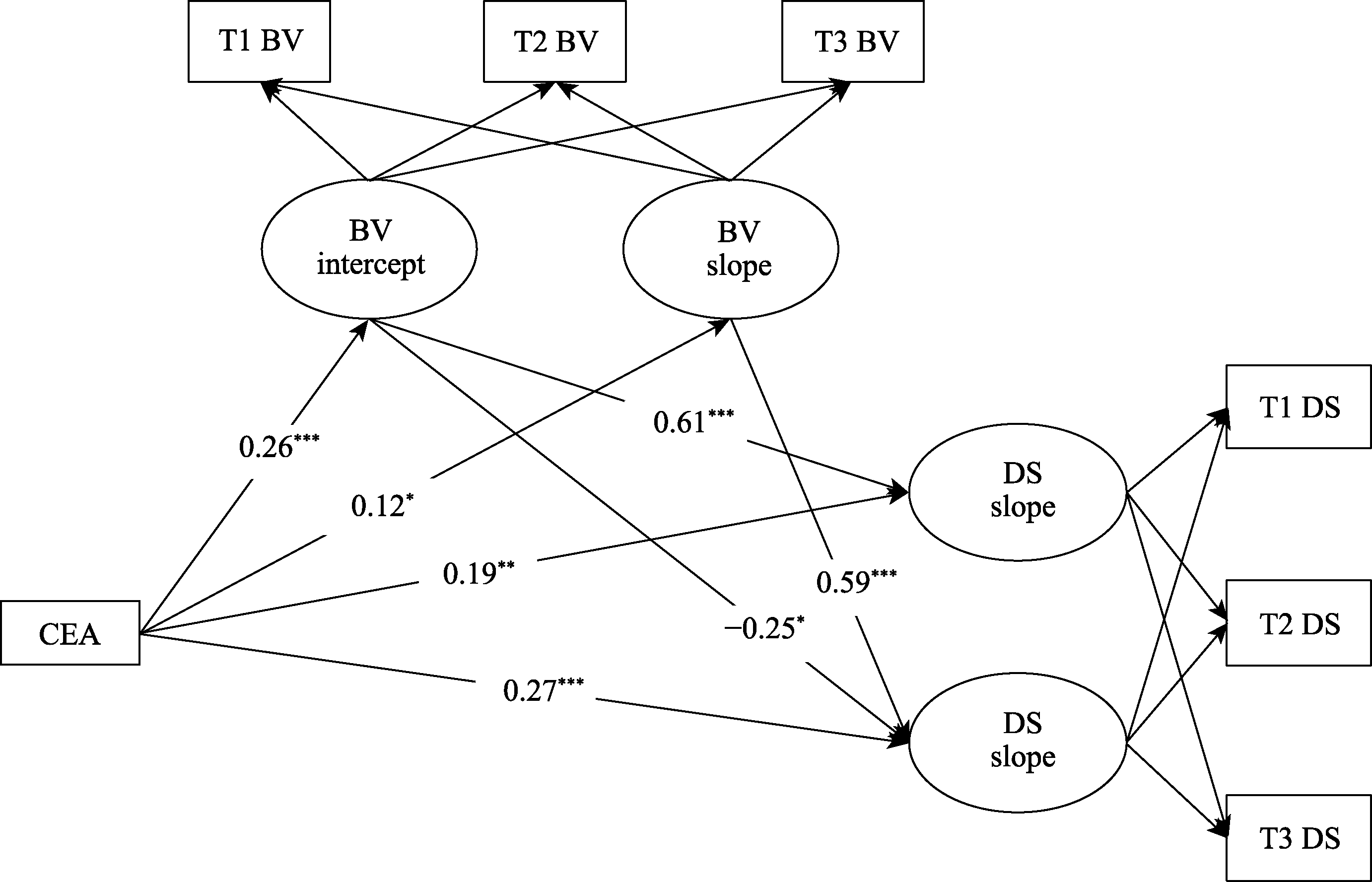
Figure 6. Test results of the sequential mediation model.
| pathways | β | SE | p | 95% CI |
|---|---|---|---|---|
| CEA → DS (I) | ||||
| direct effect | 0.19 | 0.06 | 0.002 | [0.07, 0.31] |
| CEA → BV (I) → DS(I) | 0.16 | 0.05 | <0.001 | [0.08, 0.25] |
| CEA → DS(s) | ||||
| direct effect | 0.27 | 0.09 | 0.001 | [0.09, 0.44] |
| CEA → BV (S) → DS (S) | 0.07 | 0.04 | 0.019 | [0.01, 0.15] |
| CEA → BV (I) → DS (S) | -0.07 | 0.04 | 0.023 | [-0.15, 0.01] |
Table 3 Results of the mediated effects test
| pathways | β | SE | p | 95% CI |
|---|---|---|---|---|
| CEA → DS (I) | ||||
| direct effect | 0.19 | 0.06 | 0.002 | [0.07, 0.31] |
| CEA → BV (I) → DS(I) | 0.16 | 0.05 | <0.001 | [0.08, 0.25] |
| CEA → DS(s) | ||||
| direct effect | 0.27 | 0.09 | 0.001 | [0.09, 0.44] |
| CEA → BV (S) → DS (S) | 0.07 | 0.04 | 0.019 | [0.01, 0.15] |
| CEA → BV (I) → DS (S) | -0.07 | 0.04 | 0.023 | [-0.15, 0.01] |
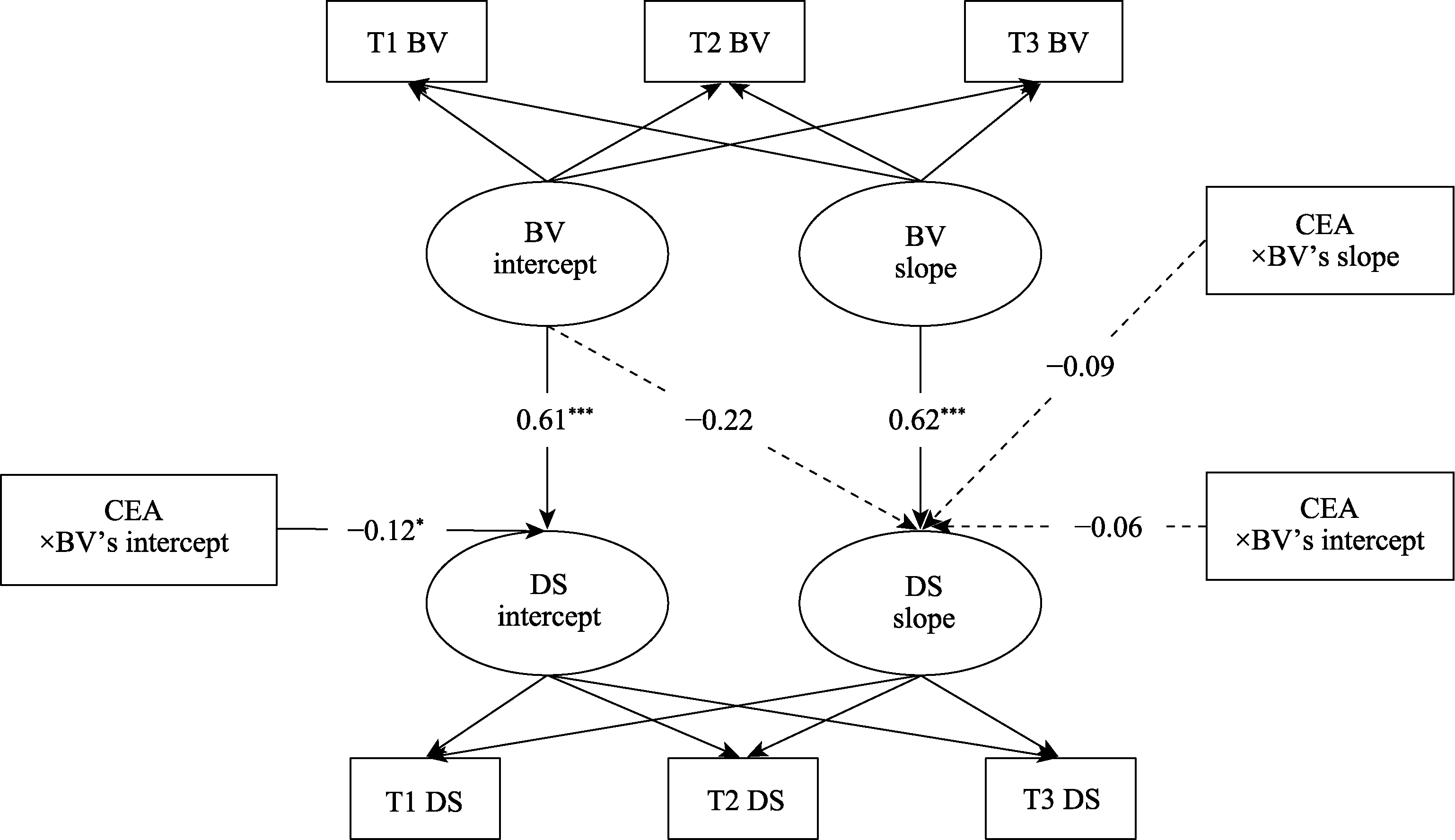
Figure 7. Test results of the enhanced moderation model. Note: “CEA × BV’s Intercept” represents the interaction term between childhood emotional abuse and the initial intercept of bullying victimization; “CEA × BV Slope” represents the interaction term between childhood emotional abuse and the slope of bullying victimization growth. For graphical simplicity, only key effect values are reported in the figures, and all beta values are standardized path coefficients.
| [1] |
Aas, M., Bellivier, F., Bettella, F., Henry, C., Gard, S., Kahn, J. P., … Etain, B. (2020). Childhood maltreatment and polygenic risk in bipolar disorders. Bipolar Disorders, 22(2), 174-181.
doi: 10.1111/bdi.12851 pmid: 31628696 |
| [2] | American Psychiatric Association, D. S. M. T. F., & American Psychiatric Association, D. S. (2013). Diagnostic and statistical manual of mental disorders: DSM-5 (Vol. 5, No. 5). Washington, DC: American Psychiatric Association. |
| [3] |
Andresen, E. M., Malmgren, J. A., Carter, W. B., & Patrick, D. L. (1994). Screening for depression in well older adults: Evaluation of a short form of the CES-D. American Journal of Preventive Medicine, 10(2), 77-84.
pmid: 8037935 |
| [4] |
Appleyard, K., Egeland, B., van Dulmen, M. H., & Alan Sroufe, L. (2005). When more is not better: The role of cumulative risk in child behavior outcomes. Journal of Child Psychology and Psychiatry, 46(3), 235-245.
doi: 10.1111/j.1469-7610.2004.00351.x pmid: 15755300 |
| [5] | Asparouhov, T., & Muthén, B. (2021). Bayesian estimation of single and multilevel models with latent variable interactions. Structural Equation Modeling: A Multidisciplinary Journal, 28(2), 314-328. |
| [6] | Benedini, K. M., Fagan, A. A., & Gibson, C. L. (2016). The cycle of victimization: The relationship between childhood maltreatment and adolescent peer victimization. Child Abuse & Neglect, 59, 111-121. |
| [7] | Bernstein, D. P., Stein, J. A., Newcomb, M. D., Walker, E., Pogge, D., Ahluvalia, T., … Zule, W. (2003). Development and validation of a brief screening version of the Childhood Trauma Questionnaire. Child Abuse & Neglect, 27(2), 169-190. |
| [8] | Bowlby, J. (1969). Attachment and loss. London, UK: Hogarth Press. |
| [9] | Calvete, E. (2014). Emotional abuse as a predictor of early maladaptive schemas in adolescents: Contributions to the development of depressive and social anxiety symptoms. Child Abuse & Neglect, 38(4), 735-746. |
| [10] |
Calvete, E., Fernández-González, L., González-Cabrera, J. M., & Gámez-Guadix, M. (2018). Continued bullying victimization in adolescents: Maladaptive schemas as a mediational mechanism. Journal of Youth and Adolescence, 47, 650-660.
doi: 10.1007/s10964-017-0677-5 pmid: 28434091 |
| [11] | Chen, F. F. (2007). Sensitivity of goodness of fit indexes to lack of measurement invariance. Structural Equation Modeling: A Multidisciplinary Journal, 14(3), 464-504. |
| [12] |
Cho, D., Zatto, B. R., & Hoglund, W. L. (2022). Forms of peer victimization in adolescence: Covariation with symptoms of depression. Developmental Psychology, 58(2), 392-404.
doi: 10.1037/dev0001300 pmid: 34990200 |
| [13] |
Coyne, J. C. (1976). Toward an interactional description of depression. Psychiatry, 39(1), 28-40.
doi: 10.1080/00332747.1976.11023874 pmid: 1257353 |
| [14] |
Davis, J. P., Dumas, T. M., Merrin, G. J., Espelage, D. L., Tan, K., Madden, D., & Hong, J. S. (2018). Examining the pathways between bully victimization, depression, academic achievement, and problematic drinking in adolescence. Psychology of Addictive Behaviors, 32(6), 605-616.
doi: 10.1037/adb0000394 pmid: 30211583 |
| [15] | de Oliveira, I. R., Matos-Ragazzo, A. C., Zhang, Y., Vasconcelos, N. M., Velasquez, M. L., Reis, D., … Cecil, C. A. (2018). Disentangling the mental health impact of childhood abuse and neglect: A replication and extension study in a Brazilian sample of high-risk youth. Child Abuse & Neglect, 80, 312-323. |
| [16] |
de Vries, E., Kaufman, T. M., Veenstra, R., Laninga-Wijnen, L., & Huitsing, G. (2021). Bullying and victimization trajectories in the first years of secondary education: Implications for status and affection. Journal of Youth and Adolescence, 50(10), 1995-2006.
doi: 10.1007/s10964-020-01385-w pmid: 33464443 |
| [17] |
Epkins, C. C., & Heckler, D. R. (2011). Integrating etiological models of social anxiety and depression in youth: Evidence for a cumulative interpersonal risk model. Clinical Child and Family Psychology Review, 14(4), 329-376.
doi: 10.1007/s10567-011-0101-8 pmid: 22080334 |
| [18] |
Evans, G. W., Li, D., & Whipple, S. S. (2013). Cumulative risk and child development. Psychological Bulletin, 139(6), 1342-1396.
doi: 10.1037/a0031808 pmid: 23566018 |
| [19] | Fang, J., & Wen, Z. (2018). The analyses of moderated mediation effects based on structural equation modeling. Journal of Psychological Science, 41(2), 453-458. |
| [20] | Franzen, M., van Duijn, M. A., de Jong, P. J., Veenstra, R., & aan het Rot, M. (2024). How do victims of bullying develop depression? Testing interpersonal style to explain the victimization-depression link. Journal of Research on Adolescence, 34(4), 1391-1402. |
| [21] | Garmezy, N. (1991). Resiliency and vulnerability to adverse developmental outcomes associated with poverty. American Behavioral Scientist, 34(4), 416-430. |
| [22] | Gelman, A., Meng, X. L., & Stern, H. (1996). Posterior predictive assessment of model fitness via realized discrepancies. Statistica Sinica, 6(4), 733-760. |
| [23] | Glaser, D. (2011). How to deal with emotional abuse and neglect—Further development of a conceptual framework (FRAMEA). Child Abuse & Neglect, 35(10), 866-875. |
| [24] | Goemans, A., Viding, E., & McCrory, E. (2023). Child maltreatment, peer victimization, and mental health: Neurocognitive perspectives on the cycle of victimization. Trauma, Violence, & Abuse, 24(2), 530-548. |
| [25] | Hames, J. L., Hagan, C. R., & Joiner, T. E. (2013). Interpersonal processes in depression. Annual Review of Clinical Psychology, 9(1), 355-377. |
| [26] |
Henricks, L. A., Lange, W. G., Luijten, M., van den Berg, Y. H., Stoltz, S. E., Cillessen, A. H., & Becker, E. S. (2023). The longitudinal link between popularity, likeability, fear of negative evaluation and social avoidance across adolescence. Journal of Research on Adolescence, 33(3), 720-734.
doi: 10.1111/jora.12833 pmid: 36724545 |
| [27] | Juvonen, J., & Graham, S. (2014). Bullying in schools: The power of bullies and the plight of victims. Annual Review of Psychology, 65(1), 159-185. |
| [28] |
Kaufman, T. M., Kretschmer, T., Huitsing, G., & Veenstra, R. (2020). Caught in a vicious cycle? Explaining bidirectional spillover between parent-child relationships and peer victimization. Development and Psychopathology, 32(1), 11-20.
doi: 10.1017/S0954579418001360 pmid: 30642413 |
| [29] | Kızıltepe, R., & Irmak, T. Y. (2024). Intergenerational transmission of childhood maltreatment and offspring behavioral adjustment problems and competence. Child Abuse & Neglect, 153, Article e106851. |
| [30] |
Klein, J. P., Stahl, J., Hüppe, M., McCullough, J. P., Schramm, E., Ortel, D., … Schweiger, U. (2020). Do interpersonal fears mediate the association between childhood maltreatment and interpersonal skills deficits? A matched cross-sectional analysis. Psychotherapy Research, 30(2), 267-278.
doi: 10.1080/10503307.2018.1532125 pmid: 30309293 |
| [31] |
Kochel, K. P., Ladd, G. W., & Rudolph, K. D. (2012). Longitudinal associations among youth depressive symptoms, peer victimization, and low peer acceptance: An interpersonal process perspective. Child Development, 83(2), 637-650.
doi: 10.1111/j.1467-8624.2011.01722.x pmid: 22313098 |
| [32] | LaFontana, K. M., & Cillessen, A. H. (2010). Developmental changes in the priority of perceived status in childhood and adolescence. Social Development, 19(1), 130-147. |
| [33] |
Laursen, B., & Veenstra, R. (2021). Toward understanding the functions of peer influence: A summary and synthesis of recent empirical research. Journal of Research on Adolescence, 31(4), 889-907.
doi: 10.1111/jora.12606 pmid: 34820944 |
| [34] |
Lavi, I., Katz, L. F., Ozer, E. J., & Gross, J. J. (2019). Emotion reactivity and regulation in maltreated children: A meta-analysis. Child Development, 90(5), 1503-1524.
doi: 10.1111/cdev.13272 pmid: 31281975 |
| [35] |
Liang, C., Liu, J., Gao, Y., & Liu, X. (2023). Developmental pathway from childhood abuse to adolescent peer victimization: The role of rejection sensitivity and aggression. Journal of Youth and Adolescence, 52(11), 2370-2383.
doi: 10.1007/s10964-023-01833-3 pmid: 37561289 |
| [36] |
Masten, A. S., & Cicchetti, D. (2010). Developmental cascades. Development and Psychopathology, 22(3), 491-495.
doi: 10.1017/S0954579410000222 pmid: 20576173 |
| [37] | McNeil, S. L., Andrews, A. R., & Cohen, J. R. (2020). Emotional maltreatment and adolescent depression: Mediating mechanisms and demographic considerations in a child welfare sample. Child Development, 91(5), 1681-1697. |
| [38] | Olweus, D. (2009). Understanding and researching bullying: Some critical issues. Handbook of bullying in schools (pp. 9-33). Routledge. |
| [39] | Ometto, M., de Oliveira, P. A., Milioni, A. L., Dos Santos, B., Scivoletto, S., Busatto, G. F., Nunes, P. V., & Cunha, P. J. (2016). Social skills and psychopathic traits in maltreated adolescents. European Child & Adolescent Psychiatry, 25(4), 397-405. |
| [40] |
Pillow, D. R., Malone, G. P., & Hale, W. J. (2015). The need to belong and its association with fully satisfying relationships: A tale of two measures. Personality and Individual Differences, 74, 259-264.
pmid: 27134325 |
| [41] |
Podsakoff, P. M., MacKenzie, S. B., Lee, J. Y., & Podsakoff, N. P. (2003). Common method biases in behavioral research: A critical review of the literature and recommended remedies. Journal of Applied Psychology, 88(5), 879-903.
doi: 10.1037/0021-9010.88.5.879 pmid: 14516251 |
| [42] | Radloff, L. S. (1977). The CES-D scale: A self-report depression scale for research in the general population. Applied Psychological Measurement, 1(3), 385-401. |
| [43] |
Rousson, A. N., Fleming, C. B., & Herrenkohl, T. I. (2020). Childhood maltreatment and later stressful life events as predictors of depression: A test of the stress sensitization hypothesis. Psychology of Violence, 10(5), 493-500.
doi: 10.1037/vio0000303 pmid: 35387359 |
| [44] | Rudolph, K. D., Lansford, J. E., & Rodkin, P. C. (2016). Interpersonal theories of developmental psychopathology. In D. Cicchetti (Ed.), Developmental psychopathology (Vol. 3, pp. 243-311). John Wiley & Sons, Inc. |
| [45] |
Rutter, M. (1981). Stress, coping and development: Some issues and some questions. Journal of Child Psychology and Psychiatry, 22(4), 323-356.
pmid: 7287844 |
| [46] | Selig, J. P., & Little, T. D. (2012). Autoregressive and cross-lagged panel analysis for longitudinal data. In B. Laursen, T. D. Little, & N. A. Card (Eds.), Handbook of developmental research methods (pp. 265-278). The Guilford Press. |
| [47] | Sigrist, C., Ottaviani, C., Baumeister-Lingens, L., Bussone, S., Pesca, C., Kaess, M., Valeria, C., & Koenig, J. (2024). A sex-specific pathway linking early life maltreatment, vagal activity, and depressive symptoms. European Journal of Psychotraumatology, 15(1), Article e2325247. |
| [48] | Sisk, L. M., & Gee, D. G. (2022). Stress and adolescence: Vulnerability and opportunity during a sensitive window of development. Current Opinion in Psychology, 44, 286-292. |
| [49] | Stoltenborgh, M., Bakermans-Kranenburg, M. J., Alink, L. R., & van IJzendoorn, M. H. (2015). The prevalence of child maltreatment across the globe: Review of a series of meta-analyses. Child Abuse Review, 24(1), 37-50. |
| [50] | Strathearn, L., Giannotti, M., Mills, R., Kisely, S., Najman, J., & Abajobir, A. (2020). Long-term cognitive, psychological, and health outcomes associated with child abuse and neglect. Pediatrics, 146(4), Article e20200438. |
| [51] | Thornberg, R., & Delby, H. (2019). How do secondary school students explain bullying? Educational Research, 61(2), 142-160. |
| [52] |
Vallati, M., Cunningham, S., Mazurka, R., Stewart, J. G., Larocque, C., Milev, R. V., … Harkness, K. L. (2020). Childhood maltreatment and the clinical characteristics of major depressive disorder in adolescence and adulthood. Journal of Abnormal Psychology, 129(5), 469-479.
doi: 10.1037/abn0000521 pmid: 32237880 |
| [53] | van Harmelen, A. L., de Jong, P. J., Glashouwer, K. A., Spinhoven, P., Penninx, B. W., & Elzinga, B. M. (2010). Child abuse and negative explicit and automatic self-associations: The cognitive scars of emotional maltreatment. Behaviour Research and Therapy, 48(6), 486-494. |
| [54] | Walker, H. E., & Wamser-Nanney, R. (2023). Revictimization risk factors following childhood maltreatment: A literature review. Trauma, Violence, & Abuse, 24(4), 2319-2332. |
| [55] | Wong, D. R., & Anderson, K. G. (2024). Life course models of child maltreatment: Effects on general psychopathology outcomes in a longitudinal sample. Child Maltreatment, 30(2), 318-330. |
| [56] | Young, J. E. (1999). Cognitive therapy for personality disorders: A schema-focused approach. Professional Resource Press/Professional Resource Exchange. |
| [57] | Zeanah, C. H., & Humphreys, K. L. (2018). Child abuse and neglect. Journal of the American Academy of Child & Adolescent Psychiatry, 57(9), 637-644. |
| [58] | Zhang, W. X., Wu, J. F., & Kevin, J. (1999). Revision of the Chinese version of the Olweus Children Bully /Victim Questionaire. Psychological Development and Education, 14(2), 7-11+37. |
| [59] | Zhang, Z., Liu, S., Li, X., & Xiang, Y. (2024). Child maltreatment predicts bullying/victimization through personality solidification: A weekly diary study. Child Abuse & Neglect, 157, Article e107051. |
| [60] | Zou, T., & Yao, S. (2006). Cognitive vulnerability-stress model of depression: Origin, development and integration. Advances in Psychological Science, 14(5), 762-768. |
| Viewed | ||||||
|
Full text |
|
|||||
|
Abstract |
|
|||||
