
ISSN 0439-755X
CN 11-1911/B
CN 11-1911/B
Acta Psychologica Sinica ›› 2026, Vol. 58 ›› Issue (10): 2035-2050.doi: 10.3724/SP.J.1041.2026.2035
• Reports of Empirical Studies • Previous Articles Next Articles
ZHAO Xin1( ), ZHENG Aiying2, ZHANG Wenyu2
Published:2026-10-25
Online:2026-08-04
Contact:
ZHAO Xin
E-mail:xzhao@dep.ecnu.edu.cn
ZHAO Xin, ZHENG Aiying, ZHANG Wenyu. (2026). The effects of process and outcome cues on 4- to 7-year-old children’s and adults' inferences and evaluations of ability and effort. Acta Psychologica Sinica, 58(10), 2035-2050.

Figure 1. Example of the Procedure.
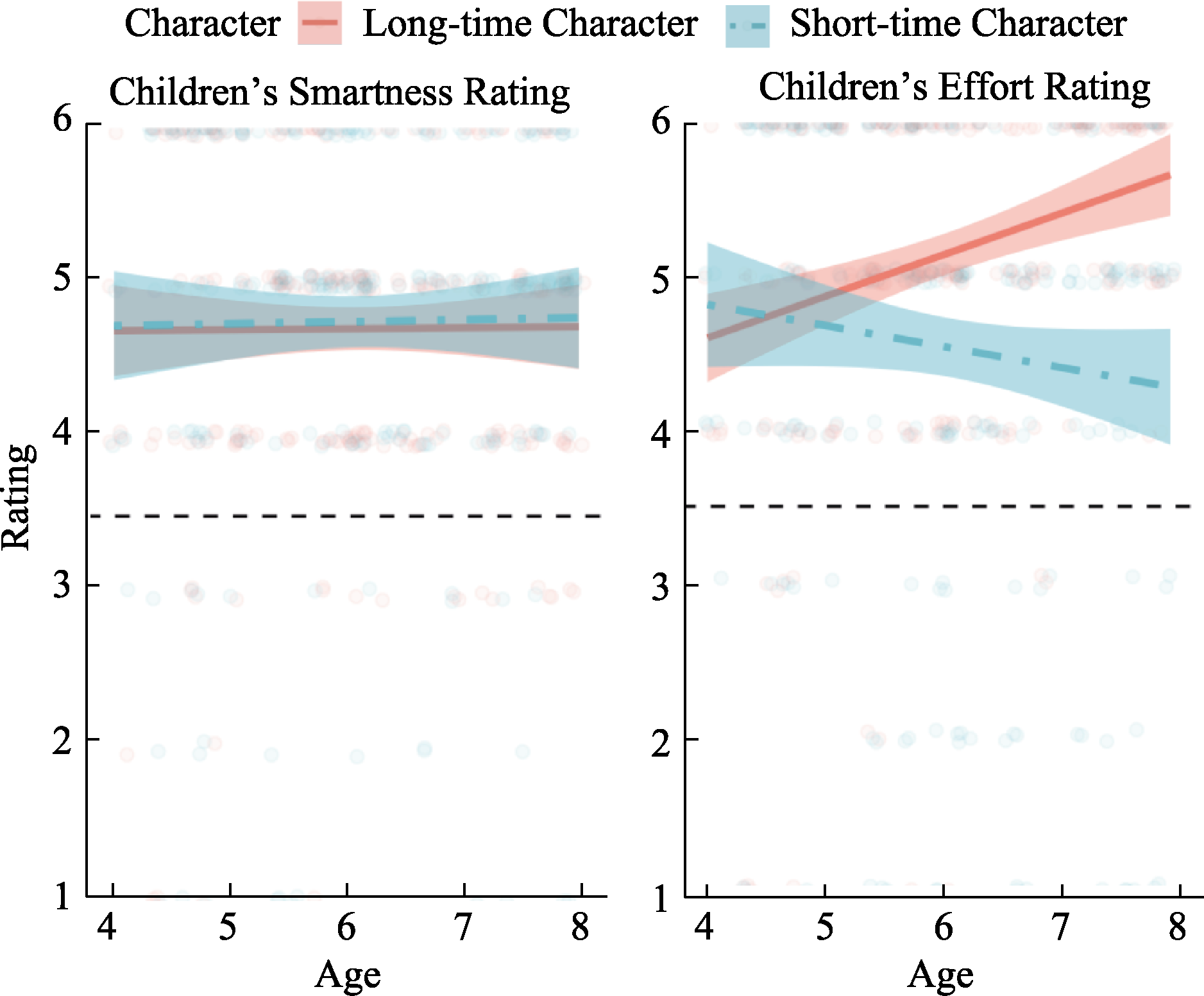
Figure 2. Relationship between age and children's smartness and effort ratings of the long-time and short-time characters after the first exam. Shaded areas represent 95% confidence intervals.
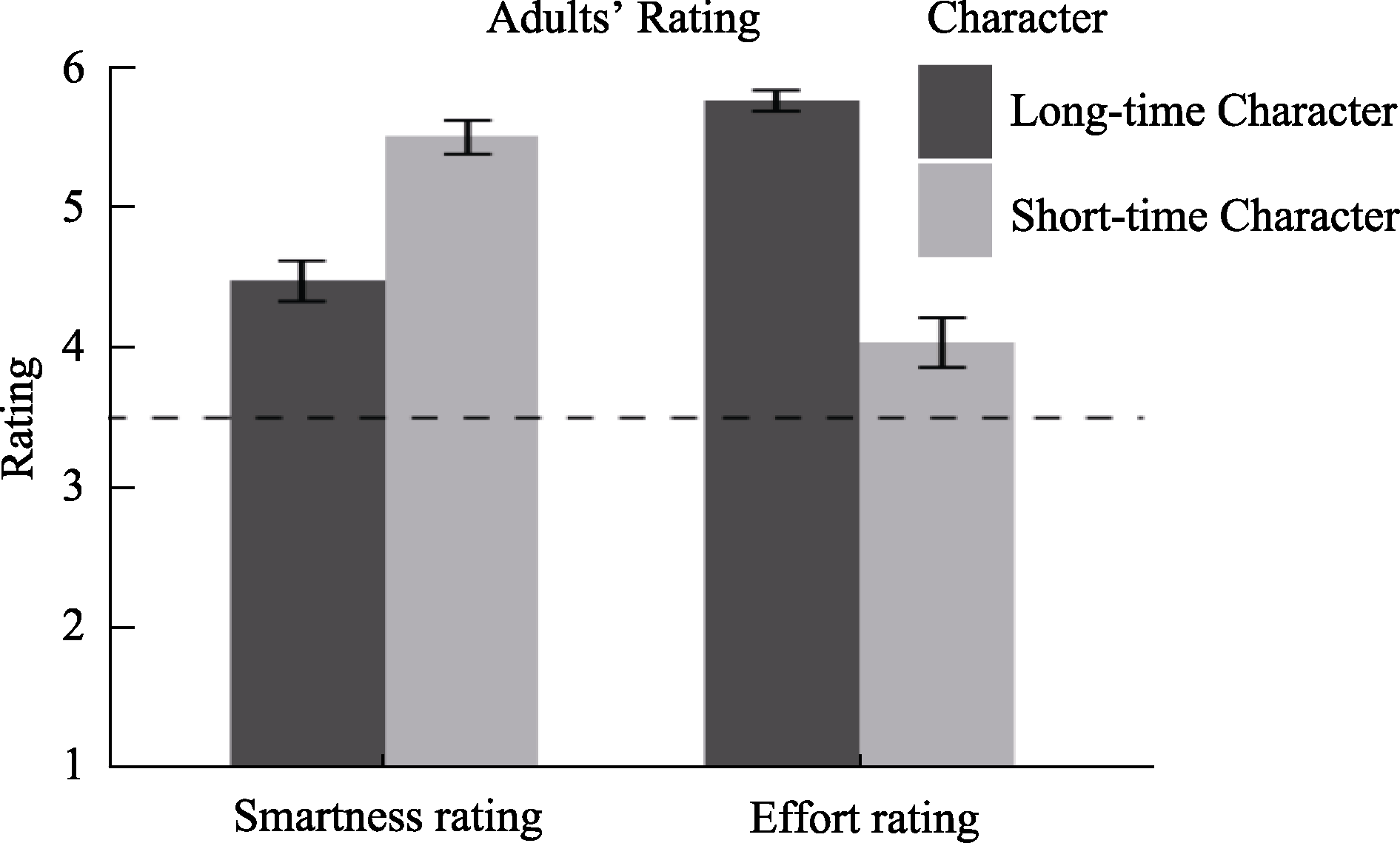
Figure 3. Adults' smartness and hardworking ratings of the long-time and short-time characters after the first exam. Error bars represent 95% confidence intervals.
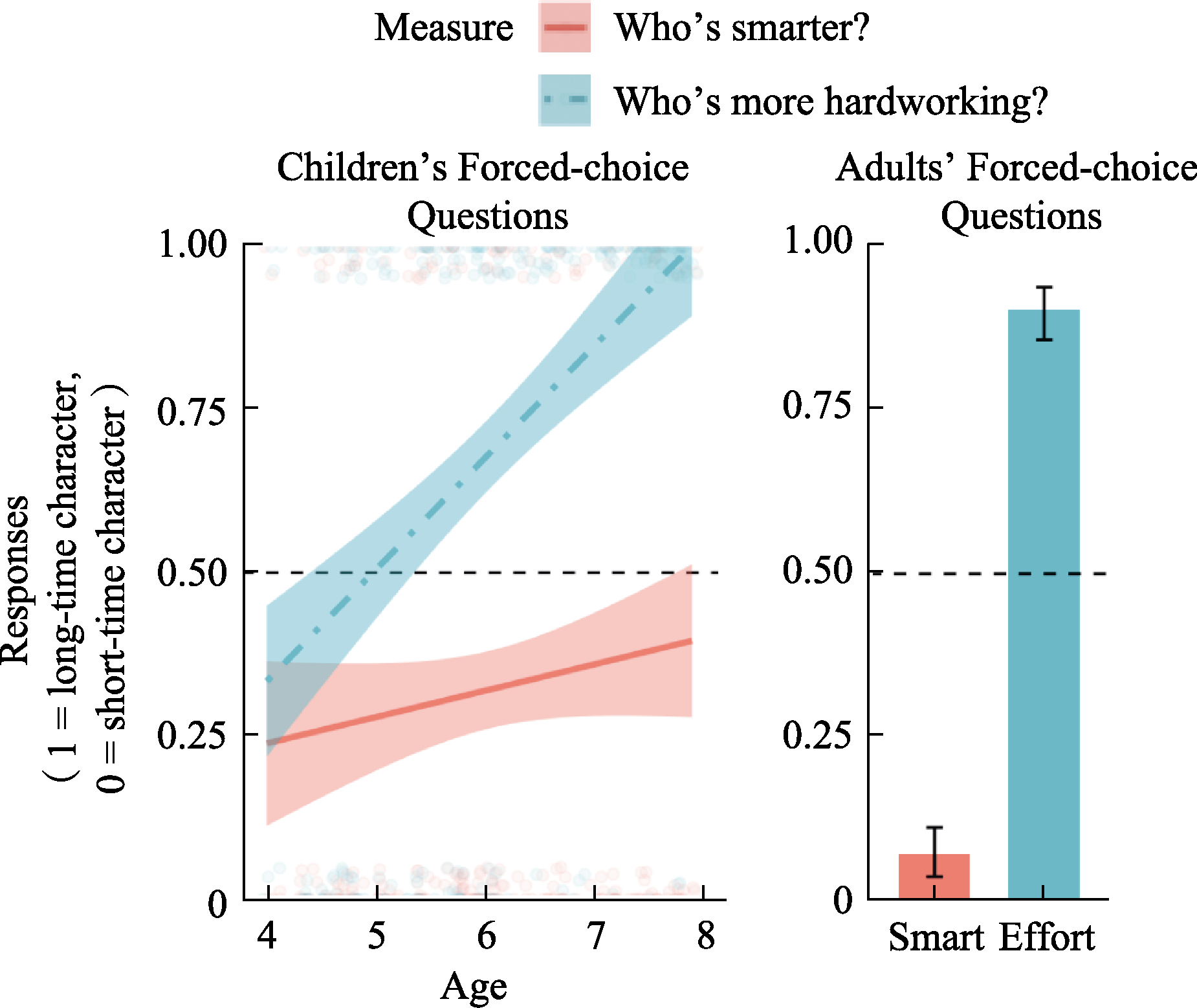
Figure 4. Children's and adults' responses to the forced-choice questions after the first exam. Shaded areas and error bars represent 95% confidence intervals.
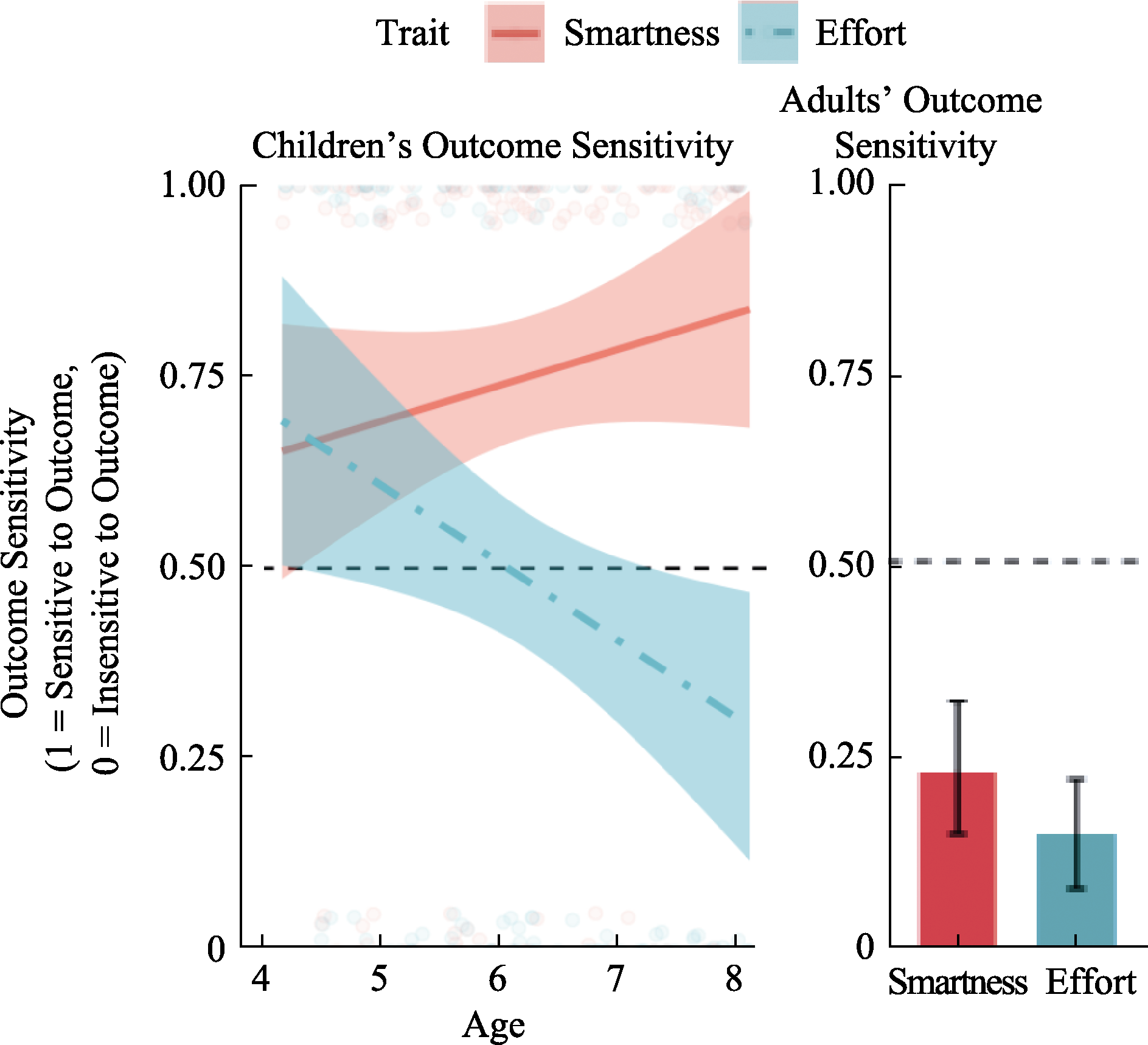
Figure 5. Children's and adults' outcome sensitivity in judgments of smartness and effort. Shaded areas and error bars represent 95% confidence intervals.
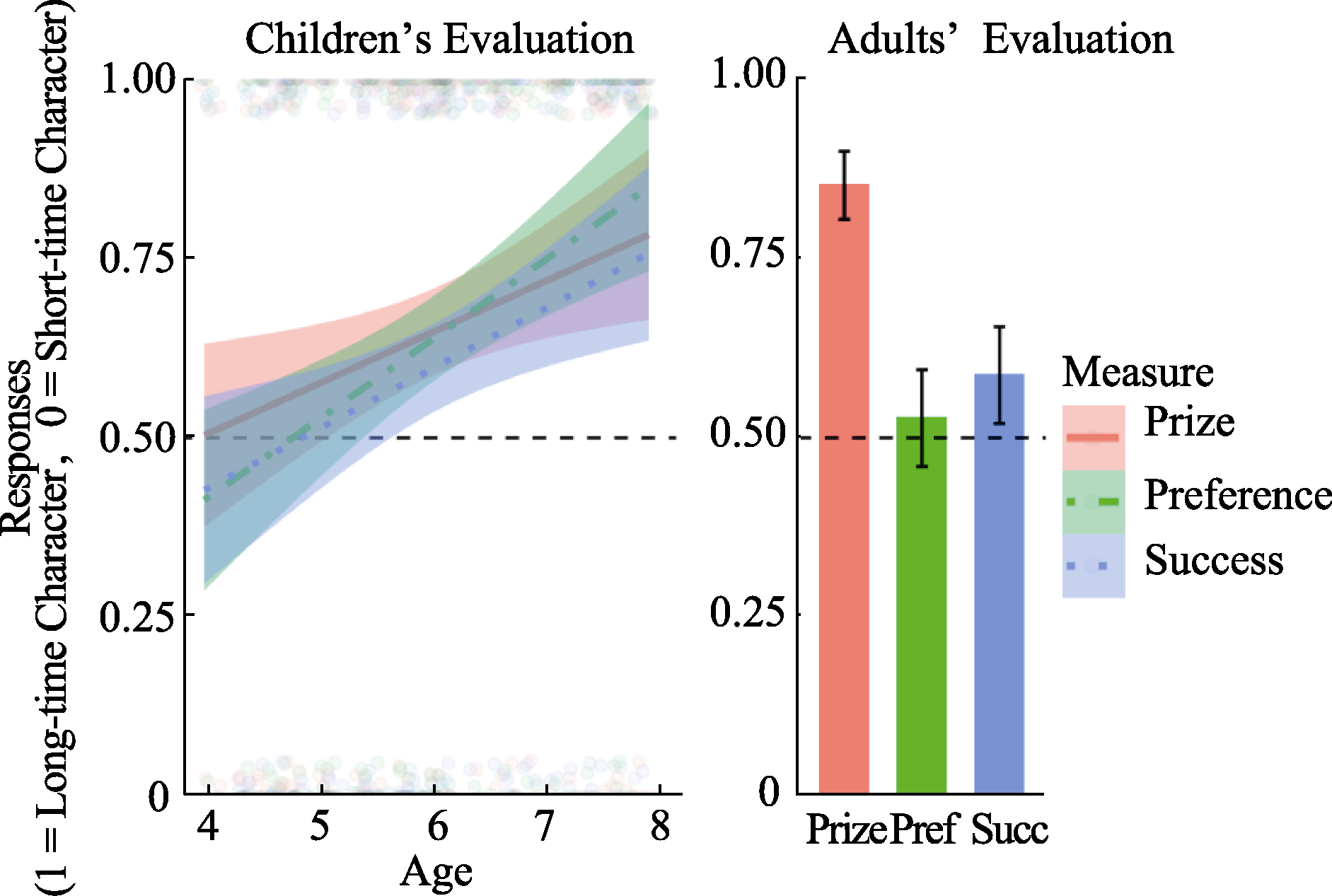
Figure 6. Children's and adults' evaluations of the two characters (1 = long-time character, 0 = short-time character) by measure (Prize, Preference, Success). Shaded areas and error bars represent 95% confidence intervals.
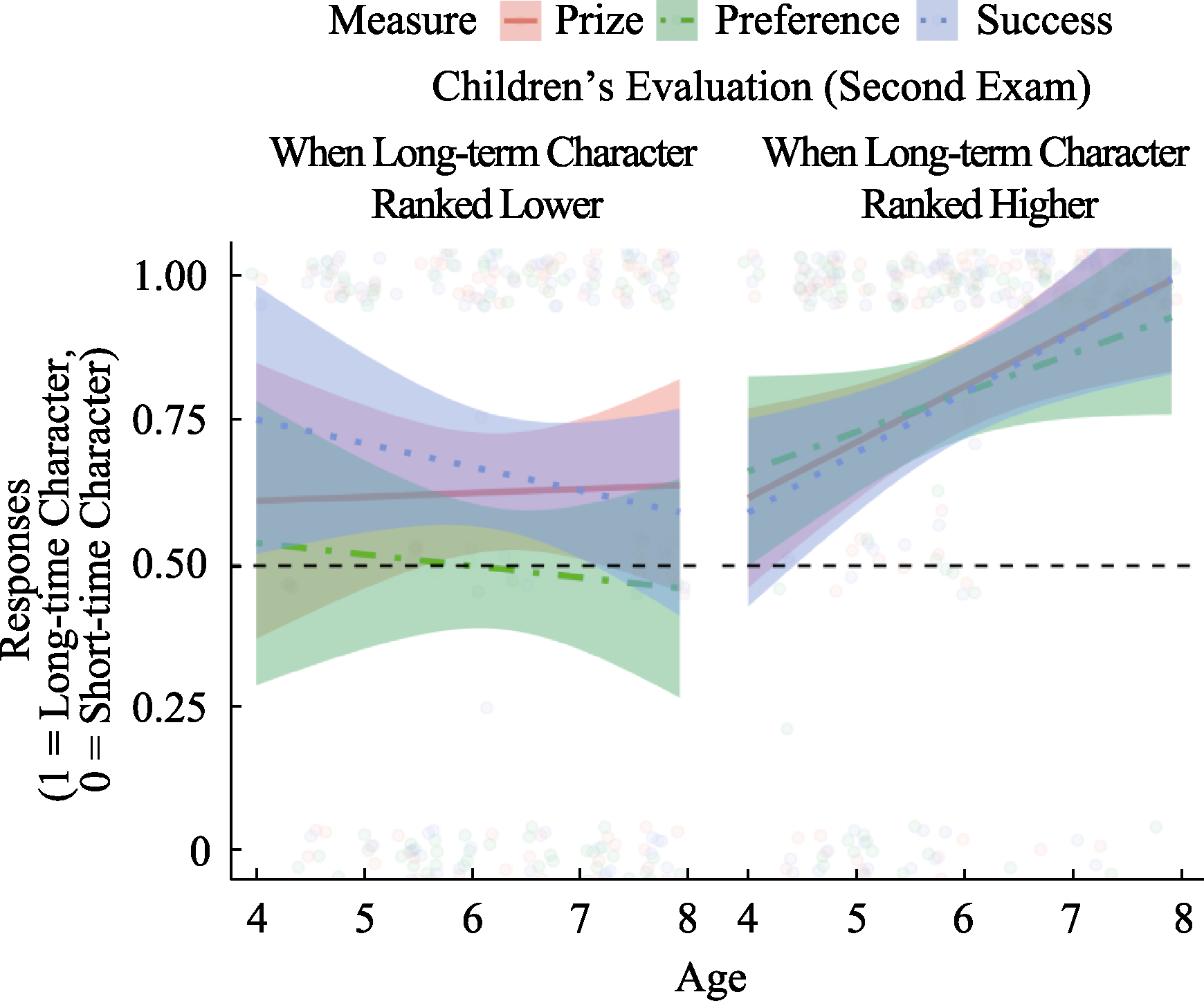
Figure 7. Relations between age and children's evaluations of the two characters during the second examination (1 = long-time character, 0 = short-time character). Shaded areas represent 95% confidence intervals.
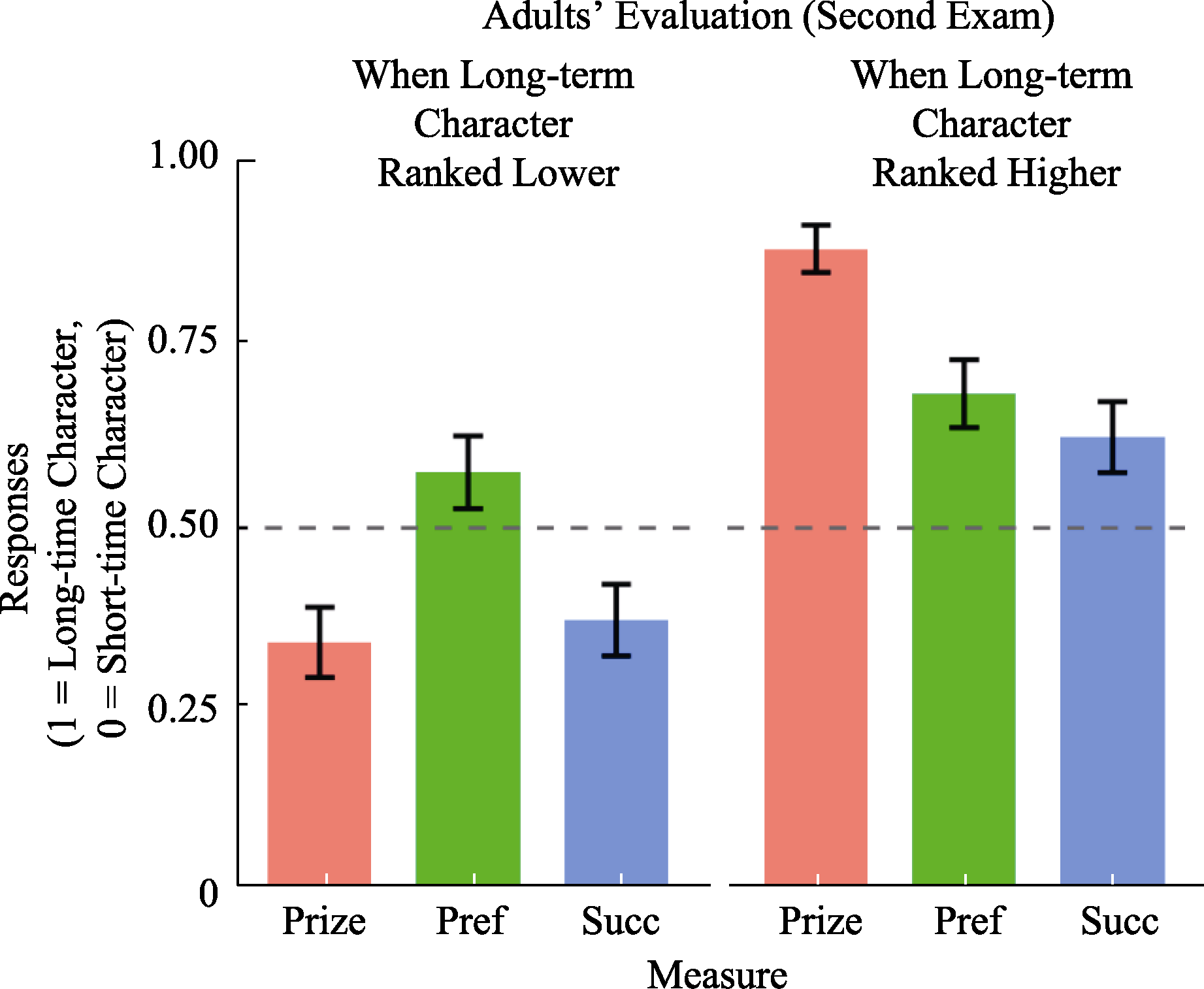
Figure 8. Adults’ evaluations of the two characters during the second examination (1 = long-time character, 0 = short-time character) by measure (Prize, Preference, Success). Error bars represent 95% confidence intervals.
| [1] |
Bak, H., & Yi, Y. (2025). Cultures of genius in unequal societies: The impact of perceived economic inequality on preferences for talent over effort. Journal of Business Research, 199, 115512.
doi: 10.1016/j.jbusres.2025.115512 URL |
| [2] | Bates, D., Mächler, M., Bolker, B., & Walker, S. (2015). Fitting linear mixed-effects models using lme4. Journal of Statistical Software, 67(1), 1-48. |
| [3] |
Bauer, C. A., Job, V., & Hannover, B. (2023). Who gets to see themselves as talented? Biased self-concepts contribute to first-generation students’ disadvantage in talent-focused environments. Journal of Experimental Social Psychology, 108, 104501.
doi: 10.1016/j.jesp.2023.104501 URL |
| [4] |
Brown, C. M., Troy, N. S., Jobson, K. R., & Link, J. K. (2018). Contextual and personal determinants of preferring success attributed to natural talent or striving. Journal of Experimental Social Psychology, 78, 134-147.
doi: 10.1016/j.jesp.2018.03.017 URL |
| [5] |
Celniker, J. B., Gregory, A., Koo, H. J., Piff, P. K., Ditto, P. H., & Shariff, A. F. (2023). The moralization of effort. Journal of Experimental Psychology: General, 152(1), 60-79.
doi: 10.1037/xge0001259 URL |
| [6] |
Cushman, F. (2008). Crime and punishment: Distinguishing the roles of causal and intentional analyses in moral judgment. Cognition, 108(2), 353-380.
doi: 10.1016/j.cognition.2008.03.006 pmid: 18439575 |
| [7] |
Cushman, F., Sheketoff, R., Wharton, S., & Carey, S. (2013). The development of intent-based moral judgment. Cognition, 127(1), 6-21.
doi: 10.1016/j.cognition.2012.11.008 pmid: 23318350 |
| [8] |
Droege, K. L., & Stipek, D. J. (1993). Children’s use of dispositions to predict classmates’ behavior. Developmental Psychology, 29(4), 646-654.
doi: 10.1037/0012-1649.29.4.646 URL |
| [9] | Dweck, C. S. (2013). Self-theories: Their role in motivation, personality, and development. New York: Psychology Press. |
| [10] |
Folmer, A. S., Cole, D. A., Sigal, A. B., Benbow, L. D., Satterwhite, L. F., Swygert, K. E., & Ciesla, J. A. (2007). Age-related changes in children’s understanding effort and ability: Implications for attribution theory and motivation. Journal of Experimental Child Psychology, 99(2), 114-134.
doi: 10.1016/j.jecp.2007.09.003 URL |
| [11] |
Fwu, B., Wei, C., Chen, S., & Wang, H. (2014). Effort counts: The moral significance of effort in the patterns of credit assignment on math learning in the Confucian cultural context. International Journal of Educational Development, 39, 157-162.
doi: 10.1016/j.ijedudev.2014.07.010 URL |
| [12] |
Haber, A. S., Kumar, S. C., Leech, K. A., & Corriveau, K. H. (2024). How does caregiver-child conversation during a scientific storybook reading impact children’s mindset beliefs and persistence? Child Development, 95(5), 1739-1753.
doi: 10.1111/cdev.14107 URL |
| [13] |
Heyman, G. D., & Compton, B. J. (2006). Context sensitivity in children’s reasoning about ability across the elementary school years. Developmental Science, 9(6), 616-627.
pmid: 17059459 |
| [14] |
Heyman, G. D., Gee, C. L., & Giles, J. W. (2003). Preschool children’s reasoning about ability. Child Development, 74(2), 516-534.
pmid: 12705570 |
| [15] |
Hu, Y., Shu, Y., & Zhao, X. (2026). Children consider changes in performance over time when reasoning about academic achievements. NPJ Science of Learning, 11, 13.
doi: 10.1038/s41539-026-00401-1 |
| [16] |
Jiang, Y., Rosenzweig, E. Q., & Gaspard, H. (2018). An expectancy-value-cost approach in predicting adolescent students’ academic motivation and achievement. Contemporary Educational Psychology, 54, 139-152.
doi: 10.1016/j.cedpsych.2018.06.005 URL |
| [17] | Johnson, P. O., & Neyman, J. (1936). Tests of certain linear hypotheses and their application to some educational problems. Statistical Research Memoirs, 1, 57-93. |
| [18] |
Li, J., Fung, H., Bakeman, R., Rae, K., & Wei, W. (2013). How European American and Taiwanese mothers talk to their children about learning. Child Development, 85(3), 1206-1221.
doi: 10.1111/cdev.12172 URL |
| [19] |
Lucca, K., Horton, R., & Sommerville, J. A. (2019). Keep trying!: Parental language predicts infants’ persistence. Cognition, 193, 104025.
doi: 10.1016/j.cognition.2019.104025 URL |
| [20] |
Ma, F., Tang, L., Jiang, Y., Luo, X., Compton, B. J., & Heyman, G. D. (2025). Overheard evaluative comments can affect young children’s effort. Journal of Experimental Psychology: General, 154(9), 2447-2455.
doi: 10.1037/xge0001785 URL |
| [21] |
Ma, S., Tsay, C., & Chen, E. E. (2022). Preference for talented naturals over hard workers emerges in childhood and shapes behavior. Child Development, 94(3), 674-690.
doi: 10.1111/cdev.13886 pmid: 36537003 |
| [22] |
Meinz, E. J., Hambrick, D. Z., Hawkins, C. B., Gillings, A. K., Meyer, B. E., & Schneider, J. L. (2012). Roles of domain knowledge and working memory capacity in components of skill in Texas Hold’Em poker. Journal of Applied Research in Memory and Cognition, 1(1), 34-40.
doi: 10.1016/j.jarmac.2011.11.001 URL |
| [23] |
Muradoglu, M., & Cimpian, A. (2020). Children’s intuitive theories of academic performance. Child Development, 91(4), 902-918.
doi: 10.1111/cdev.13325 pmid: 31631332 |
| [24] |
Ng, F. F., & Wei, J. (2020). Delving into the minds of Chinese parents: What beliefs motivate their learning‐related practices? Child Development Perspectives, 14(1), 61-67.
doi: 10.1111/cdep.12358 URL |
| [25] |
Nicholls, J. G. (1978). The development of the concepts of effort and ability, perception of academic attainment, and the understanding that difficult tasks require more ability. Child Development, 49(3), 800-814.
doi: 10.2307/1128250 URL |
| [26] |
Nicholls, J. G., & Miller, A. T. (1984). Reasoning about the ability of self and others: A developmental study. Child Development, 55(6), 1990-1999.
doi: 10.2307/1129774 URL |
| [27] |
Nickerson, R. S. (1998). Confirmation bias: A ubiquitous phenomenon in many guises. Review of General Psychology, 2(2), 175-220.
doi: 10.1037/1089-2680.2.2.175 URL |
| [28] |
Noh, J. Y., D’Esterre, A., & Killen, M. (2019). Effort or outcome? Children’s meritorious decisions. Journal of Experimental Child Psychology, 178, 1-14.
doi: 10.1016/j.jecp.2018.09.005 URL |
| [29] |
Radovanovic, M., Chao, T. W. T., Onyshko, E., Huynh, Q.D. T., Liu, Y. L., & Sommerville, J. A. (2023). Not just if, but how much: Children and adults use cost and need to make evaluations about generosity across contexts. Cognition, 238, 105533.
doi: 10.1016/j.cognition.2023.105533 URL |
| [30] |
Rholes, W. S., & Ruble, D. N. (1984). Children's understanding of dispositional characteristics of others. Child Development, 55(2), 550-560.
doi: 10.2307/1129966 URL |
| [31] |
Stipek, D., & Gralinski, J. H. (1996). Children’s beliefs about intelligence and school performance. Journal of Educational Psychology, 88(3), 397-407.
doi: 10.1037/0022-0663.88.3.397 URL |
| [32] |
Stipek, D. J., & Daniels, D. H. (1990). Children’s use of dispositional attributions in predicting the performance and behavior of classmates. Journal of Applied Developmental Psychology, 11(1), 13-28.
doi: 10.1016/0193-3973(90)90029-J URL |
| [33] |
Subotnik, R. F., Olszewski-Kubilius, P., & Worrell, F. C. (2011). Rethinking giftedness and gifted education. Psychological Science in the Public Interest, 12(1), 3-54.
doi: 10.1177/1529100611418056 pmid: 26168418 |
| [34] |
Tsay, C. J. (2016). Privileging naturals over strivers: The costs of the naturalness bias. Personality and Social Psychology Bulletin, 42(1), 40-53.
doi: 10.1177/0146167215611638 URL |
| [35] |
Tsay, C. J., & Banaji, M. R. (2011). Naturals and strivers: Preferences and beliefs about sources of achievement. Journal of Experimental Social Psychology, 47(2), 460-465.
doi: 10.1016/j.jesp.2010.12.010 URL |
| [36] | Weiner, B., Frieze, I. H., Kukla, A., Reed, L., Rest, S. & Rosenbaum, R. M. (1971). Perceiving the causes of success and failure. Morristown, NJ: General Learning Press. |
| [37] | Xing, S. F., Yu, G. L., & Lin, C. D. (2011a). The effect of praise for ability or effort on children’s psychological effects of post-failure. Journal of Psychological Science, 34(5), 1079-1084. |
| [38] | Xing, S. F., Yu, G. L., & Lin, C. D. (2011b). The characteristics of implicit theory of intelligence of children in higher grader of primary school and the effects of praise on it. Psychological Development and Education, 27(3), 255-259. |
| [39] | Xu, Q. M., & Ju, X. H. (2004). Children’s emotional reactions and emotional attribution to success and failure in learning. Chinese Journal of Clinical Psychology, 12(3), 239-243. |
| [40] |
Yang, X., Zhao, X., Dunham, Y., & Bian, L. (2024). The development and predictors of a preference for strivers over naturals in the United States and China. Child Development, 95(2), 593-608.
doi: 10.1111/cdev.14012 URL |
| [41] |
Yeager, D. S., & Dweck, C. S. (2012). Mindsets that promote resilience: When students believe that personal characteristics can be developed. Educational Psychologist, 47(4), 302-314.
doi: 10.1080/00461520.2012.722805 URL |
| [42] |
Yee, D. K., & Eccles, J. S. (1988). Parent perceptions and attributions for children’s math achievement. Sex Roles, 19(5-6), 317-333.
doi: 10.1007/BF00289840 URL |
| [43] |
Zhang, H., & Yu, F. (2023). The concept, manifestation and cause of naturalness preference. Advances in Psychological Science, 31(12), 2393-2405.
doi: 10.3724/SP.J.1042.2023.02393 |
| [44] | Zhang, X., Lin, C., Shen, J., & Guo, D. (2007). A review of the relationships among motivational orientation, achievement attribution, self-efficacy, and academic achievement. Educational Science Research, (3), 48-51, 55. |
| [45] |
Zhao, L., Li, Y., Qin, W., Amemiya, J., Fang, F., Compton, B. J., & Heyman, G. D. (2022). Overheard evaluative comments: Implications for beliefs about effort and ability. Child Development, 93(6), 1889-1902.
doi: 10.1111/cdev.13829 pmid: 35938557 |
| [46] |
Zhao, X., & Hu, Y. (2026). The belief-behavior link: The relationship between children’s beliefs about constraints on academic achievement and their persistence and challenge-seeking behaviors. Journal of Experimental Child Psychology, 264, 106431.
doi: 10.1016/j.jecp.2025.106431 URL |
| [47] |
Zhao, X., & Kushnir, T. (2023). When it's not easy to do the right thing: Developmental changes in understanding cost drive evaluations of moral praiseworthiness. Developmental Science, 26(1), e13257.
doi: 10.1111/desc.v26.1 URL |
| [48] |
Zhao, X., Wente, A., Flecha, M. F., Galvan, D. S., Gopnik, A., & Kushnir, T. (2021). Culture moderates the relationship between self-control ability and free will beliefs in childhood. Cognition, 210, 104609.
doi: 10.1016/j.cognition.2021.104609 URL |
| [49] |
Zhao, X., & Yang, X. (2023). She succeeded despite lack of ability or resources: Children’s consideration of constraint in beliefs and reasoning about academic achievement. Developmental Psychology, 59(3), 594-608.b
doi: 10.1037/dev0001465 URL |
| Viewed | ||||||
|
Full text |
|
|||||
|
Abstract |
|
|||||
