

ISSN 0439-755X
CN 11-1911/B
CN 11-1911/B
Acta Psychologica Sinica ›› 2025, Vol. 57 ›› Issue (6): 967-986.doi: 10.3724/SP.J.1041.2025.0967
• Academic Papers of the 27 th Annual Meeting of the China Association for Science and Techn • Previous Articles Next Articles
WANG Fancong, TANG Xiaoyu, YU Shengquan( )
)
Published:2025-06-25
Online:2025-04-15
Contact:
YU Shengquan
E-mail:yusq@bnu.edu.cn
WANG Fancong, TANG Xiaoyu, YU Shengquan. (2025). Cognitive outsourcing based on generative artificial intelligence: An Analysis of interactive behavioral patterns and cognitive structural features. Acta Psychologica Sinica, 57(6), 967-986.
Add to citation manager EndNote|Ris|BibTeX
URL: https://journal.psych.ac.cn/acps/EN/10.3724/SP.J.1041.2025.0967
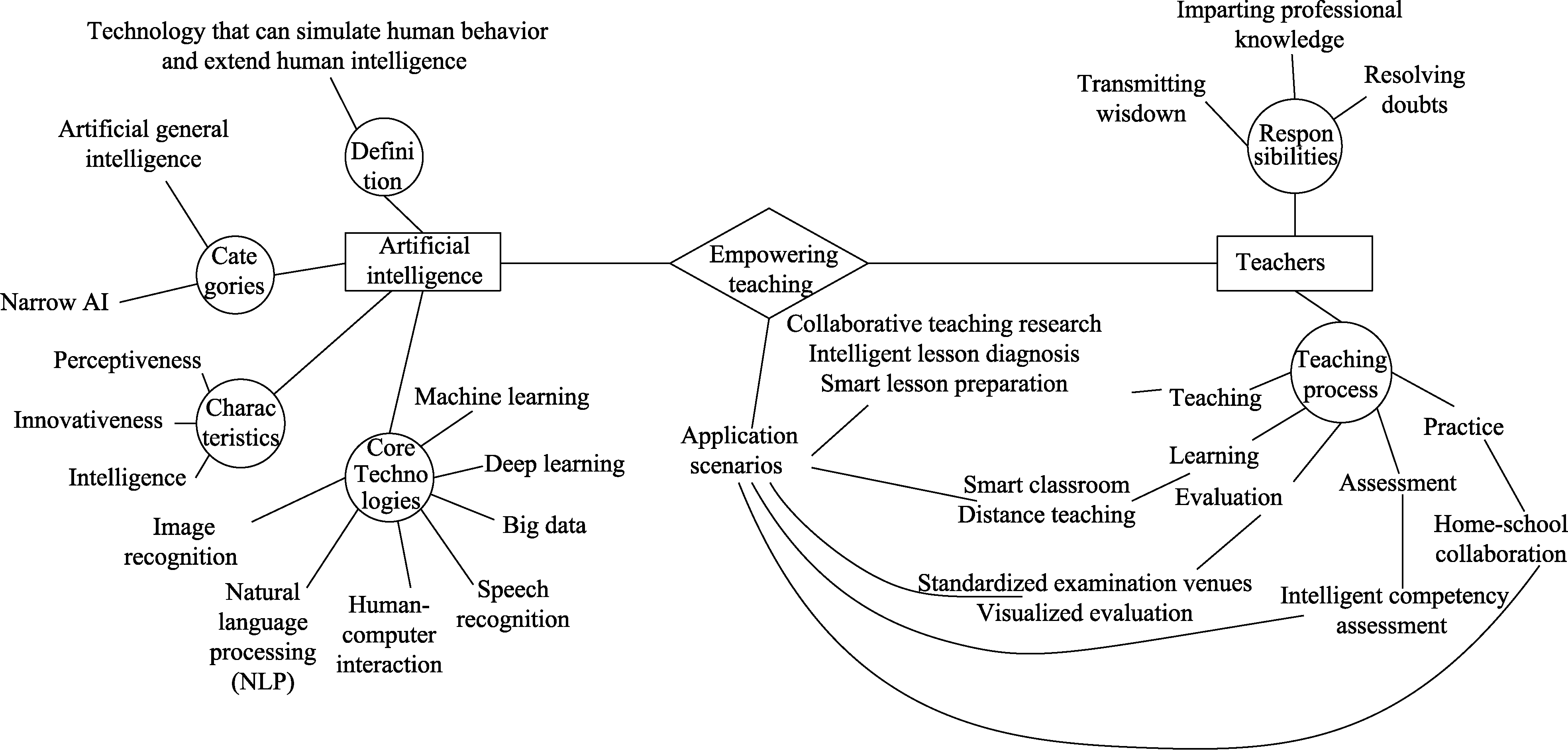
Figure 1. Example of a concept map drawn by a participant.
| Dimension | Definition | Scoring Criteria |
|---|---|---|
| Concept nodes | Concepts related to the theme | Correct: Score = 1 + 0.5 × (L ? 1), where L represents the hierarchical level of the concept node in the concept map, and L ≥ 1; Irrelevant: 0 points; Incorrect: ?1 point; |
| Cross-connection | Using connecting lines to represent meaningful relationships between two concepts that are not in a parent-child relationship | Correct: 2 points; Irrelevant: 0 points; Incorrect: ?2 points; |
| Text Annotation | Detailed explanations of concepts on nodes, relationships between concepts on different nodes, and explanations of the entire concept map. | Correct: 1 point; Irrelevant: 0 points; Incorrect: ?1 point; |
Table 1 Concept map scoring criteria
| Dimension | Definition | Scoring Criteria |
|---|---|---|
| Concept nodes | Concepts related to the theme | Correct: Score = 1 + 0.5 × (L ? 1), where L represents the hierarchical level of the concept node in the concept map, and L ≥ 1; Irrelevant: 0 points; Incorrect: ?1 point; |
| Cross-connection | Using connecting lines to represent meaningful relationships between two concepts that are not in a parent-child relationship | Correct: 2 points; Irrelevant: 0 points; Incorrect: ?2 points; |
| Text Annotation | Detailed explanations of concepts on nodes, relationships between concepts on different nodes, and explanations of the entire concept map. | Correct: 1 point; Irrelevant: 0 points; Incorrect: ?1 point; |
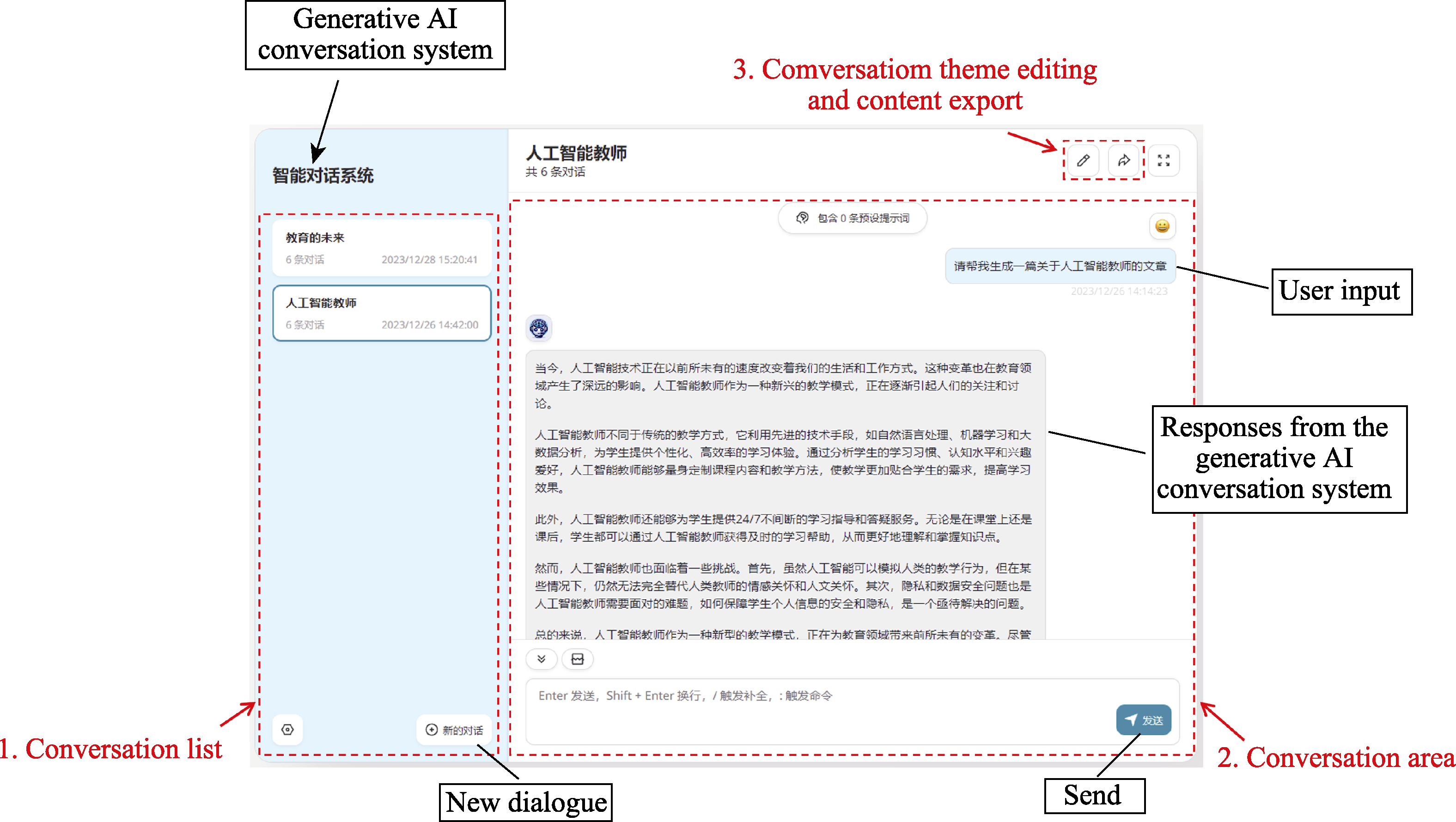
Figure 2. Generative AI conversation system interface.
| Code | Interactive Behavior Category | Description |
|---|---|---|
| TR | Task Review | Reviewing the requirements and objectives of the writing task. |
| AQ | Ask a Question | Asking the system questions to obtain information, explanations, or perspectives. |
| FQ | Follow-up Question | Asking further questions based on the system's response after receiving an answer. |
| EF | Evaluative Feedback | Evaluating the content of system responses, including assessments of information accuracy/ usefulness or feedback on response styles. |
| CCP | Content Copy-Pasting | Selecting and pasting partial or entire content from system responses into articles. |
| CPC | Content Planning and Conceptualization | Drafting topic outline or core points, as well as planning content structure. |
| CC | Content Cut | Deleting unnecessary or irrelevant parts of existing content. |
| CR | Content Rewriting | Rewriting certain parts or sentences of existing content. |
| ACC | Autonomous Content Creation | Independently producing or writing article content based on existing information. |
Table 2 Interactive behavioral coding framework
| Code | Interactive Behavior Category | Description |
|---|---|---|
| TR | Task Review | Reviewing the requirements and objectives of the writing task. |
| AQ | Ask a Question | Asking the system questions to obtain information, explanations, or perspectives. |
| FQ | Follow-up Question | Asking further questions based on the system's response after receiving an answer. |
| EF | Evaluative Feedback | Evaluating the content of system responses, including assessments of information accuracy/ usefulness or feedback on response styles. |
| CCP | Content Copy-Pasting | Selecting and pasting partial or entire content from system responses into articles. |
| CPC | Content Planning and Conceptualization | Drafting topic outline or core points, as well as planning content structure. |
| CC | Content Cut | Deleting unnecessary or irrelevant parts of existing content. |
| CR | Content Rewriting | Rewriting certain parts or sentences of existing content. |
| ACC | Autonomous Content Creation | Independently producing or writing article content based on existing information. |
| Cognitive Element Category | Description | Example |
|---|---|---|
| Remember | Recalling and verifying basic concepts and factual information. | What is generative artificial intelligence? |
| Understand | Explaining, and summarizing information. | How does artificial intelligence assist in production practices? |
| Apply | Applying information in new contexts. | How to promote teacher professional development and learning in the era of generative artificial intelligence? |
| Analyze | Clarifying the interrelationships between various concepts. | Analyze the current trend of artificial intelligence development and its impact on teacher education. |
| Evaluate | Evaluating and judging the value of information. | What is your perspective on the challenges of AI in privacy protection? |
| Create | Generating new or original works. | Develop a plan to enhance classroom teaching effectiveness using artificial intelligence. |
Table 3 Cognitive elements coding framework
| Cognitive Element Category | Description | Example |
|---|---|---|
| Remember | Recalling and verifying basic concepts and factual information. | What is generative artificial intelligence? |
| Understand | Explaining, and summarizing information. | How does artificial intelligence assist in production practices? |
| Apply | Applying information in new contexts. | How to promote teacher professional development and learning in the era of generative artificial intelligence? |
| Analyze | Clarifying the interrelationships between various concepts. | Analyze the current trend of artificial intelligence development and its impact on teacher education. |
| Evaluate | Evaluating and judging the value of information. | What is your perspective on the challenges of AI in privacy protection? |
| Create | Generating new or original works. | Develop a plan to enhance classroom teaching effectiveness using artificial intelligence. |
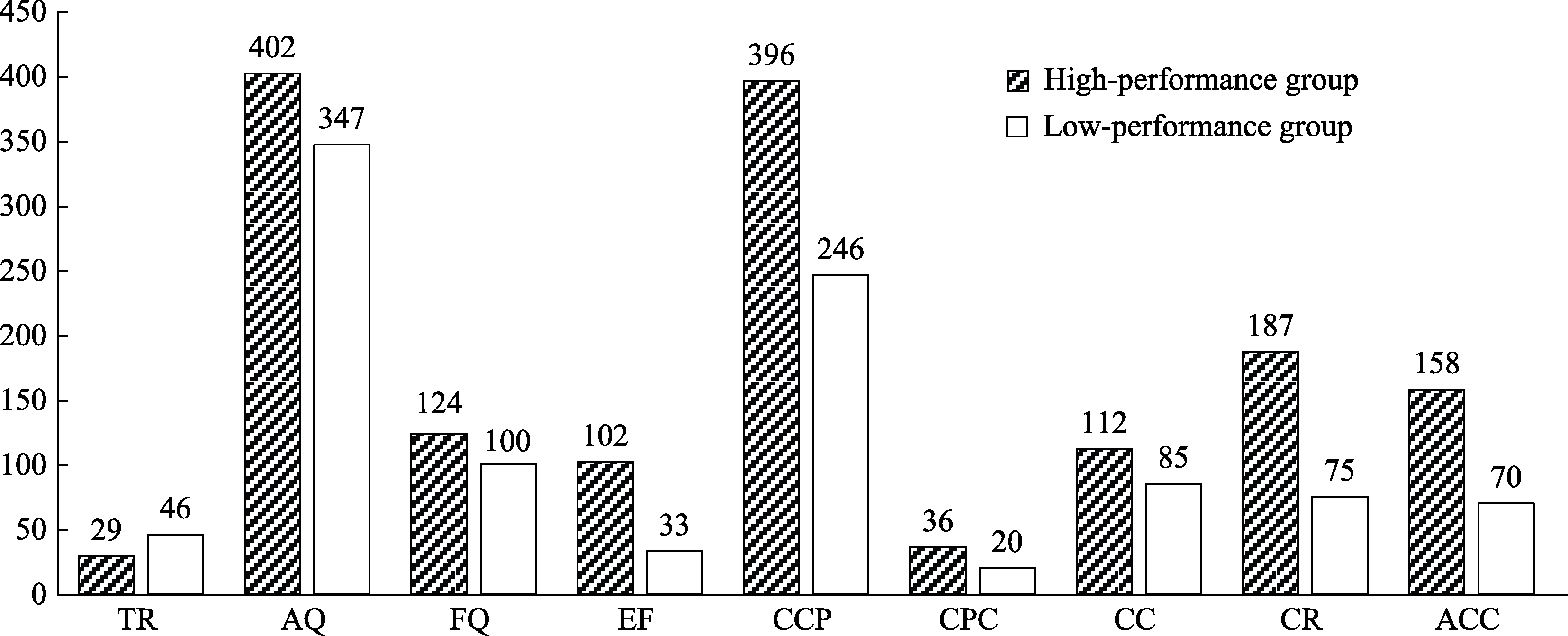
Figure 3. Frequency distribution of interactive behaviors in high- and low-performance groups. Note: TR = Task Review; AQ = Ask a Question; FQ = Follow-up Question; EF = Evaluative Feedback; CCP = Content Copy-Pasting; CPC = Content Planning and Conceptualization; CC = Content Cut; CR = Content Rewriting; ACC = Autonomous Content Creation.
| Z | TR | AQ | FQ | EF | CCP | CPC | CC | CR | ACC |
|---|---|---|---|---|---|---|---|---|---|
| TR | ?0.34 | 5.68* | ?1.62 | ?1.46 | ?2.80 | ?0.85 | ?1.53 | ?2.03 | 2.45* |
| AQ | 1.33 | 0.13 | 4.82* | 3.81* | 1.40 | ?0.16 | ?4.75 | ?4.95 | ?0.44 |
| FQ | ?0.72 | ?3.26 | 4.86* | 2.58* | 2.86* | 1.31 | ?2.16 | ?3.73 | ?0.51 |
| EF | ?0.65 | ?0.56 | 2.97* | 5.51* | 0.47 | 2.48* | ?2.12 | ?3.24 | ?2.84 |
| CCP | ?0.51 | ?3.49 | ?4.47 | ?2.86 | ?3.16 | ?1.64 | 5.22* | 11.62* | ?0.11 |
| CPC | ?0.38 | 1.72 | ?0.57 | ?0.95 | 1.40 | ?0.94 | ?1.71 | ?1.76 | 0.70 |
| CC | ?0.68 | 1.12 | ?1.43 | ?2.52 | ?2.17 | ?0.39 | ?3.07 | 5.28* | 2.14* |
| CR | 0.36 | 1.79 | ?3.12 | ?2.59 | ?1.14 | ?0.68 | 5.63* | ?3.69 | 3.40* |
| ACC | 0.53 | 1.94 | ?1.74 | ?2.16 | 3.23* | 1.30 | 1.17 | ?2.33 | ?3.36 |
Table 4 Adjusted residual values of the high-performance group
| Z | TR | AQ | FQ | EF | CCP | CPC | CC | CR | ACC |
|---|---|---|---|---|---|---|---|---|---|
| TR | ?0.34 | 5.68* | ?1.62 | ?1.46 | ?2.80 | ?0.85 | ?1.53 | ?2.03 | 2.45* |
| AQ | 1.33 | 0.13 | 4.82* | 3.81* | 1.40 | ?0.16 | ?4.75 | ?4.95 | ?0.44 |
| FQ | ?0.72 | ?3.26 | 4.86* | 2.58* | 2.86* | 1.31 | ?2.16 | ?3.73 | ?0.51 |
| EF | ?0.65 | ?0.56 | 2.97* | 5.51* | 0.47 | 2.48* | ?2.12 | ?3.24 | ?2.84 |
| CCP | ?0.51 | ?3.49 | ?4.47 | ?2.86 | ?3.16 | ?1.64 | 5.22* | 11.62* | ?0.11 |
| CPC | ?0.38 | 1.72 | ?0.57 | ?0.95 | 1.40 | ?0.94 | ?1.71 | ?1.76 | 0.70 |
| CC | ?0.68 | 1.12 | ?1.43 | ?2.52 | ?2.17 | ?0.39 | ?3.07 | 5.28* | 2.14* |
| CR | 0.36 | 1.79 | ?3.12 | ?2.59 | ?1.14 | ?0.68 | 5.63* | ?3.69 | 3.40* |
| ACC | 0.53 | 1.94 | ?1.74 | ?2.16 | 3.23* | 1.30 | 1.17 | ?2.33 | ?3.36 |
| Z | TR | AQ | FQ | EF | CCP | CPC | CC | CR | ACC |
|---|---|---|---|---|---|---|---|---|---|
| TR | ?1.02 | 5.10* | ?1.16 | ?1.22 | ?3.05 | ?0.95 | ?2.02 | ?1.29 | 2.51* |
| AQ | 1.35 | 3.19* | 0.30 | 3.56* | 1.20 | ?0.91 | ?4.63 | ?4.54 | ?1.37 |
| FQ | ?0.89 | ?3.36 | 9.99* | 1.05 | 0.21 | ?1.49 | ?0.89 | ?2.97 | ?1.19 |
| EF | 0.32 | 3.73* | 1.08 | 0.95 | ?2.87 | ?0.82 | ?0.47 | ?1.64 | ?1.58 |
| CCP | ?0.74 | ?5.14 | ?2.45 | ?2.45 | 0.89 | 4.35* | 4.16* | 4.52* | 1.53 |
| CPC | ?0.69 | 0.50 | ?0.75 | ?0.83 | ?1.01 | ?0.65 | 3.48* | ?0.43 | ?0.36 |
| CC | 0.03 | 0.35 | ?2.84 | ?1.15 | ?0.77 | 0.24 | ?2.53 | 5.43* | 1.80 |
| CR | 0.28 | 0.51 | ?2.12 | ?1.63 | ?1.63 | ?1.26 | 6.08* | ?1.58 | 0.94 |
| ACC | 0.43 | ?1.23 | ?2.35 | ?0.11 | 3.57* | ?1.19 | ?0.70 | 2.49* | ?2.29 |
Table 5 Adjusted residual values of the low-performance group
| Z | TR | AQ | FQ | EF | CCP | CPC | CC | CR | ACC |
|---|---|---|---|---|---|---|---|---|---|
| TR | ?1.02 | 5.10* | ?1.16 | ?1.22 | ?3.05 | ?0.95 | ?2.02 | ?1.29 | 2.51* |
| AQ | 1.35 | 3.19* | 0.30 | 3.56* | 1.20 | ?0.91 | ?4.63 | ?4.54 | ?1.37 |
| FQ | ?0.89 | ?3.36 | 9.99* | 1.05 | 0.21 | ?1.49 | ?0.89 | ?2.97 | ?1.19 |
| EF | 0.32 | 3.73* | 1.08 | 0.95 | ?2.87 | ?0.82 | ?0.47 | ?1.64 | ?1.58 |
| CCP | ?0.74 | ?5.14 | ?2.45 | ?2.45 | 0.89 | 4.35* | 4.16* | 4.52* | 1.53 |
| CPC | ?0.69 | 0.50 | ?0.75 | ?0.83 | ?1.01 | ?0.65 | 3.48* | ?0.43 | ?0.36 |
| CC | 0.03 | 0.35 | ?2.84 | ?1.15 | ?0.77 | 0.24 | ?2.53 | 5.43* | 1.80 |
| CR | 0.28 | 0.51 | ?2.12 | ?1.63 | ?1.63 | ?1.26 | 6.08* | ?1.58 | 0.94 |
| ACC | 0.43 | ?1.23 | ?2.35 | ?0.11 | 3.57* | ?1.19 | ?0.70 | 2.49* | ?2.29 |
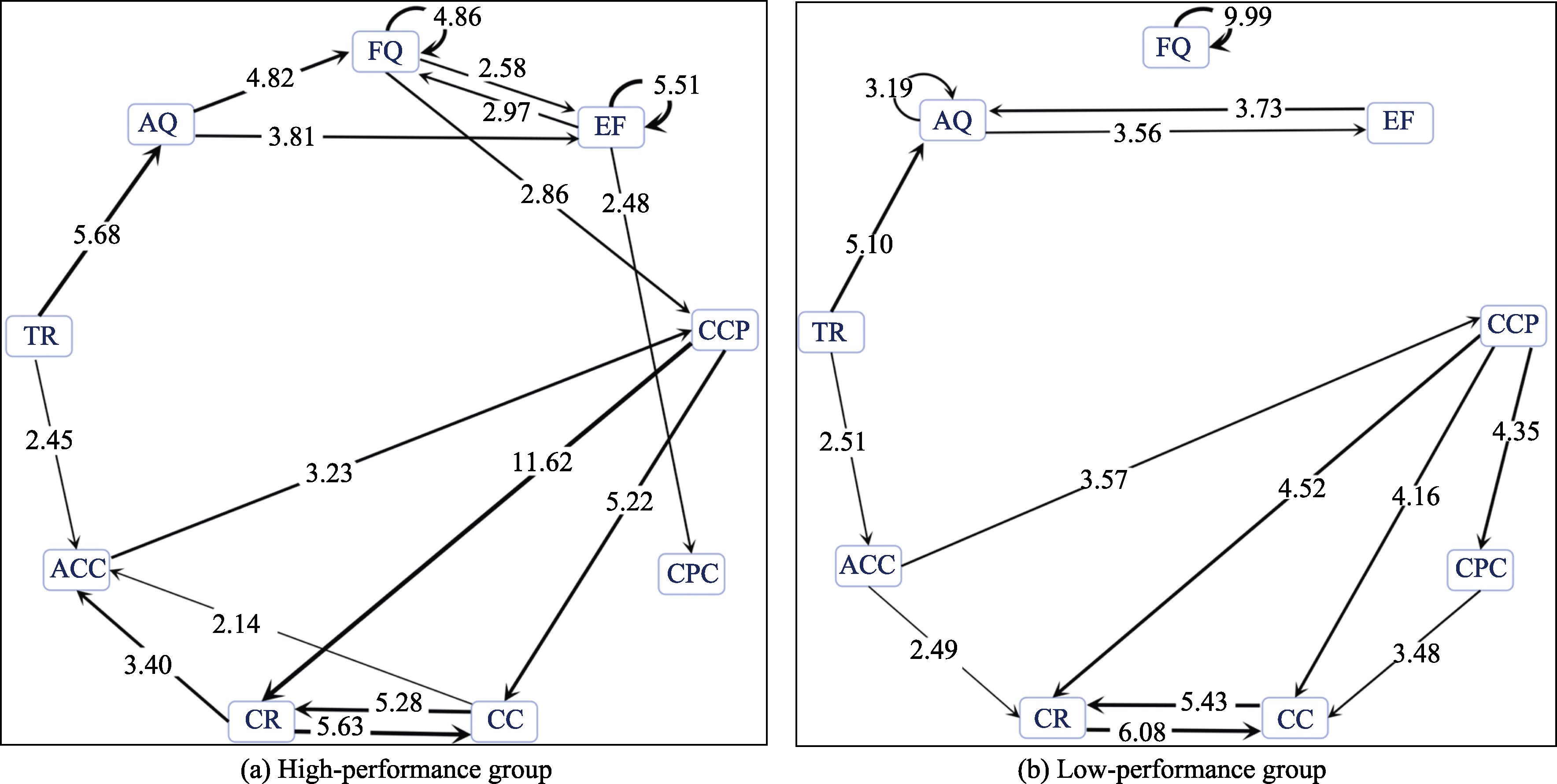
Figure 4. Interactive behavior transition diagrams of the high-performance group (a) and low-performance group (b). Note: TR = Task Review; AQ = Ask a Question; FQ = Follow-up Question; EF = Evaluative Feedback; CCP = Content Copy-Pasting; CPC = Content Planning and Conceptualization; CC = Content Cut; CR = Content Rewriting; ACC = Autonomous Content Creation.
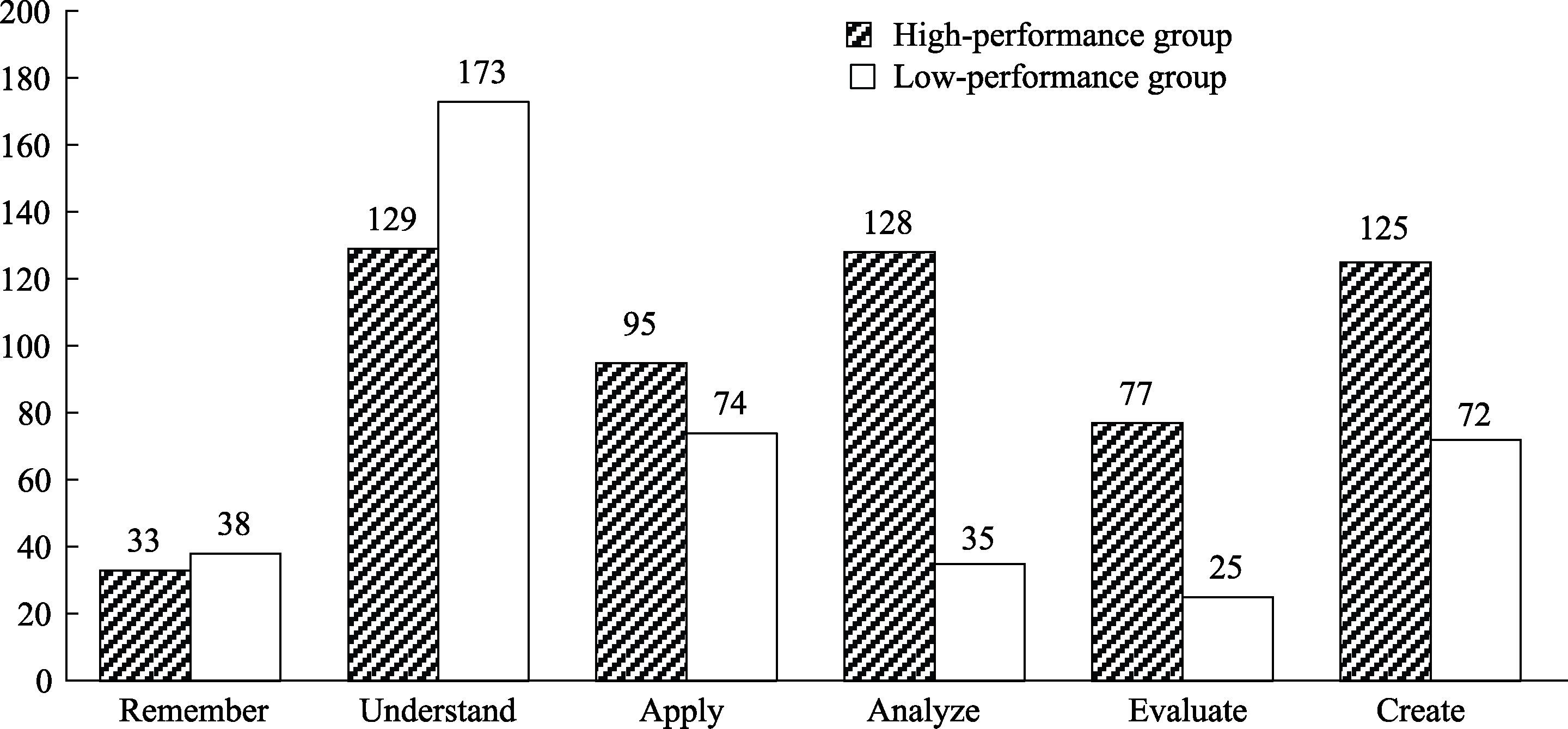
Figure 5. Frequency distribution of cognitive elements in high- and low-performance groups.
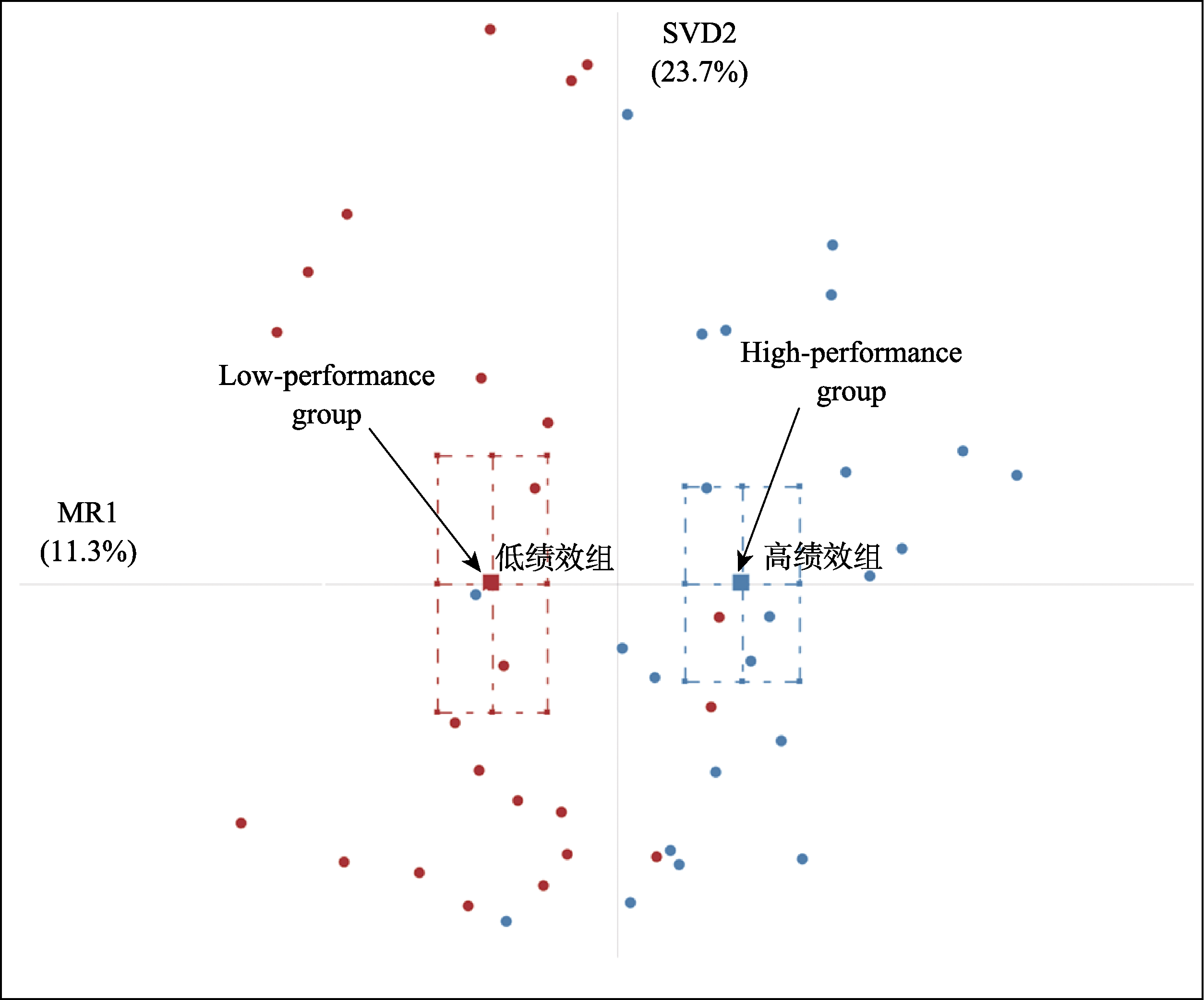
Figure 6. Two-dimensional centroid distribution diagrams of the high-performance group and low-performance group. Note: Color figures are available in the electronic version, same below.
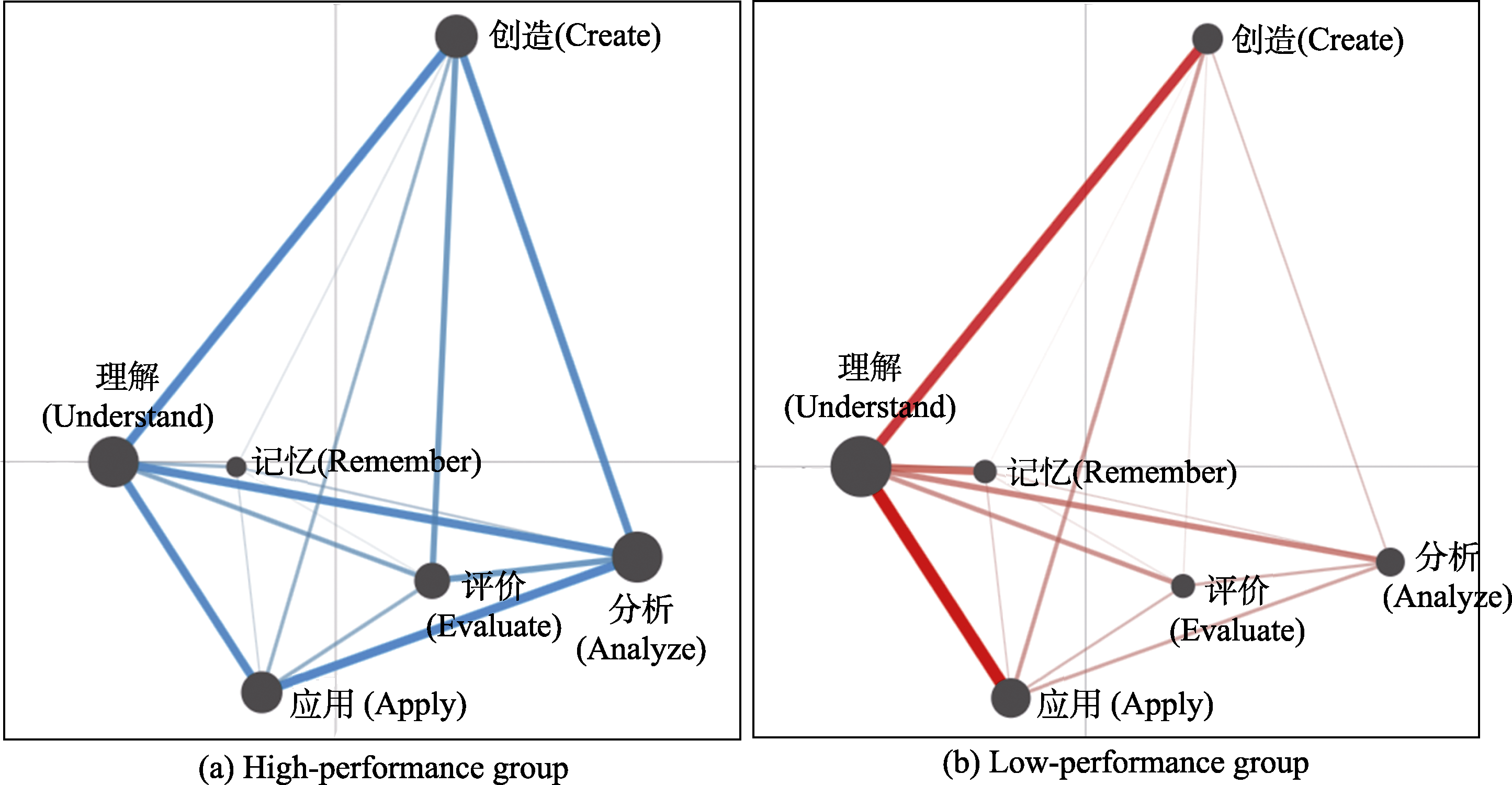
Figure 7. Epistemic network diagrams of the high-performance group (a) and the low-performance group (b).
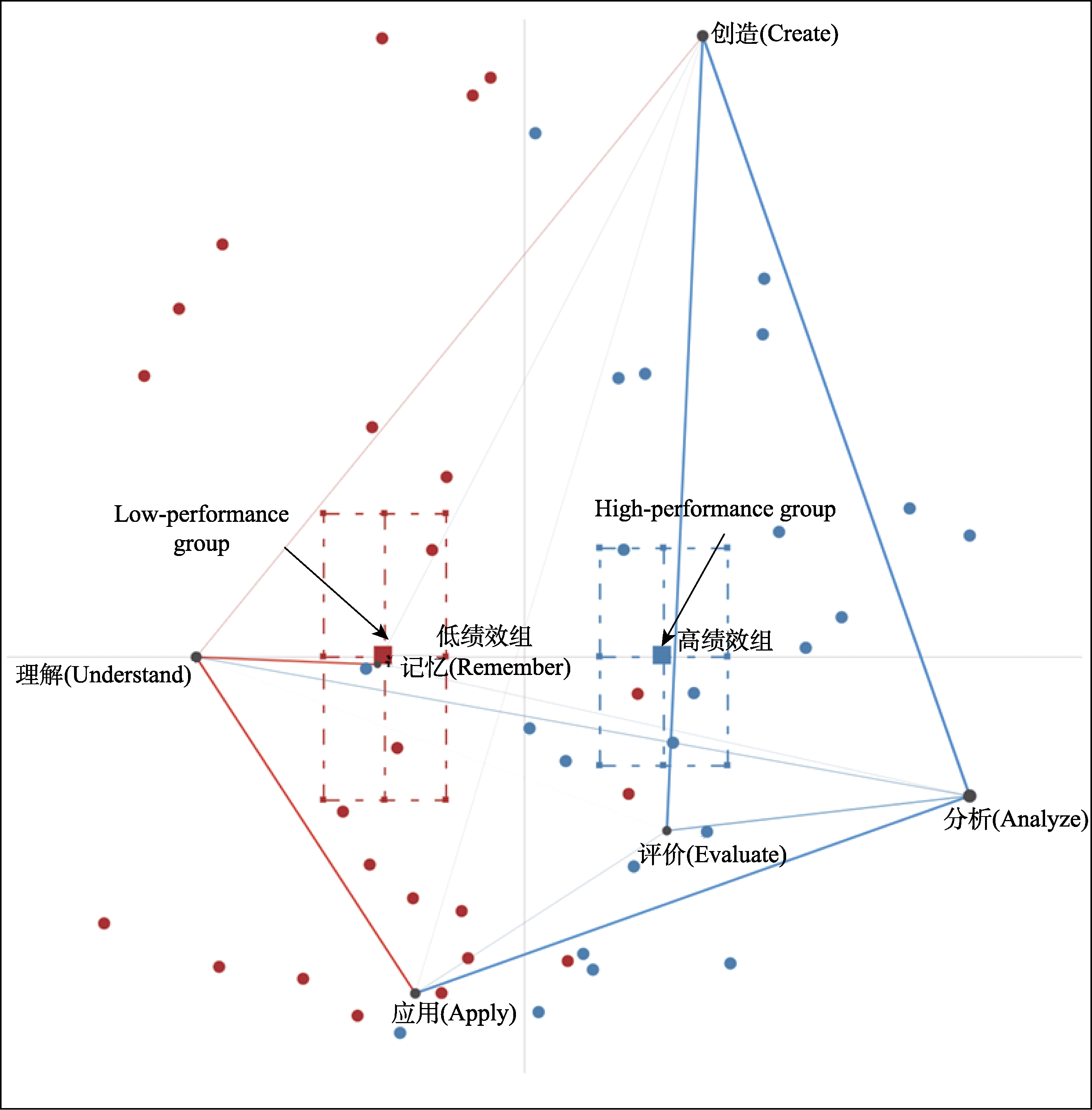
Figure 8. Subtraction diagram of the epistemic network between the high-performance group and the low-performance group.
| [1] | Abdelhalim S. M. (2024). Using ChatGPT to promote research competency: English as a foreign language undergraduates’ perceptions and practices across varied metacognitive awareness levels. Journal of Computer Assisted Learning, 40(3), 1261-1275. |
| [2] | Alexander P. A., & Judy J. E. (1988). The interaction of domain- specific and strategic knowledge in academic performance. Review of Educational research, 58(4), 375-404. |
| [3] | Alkaissi H., & McFarlane S. I. (2023). Artificial hallucinations in ChatGPT: Implications in scientific writing. Cureus, 15(2), Article e35179. https://doi.org/10.7759/cureus.35179 |
| [4] | Anderson L. W., & Krathwohl D. R. (2001). A taxonomy for learning, teaching, and assessing: A revision of Bloom's taxonomy of educational objectives: Complete edition. Addison Wesley Longman, Inc. |
| [5] | Anderson R. C. (1984). Some reflections on the acquisition of knowledge. Educational researcher, 13(9), 5-10. |
| [6] | Baidoo-Anu D., & Ansah L. O. (2023). Education in the era of generative artificial intelligence (AI): Understanding the potential benefits of ChatGPT in promoting teaching and learning. Journal of AI, 7(1), 52-62. |
| [7] | Bakeman R., & Gottman J. M. (1997). Observing interaction: An introduction to sequential analysis. Cambridge University Press. |
| [8] | Barr N., Pennycook G., Stolz J. A., & Fugelsang J. A. (2015). The brain in your pocket: Evidence that smartphones are used to supplant thinking. Computers in Human Behavior, 48, 473-480. |
| [9] | Bašić Ž., Banovac A., Kružić I., & Jerković I. (2023). ChatGPT-3.5 as writing assistance in students’ essays. Humanities and Social Sciences Communications, 10, 750. https://doi.org/10.1057/s41599-023-02269-7 |
| [10] |
Beier M. E., & Ackerman P. L. (2005). Age, ability, and the role of prior knowledge on the acquisition of new domain knowledge: Promising results in a real-world learning environment. Psychology and aging, 20(2), 341-355.
doi: 10.1037/0882-7974.20.2.341 pmid: 16029097 |
| [11] | Bittermann A., McNamara D., Simonsmeier B. A., & Schneider M. (2023). The landscape of research on prior knowledge and learning: A bibliometric analysis. Educational Psychology Review, 35, 58. https://doi.org/10.1007/s10648-023-09775-9 |
| [12] |
Bostrom N., & Sandberg A. (2009). Cognitive enhancement: Methods, ethics, regulatory challenges. Science and Engineering Ethics, 15(3), 311-341.
doi: 10.1007/s11948-009-9142-5 pmid: 19543814 |
| [13] | Bouton E., Yosef D., & Asterhan C. S. (2025). Differences between low and high achievers in whole-classroom dialogue participation quality. Learning and Instruction, 96, 102088. https://doi.org/10.1016/j.learninstruc.2025.102088 |
| [14] | Chang C. Y., Lin H. C., Yin C., & Yang K. H. (2025). Generative AI-assisted reflective writing for improving students’ higher order thinking: Evidence from quantitative and epistemic network analysis. Educational Technology & Society, 28(1), 270-285. |
| [15] | Chang K. E., Sung Y. T., Chang R. B., & Lin S. C. (2005). A new assessment for computer-based concept mapping. Journal of Educational Technology & Society, 8(3), 138-148. |
| [16] | Cheng Y. W., Wang Y., Cheng I. L., & Chen N. S. (2019). An in-depth analysis of the interaction transitions in a collaborative Augmented Reality-based mathematic game. Interactive Learning Environments, 27(5-6), 782-796. |
| [17] | Chu H. C., Hwang G. J., & Tsai C. C. (2010). A knowledge engineering approach to developing mindtools for context-aware ubiquitous learning. Computers & Education, 54(1), 289-297. |
| [18] | Clark A. (2001). Natural-born cyborgs? In Beynon, M., Nehaniv, C. L., & Dautenhahn, K. (Eds.), Lecture notes in computer science: Vol. 2117: Cognitive technology: Instruments of mind (pp. 17-24). Springer, Berlin, Heidelberg. |
| [19] | Clark A., & Chalmers D. (1998). The extended mind. Analysis, 58(1), 7-19. |
| [20] | Cohen J. (1960). A coefficient of agreement for nominal scales. Educational and Psychological Measurement, 20(1), 37-46. |
| [21] | Cole M., & Engeström Y. (1993). A cultural-historical approach to distributed cognition. In G. Salomon (Ed.), Distributed cognitions: Psychological and educational considerations (pp. 1-46). Cambridge University Press. |
| [22] | Fan Y., Tang L., Le H., Shen K., Tan S., Zhao Y.,... Gašević D. (2025). Beware of metacognitive laziness: Effects of generative artificial intelligence on learning motivation, processes, and performance. British Journal of Educational Technology, 56(2), 489-530. |
| [23] | Farina M., & Levin S. (2021). The Extended Mind Thesis and Its Applications. In: Robinson, M. D., & Thomas, L. E. (Eds.), (pp. 127-147). Springer, Cham. |
| [24] | Farrokhnia M., Banihashem S. K., Noroozi O., & Wals A. (2024). A SWOT analysis of ChatGPT: Implications for educational practice and research. Innovations in Education and Teaching International, 61(3), 460-474. |
| [25] | Fisher M., Goddu M. K., & Keil F. C. (2015). Searching for explanations: How the Internet inflates estimates of internal knowledge. Journal of experimental psychology: General, 144(3), 674-687. |
| [26] | Gilson A., Safranek C. W., Huang T., Socrates V., Chi L., Taylor R. A., & Chartash D. (2023). How does ChatGPT perform on the United States medical licensing examination? The implications of large language models for medical education and knowledge assessment. JMIR Medical Education, 9(1), Article e45312. https://doi.org/10.2196/45312 |
| [27] | Greve A., Cooper E., Tibon R., & Henson R. N. (2019). Knowledge is power: Prior knowledge aids memory for both congruent and incongruent events, but in different ways. Journal of Experimental Psychology: General, 148(2), 325-341. |
| [28] | Gunawardena C. N., Lowe C. A., & Anderson T. (1997). Analysis of a global online debate and the development of an interaction analysis model for examining social construction of knowledge in computer conferencing. Journal of Educational Computing Research, 17(4), 397-431. |
| [29] | Güner H., & Er E. (2025). AI in the classroom: Exploring students’ interaction with ChatGPT in programming learning. Education and Information Technologies. Advance online publication. https://doi.org/10.1007/s10639-025-13337-7 |
| [30] | Herbold S., Hautli-Janisz A., Heuer U., Kikteva Z., & Trautsch A. (2023). A large-scale comparison of human-written versus ChatGPT-generated essays. Scientific Reports, 13, 18617. https://doi.org/10.1038/s41598-023-45644-9 |
| [31] | Hollan J., Hutchins E., & Kirsh D. (2000). Distributed cognition: Toward a new foundation for human-computer interaction research. ACM Transactions on Computer- Human Interaction, 7(2), 174-196. |
| [32] | Hwang G. J., Hung P. H., Chen N. S., & Liu G. Z. (2014). Mindtool-assisted in-field learning (MAIL): An advanced ubiquitous learning project in Taiwan. Journal of Educational Technology & Society, 17(2), 4-16. |
| [33] | Kang J., & Liu M. (2022). Investigating navigational behavior patterns of students across at-risk categories within an open-ended serious game. Technology, Knowledge and Learning, 27, 183-205. |
| [34] | Kasneci E., Sessler K., Küchemann S., Bannert M., Dementieva D., Fischer F., … Kasneci G. (2023). ChatGPT for good? On opportunities and challenges of large language models for education. Learning and Individual Differences, 103, 102274. https://doi.org/10.1016/j.lindif.2023.102274 |
| [35] | Kocoń J., Cichecki I., Kaszyca O., Kochanek M., Szydło D., Baran J.,... Kazienko P. (2023). ChatGPT: Jack of all trades, master of none. Information Fusion, 99, 101861. https://doi.org/10.1016/j.inffus.2023.101861 |
| [36] | Lin X. F., Wang Z., Zhou W., Luo G., Hwang G. J., Zhou Y.,... Liang Z. M. (2023). Technological support to foster students’ artificial intelligence ethics: An augmented reality-based contextualized dilemma discussion approach. Computers & Education, 201, 104813. https://doi.org/10.1016/j.compedu.2023.104813 |
| [37] |
Lin Z. (2024). How to write effective prompts for large language models. Nature Human Behaviour, 8(4), 611-615.
doi: 10.1038/s41562-024-01847-2 pmid: 38438650 |
| [38] | Liu M., Zhang L. J., & Biebricher C. (2024). Investigating students’ cognitive processes in generative AI-assisted digital multimodal composing and traditional writing. Computers & Education, 211, 104977. https://doi.org/10.1016/j.compedu.2023.104977 |
| [39] | Liu P., Yuan W., Fu J., Jiang Z., Hayashi H., & Neubig G. (2023). Pre-train, prompt, and predict: A systematic survey of prompting methods in natural language processing. ACM Computing Surveys, 55(9), 1-35. |
| [40] | Mao Z., Li X., Li Y., Shao J., & Bao H. (2025). Capturing patterns of argumentation elements, encountered challenges, and social regulation in collaborative argumentation: An epistemic network analysis study. Interactive Learning Environments. Advance online publication. https://doi.org/10.1080/10494820.2025.2460583 |
| [41] | Molenaar I., Horvers A., & Baker R. S. J. D. (2021). What can moment-by-moment learning curves tell about students' self-regulated learning? Learning and Instruction, 72, 101206. https://doi.org/10.1016/j.learninstruc.2019.05.003 |
| [42] |
Muraven M., & Baumeister R. F. (2000). Self-regulation and depletion of limited resources: Does self-control resemble a muscle? Psychological Bulletin, 126(2), 247-259.
doi: 10.1037/0033-2909.126.2.247 pmid: 10748642 |
| [43] |
Noy S., & Zhang W. (2023). Experimental evidence on the productivity effects of generative artificial intelligence. Science, 381(6654), 187-192.
doi: 10.1126/science.adh2586 pmid: 37440646 |
| [44] |
Papamitsiou Z., & Economides A. A. (2019). Exploring autonomous learning capacity from a self-regulated learning perspective using learning analytics. British Journal of Educational Technology, 50(6), 3138-3155.
doi: 10.1111/bjet.12747 |
| [45] | Pifarre M., & Cobos R. (2010). Promoting metacognitive skills through peer scaffolding in a CSCL environment. International Journal of Computer-Supported Collaborative Learning, 5, 237-253. |
| [46] | Shaffer D. W., Collier W., & Ruis A. R. (2016). A tutorial on epistemic network analysis: Analyzing the structure of connections in cognitive, social, and interaction data. Journal of Learning Analytics, 3(3), 9-45. |
| [47] | Shapiro A. M. (2004). How including prior knowledge as a subject variable may change outcomes of learning research. American Educational Research Journal, 41(1), 159-189. |
| [48] | Shing Y. L., & Brod G. (2016). Effects of prior knowledge on memory: Implications for education. Mind, Brain, and Education, 10(3), 153-161. |
| [49] | Shoufan A. (2023). Can students without prior knowledge use ChatGPT to answer test questions? An empirical study. ACM Transactions on Computing Education, 23(4), 1-29. |
| [50] | Simonsmeier B. A., Flaig M., Deiglmayr A., Schalk L., & Schneider M. (2022). Domain-specific prior knowledge and learning: A meta-analysis. Educational psychologist, 57(1), 31-54. |
| [51] | Song Y., Huang L., Zheng L., Fan M., & Liu Z. (2025). Interactions with generative AI chatbots: Unveiling dialogic dynamics, students’ perceptions, and practical competencies in creative problem-solving. International Journal of Educational Technology in Higher Education, 22, 12. https://doi.org/10.1186/s41239-025-00508-2 |
| [52] |
Sparrow B., Liu J., & Wegner D. M. (2011). Google effects on memory: Cognitive consequences of having information at our fingertips. Science, 333(6043), 776-778.
doi: 10.1126/science.1207745 pmid: 21764755 |
| [53] | Stojanov A., Liu Q., & Koh J. H. L. (2024). University students’ self-reported reliance on ChatGPT for learning: A latent profile analysis. Computers and Education: Artificial Intelligence, 6, 100243. https://doi.org/10.1016/j.caeai.2024.100243 |
| [54] | Sweller J., Ayres P., & Kalyuga S. (2011). Cognitive load theory. New York: Springer. |
| [55] | Terry C. A., Mishra P., & Roseth C. J. (2016). Preference for multitasking, technological dependency, student metacognition, & pervasive technology use: An experimental intervention. Computers in Human Behavior, 65, 241-251. |
| [56] | Tsai C. Y., Lin Y. T., & Brown I. K. (2024). Impacts of ChatGPT-assisted writing for EFL English majors: Feasibility and challenges. Education and Information Technologies, 29, 22427-22445. |
| [57] |
Voinea C., Vică C., Mihailov E., & Savulescu J. (2020). The internet as cognitive enhancement. Science and Engineering Ethics, 26(4), 2345-2362.
doi: 10.1007/s11948-020-00210-8 pmid: 32253711 |
| [58] | Wang X., Liu Q., Pang H., Tan S. C., Lei J., Wallace M. P., & Li L. (2023). What matters in AI-supported learning: A study of human-AI interactions in language learning using cluster analysis and epistemic network analysis. Computers & Education, 194, 104703. https://doi.org/10.1016/j.compedu.2022.104703 |
| [59] | White J., Fu Q., Hays S., Sandborn M., Olea C., Gilbert H., … Schmidt D. C. (2023). A prompt pattern catalog to enhance prompt engineering with ChatGPT. arXiv:2302. 11382 [Preprint]. https://doi.org/10.48550/arXiv.2302.11382 |
| [60] | Witherby A. E., & Carpenter S. K. (2022). The rich-get- richer effect: Prior knowledge predicts new learning of domain-relevant information. Journal of Experimental Psychology: Learning, Memory, and Cognition, 48(4), 483-498. |
| [61] | Xia Q., Chiu T. K., Chai C. S., & Xie K. (2023). The mediating effects of needs satisfaction on the relationships between prior knowledge and self-regulated learning through artificial intelligence chatbot. British Journal of Educational Technology, 54(4), 967-986. |
| [62] | Yilmaz R., & Yilmaz F. G. K. (2023). The effect of generative artificial intelligence (AI)-based tool use on students’ computational thinking skills, programming self-efficacy and motivation. Computers and Education: Artificial Intelligence, 4, 100147. https://doi.org/10.1016/j.caeai.2023.100147 |
| [63] | Yu S., & Wang F. (2023). Cognitive outsourcing pitfalls of artificial intelligence for educational applications and their crossing. e-Education Research, (12), 5-13. |
| [64] | Yu S., & Wang Q. (2019). Analysis of collaborative path development of "AI+teachers". e-Education Research, (4), 14-22+29. |
| [65] | Zamfirescu-Pereira J. D., Wong R. Y., Hartmann B., & Yang Q. (2023, April). Why Johnny can’t prompt: How non-AI experts try (and fail) to design LLM prompts. Paper presented at the meeting of the 2023 CHI Conference on Human Factors in Computing Systems, Hamburg, Germany. |
| [66] | Zhang J., Bao K., Zhang Y., Wang W., Feng F., & He X. (2023, September). Is ChatGPT fair for recommendation? evaluating fairness in large language model recommendation. Paper presented at the meeting of the 17th ACM Conference on Recommender Systems, Singapore. |
| [67] | Zimmerman B. J., & Pons M. M. (1986). Development of a structured interview for assessing student use of self-regulated learning strategies. American Educational Research Journal, 23(4), 614-628. |
| No related articles found! |
| Viewed | ||||||
|
Full text |
|
|||||
|
Abstract |
|
|||||
