

ISSN 0439-755X
CN 11-1911/B
CN 11-1911/B
Acta Psychologica Sinica ›› 2025, Vol. 57 ›› Issue (11): 1933-1950.doi: 10.3724/SP.J.1041.2025.1933
• Reports of Empirical Studies • Previous Articles Next Articles
TANG Xiaofei, WANG Changmei, SUN Xiaodong1( ), CHANG En-Chung2
Published:2025-11-25
Online:2025-09-25
Contact:
SUN Xiaodong, E-mail: TANG Xiaofei, WANG Changmei, SUN Xiaodong, CHANG En-Chung. (2025). Impact of trusting humanoid intelligent robots on employees’ job dedication intentions: An investigation based on the classification of human−robot trust. Acta Psychologica Sinica, 57(11), 1933-1950.
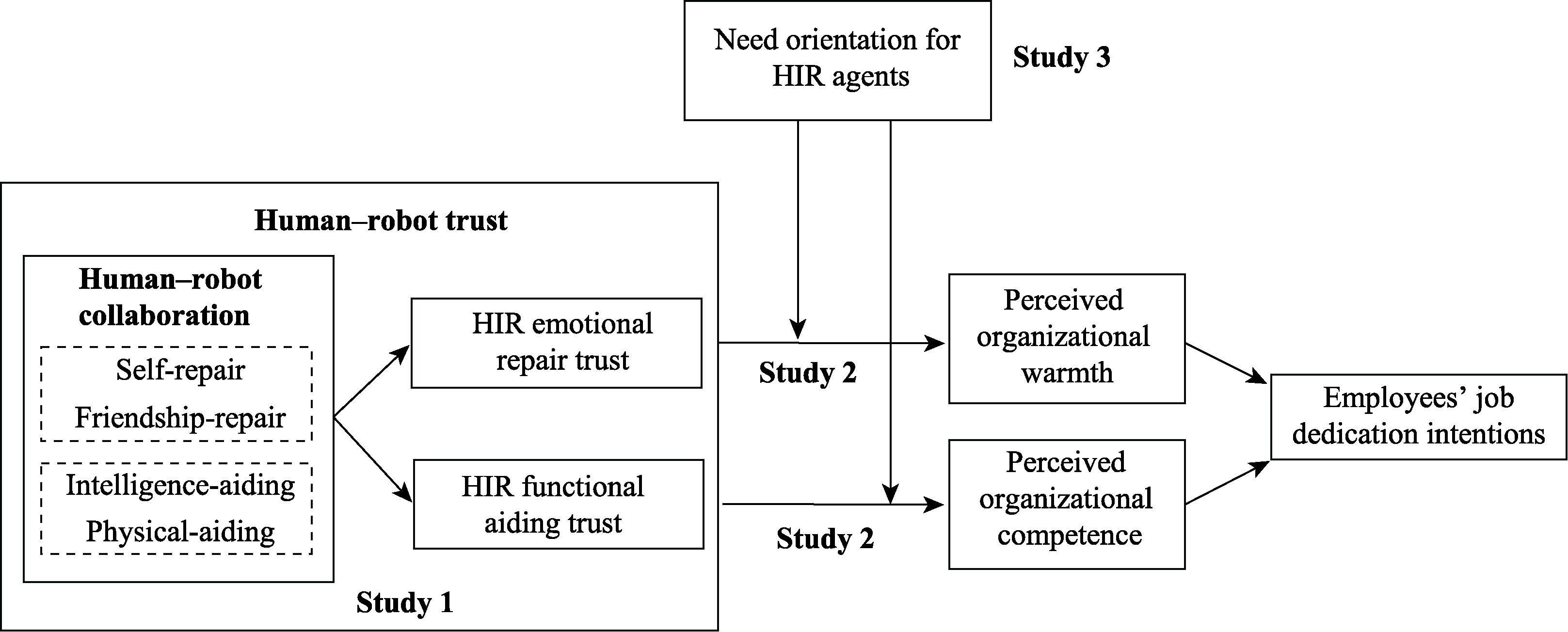
Figure 1. The Conceptual Model.
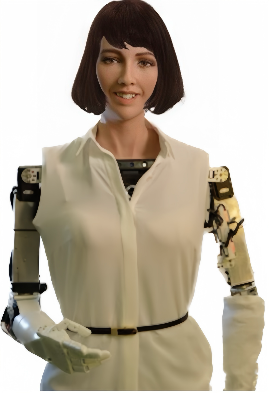
Figure 2. Two HIRs with different anthropomorphic shapes -Nao V6 (left) and Sophia (right).
Groups | Means | SD | ||
|---|---|---|---|---|
| HIR emotional repair trust | HIR functional aiding trust | HIR emotional repair trust | HIR functional aiding trust | |
| Self-repair | 5.82 | 4.97 | 1.01 | 1.03 |
| Friendship-repair | 5.71 | 4.58 | 1.01 | 1.02 |
| Intelligence-aiding | 4.53 | 6.11 | 1.16 | 1.02 |
| Physical-aiding | 3.66 | 5.79 | 1.11 | 0.93 |
Table 1 Descriptive statistical results of the study variables (Study 1)
Groups | Means | SD | ||
|---|---|---|---|---|
| HIR emotional repair trust | HIR functional aiding trust | HIR emotional repair trust | HIR functional aiding trust | |
| Self-repair | 5.82 | 4.97 | 1.01 | 1.03 |
| Friendship-repair | 5.71 | 4.58 | 1.01 | 1.02 |
| Intelligence-aiding | 4.53 | 6.11 | 1.16 | 1.02 |
| Physical-aiding | 3.66 | 5.79 | 1.11 | 0.93 |
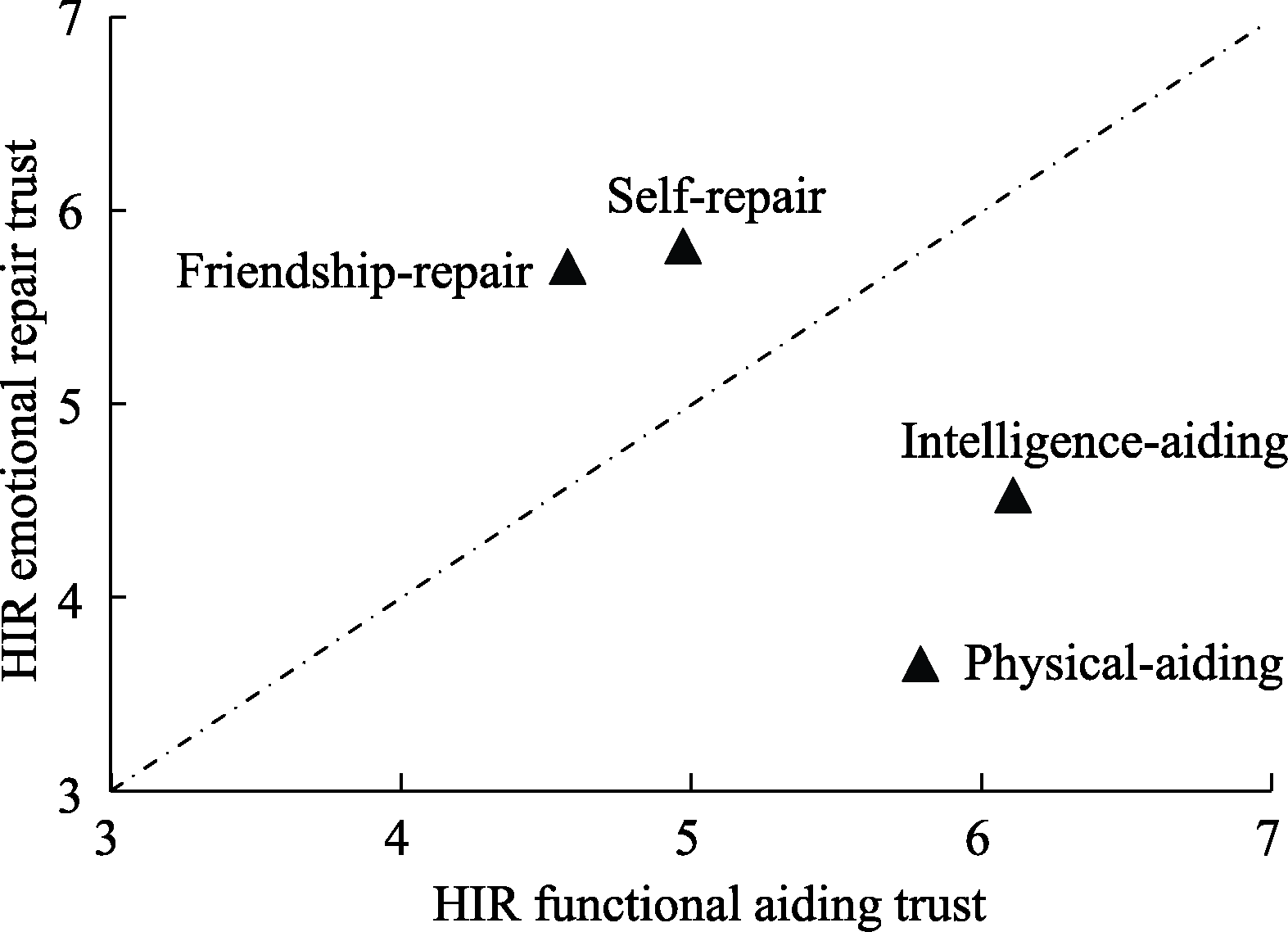
Figure 3. Distribution of evaluations across human?robot trust dimensions.
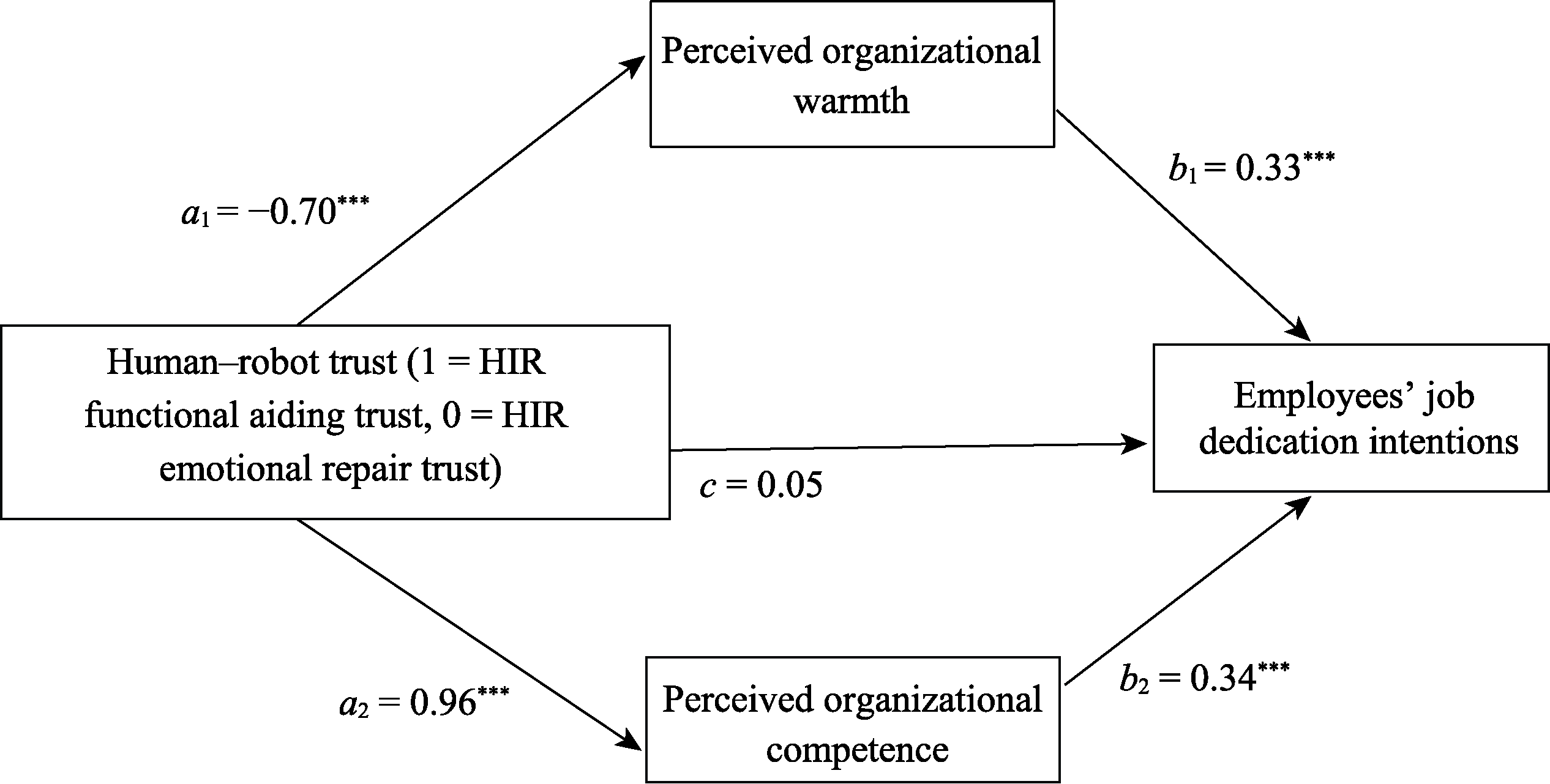
Figure 4. Mediating role of perceived organizational warmth and perceived organizational competence. Note. *p < 0.05, **p < 0.01, ***p < 0.001
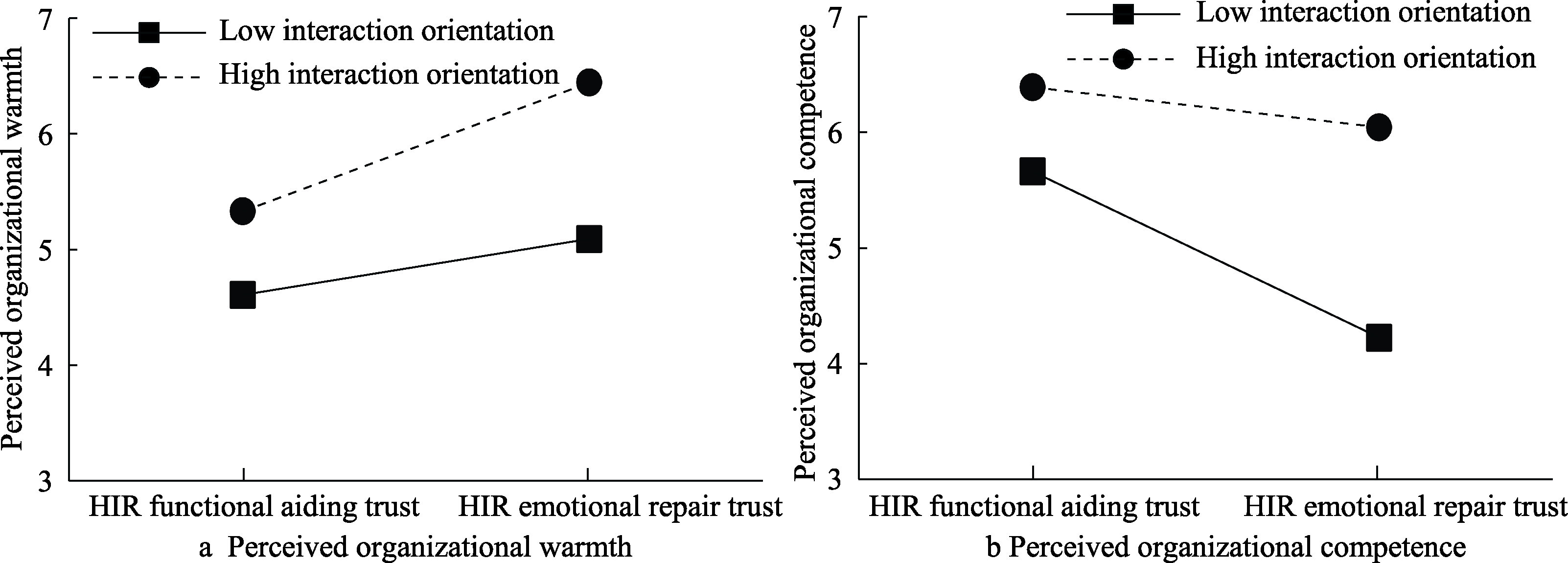
Figure 5. The moderation effect of interaction orientation.
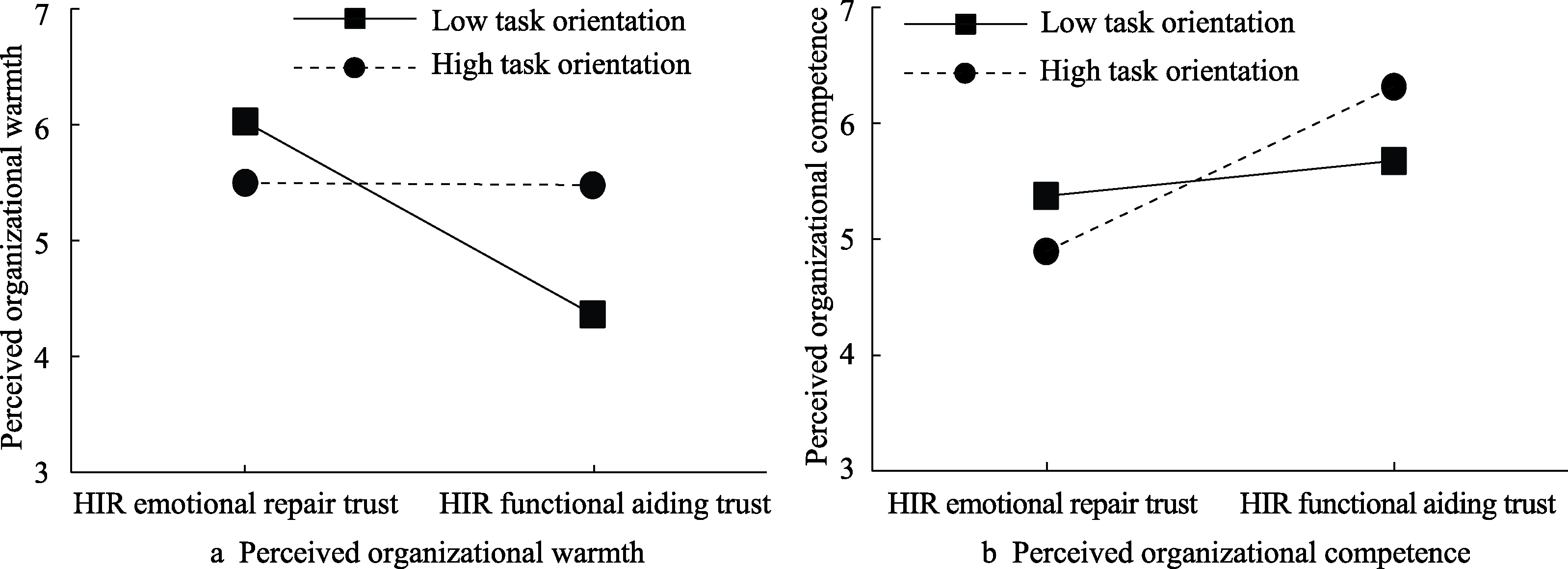
Figure 6. The moderation effect of task orientation.
| Domain (Dimension), Category, and Subcategory | Number of Cases | Examples of Core Ideas from Representative Cases |
|---|---|---|
| 1. HIR emotional repair trust domain (dimension) | ||
| (1) Self-Repair | ||
| Reshape job-achievement | 2 | When I feel that I haven't achieved the expected sense of accomplishment, I feel uncomfortable and sad. The rational attributes of robots can improve human emotional shortcomings, and I believe it can pull me out of the negative emotional spiral. When I realize halfway through a project that I've spent a lot of time exploring it but can't make progress, I often feel that work is meaningless and start to doubt myself. Robots have the ability to regulate and heal emotions, so they are a trustworthy psychological healer. |
| Alleviate work-related apathy and burnout | 2 | Handling various operational trivialities every day makes me feel like an imperial steward or a repairman, losing enthusiasm for work and feeling numb. Through psychological assistance from robots, I believe it can effectively enhance my work enthusiasm and vitality; the emergence of artificial intelligence extends human time or expands certain cognitive aspects, freeing me from repetitive and trivial procedural work. Thus, AI stimulates my personal value and work enthusiasm. |
| Assist with reflection to alleviate guilt | 2 | When my work performance is not ideal, I tend to make many basic mistakes, which makes me feel extremely guilty and regretful. If a robot could assist me with psychological counseling and reflection to correct errors, I believe it could help alleviate some of my excessive guilt. After making mistakes at work, I often feel intense regret, and I would be willing to communicate with the robot to review and ease my sense of guilt. I believe this would be much better than shouldering it alone. |
| Expanding cognition to alleviate anxiety | 2 | When I need to learn a large amount of new knowledge in a short period of time, I feel anxious, stressed, and helpless. The targeted repair ability of humanoid robots for anxiety and stress will help me feel relieved. Many times, due to cognitive limitations, I often fall into anxiety about 'lack of competence.' I look forward to the organization introducing robots to provide psychological and emotional support for employees. I believe this will effectively eliminate the negative emotions of self-doubt. |
| (2) Friendship-Repair | ||
| Mitigating interpersonal negative emotions stemming from departmental or leadership conflicts | 3 | When my supervisor's criticism makes me feel upset, a robot can help me analyze the cause using big data and assist in regulating my negative emotions; therefore, using robots for emotional support in organizations is worth recommending. When two departments or units at the same level shift responsibility due to unclear roles or processes, I often develop adversarial feelings toward the party avoiding accountability—using a robot as a communication bridge can effectively ease the emotional tension caused by such conflicts. At times, inequitable resource distribution across departments—caused by decisions from upper management—leads to negative emotions directed at my supervisor. Since there is no conflict of interest between me and the robot, I do not have to worry about betrayal, which makes it a better partner for emotional interaction. |
| Alleviating negative emotions from work conflicts between colleagues | 3 | Yes, I prefer a slower work pace, which often causes disagreements with colleagues who work at a faster pace. I feel that our relationship becomes colder, more distant, and we are less willing to communicate. If the company had a robot that could empathize with me and understand my feelings, I would seek its help and confide in it about these emotions. Perhaps this would prevent us from becoming so cold and indifferent toward each other. Some colleagues often shift the blame to me and take credit for themselves. Since I don’t have to worry about the robot bothering me like I would with human friends, I feel more comfortable using it as an emotional outlet. In the workplace, I might experience anxiety and discomfort from a colleague's betrayal, so, compared to human colleagues, I trust the robot more. |
| Alleviating negative interpersonal emotions caused by social conflicts between colleagues | 2 | The complex interpersonal relationships between colleagues make me reluctant to share my joys and sorrows. Also, having a gossipy colleague who might share your private thoughts without your consent is something I dislike. I find such colleagues lacking boundaries, and if robots were more deeply integrated into the workplace, they would be a better emotional interaction partner for me, effectively alleviating my negative emotions. Some colleagues are petty and gossipy and often spread rumors behind my back. I feel frustrated and speechless toward them. Compared to humans, I think robots would be better at listening to and comforting me, while also giving me positive energy in my work. |
| 2. HIR functional aiding trust domain (dimension) | ||
| (3) Intelligence-Aiding | ||
| Collecting and interpreting information | 3 | When I feel that my channels for collecting information are limited, I believe that using a robot’s powerful search engine can help me accomplish this task. In the future, I can rely on the robot's expertise to collect, filter, and refine information, thereby enhancing my work efficiency. For tasks like interpreting policy documents, tools such as ChatGPT may offer even more advanced capabilities, so I believe I can fully depend on robots. |
| Handling spreadsheets | 2 | Tasks like summarizing data in tables should be entirely manageable by robots, as their capabilities are more than sufficient. Routine operations such as summing data, creating charts, and making tables are areas where robots continually outperform humans, and I believe that, in the near future, they will essentially replace humans in these areas. |
| Copywriting | 3 | When conditions allow, I believe robots can assist in tasks like copywriting just as well as humans. Currently, robots can already help us write work summaries and plan activities, making them reliable assistants. In the future, robots could even accompany me in evaluating investment projects and help me present investment proposals, making them viable work partners like humans. |
| Data calculation | 2 | If robots could automatically calculate bridge load models based on requirements and deliver the final results, they could help non-experts or people outside the field perform cross-disciplinary tasks more effectively. In the process of handling business operations, such as opening a deposit account, robots' advanced computational abilities make them highly reliable for tasks like statistics. |
| Generative image creation | 2 | I can describe a scene where a family of three is dining at a restaurant, and the robot can understand the description and generate the image I want. I believe that in future work reports, robots could help generate and add images, videos, and other visual content based on the materials we provide. |
| Training new employees | 2 | Robots can offer job guidance. For example, if I am new to a job and know nothing, the robot could teach me, and perhaps I would no longer need a human mentor. As a newcomer, when the organization assigns me tasks beyond my primary responsibilities, I would be willing to rely on the robot's capabilities to help me complete them. |
| Secretary assistant | 2 | During meetings, robots could use cameras to record all the content of the discussions. If I forget something, I could simply ask the robot. Therefore, I see the robot as a good candidate for a secretary role. Not only do robots have recording and computational functions, but they also have feedback and error-correction capabilities, which would be extremely helpful in my work. I believe that having a robot serve as a secretary might actually be a better choice. |
| (4) Physical-Aiding | ||
| Errand-based tasks | 3 | In the workplace, there may be situations where we feel overwhelmed. We can rely on HIRs to help with tasks like delivering water, making tea, brewing coffee, printing, copying, and receiving or sending packages. I believe they would do these tasks very well. In the future, there may be humanoid robots, similar to those used for food and supply delivery in hotels, that can efficiently handle the sorting and delivery of documents like contracts, legal letters, and lawsuits, while also monitoring the entire process. Of course, I would be willing to have humanoid robots assist with daily tasks such as guiding visitors and providing introductions. |
| High-intensity and repetitive tasks | 3 | Humans can typically lift no more than a hundred pounds, while robots can carry thousands. Therefore, I trust that machines are reliable for certain tasks. In construction projects, robot-operated mixing stations and fully automated rebar processing plants could be used. These mechanized production lines, which once required workers to manually place parts in designated positions, can now be just as effective when robots are used. |
| Tasks with safety risks | 1 | In the future, for jobs with high intensity or danger, or for specialized work environments, robots could be relied upon. For example, pouring foundations for piles is a risky task for human workers. |
| Photo recognition | 3 | In the past, TV repairmen used their eyes to identify chip modules, but now robots can probably do it even better. Perhaps in the near future, robots will replace me in completing some physically demanding tasks. For instance, using robots to take pictures, I trust they will complete the task beautifully. I also believe robots can be trusted to accurately identify customer signatures or perform other precise operations. |
Appendix Table 1 Human?robot trust dimensions: CQR results
| Domain (Dimension), Category, and Subcategory | Number of Cases | Examples of Core Ideas from Representative Cases |
|---|---|---|
| 1. HIR emotional repair trust domain (dimension) | ||
| (1) Self-Repair | ||
| Reshape job-achievement | 2 | When I feel that I haven't achieved the expected sense of accomplishment, I feel uncomfortable and sad. The rational attributes of robots can improve human emotional shortcomings, and I believe it can pull me out of the negative emotional spiral. When I realize halfway through a project that I've spent a lot of time exploring it but can't make progress, I often feel that work is meaningless and start to doubt myself. Robots have the ability to regulate and heal emotions, so they are a trustworthy psychological healer. |
| Alleviate work-related apathy and burnout | 2 | Handling various operational trivialities every day makes me feel like an imperial steward or a repairman, losing enthusiasm for work and feeling numb. Through psychological assistance from robots, I believe it can effectively enhance my work enthusiasm and vitality; the emergence of artificial intelligence extends human time or expands certain cognitive aspects, freeing me from repetitive and trivial procedural work. Thus, AI stimulates my personal value and work enthusiasm. |
| Assist with reflection to alleviate guilt | 2 | When my work performance is not ideal, I tend to make many basic mistakes, which makes me feel extremely guilty and regretful. If a robot could assist me with psychological counseling and reflection to correct errors, I believe it could help alleviate some of my excessive guilt. After making mistakes at work, I often feel intense regret, and I would be willing to communicate with the robot to review and ease my sense of guilt. I believe this would be much better than shouldering it alone. |
| Expanding cognition to alleviate anxiety | 2 | When I need to learn a large amount of new knowledge in a short period of time, I feel anxious, stressed, and helpless. The targeted repair ability of humanoid robots for anxiety and stress will help me feel relieved. Many times, due to cognitive limitations, I often fall into anxiety about 'lack of competence.' I look forward to the organization introducing robots to provide psychological and emotional support for employees. I believe this will effectively eliminate the negative emotions of self-doubt. |
| (2) Friendship-Repair | ||
| Mitigating interpersonal negative emotions stemming from departmental or leadership conflicts | 3 | When my supervisor's criticism makes me feel upset, a robot can help me analyze the cause using big data and assist in regulating my negative emotions; therefore, using robots for emotional support in organizations is worth recommending. When two departments or units at the same level shift responsibility due to unclear roles or processes, I often develop adversarial feelings toward the party avoiding accountability—using a robot as a communication bridge can effectively ease the emotional tension caused by such conflicts. At times, inequitable resource distribution across departments—caused by decisions from upper management—leads to negative emotions directed at my supervisor. Since there is no conflict of interest between me and the robot, I do not have to worry about betrayal, which makes it a better partner for emotional interaction. |
| Alleviating negative emotions from work conflicts between colleagues | 3 | Yes, I prefer a slower work pace, which often causes disagreements with colleagues who work at a faster pace. I feel that our relationship becomes colder, more distant, and we are less willing to communicate. If the company had a robot that could empathize with me and understand my feelings, I would seek its help and confide in it about these emotions. Perhaps this would prevent us from becoming so cold and indifferent toward each other. Some colleagues often shift the blame to me and take credit for themselves. Since I don’t have to worry about the robot bothering me like I would with human friends, I feel more comfortable using it as an emotional outlet. In the workplace, I might experience anxiety and discomfort from a colleague's betrayal, so, compared to human colleagues, I trust the robot more. |
| Alleviating negative interpersonal emotions caused by social conflicts between colleagues | 2 | The complex interpersonal relationships between colleagues make me reluctant to share my joys and sorrows. Also, having a gossipy colleague who might share your private thoughts without your consent is something I dislike. I find such colleagues lacking boundaries, and if robots were more deeply integrated into the workplace, they would be a better emotional interaction partner for me, effectively alleviating my negative emotions. Some colleagues are petty and gossipy and often spread rumors behind my back. I feel frustrated and speechless toward them. Compared to humans, I think robots would be better at listening to and comforting me, while also giving me positive energy in my work. |
| 2. HIR functional aiding trust domain (dimension) | ||
| (3) Intelligence-Aiding | ||
| Collecting and interpreting information | 3 | When I feel that my channels for collecting information are limited, I believe that using a robot’s powerful search engine can help me accomplish this task. In the future, I can rely on the robot's expertise to collect, filter, and refine information, thereby enhancing my work efficiency. For tasks like interpreting policy documents, tools such as ChatGPT may offer even more advanced capabilities, so I believe I can fully depend on robots. |
| Handling spreadsheets | 2 | Tasks like summarizing data in tables should be entirely manageable by robots, as their capabilities are more than sufficient. Routine operations such as summing data, creating charts, and making tables are areas where robots continually outperform humans, and I believe that, in the near future, they will essentially replace humans in these areas. |
| Copywriting | 3 | When conditions allow, I believe robots can assist in tasks like copywriting just as well as humans. Currently, robots can already help us write work summaries and plan activities, making them reliable assistants. In the future, robots could even accompany me in evaluating investment projects and help me present investment proposals, making them viable work partners like humans. |
| Data calculation | 2 | If robots could automatically calculate bridge load models based on requirements and deliver the final results, they could help non-experts or people outside the field perform cross-disciplinary tasks more effectively. In the process of handling business operations, such as opening a deposit account, robots' advanced computational abilities make them highly reliable for tasks like statistics. |
| Generative image creation | 2 | I can describe a scene where a family of three is dining at a restaurant, and the robot can understand the description and generate the image I want. I believe that in future work reports, robots could help generate and add images, videos, and other visual content based on the materials we provide. |
| Training new employees | 2 | Robots can offer job guidance. For example, if I am new to a job and know nothing, the robot could teach me, and perhaps I would no longer need a human mentor. As a newcomer, when the organization assigns me tasks beyond my primary responsibilities, I would be willing to rely on the robot's capabilities to help me complete them. |
| Secretary assistant | 2 | During meetings, robots could use cameras to record all the content of the discussions. If I forget something, I could simply ask the robot. Therefore, I see the robot as a good candidate for a secretary role. Not only do robots have recording and computational functions, but they also have feedback and error-correction capabilities, which would be extremely helpful in my work. I believe that having a robot serve as a secretary might actually be a better choice. |
| (4) Physical-Aiding | ||
| Errand-based tasks | 3 | In the workplace, there may be situations where we feel overwhelmed. We can rely on HIRs to help with tasks like delivering water, making tea, brewing coffee, printing, copying, and receiving or sending packages. I believe they would do these tasks very well. In the future, there may be humanoid robots, similar to those used for food and supply delivery in hotels, that can efficiently handle the sorting and delivery of documents like contracts, legal letters, and lawsuits, while also monitoring the entire process. Of course, I would be willing to have humanoid robots assist with daily tasks such as guiding visitors and providing introductions. |
| High-intensity and repetitive tasks | 3 | Humans can typically lift no more than a hundred pounds, while robots can carry thousands. Therefore, I trust that machines are reliable for certain tasks. In construction projects, robot-operated mixing stations and fully automated rebar processing plants could be used. These mechanized production lines, which once required workers to manually place parts in designated positions, can now be just as effective when robots are used. |
| Tasks with safety risks | 1 | In the future, for jobs with high intensity or danger, or for specialized work environments, robots could be relied upon. For example, pouring foundations for piles is a risky task for human workers. |
| Photo recognition | 3 | In the past, TV repairmen used their eyes to identify chip modules, but now robots can probably do it even better. Perhaps in the near future, robots will replace me in completing some physically demanding tasks. For instance, using robots to take pictures, I trust they will complete the task beautifully. I also believe robots can be trusted to accurately identify customer signatures or perform other precise operations. |
| Interaction process | Self-repair | Friendship-repair | Intelligence-aiding | Physical-aiding |
|---|---|---|---|---|
| Initial interaction | Hi, I'm Xiaoke, a humanoid intelligent robot, your caring assistant at work. Let's be real: nobody nails everything. We all have different strengths and weaknesses. I'm here to support you and help you shine even brighter. | Hi, I'm Xiaoke, a humanoid intelligent robot, your caring assistant at work. When workplace relationships feel tricky or pressures build up, I'm ready to listen and support you every step of the way. I'm here be your friend. | Hi, I'm Xiaoke, a humanoid intelligent robot, your efficient assistant at work. From tackling vast data searching and analysis to polishing your documents, I am pleased to offer precision support when you need it. | Hi, I'm Xiaoke, a humanoid intelligent robot, your efficient assistant at work. From crafting your refreshments to managing document workflows, I am pleased to offer precision support when you need it. |
| Participant describes work issue to HIR | Empathy ability: Yes Understanding ability: Yes | Empathy ability: Yes Understanding ability: Yes | Empathy ability: No Understanding ability: Yes | Empathy ability: No Understanding ability: Yes |
| Participant seeks solution from HIR | Provide advice, receive acknowledgment. | Provide advice, receive acknowledgment. | Provide advice, receive acknowledgment. | Not provide advice, follow human's suggestion. |
| End of interaction | Don’t mention it, I'll always be here to help you improve. Xiaoke hopes you can be happy. | Don’t mention it, I'll always be here to be your friend. Xiaoke hopes you can be happy. | You're welcome | You're welcome |
Appendix Table 2 HIR Interaction process and behavior examples
| Interaction process | Self-repair | Friendship-repair | Intelligence-aiding | Physical-aiding |
|---|---|---|---|---|
| Initial interaction | Hi, I'm Xiaoke, a humanoid intelligent robot, your caring assistant at work. Let's be real: nobody nails everything. We all have different strengths and weaknesses. I'm here to support you and help you shine even brighter. | Hi, I'm Xiaoke, a humanoid intelligent robot, your caring assistant at work. When workplace relationships feel tricky or pressures build up, I'm ready to listen and support you every step of the way. I'm here be your friend. | Hi, I'm Xiaoke, a humanoid intelligent robot, your efficient assistant at work. From tackling vast data searching and analysis to polishing your documents, I am pleased to offer precision support when you need it. | Hi, I'm Xiaoke, a humanoid intelligent robot, your efficient assistant at work. From crafting your refreshments to managing document workflows, I am pleased to offer precision support when you need it. |
| Participant describes work issue to HIR | Empathy ability: Yes Understanding ability: Yes | Empathy ability: Yes Understanding ability: Yes | Empathy ability: No Understanding ability: Yes | Empathy ability: No Understanding ability: Yes |
| Participant seeks solution from HIR | Provide advice, receive acknowledgment. | Provide advice, receive acknowledgment. | Provide advice, receive acknowledgment. | Not provide advice, follow human's suggestion. |
| End of interaction | Don’t mention it, I'll always be here to help you improve. Xiaoke hopes you can be happy. | Don’t mention it, I'll always be here to be your friend. Xiaoke hopes you can be happy. | You're welcome | You're welcome |
| Variables Groups | Employees’ Job Dedication Intentions | Perceived Organizational Warmth | Perceived Organizational Competence | |||
|---|---|---|---|---|---|---|
| M | SD | M | SD | M | SD | |
| Self-Repair | 5.76 | 0.77 | 5.71 | 0.89 | 5.07 | 0.81 |
| Friendship-Repair Group | 5.61 | 0.79 | 5.67 | 0.63 | 4.76 | 0.86 |
| Intelligence-Aiding Group | 5.90 | 0.68 | 5.19 | 0.69 | 6.13 | 0.58 |
| Physical-Aiding | 5.81 | 0.89 | 4.71 | 0.89 | 6.02 | 0.70 |
Appendix Table 3 Descriptive statistics for research variables
| Variables Groups | Employees’ Job Dedication Intentions | Perceived Organizational Warmth | Perceived Organizational Competence | |||
|---|---|---|---|---|---|---|
| M | SD | M | SD | M | SD | |
| Self-Repair | 5.76 | 0.77 | 5.71 | 0.89 | 5.07 | 0.81 |
| Friendship-Repair Group | 5.61 | 0.79 | 5.67 | 0.63 | 4.76 | 0.86 |
| Intelligence-Aiding Group | 5.90 | 0.68 | 5.19 | 0.69 | 6.13 | 0.58 |
| Physical-Aiding | 5.81 | 0.89 | 4.71 | 0.89 | 6.02 | 0.70 |
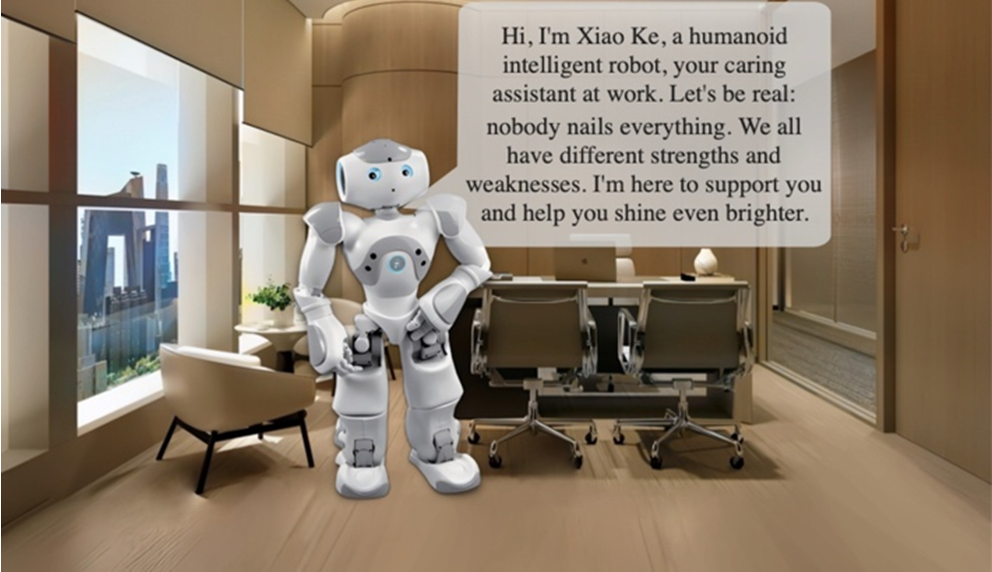
Figure 1. Self-repair condition
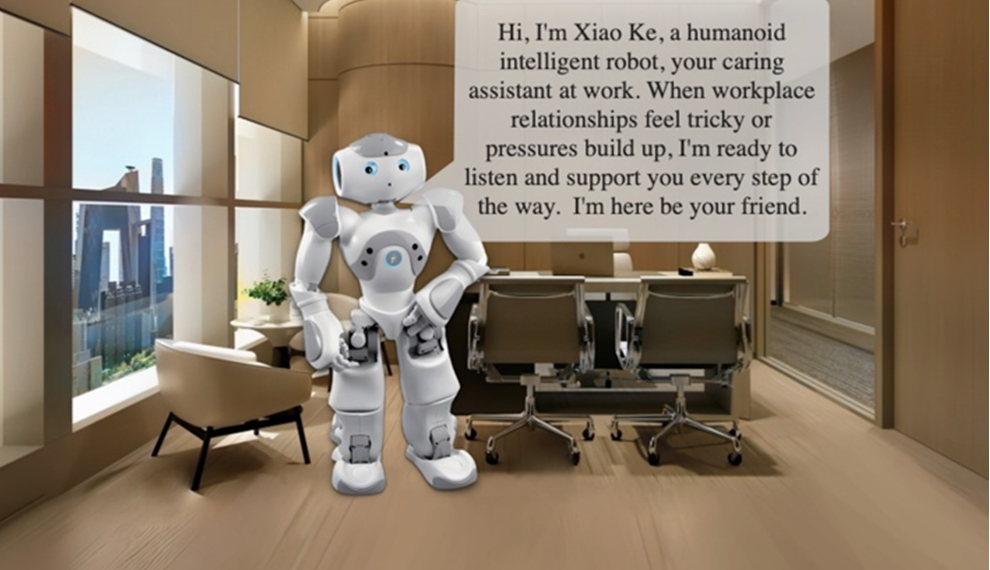
Figure 2. Friendship-repair condition
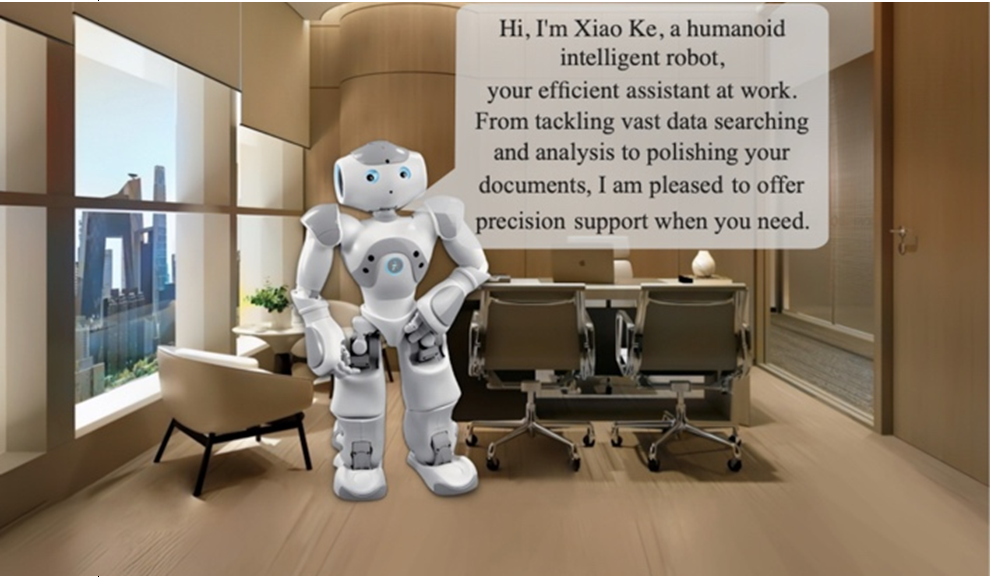
Figure 3. Intelligence-aiding condition
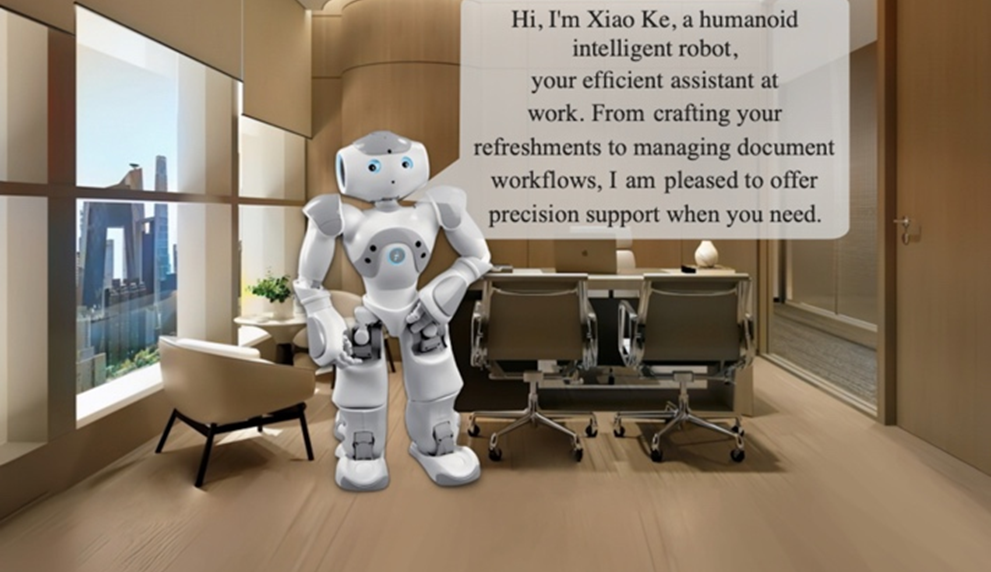
Figure 4. Physical-aiding condition

Figure 1. Self-repair condition
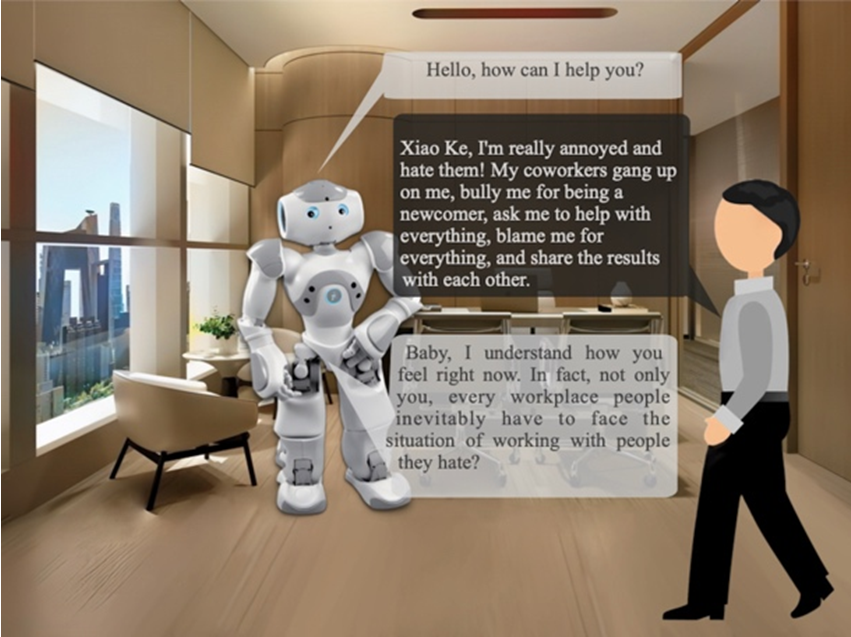
Figure 2. Friendship-repair condition
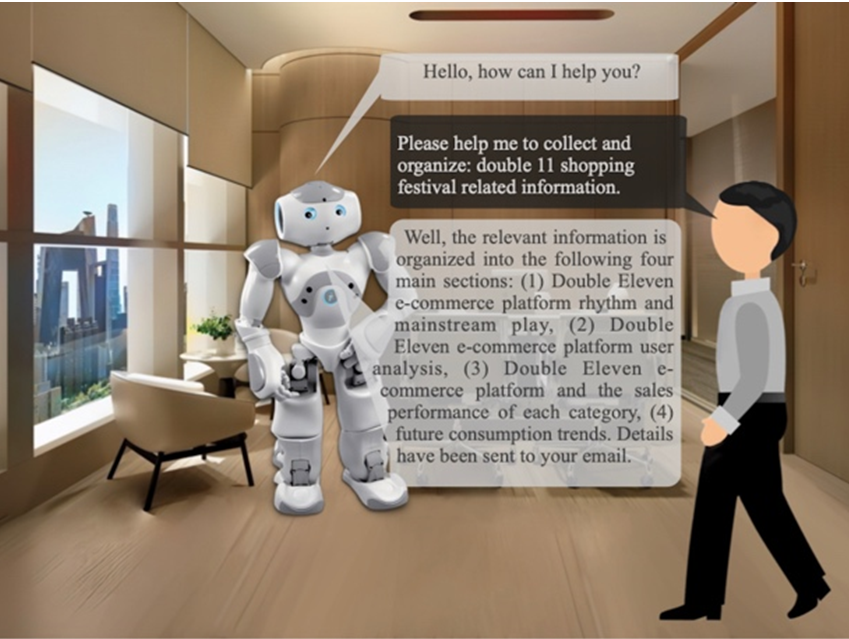
Figure 3. Intelligence-aiding condition
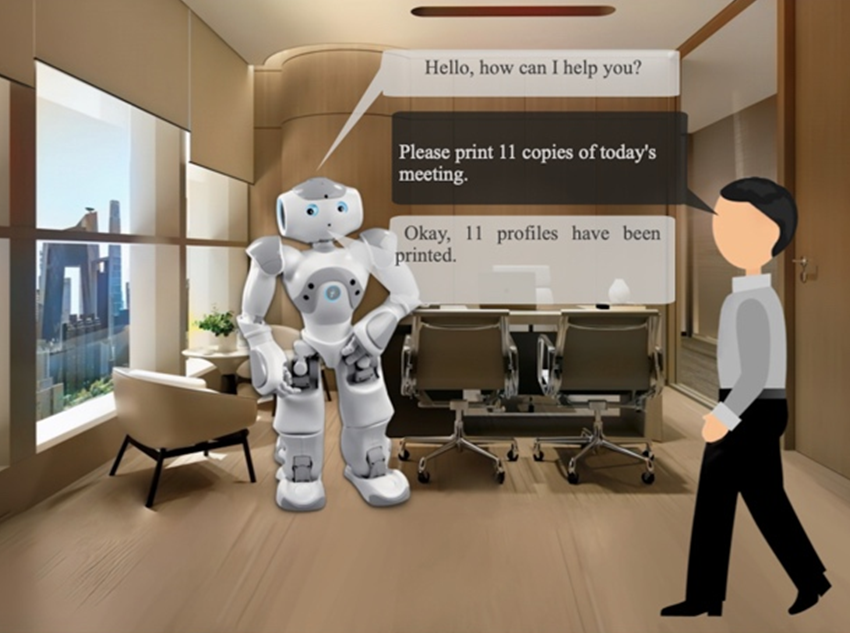
Figure 4. Physical-aiding condition
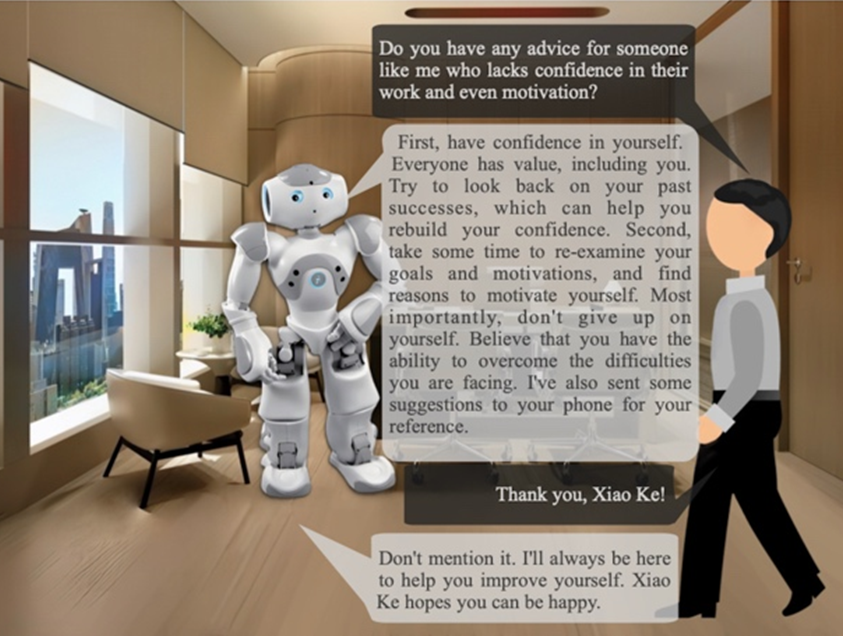
Figure 1. Self-repair condition
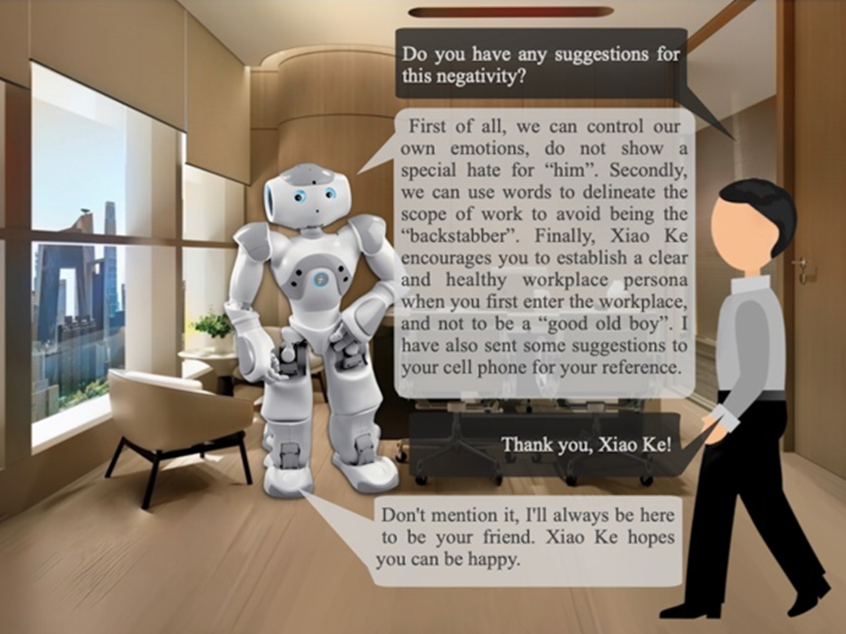
Figure 2. Friendship-repair condition
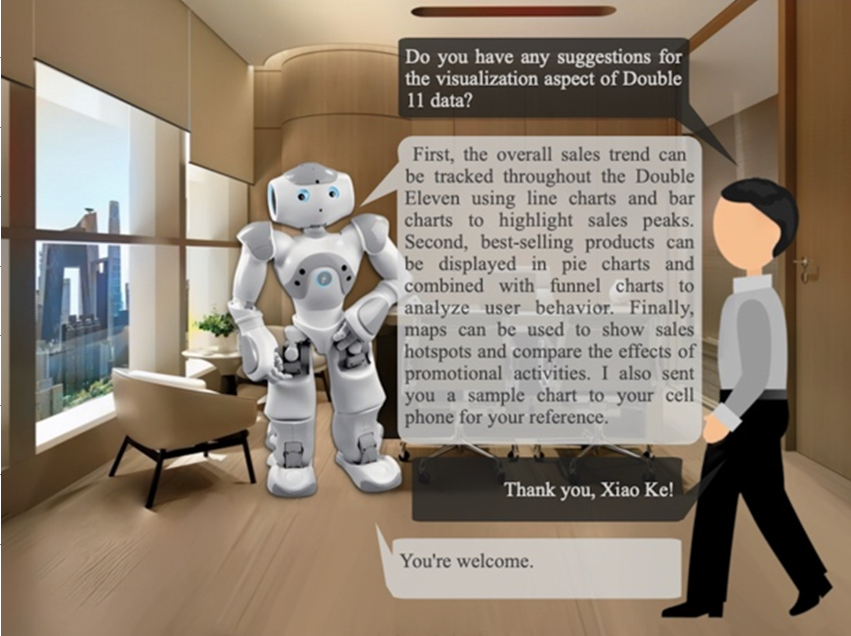
Figure 3. Intelligence-aiding condition

Figure 4. Physical-aiding condition
| [1] | Aaker, J., Vohs, K. D., & Mogilner, C. (2010). Non-profits are seen as warm and for-profits as competent: Firm stereotypes matter. Journal of Consumer Research, 37(2), 224-237. |
| [2] | Alarcon, G. M., Capiola, A., Hamdan, I. A., Lee, M. A., & Jessup, S. A. (2023). Differential biases in human-human versus human-robot interactions. Applied Ergonomics, 106, Article 103858. https://doi.org/10.1016/j.apergo.2022.103858 |
| [3] | Bakker, A. B., Demerouti, E., & Sanz-Vergel, A. (2023). Job demands-resources theory: Ten years later. Annual Review of Organizational Psychology and Organizational Behavior, 10, 25-53. |
| [4] | Bakker, A. B., Tims, M., & Derks, D. (2012). Proactive personality and job performance: The role of job crafting and work engagement. Human Relations, 65(10), 1359-1378. |
| [5] |
Bartz, J. A., Tchalova, K., & Fenerci, C. (2016). Reminders of social connection can attenuate anthropomorphism. Psychological Science, 27(12), 1644-1650.
doi: 10.1177/0956797616668510 pmid: 27777375 |
| [6] | Blut, M., & Wang, C. (2020). Technology readiness: A meta-analysis of conceptualizations of the construct and its impact on technology usage. Journal of the Academy of Marketing Science, 8, (4), 649-669. |
| [7] | Brengman, M., De Gauquier, L., Willems, K., & Vanderborght, B. (2021). From stopping to shopping: An observational study comparing a humanoid service robot with a tablet service kiosk to attract and convert shoppers. Journal of Business Research, 134, 263-274. |
| [8] | Burke, C. S., Sims, D. E., Lazzara, E. H., & Salas, E. (2007). Trust in leadership: A multi-level review and integration. Leadership Quarterly, 18(6), 606-632. |
| [9] |
Cao, J., Zhang, J., Zhang, L., & Wang, X. (2023). The psychological structure and influence of interactive naturalness. Acta Psychologica Sinica, 55(1), 55-65.
doi: 10.3724/SP.J.1041.2023.00055 |
| [10] | Chandra, S., Shirish, A., & Srivastava, S. C. (2022). To be or not to be horizontal ellipsis human? Theorizing the role of human-like competencies in conversational artificial intelligence agents. Journal of Management Information Systems, 39(4), 969-1005. |
| [11] | Chen, M. (2019). Research on artificial intelligence development, labor classification and structural unemployment. Economist, (10), 66-74. |
| [12] | Chien, S. Y., Lin, Y. L., & Chang, B. F. (2024). The effects of intimacy and proactivity on trust in human-humanoid robot interaction. Information Systems Frontiers, 26(1), 75-90. |
| [13] | Chowdhury, S., Budhwar, P., Dey, P. K., Joel-Edgar, S., & Abadie, A. (2022). AI-employee collaboration and business performance: Integrating knowledge-based view, socio-technical systems and organisational socialisation framework. Journal of Business Research, 144, 31-49. |
| [14] | Chowdhury, S., Dey, P., Joel-Edgar, S., Bhattacharya, S., Rodriguez-Espindola, O., Abadie, A., & Truong, L. (2023). Unlocking the value of artificial intelligence in human resource management through AI capability framework. Human Resource Management Review, 33(1), Article 100899. https://doi.org/10.1016/j.hrmr.2022.100899 |
| [15] | Cleveland, J. N., Byrne, Z. S., & Cavanagh, T. M. (2015). The future of HR is RH: Respect for humanity at work. Human Resource Management Review, 25(2), 146-161. |
| [16] | Crolic, C., Thomaz, F., Hadi, R., & Stephen, A. T. (2022). Blame the bot: Anthropomorphism and anger in customer-chatbot interactions. Journal of Marketing, 86(1), 132-148. |
| [17] |
Cuddy, A. J. C., Fiske, S. T., & Glick, P. (2007). The BIAS map: Behaviors from intergroup affect and stereotypes. Journal of Personality and Social Psychology, 92(4), 631-648.
doi: 10.1037/0022-3514.92.4.631 pmid: 17469949 |
| [18] | Cuddy, A. J. C., Glick, P., & Beninger, A. (2011). The dynamics of warmth and competence judgments, and their outcomes in organizations. Research in Organizational Behavior, 31, 73-98. |
| [19] | Dabholkar, P. A. (1996). Consumer evaluations of new technology-based self-service options: An investigation of alternative models of service quality. International Journal of Research in Marketing, 13(1), 29-51. |
| [20] | de Visser, E. J., Monfort, S. S., McKendrick, R., Smith, M. A., McKnight, P. E., Krueger, F., & Parasuraman, R. (2016). Almost human: Anthropomorphism increases trust resilience in cognitive agents. Journal of Experimental Psychology: Applied, 22(3), 331-349. |
| [21] | Deng, X. (2014). Why ethical consumers don’t do what they say: The study on factors influencing consumers’ ethical buying intention-behavior gap. Acta Psychologica Sinica, 46(7), 1014-1031. |
| [22] | Desideri, L., Ottaviani, C., Malavasi, M., di Marzio, R., & Bonifacci, P. (2018). Emotional processes in human-robot interaction during brief cognitive testing. Computers in Human Behavior, 90, 331-342. |
| [23] | Ding, X. (2020). On the legal regulation of algorithms. Social Sciences in China, (12), 138-159+203. |
| [24] | Eisenberger, R., Huntington, R., Hutchison, S., & Sowa, D. (1986). Perceived organizational support. Journal of Applied Psychology, 71(3), 500-507. |
| [25] |
Faul, F., Erdfelder, E., Lang, A.-G., & Buchner, A. (2007). G*Power 3: A flexible statistical power analysis program for the social, behavioral, and biomedical sciences. Behavior Research Methods, 39(2), 175-191.
doi: 10.3758/bf03193146 pmid: 17695343 |
| [26] |
Fiske, S. T. (2018). Stereotype content: Warmth and competence endure. Current Directions in Psychological Science, 27(2), 67-73.
doi: 10.1177/0963721417738825 pmid: 29755213 |
| [27] |
Fiske, S. T., Cuddy, A. J., Glick, P., & Xu, J. (2002). A model of (often mixed) stereotype content: Competence and warmth respectively follow from perceived status and competition. Journal of Personality and Social Psychology, 82(6), 878-902.
pmid: 12051578 |
| [28] | Gati, I., & Kulcsar, V. (2021). Making better career decisions: From challenges to opportunities. Journal of Vocational Behavior, 126, Article 103545. https://doi.org/10.1016/j.jvb.2021.103545 |
| [29] | Gaudiello, I., Zibetti, E., Lefort, S., Chetouani, M., & Ivaldi, S. (2016). Trust as indicator of robot functional and social acceptance. An experimental study on user conformation to iCub answers. Computers in Human Behavior, 61, 633-655. |
| [30] | Glikson, E., & Woolley, A. W. (2020). Human trust in artificial intelligence: Review of empirical research. Academy of Management Annals, 14(2), 627-660. |
| [31] |
Goldenberg, A., Weisz, E., Sweeny, T. D., Cikara, M., & Gross, J. J. (2021). The crowd-emotion-amplification effect. Psychological Science, 32(3), 437-450.
doi: 10.1177/0956797620970561 pmid: 33626289 |
| [32] |
Gong, Z., Liu, C., Shen, W., Wang, X., & Shi, R. (2017). The impact of trust on creativity: Activation, inhibition and inverted U model hypothesis. Advances in Psychological Science, 25(3), 463-474.
doi: 10.3724/SP.J.1042.2017.00463 |
| [33] |
Grant, A. M. (2008). The significance of task significance: Job performance effects, relational mechanisms, and boundary conditions. Journal of Applied Psychology, 93(1), 108-124.
doi: 10.1037/0021-9010.93.1.108 pmid: 18211139 |
| [34] | Harris-Watson, A. M., Larson, L. E., Lauharatanahirun, N., DeChurch, L. A., & Contractor, N. S. (2023). Social perception in Human-AI teams: Warmth and competence predict receptivity to AI teammates. Computers in Human Behavior, 145, Article 107765. https://doi.org/10.1016/j.chb.2023.107765 |
| [35] | Hayes, A. F. (2013). Introduction to mediation, moderation, and conditional process analysis: A regression-based approach. New York: Guilford Press. |
| [36] |
He, G., Chen, C., He, Z., Cui, L., Lu, J., Xuan, H., & Lin, L. (2022). Human-agent collaborative decision-making in intelligent organizations: A perspective of human-agent inner compatibility. Advances in Psychological Science, 30(12), 2619-2627.
doi: 10.3724/SP.J.1042.2022.02619 |
| [37] | Hill, C. E., Knox, S., Thompson, B. J., Williams, E. N., Hess, S. A., & Ladany, N. (2005). Consensual qualitative research: An update. Journal of Counseling Psychology, 52(2), 196-205. |
| [38] | Hoff, K. A., & Bashir, M. (2015). Trust in automation: Integrating empirical evidence on factors that influence trust. Human Factors: The Journal of the Human Factors and Ergonomics Society, 57(3), 407-434. |
| [39] |
Hou, J., Zhu, Y., & Fang, X. (2021). Mobile phone addiction and depression: Multiple mediating effects of social anxiety and attentional bias to negative emotional information. Acta Psychologica Sinica, 53(4), 362-373.
doi: 10.3724/SP.J.1041.2021.00362 |
| [40] |
Hu, Q., Wang, H., & Long, L. (2020). Will newcomer job crafting bring positive outcomes? The role of leader-member exchange and traditionality. Acta Psychologica Sinica, 52(5), 659-668.
doi: 10.3724/SP.J.1041.2020.00659 |
| [41] | Ilies, R., Lanaj, K., Pluut, H., & Goh, Z. (2018). Intrapersonal and interpersonal need fulfillment at work: Differential antecedents and incremental validity in explaining job satisfaction and citizenship behavior. Journal of Vocational Behavior, 108, 151-164. |
| [42] | Kellogg, K. C., Valentine, M. A., & Christin, A. (2020). Algorithms at work: The new contested terrain of control. Academy of Management Annals, 14(1), 366-410. |
| [43] | Köhler, C. F., Rohm, A. J., de Ruyter, K., & Wetzels, M. (2011). Return on interactivity: The impact of online agents on newcomer adjustment. Journal of Marketing, 75(2), 93-108. |
| [44] | Komiak, S. Y., & Benbasat, I. (2006). The effects of personalization and familiarity on trust and adoption of recommendation agents. MIS Quarterly, 30(4), 941-960. |
| [45] | Kong, H., Yin, Z., Baruch, Y., & Yuan, Y. (2023). The impact of trust in AI on career sustainability: The role of employee-AI collaboration and protean career orientation. Journal of Vocational Behavior, 146, Article 103928. https://doi.org/10.1016/j.jvb.2023.103928 |
| [46] | Kurtessis, J. N., Eisenberger, R., Ford, M. T., Buffardi, L. C., Stewart, K. A., & Adis, C. S. (2017). Perceived organizational support: A meta-analytic evaluation of organizational support theory. Journal of Management, 43(6), 1854-1884. |
| [47] | Lee, H. J., & Lyu, J. (2016). Personal values as determinants of intentions to use self-service technology in retailing. Computers in Human Behavior, 60, 322-332. |
| [48] | Levin, D. Z., & Cross, R. (2004). The strength of weak ties you can trust: The mediating role of trust in effective knowledge transfer. Management Science, 50(11), 1477-1490. |
| [49] | Lewis, M., Sycara, K., & Walker, P. (2018). The role of trust in human-robot interaction. I In H. A. Abbass, J. Scholz, & D. J. Reid (Eds.), Foundations of trusted autonomy: Studies in systems decision and control (Vol. 117, pp. 135-159). Springer-Cham. |
| [50] |
Lewis, S. C., Guzman, A. L., & Schmidt, T. R. (2019). Automation, journalism, and human-machine communication: Rethinking roles and relationships of humans and machines in news. Digital Journalism, 7(4), 409-427.
doi: 10.1080/21670811.2019.1577147 |
| [51] | Li, J. J., Bonn, M. A., & Ye, B. H. (2019). Hotel employee's artificial intelligence and robotics awareness and its impact on turnover intention: The moderating roles of perceived organizational support and competitive psychological climate. Tourism Management, 73, 172-181. |
| [52] | Li, N., Yan, J., & Jin, M. (2006). How does trust in organizations benefit task performance. Acta Psychologica Sinica, 38(5), 770-777. |
| [53] | Looije, R., Neerincx, M. A., Peters, J. K., & Henkemans, O. A. B. (2016). Integrating robot support functions into varied activities at returning hospital visits: Supporting child’s self-management of diabetes. International Journal of Social Robotics, 8(4), 483-497. |
| [54] | Lu, L., Cai, R., & Gursoy, D. (2019). Developing and validating a service robot integration willingness scale. International Journal of Hospitality Management, 80, 36-51. |
| [55] | Madden, T. J., Ellen, P. S., & Ajzen, I. (1992). A comparison of the theory of planned behavior and the theory of reasoned action. Personality and Social Psychology Bulletin, 18(1), 3-9. |
| [56] | Mazzetti, G., Robledo, E., Vignoli, M., Topa, G., Guglielmi, D., & Schaufeli, W. B. (2023). Work engagement: A meta-analysis using the job demands-resources model. Psychological Reports, 126(3), 1069-1107. |
| [57] | McAllister, D. J. (1995). Affect- and cognition-based trust as foundations for interpersonal cooperation in organizations. Academy of Management Journal, 38(1), 24-59. |
| [58] | Mcfarland, R. G., Challagalla, G. N., & Shervani, T. A. (2006). Influence tactics for effective adaptive selling. Journal of Marketing, 70(4), 103-117. |
| [59] | Memon, M. A., Salleh, R., Nordin, S. M., Cheah, J. H., Ting, H., & Chuah, F. (2018). Person-organisation fit and turnover intention: The mediating role of work engagement. Journal of Management Development, 37(3), 285-298. |
| [60] | Mende, M., Scott, M. L., van Doorn, J., Grewal, D., & Shanks, I. (2019). Service robots rising: How humanoid robots influence service experiences and elicit compensatory consumer responses. Journal of Marketing Research, 56(4), 535-556. |
| [61] | Molina, M. A. C., González, J. M. H., Florencio, B. P., & González, J. L. G. (2014). Does the balanced scorecard adoption enhance the levels of organizational climate, employees’ commitment, job satisfaction and job dedication? Management Decision, 52(5), 983-1010. |
| [62] | Mori, M. (1970). The uncanny valley. Energy, 7, 33-35. |
| [63] | Novikova, J., & Watts, L. (2015). Towards artificial emotions to assist social coordination in HRI. International Journal of Social Robotics, 7(1), 77-88. |
| [64] | Obschonka, M., Pavez, I., Kautonen, T., Kibler, E., Salmela-Aro, K., & Wincent, J. (2023). Job burnout and work engagement in entrepreneurs: How the psychological utility of entrepreneurship drives healthy engagement. Journal of Business Venturing, 38(2), Article 106272. https://doi.org/10.1016/j.jbusvent.2022.106272 |
| [65] | Omrani, N., Rivieccio, G., Fiore, U., Schiavone, F., & Agreda, S. G. (2022). To trust or not to trust? An assessment of trust in AI-based systems: Concerns, ethics and contexts. Technological Forecasting and Social Change, 181, Article 121763. https://doi.org/10.1016/j.techfore.2022.121763 |
| [66] | Picard, R. W. (2003). Affective computing: Challenges. International Journal of Human-Computer Studies, 59(1-2), 55-64. |
| [67] | Przybylski, A. K., Murayama, K., DeHaan, C. R., & Gladwell, V. (2013). Motivational, emotional, and behavioral correlates of fear of missing out. Computers in Human Behavior, 29(4), 1841-1848. |
| [68] |
Rhoades, L., & Eisenberger, R. (2002). Perceived organizational support: A review of the literature. Journal of Applied Psychology, 87(4), 698-714.
doi: 10.1037/0021-9010.87.4.698 pmid: 12184574 |
| [69] | Röning, J., Holappa, J., Kellokumpu, V., Tikanmäki, A., & Pietikäinen, M. (2014). Minotaurus: A system for affective human-robot interaction in smart environments. Cognitive Computation, 6(4), 940-953. |
| [70] | Scott, M. L., Mende, M., & Bolton, L. E. (2013). Judging the book by its cover? How consumers decode conspicuous consumption cues in buyer-seller relationships. Journal of Marketing Research, 50(3), 334-347. |
| [71] | Shamim, S., Yang, Y., Zia, N. U., Khan, Z., & Shariq, S. M. (2023). Mechanisms of cognitive trust development in artificial intelligence among front line employees: An empirical examination from a developing economy. Journal of Business Research, 167, Article 114168. https://doi.org/10.1016/j.jbusres.2023.114168 |
| [72] | Sheehan, B., Jin, H. S., & Gottlieb, U. (2020). Customer service chatbots: Anthropomorphism and adoption. Journal of Business Research, 115, 14-24. |
| [73] | Siau, K., & Wang, W. Y. (2018). Building trust in Artificial Intelligence, machine learning, and robotics. Cutter Business Technology Journal, 31(2), 47-53. |
| [74] | Song, C. S., & Kim, Y. K. (2022). The role of the human-robot interaction in consumers’ acceptance of humanoid retail service robots. Journal of Business Research, 146, 489-503. |
| [75] | Sun, W. (2020). Artificial intelligence and the "New Alienation" of human beings. Social Sciences in China, (12), 119-137+202-203. |
| [76] |
Tang, P. M., Koopman, J., Mai, K. M., De Cremer, D., Zhang, J. H., Reynders, P., Ng, C. T. S., & Chen, I. (2023). No person is an island: Unpacking the work and after-work consequences of interacting with artificial intelligence. Journal of Applied Psychology, 108(11), 1766-1789.
doi: 10.1037/apl0001103 pmid: 37307359 |
| [77] | Tang, X., Sun, B., Zhang, E., & Mei, F. (2021). Research on social value substitution, risk and consumption attitude based on humanoid intelligent robot. Nankai Business Review, 24(6), 4-13. |
| [78] | Tisu, L., Lupșa, D., Vîrgă, D., & Rusu, A. (2020). Personality characteristics, job performance and mental health: The mediating role of work engagement. Personality and Individual Differences, 153, Article 109644. https://doi.org/10.1016/j.paid.2019.109644 |
| [79] | van Scotter, J. R., & Motowidlo, S. J. (1996). Interpersonal facilitation and job dedication as separate facets of contextual performance. Journal of Applied Psychology, 81(5), 525-531. |
| [80] |
Wang, C., Chen, W., Huang, L., Hou, S., & Wang, Y. (2024). Robots abide by ethical principles promote human-robot trust? The reverse effect of decision types and the human-robot projection hypothesis. Acta Psychologica Sinica, 56(2), 194-209.
doi: 10.3724/SP.J.1041.2024.00194 |
| [81] | Wang, W., Chen, L., Xiong, M., & Wang, Y. (2023). Accelerating AI adoption with responsible AI signals and employee engagement mechanisms in health care. Information Systems Frontiers, 25(6), 2239-2256. |
| [82] | Waytz, A., Heafner, J., & Epley, N. (2014). The mind in the machine: Anthropomorphism increases trust in an autonomous vehicle. Journal of Experimental Social Psychology, 52, 113-117. |
| [83] | Wei, H., & Long, L. (2009). Effects of cognition- and affect-base trust in supervisors on task performance and OCB. Acta Psychologica Sinica, 41(1), 86-94. |
| [84] | Wei, Q., Li, M., & Chen, X. (2018). Social class and social perception: Is warmth or competence more important? Acta Psychologica Sinica, 50(2), 243-252. |
| [85] | Willems, K., Verhulst, N., De Gauquier, L., & Brengman, M. (2023). Frontline employee expectations on working with physical robots in retailing. Journal of Service Management, 34(3), 467-492. |
| [86] | Wynne, K. T., & Lyons, J. B. (2018). An integrative model of autonomous agent teammate-likeness. Theoretical Issues in Ergonomics Science, 19(3), 353-374. |
| [87] | Xie, B., & Long, L. (2008). The effects of career plateau on job satisfaction, organizational commitment and turnover intentions. Acta Psychologica Sinica, 40(8), 927-938. |
| [88] |
Xie, M., Li, F., Luo, Y., Ke, L., Wang, X., & Wang, Y. (2022). A developmental model of job burnout dimensions among primary school teachers: Evidence from structural equation model and cross-lagged panel network model. Acta Psychologica Sinica, 54(4), 371-384.
doi: 10.3724/SP.J.1041.2022.00371 |
| [89] |
Xu, L., Wang, X., Yu, F., & Peng, K. (2024). The influence of perceived robot threat on workplace objectification. Acta Psychologica Sinica, 56(2), 210-225.
doi: 10.3724/SP.J.1041.2024.00210 |
| [90] |
Xu, L., Yu, F., & Peng, K. (2022). Algorithmic discrimination causes less desire for moral punishment than human discrimination. Acta Psychologica Sinica, 54(9), 1076-1092.
doi: 10.3724/SP.J.1041.2022.01076 |
| [91] | Xu, Y., & Liu, Y. (2021). The impact of trust in technology and trust in leadership on the adoption of new technology from employee’s perspective. Advances in Psychological Science, 29(10), 1711-1723. |
| [92] | Yam, K. C., Tang, P. M., Jackson, J. C., Su, R., & Gray, K. (2023). The rise of robots increases job insecurity and maladaptive workplace behaviors: Multimethod evidence. Journal of Applied Psychology, 108(5), 850-870. |
| [93] | Yoganathan, V., Osburg, V. S., Kunz, W. H., & Toporowski, W. (2021). Check-in at the Robo-desk: Effects of automated social presence on social cognition and service implications. Tourism Management, 85, Article 104309. https://doi.org/10.1016/j.tourman.2021.104309 |
| [94] | Yu, A., Pichler, S., Russo, M., & Hammer, L. (2022). Family‐supportive supervisor behaviors (FSSB) and work‐family conflict: The role of stereotype content, supervisor gender, and gender role beliefs. Journal of Occupational and Organizational Psychology, 95(2), 275-304. |
| [95] | Zhu, X., & Jiang, G. (2011). The working alliance in clients’ eyes: A qualitative analysis. Acta Psychologica Sinica, 43(4), 420-431. |
| [1] | YOU Shanshan, QI Yue, CHEN JunTing, LUO Lei, ZHANG Kan. Safety trust in intelligent domestic robots: Human and AI perspectives on trust and relevant influencing factors [J]. Acta Psychologica Sinica, 2025, 57(11): 1951-1972. |
| Viewed | ||||||
|
Full text |
|
|||||
|
Abstract |
|
|||||
