

ISSN 0439-755X
CN 11-1911/B
CN 11-1911/B
Acta Psychologica Sinica ›› 2025, Vol. 57 ›› Issue (8): 1468-1481.doi: 10.3724/SP.J.1041.2025.1468
• Reports of Empirical Studies • Previous Articles Next Articles
LIU Pan1, QIU Lin2,3,4, XIE Tian5,6, REN Xiaopeng7,8( )
)
Published:2025-08-25
Online:2025-05-22
Contact:
REN Xiaopeng
E-mail:renxp@psych.ac.cn
LIU Pan, QIU Lin, XIE Tian, REN Xiaopeng. (2025). High- vs. low-stake choices in life: How does modernization predict the multidimensional shifts of individualism in China. Acta Psychologica Sinica, 57(8), 1468-1481.
Add to citation manager EndNote|Ris|BibTeX
URL: https://journal.psych.ac.cn/acps/EN/10.3724/SP.J.1041.2025.1468
| No. | Item Content |
|---|---|
| 1 | The choice of ____ rarely occurs in one’s lifespan. |
| 2 | The possible outcomes of the choice of ____ are uncertain. |
| 3 | The choice of ____ involves much consideration. |
| 4 | The choice of ____ relates to personal morals or values. |
| 5 | The choice of ____ requires significant investment of resources. |
| 6 | The choice of ____ rules out many other options. |
| 7 | The choice of ____ affects multiple areas of life. |
| 8 | The choice of ____ greatly affects one’s interpersonal relationships. |
| 9 | The choice of ____ greatly affects one’s economic situation. |
| 10 | The choice of ____ greatly affects one’s lifestyle. |
| 11 | The choice of ____ affects many people. |
| 12 | The choice of ____ has long-term consequences. |
| 13 | Once the choice of ____ is made, it is difficult to undo or take back. |
Table 1 The Life Choice Characteristics Scale in Study 1
| No. | Item Content |
|---|---|
| 1 | The choice of ____ rarely occurs in one’s lifespan. |
| 2 | The possible outcomes of the choice of ____ are uncertain. |
| 3 | The choice of ____ involves much consideration. |
| 4 | The choice of ____ relates to personal morals or values. |
| 5 | The choice of ____ requires significant investment of resources. |
| 6 | The choice of ____ rules out many other options. |
| 7 | The choice of ____ affects multiple areas of life. |
| 8 | The choice of ____ greatly affects one’s interpersonal relationships. |
| 9 | The choice of ____ greatly affects one’s economic situation. |
| 10 | The choice of ____ greatly affects one’s lifestyle. |
| 11 | The choice of ____ affects many people. |
| 12 | The choice of ____ has long-term consequences. |
| 13 | Once the choice of ____ is made, it is difficult to undo or take back. |
| Life Choice Type | Factor | |
|---|---|---|
| 1 | 2 | |
| Whether to get married | 0.86 | |
| Whether to get divorced | 0.63 | |
| Whether to have children | 0.70 | |
| Whether to live apart from parents | 0.48 | |
| Naming newborn boys | 0.91 | |
| Naming newborn girls | 0.90 | |
Table 2 Rotated factor matrix
| Life Choice Type | Factor | |
|---|---|---|
| 1 | 2 | |
| Whether to get married | 0.86 | |
| Whether to get divorced | 0.63 | |
| Whether to have children | 0.70 | |
| Whether to live apart from parents | 0.48 | |
| Naming newborn boys | 0.91 | |
| Naming newborn girls | 0.90 | |
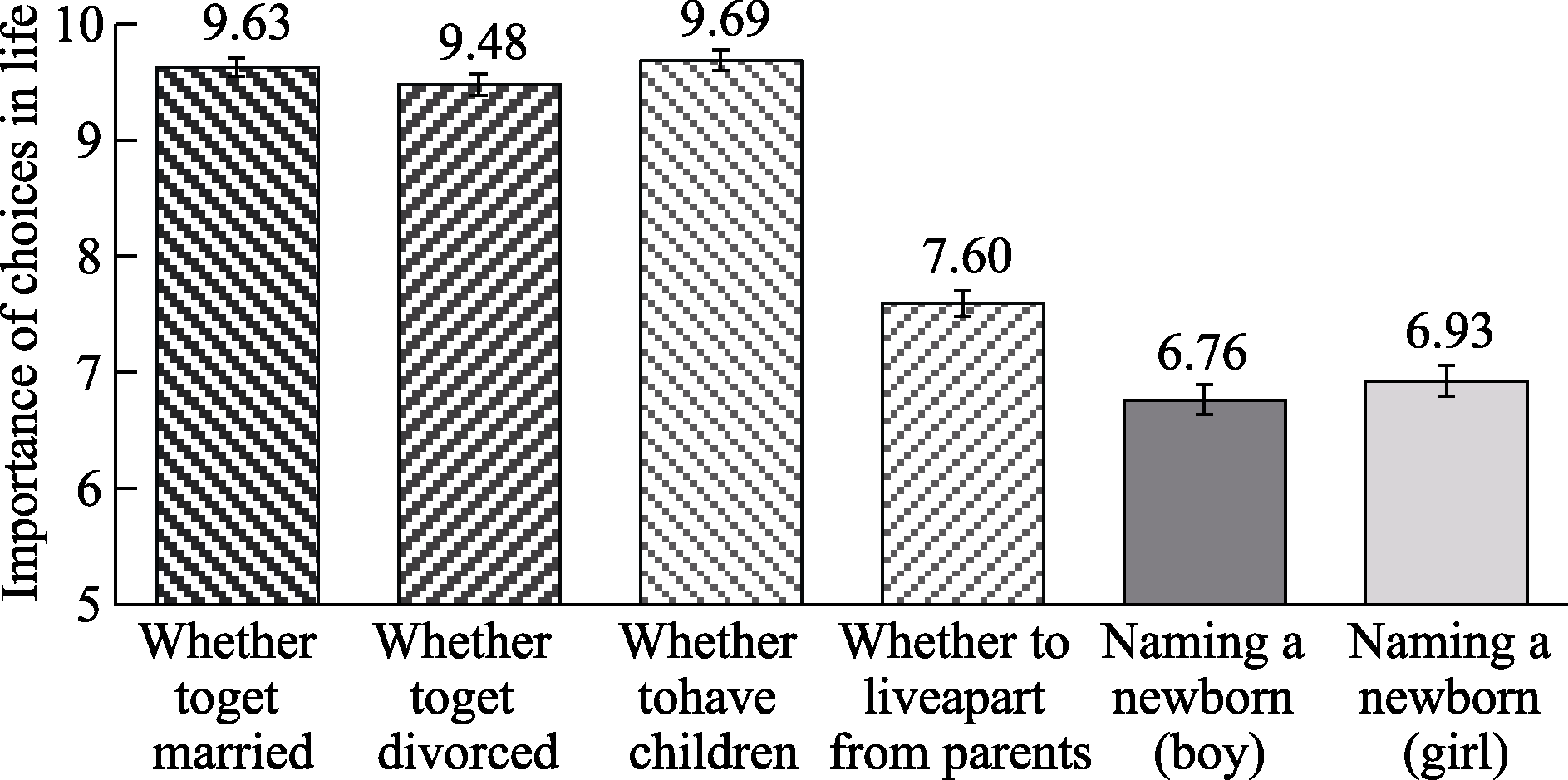
Figure 1. Comparison of importance ratings across six types of life choices.
| Modernization Indicators | 1 | 2 | 3 | 4 | 5 | |
|---|---|---|---|---|---|---|
| GDP per capita | 1 | — | ||||
| Urbanization rate | 2 | 0.71*** | — | |||
| Higher education attainment rate | 3 | 0.83*** | 0.77*** | — | ||
| Illiteracy rate | 4 | ?0.56*** | ?0.63*** | ?0.47*** | — | |
| Composite index | 5 | 0.90*** | 0.90*** | 0.89*** | ?0.77*** | — |
| Mean | 9015.48 | 0.38 | 0.02 | 15.36 | 0 | |
| SD | 11972.44 | 0.18 | 0.02 | 12.05 | 0.86 | |
Table 3 Correlations among modernization indicators
| Modernization Indicators | 1 | 2 | 3 | 4 | 5 | |
|---|---|---|---|---|---|---|
| GDP per capita | 1 | — | ||||
| Urbanization rate | 2 | 0.71*** | — | |||
| Higher education attainment rate | 3 | 0.83*** | 0.77*** | — | ||
| Illiteracy rate | 4 | ?0.56*** | ?0.63*** | ?0.47*** | — | |
| Composite index | 5 | 0.90*** | 0.90*** | 0.89*** | ?0.77*** | — |
| Mean | 9015.48 | 0.38 | 0.02 | 15.36 | 0 | |
| SD | 11972.44 | 0.18 | 0.02 | 12.05 | 0.86 | |
| HSC Indicators | 1 | 2 | 3 | 4 | 5 | |
|---|---|---|---|---|---|---|
| Single-person household proportion | 1 | — | ||||
| Divorce rate | 2 | 0.42*** | — | |||
| Family size | 3 | ?0.70** | ?0.54*** | — | ||
| Extended family percentage | 4 | ?0.43** | ?0.35** | 0.89*** | — | |
| Composite index | 5 | 0.78*** | 0.71** | ?0.96*** | ?0.82*** | — |
| Mean | 8.62 | 0.009 | 3.75 | 2.92 | 0 | |
| SD | 3.46 | 0.005 | 0.58 | 3.31 | 0.82 | |
Table 4 Correlations among individualistic HSC indicators
| HSC Indicators | 1 | 2 | 3 | 4 | 5 | |
|---|---|---|---|---|---|---|
| Single-person household proportion | 1 | — | ||||
| Divorce rate | 2 | 0.42*** | — | |||
| Family size | 3 | ?0.70** | ?0.54*** | — | ||
| Extended family percentage | 4 | ?0.43** | ?0.35** | 0.89*** | — | |
| Composite index | 5 | 0.78*** | 0.71** | ?0.96*** | ?0.82*** | — |
| Mean | 8.62 | 0.009 | 3.75 | 2.92 | 0 | |
| SD | 3.46 | 0.005 | 0.58 | 3.31 | 0.82 | |
| LSC Indicators | 1 | 2 | 3 | |
|---|---|---|---|---|
| The total proportion of the top 10 baby names (boy) | 1 | — | ||
| The total proportion of the top 10 baby names (girl) | 2 | 0.90*** | — | |
| Composite index | 3 | ?0.97*** | ?0.97*** | — |
| Mean | 6.17 | 6.86 | 0 | |
| SD | 2.57 | 2.75 | 0.97 | |
Table 5 Correlations among individualistic LSC indicators
| LSC Indicators | 1 | 2 | 3 | |
|---|---|---|---|---|
| The total proportion of the top 10 baby names (boy) | 1 | — | ||
| The total proportion of the top 10 baby names (girl) | 2 | 0.90*** | — | |
| Composite index | 3 | ?0.97*** | ?0.97*** | — |
| Mean | 6.17 | 6.86 | 0 | |
| SD | 2.57 | 2.75 | 0.97 | |

Figure 2. Shifts of individualistic HSC (left) and LSC (right) from 1981 to 2010 across provinces in China. Note. Circles represent composite indices of individualistic HSC/LSC for each province and each year, and dashed lines indicate the shifting trends of individualism fitted by the multilevel models.
| Modernization Indicators | HSC | LSC | ||||
|---|---|---|---|---|---|---|
| b | 95% CI | t | b | 95% CI | t | |
| GDP per capita | 0.262*** (0.030) | [0.188, 0.336] | 8.84 | 0.002^ (0.032) | [?0.061, 0.065] | 0.06 |
| Urbanization rate | 0.953*** (0.106) | [0.737, 1.168] | 9.02 | 0.396** (0.115) | [0.159, 0.634] | 3.45 |
| Higher education attainment rate | 0.855*** (0.073) | [0.705, 1.006] | 11.70 | 0.356** (0.107) | [0.130, 0.582] | 3.34 |
| Illiteracy rate | ?0.472*** (0.045) | [?0.566, ?0.378] | ?10.47 | ?0.366*** (0.085) | [?0.546, ?0.185] | ?4.28 |
| Composite index | 0.859*** (0.076) | [0.702, 1.015] | 11.31 | 0.303** (0.092) | [0.108, 0.498] | 3.30 |
Table 6 Prediction of individualistic HSC and LSC by modernization at the provincial level in China
| Modernization Indicators | HSC | LSC | ||||
|---|---|---|---|---|---|---|
| b | 95% CI | t | b | 95% CI | t | |
| GDP per capita | 0.262*** (0.030) | [0.188, 0.336] | 8.84 | 0.002^ (0.032) | [?0.061, 0.065] | 0.06 |
| Urbanization rate | 0.953*** (0.106) | [0.737, 1.168] | 9.02 | 0.396** (0.115) | [0.159, 0.634] | 3.45 |
| Higher education attainment rate | 0.855*** (0.073) | [0.705, 1.006] | 11.70 | 0.356** (0.107) | [0.130, 0.582] | 3.34 |
| Illiteracy rate | ?0.472*** (0.045) | [?0.566, ?0.378] | ?10.47 | ?0.366*** (0.085) | [?0.546, ?0.185] | ?4.28 |
| Composite index | 0.859*** (0.076) | [0.702, 1.015] | 11.31 | 0.303** (0.092) | [0.108, 0.498] | 3.30 |
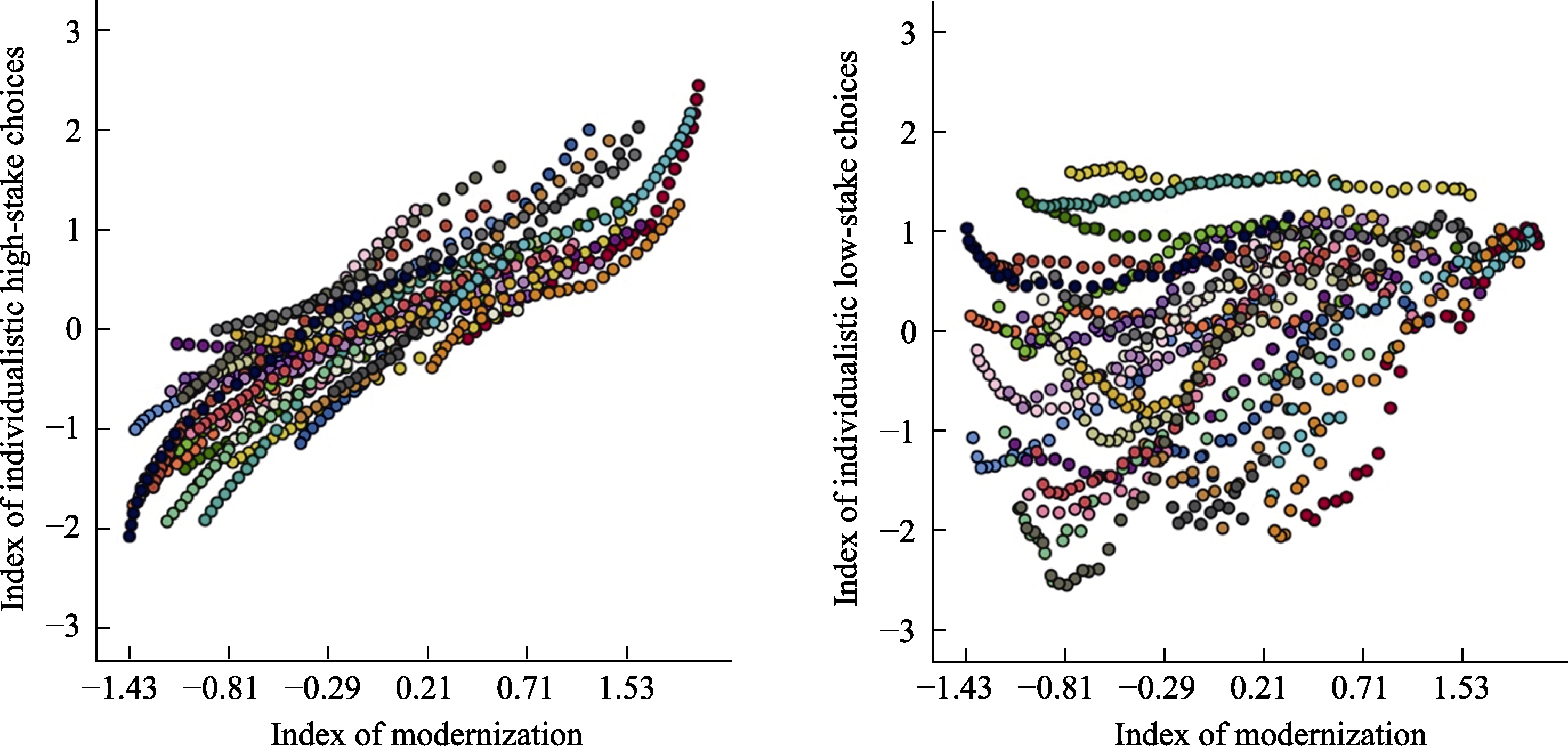
Figure 3. Interprovincial variations in modernization’s predictive patterns for individualistic HSC and LSC in China. Note. Dots represent composite index scores of individualistic HSC/HSC for each province and each year.
| Province | Modernization | Individualism | Province | Modernization | Individualism | ||
|---|---|---|---|---|---|---|---|
| HSC | LSC | HSC | LSC | ||||
| Anhui | ?0.52 | ?0.15 | ?0.58 | Jiangxi | ?0.30 | ?0.57^ | 0.15 |
| Beijing | 1.74# | 0.96# | ?0.08 | Jilin | 0.25 | 0.25 | ?0.62 |
| Fujian | ?0.08 | ?0.24 | 1.05# | Liaoning | 0.45 | 0.44 | ?0.51 |
| Gansu | ?0.58^ | ?0.65^ | 0.10 | Ningxia | ?0.34 | ?0.56^ | ?1.21^ |
| Guangdong | 0.19 | ?0.24 | 1.52# | Qinghai | ?0.52 | ?0.21 | 0.68 |
| Guangxi | ?0.29 | ?0.48 | 1.40# | Shanxi | ?0.21 | ?0.13 | ?0.66^ |
| Guizhou | ?0.64^ | ?0.31 | ?0.25 | Shandong | ?0.07 | ?0.04 | 0.15 |
| Hebei | ?0.27 | ?0.17 | 0.42 | Shanxi | ?0.09 | 0.08 | 0.03 |
| Henan | ?0.40 | ?0.43 | 0.52 | Shanghai | 1.43# | 1.10# | 0.08 |
| Heilongjiang | 0.22 | 0.20 | ?0.56 | Sichuan | ?0.35 | 0.34 | ?1.15^ |
| Hubei | ?0.06 | ?0.14 | ?0.46 | Tianjin | 1.06# | 0.40 | ?0.39 |
| Hunan | ?0.21 | 0.14 | ?0.39 | Yunnan | ?0.63^ | ?0.49 | 0.70 |
| Jiangsu | 0.07 | 0.20 | ?0.51 | Zhejiang | 0.15 | 0.69# | 0.59 |
Table S1 Indices of modernization, individualistic HSC and LSC across provinces in China (1981~2010)
| Province | Modernization | Individualism | Province | Modernization | Individualism | ||
|---|---|---|---|---|---|---|---|
| HSC | LSC | HSC | LSC | ||||
| Anhui | ?0.52 | ?0.15 | ?0.58 | Jiangxi | ?0.30 | ?0.57^ | 0.15 |
| Beijing | 1.74# | 0.96# | ?0.08 | Jilin | 0.25 | 0.25 | ?0.62 |
| Fujian | ?0.08 | ?0.24 | 1.05# | Liaoning | 0.45 | 0.44 | ?0.51 |
| Gansu | ?0.58^ | ?0.65^ | 0.10 | Ningxia | ?0.34 | ?0.56^ | ?1.21^ |
| Guangdong | 0.19 | ?0.24 | 1.52# | Qinghai | ?0.52 | ?0.21 | 0.68 |
| Guangxi | ?0.29 | ?0.48 | 1.40# | Shanxi | ?0.21 | ?0.13 | ?0.66^ |
| Guizhou | ?0.64^ | ?0.31 | ?0.25 | Shandong | ?0.07 | ?0.04 | 0.15 |
| Hebei | ?0.27 | ?0.17 | 0.42 | Shanxi | ?0.09 | 0.08 | 0.03 |
| Henan | ?0.40 | ?0.43 | 0.52 | Shanghai | 1.43# | 1.10# | 0.08 |
| Heilongjiang | 0.22 | 0.20 | ?0.56 | Sichuan | ?0.35 | 0.34 | ?1.15^ |
| Hubei | ?0.06 | ?0.14 | ?0.46 | Tianjin | 1.06# | 0.40 | ?0.39 |
| Hunan | ?0.21 | 0.14 | ?0.39 | Yunnan | ?0.63^ | ?0.49 | 0.70 |
| Jiangsu | 0.07 | 0.20 | ?0.51 | Zhejiang | 0.15 | 0.69# | 0.59 |
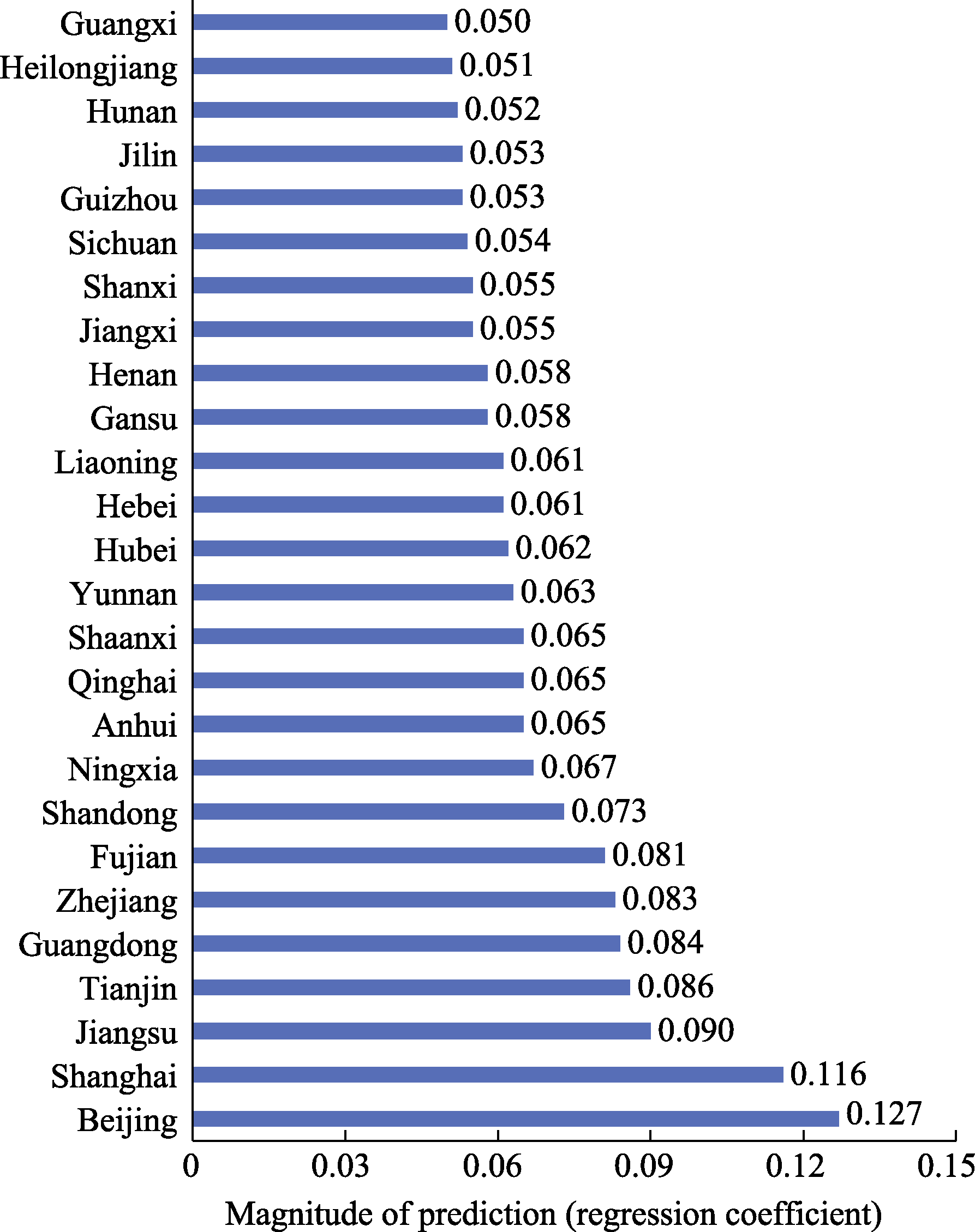
Figure S2.1. Prediction of modernization over time across provinces in China.
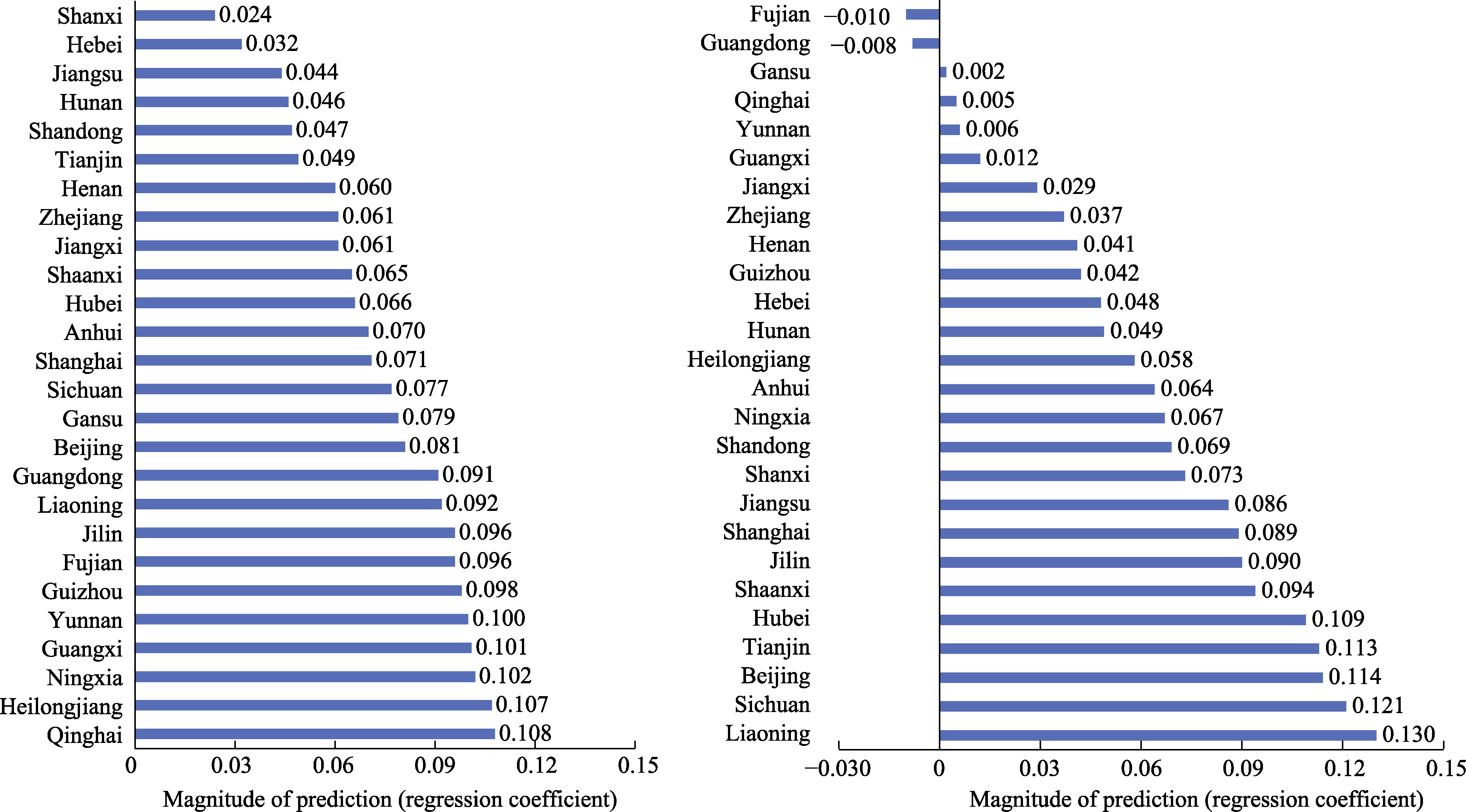
Figure S2.2. Prediction of individualistic HSC (left) and LSC (right) over time across provinces in China.
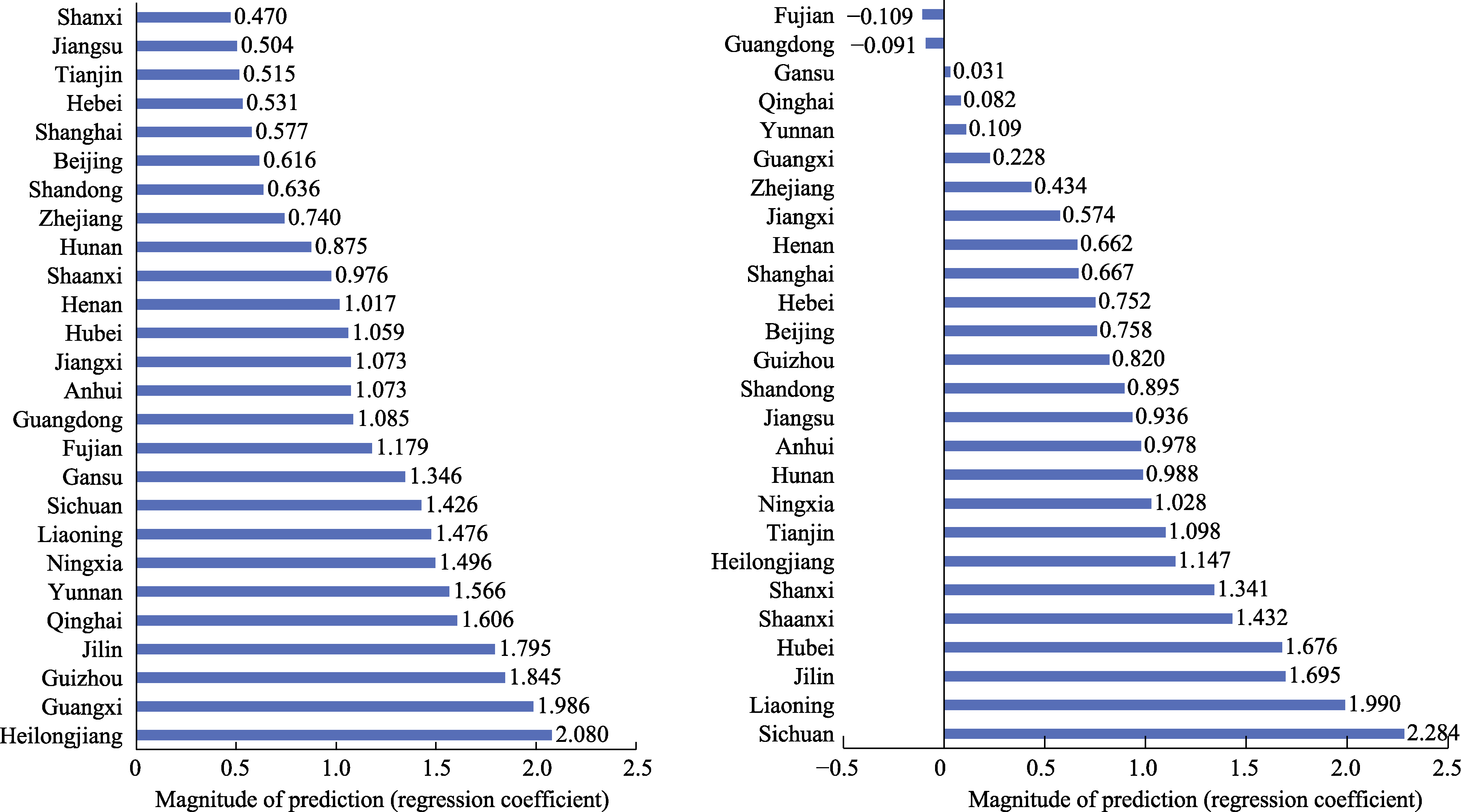
Figure S2.3. Prediction of individualistic HSC (left) and LSC (right) by modernization across provinces in China.

Figure S3.4 Shifting trends of individualistic HSC at the provincial level in China (1981~2020). Note. Circles represent HSC composite index values for each province and each year; dashed lines indicate trends fitted by multilevel models.
| Modernization Indicators | Thirty Years of Data (1981~2010) | Forty Years of Data (1981~2020) | ||||
|---|---|---|---|---|---|---|
| b | 95% CI | t | b | 95% CI | t | |
| GDP per capita | 0.262*** (0.030) | [0.188, 0.336] | 8.84 | 0.175*** (0.024) | [0.124, 0.226] | 7.19 |
| Urbanization rate | 0.953*** (0.106) | [0.737, 1.168] | 9.02 | 0.899*** (0.073) | [0.750, 1.047] | 12.36 |
| Higher education attainment rate | 0.855*** (0.073) | [0.705, 1.006] | 11.70 | 0.429*** (0.026) | [0.376, 0.483] | 16.41 |
| Illiteracy rate | ?0.472*** (0.045) | [?0.566, ?0.378] | ?10.47 | ?0.449*** (0.065) | [?0.528, ?0.370] | ?11.97 |
| Composite index | 0.859*** (0.076) | [0.702, 1.015] | 11.31 | 0.796*** (0.058) | [0.676, 0.916] | 13.64 |
Table S3. Prediction of individualistic HSC by modernization indicators
| Modernization Indicators | Thirty Years of Data (1981~2010) | Forty Years of Data (1981~2020) | ||||
|---|---|---|---|---|---|---|
| b | 95% CI | t | b | 95% CI | t | |
| GDP per capita | 0.262*** (0.030) | [0.188, 0.336] | 8.84 | 0.175*** (0.024) | [0.124, 0.226] | 7.19 |
| Urbanization rate | 0.953*** (0.106) | [0.737, 1.168] | 9.02 | 0.899*** (0.073) | [0.750, 1.047] | 12.36 |
| Higher education attainment rate | 0.855*** (0.073) | [0.705, 1.006] | 11.70 | 0.429*** (0.026) | [0.376, 0.483] | 16.41 |
| Illiteracy rate | ?0.472*** (0.045) | [?0.566, ?0.378] | ?10.47 | ?0.449*** (0.065) | [?0.528, ?0.370] | ?11.97 |
| Composite index | 0.859*** (0.076) | [0.702, 1.015] | 11.31 | 0.796*** (0.058) | [0.676, 0.916] | 13.64 |
| Sub-indices of Individualistic HSC | ||||||||
|---|---|---|---|---|---|---|---|---|
| Single-person household proportion | Divorce rate | Family size | Extended family percentage | |||||
| b | t | b | t | b | t | b | t | |
| Modernization | 3.248*** (0.272) [2.693, 3.804] | 11.96 | 0.004*** (0.001) [0.003, 0.005] | 7.34 | ?0.498*** (0.044) [?0.589, ?0.407] | ?11.21 | ?2.092*** (0.327) [?2.762, ?1.421] | ?6.40 |
Table S4.1 Prediction of individualistic HSC (sub-indices) by modernization
| Sub-indices of Individualistic HSC | ||||||||
|---|---|---|---|---|---|---|---|---|
| Single-person household proportion | Divorce rate | Family size | Extended family percentage | |||||
| b | t | b | t | b | t | b | t | |
| Modernization | 3.248*** (0.272) [2.693, 3.804] | 11.96 | 0.004*** (0.001) [0.003, 0.005] | 7.34 | ?0.498*** (0.044) [?0.589, ?0.407] | ?11.21 | ?2.092*** (0.327) [?2.762, ?1.421] | ?6.40 |
| Sub-indices of Individualistic LSC | ||||
|---|---|---|---|---|
| Total proportion of newborn boys with names among the top 10 most common names | Total proportion of newborn girls with names among the top 10 most common names | |||
| b | t | b | t | |
| Modernization | 0.632* (0.245) [?1.183, ?0.207] | ?2.58 | ?0.752*** (0.185) [?1.115, ?0.389] | ?4.07 |
Table S4.2 Prediction of individualistic LSC (sub-indices) by modernization
| Sub-indices of Individualistic LSC | ||||
|---|---|---|---|---|
| Total proportion of newborn boys with names among the top 10 most common names | Total proportion of newborn girls with names among the top 10 most common names | |||
| b | t | b | t | |
| Modernization | 0.632* (0.245) [?1.183, ?0.207] | ?2.58 | ?0.752*** (0.185) [?1.115, ?0.389] | ?4.07 |
| [1] | Aho, K. (2024, August 21st). Existentialism. In E. N. Zalta & U. Nodelman (Eds.), The Stanford encyclopedia of philosophy. https://plato.stanford.edu/archives/sum2023/entries/existentialism/ |
| [2] | Bao, H.-W.-S., Cai, H., & Huang, Z. (2022). Discerning cultural shifts in China? Commentary on Hamamura et al. (2021). American Psychologist, 77(6), 786-788. |
| [3] | Bao, H.-W.-S., Cai, H., Jing, Y., & Wang, J. (2021). Novel evidence for the increasing prevalence of unique names in China: A reply to Ogihara. Frontiers in Psychology, 12, Article 731244. |
| [4] |
Berger, J., Bradlow, E. T., Braunstein, A., & Zhang, Y. (2012). From Karen to Katie: Using baby names to understand cultural evolution. Psychological Science, 23(10), 1067-1073.
doi: 10.1177/0956797612443371 pmid: 22983760 |
| [5] |
Bianchi, E. C. (2016). American individualism rises and falls with the economy: Cross-temporal evidence that individualism declines when the economy falters. Journal of Personality and Social Psychology, 111(4), 567-584.
doi: 10.1037/pspp0000114 pmid: 27668894 |
| [6] |
Bianchi, E. C. (2020). How the economy shapes the way we think about ourselves and others. Current Opinion in Psychology, 32, 120-123.
doi: S2352-250X(19)30078-8 pmid: 31454724 |
| [7] | Boyd, R., Richerson, P. J., & Henrich, J. (2011). The cultural niche: Why social learning is essential for human adaptation. Proceedings of the National Academy of Sciences, 108(2), 10918-10925. |
| [8] |
Cai, H., Huang, Z., Lin, L., Zhang, M., Wang, X., Zhu, H.,... Jing, Y. (2020). The psychological change of the Chinese people over the past half century: A literature review. Advances in Psychological Science, 28(10), 1599-1688.
doi: 10.3724/SP.J.1042.2020.01599 |
| [9] | Cai, H., Zhang, M., Bao, H. -W. -S., Zhu, H., Yang, Z., Cheng, X., … Wang, Z. (2023). Examining societal change from the perspective of psychology: Research design and analytic techniques. Advances in Psychological Science, 31(1), 159-172. |
| [10] | Cai, H., Zou, X., Feng, Y., Liu, Y., & Jing, Y. (2018). Increasing need for uniqueness in contemporary China: Empirical evidence. Frontiers in Psychology, 9, Article 554. |
| [11] | Camilleri, A. R. (2023). An investigation of big life decisions. Judgment and Decision Making, 18, e32. |
| [12] | Chang, R. (2017). Hard choices. Journal of the American Philosophical Association, 3(1), 1-21. |
| [13] | Chen, F. F., & West, S. G. (2008). Measuring individualism and collectivism: The importance of considering differential components, reference groups, and measurement invariance. Journal of Research in Personality, 42(2), 259-294. |
| [14] |
Fincher, C. L., & Thornhill, R. (2012). The parasite-stress theory may be a general theory of culture and sociality. Behavioral and Brain Sciences, 35(2), 99-119.
pmid: 22486004 |
| [15] |
Greenfield, P. M. (2009). Linking social change and developmental change: Shifting pathways of human development. Developmental Psychology, 45(2), 401-418.
doi: 10.1037/a0014726 pmid: 19271827 |
| [16] |
Greenfield, P. M. (2016). Social change, cultural evolution, and human development. Current Opinion in Psychology, 8, 84-92.
doi: S2352-250X(15)00258-4 pmid: 29506809 |
| [17] | Greenfield, P. M., & Quiroz, B. (2013). Context and culture in the socialization and development of personal achievement values: Comparing Latino immigrant families, European American families, and elementary school teachers. Journal of Applied Developmental Psychology, 34(2), 108-118. |
| [18] |
Grossmann, I., & Na, J. (2014). Research in culture and psychology: Past lessons and future challenges. Wiley Interdisciplinary Reviews: Cognitive Science, 5, 1-14.
doi: 10.1002/wcs.1267 pmid: 26304293 |
| [19] |
Grossmann, I., & Varnum, M. E. W. (2015). Social structure, infectious diseases, disasters, secularism, and cultural change in America. Psychological Science, 26(3), 311-324.
doi: 10.1177/0956797614563765 pmid: 25656275 |
| [20] |
Hamamura, T. (2012). Are cultures becoming individualistic? A cross-temporal comparison of individualism-collectivism in the United States and Japan. Personality and Social Psychology Review, 16(1), 3-24.
doi: 10.1177/1088868311411587 pmid: 21700795 |
| [21] |
Hamamura, T., Chen, Z., Chan, C. S., Chen, S. X., & Kobayashi, T. (2021). Individualism with Chinese characteristics? Discerning cultural shifts in China using 50 years of printed texts. American Psychologist, 76(6), 888-903.
doi: 10.1037/amp0000840 pmid: 34914428 |
| [22] | Hamamura, T., & Xu, Y. (2015). Changes in Chinese culture as examined through changes in personal pronoun usage. Journal of Cross-Cultural Psychology, 46(7), 930-941. |
| [23] | Hechter, M., & Kanazawa, S. (1997). Sociological rational choice theory. Annual Review of Sociology, 23(1), 191-214. |
| [24] | Hofstede, G. (1980). Culture’s consequences: International differences in work-related values. Beverly Hills, CA: SAGE Publications. |
| [25] | Hofstede, G., Hofstede, G. J., & Minkov, M. (2010). Cultures and organizations:Software of the mind (3rd ed.). New York, NY: McGrawHill. |
| [26] | Hox, J. (2002). Multilevel analysis: Techniques and application. Mahwah, NJ: Erlbaum. |
| [27] | Huang, Z., Wang, J., Su, Z., Jing, Y., & Cai, H. (2021). Cultural and psychological changes during the social transformation in China: Sociological research and its enlightenments to psychologists. Advances in Psychological Science, 29(12), 2246-2259. |
| [28] | Inglehart, R., & Baker, W. E. (2000). Modernization, cultural change, and the persistence of traditional values. American Sociological Review, 65(1), 19-51. |
| [29] |
Kashima, Y., Kokubo, T., Kashima, E. S., Boxall, D., Yamaguchi, S., & Macrae, K. (2004). Culture and self: Are there within-culture differences in self between metropolitan areas and regional cities? Personality and Social Psychology Bulletin, 30(7), 816-823.
pmid: 15200690 |
| [30] |
Kraus, M. W., Piff, P. K., Mendoza-Denton, R., Rheinschmidt, M. L., & Keltner, D. (2012). Social class, solipsism, and contextualism: How the rich are different from the poor. Psychological Review, 119(3), 546-572.
doi: 10.1037/a0028756 pmid: 22775498 |
| [31] | LeFebvre, R., & Franke, V. (2013). Culture matters: Individualism vs. collectivism in conflict decision-making. Societies, 3(1), 128-146. |
| [32] | Liu, L., Zhu, T., & Ren, X. (2020). The generational change of collectivism/individualism of Chinese 1949-2010: Evidence from People’s Daily. Chinese Journal of Clinical Psychology, 28(3), 542-549. |
| [33] | Markus, H. R., & Kitayama, S. (1991). Culture and the self: Implications for cognition, emotion, and motivation. Psychological Review, 98(2), 224-253. |
| [34] | Morales, J. F., Gaviria, E., Molero, F., Arias, A., & Páez, D. (2000). Individualism: One or many? Psicothema, 12(Supl.), 33-44. |
| [35] | Ogihara, Y. (2017). Temporal changes in individualism and their ramification in Japan: Rising individualism and conflicts with persisting collectivism. Frontiers in Psychology, 8, Article 695. |
| [36] |
Oyserman, D., Coon, H. M., & Kemmelmeier, M. (2002). Rethinking individualism and collectivism: Evaluation of theoretical assumptions and meta-analyses. Psychological Bulletin, 128(1), 3-72.
pmid: 11843547 |
| [37] | Ren, X., Yu, J., Wan, L., Li, J., Zhang, Z., & Li, C. (2024). Provincial variations of “Zhaodi” and its clan cultural roots. Psychology: Techniques and Application, 12(3), 129-136. |
| [38] |
Santos, H. C., Varnum, M. E. W., & Grossmann, I. (2017). Global increases in individualism. Psychological Science, 28(9), 1228-1239.
doi: 10.1177/0956797617700622 pmid: 28703638 |
| [39] | Sartre, J. P. (1972). The psychology of the imagination. London, UK: Routledge. |
| [40] |
Su, H., & Ren, X. (2015). Psychological impact of first names: Individual level and group level evidence. Advances in Psychological Science, 23(5), 879-887.
doi: 10.3724/SP.J.1042.2015.00879 |
| [41] | Su, H., Ren, X., Lu, K., & Zhang, H. (2016). The evolution of given names and times change. Youth Studies, (3), 31-38. |
| [42] | Triandis, H. C., & Gelfand, M. J. (1998). Converging measurement of horizontal and vertical individualism and collectivism. Journal of Personality and Social Psychology, 74(1), 118-128. |
| [43] | Twenge, J. M., Abebe, E. M., & Campbell, W. K. (2010). Fitting in or standing out: Trends in American parents’ choices for children’s names, 1880-2007. Social Psychological and Personality Science, 1(1), 19-25. |
| [44] | Twenge, J. M., Campbell, W. K., & Gentile, B. (2013). Changes in pronoun use in American books and the rise of individualism, 1960-2008. Journal of Cross-Cultural Psychology, 44(3), 406-415. |
| [45] | Ullmann-Margalit, E. (2006). Big decisions: Opting, converting, drifting. Royal Institute of Philosophy Supplement, 81(58), 157-172. |
| [46] |
Varnum, M. E. W., & Grossmann, I. (2017). Cultural change: The how and the why. Perspectives on Psychological Science, 12(6), 956-972.
doi: 10.1177/1745691617699971 pmid: 28915361 |
| [47] | Varnum, M. E. W., Grossmann, I., Kitayama, S., & Nisbett, R. E. (2010). The origin of cultural differences in cognition: The social orientation hypothesis. Current Directions in Psychological Science, 19(1), 9-13. |
| [48] | Weiss, J. W., Weiss, D. J., & Edwards, W. (2009). Big decisions, little decisions:The hierarchy of everyday life. In J. W. Weiss & D. J. Weiss (Eds.), A science of decision making: The legacy of Ward Edwards (pp. 451-460). Oxford, UK: Oxford University Press. |
| [49] | Wu, M. S., Wang, W., & Peng, K. (2024). More utilitarian, less rational? Social change and two types of individualism over the last 40 years in China. Acta Psychologica Sinica, 56(7), 911-925. |
| [50] |
Yan, Y. (2010). The Chinese path to individualization. The British Journal of Sociology, 61(3), 489-512.
doi: 10.1111/j.1468-4446.2010.01323.x pmid: 20840429 |
| [51] | Yates, J. F., Veinott, E., & Patalano, A. L. (2003). Hard decisions, bad decisions:On decision quality and decision aiding. In S. L. Schneider & J. Shanteau (Eds.), Emerging perspectives on judgment and decision research (pp. 13-63). Cambridge, UK: Cambridge University Press. |
| [52] | Yu, F., Peng, T., Peng, K., Tang, S., Chen, C. S., Qian, X.,... Chai, F. (2016). Cultural value shifting in pronoun use. Journal of Cross- Cultural Psychology, 47(2), 310-316. |
| [53] |
Zeng, R., & Greenfield, P. M. (2015). Cultural evolution over the last 40 years in China: Using the Google Ngram Viewer to study implications of social and political change for cultural values. International Journal of Psychology, 50(1), 47-55.
doi: 10.1002/ijop.12125 pmid: 25611928 |
| [1] | ZHANG Mingyang, YANG Ying, BAO Han-Wu-Shuang, CAI Huajian. The positive ideal affect of Chinese people: Trends over the past decades [J]. Acta Psychologica Sinica, 2024, 56(7): 847-858. |
| [2] | WU Michael Shengtao, WANG Yuling, PENG Kaiping. More utilitarian and less rational? Social change and two types of individualism over the last 40 years in China [J]. Acta Psychologica Sinica, 2024, 56(7): 911-925. |
| [3] | BAO Han-Wu-Shuang, CAI Huajian, JING Yiming. Understanding the Rise of Unique Names: The Emphasis on Uniqueness Matters [J]. Acta Psychologica Sinica, 2024, 56(7): 954-963. |
| [4] | FU Genyue, Kang LEE. Psychological and behavioral stability in a rapidly changing society: An illustration of the Modesty Effect [J]. Acta Psychologica Sinica, 2024, 56(7): 994-998. |
| [5] | HUANG Liqin, SUN Yin, LUO Siyang. The impact of individualism on the efficiency of epidemic control and the underlying computational and psychological mechanisms [J]. Acta Psychologica Sinica, 2022, 54(5): 497-515. |
| [6] | WANG Haizhong, FAN Xiaowen, OUYANG Jianying. Consumer self-construal, need of uniqueness and preference of brand logo shape [J]. Acta Psychologica Sinica, 2017, 49(8): 1113-1124. |
| [7] | WangYongli,Shi Kan. THE IMPACT OF SUPERVISOR’S FEEDBACK ON WORKERS’ BEHAVIOR [J]. , 2003, 35(02): 255-260. |
| [8] | Ye Haosheng (History of Psychology Center, Nanjing Normal University ,Nanjing , 210097). A PERSONAL PERSPECTIVE ON SEVERAL TRENDS OF WESTERN PSYCHOLOGY [J]. , 1998, 30(02): 204-210. |
| Viewed | ||||||
|
Full text |
|
|||||
|
Abstract |
|
|||||
